Heavy elements like oxygen help decode a distant spiral galaxy's evolution
![NGC 1365 is 56 million light-years away in the constellation Fornax. [Cover Image Source: NASA, ESA, CSA, STScI, J. Lee (STScI), T. Williams (Oxford), PHANGS Team]](https://d3hedi16gruj5j.cloudfront.net/796493/uploads/26f45610-2750-11f1-ab1f-07537acf5e01_1200_630.jpeg)
Like archaeologists who piece together our history from fossils, a team of astronomers has described the past life of distant spiral galaxy NGC 1365 by analyzing its specific light signals. The light signals emanate from chemical species such as oxygen in this galaxy that is located 56 million light-years away from Earth. The study, published in the journal Nature Astronomy, shows a way to track the evolution of distant galaxies, paving the way for a new field of astronomy called extragalactic archaeology. "This is the first time that a chemical archaeology method has been used with such fine detail outside our own galaxy," said lead author Lisa J. Kewley, the director of the Center for Astrophysics, Harvard & Smithsonian, in a statement. "We want to understand how we got here. How did our own Milky Way form, and how did we end up breathing the oxygen that we're breathing right now?"
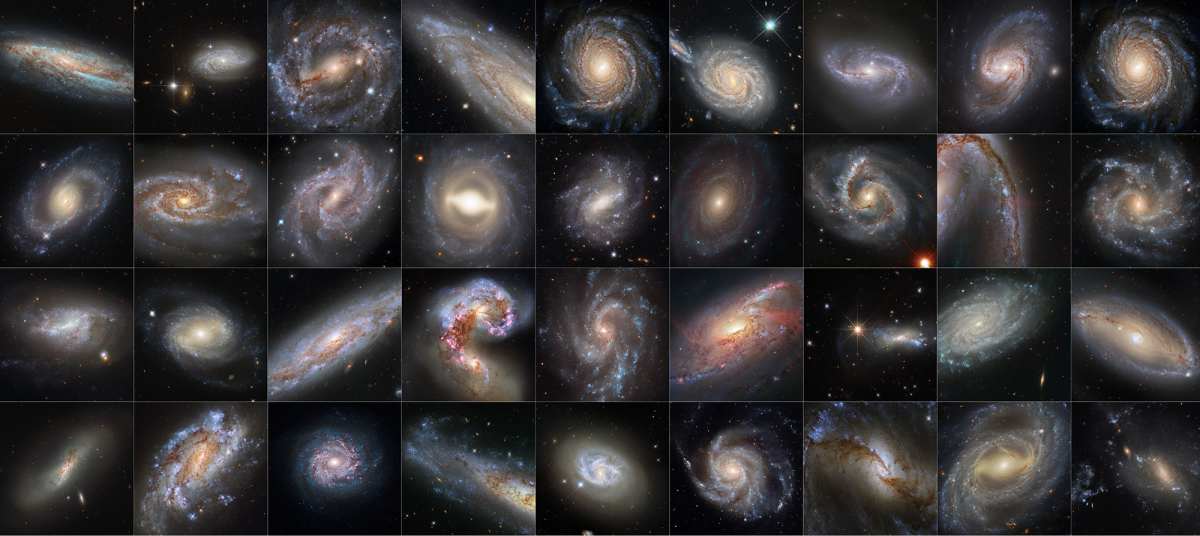
Kewley and her colleagues used data from the TYPHOON survey that scanned the nearby 44 large, angular-sized galaxies. The Irénée du Pont telescope at the Las Campanas Observatory was used to carry out the survey. While leafing through the data, they zoomed in on NGC 1365, which is observable with telescopes from Earth. The telescope’s sharp vision helped them to single out star-forming clouds in the galaxy, which they studied. “When they're young, hot stars shine brightly in the ultraviolet, and that intense light can excite nearby gases,” Kewley explained. “Each element, such as oxygen, in the gas then produces bright, narrow lines of light.”
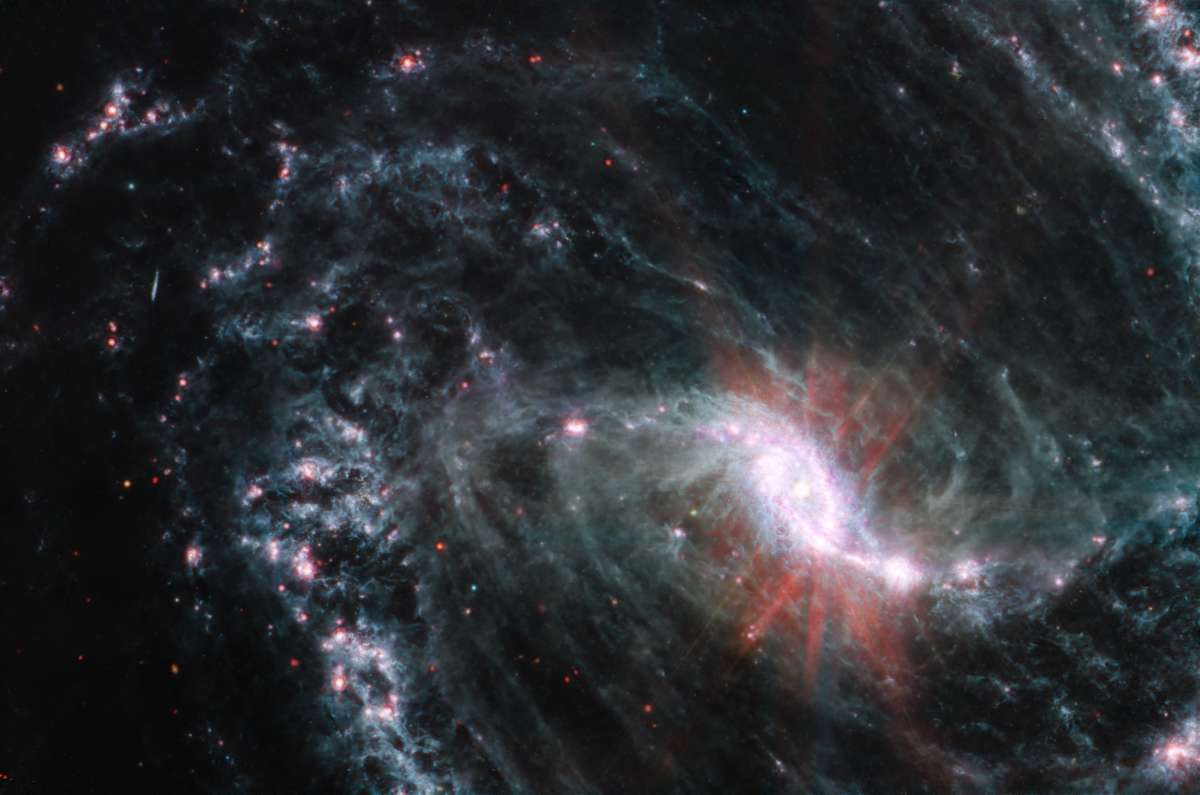
It is known to astronomers that galaxy centers usually contain more heavy elements than the outer parts. These heavy elements include oxygen, whose origin and abundance are shaped by several factors. It depends on where and when stars formed and exploded as supernovae, including the flow of gas into and out of the galaxy and whether it merged with other galaxies. The astronomers first measured how oxygen patterns change and evolve across the galaxy. They then used the Illustris Project, in which galaxy formation is simulated using numerical code and a comprehensive physical model. Their aim was to find how the galaxy grew and merged with other galaxies over 12 billion years. The simulations not only gave a snapshot of how oxygen evolved but also helped monitor the motion of gas, star formation, black holes, and chemical evolution in galaxies from after the Big Bang to the present time.
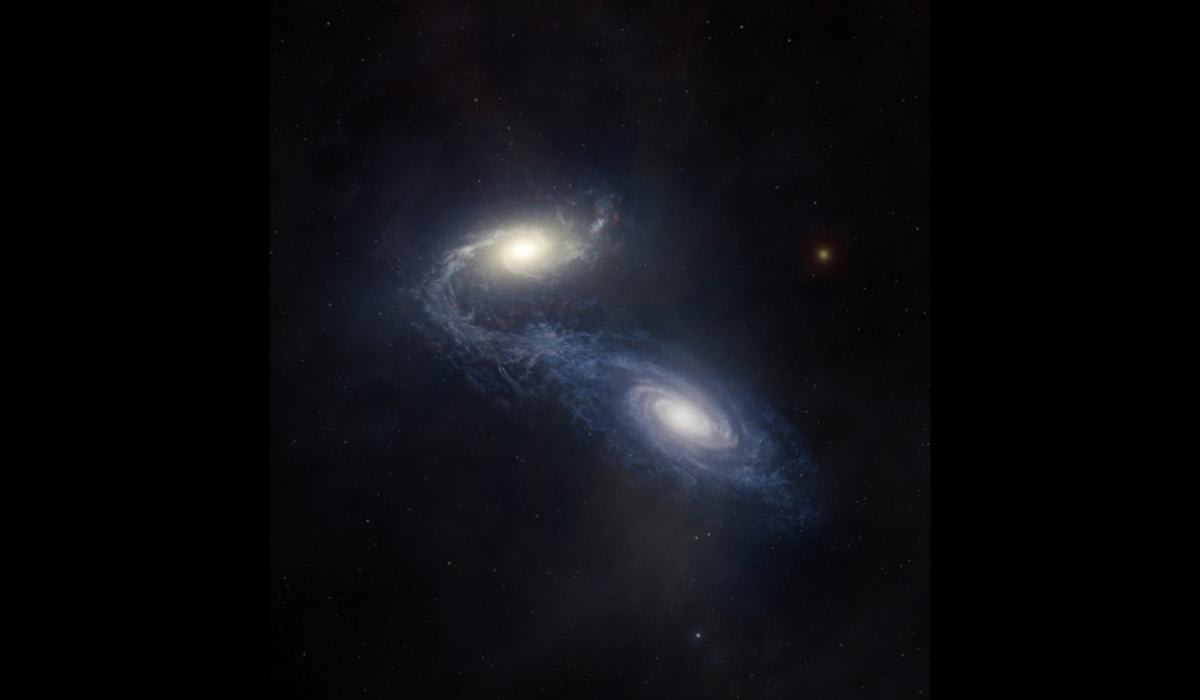
The simulation data has information about 20,000 galaxies. After painstakingly searching through this database of galaxies, the researchers eventually detected one that resembled the observed features of NGC 1365. This unveiled further information about this galaxy and its growth and merger with other galaxies. First, they found that the galaxy’s core region evolved early and generated a large amount of oxygen. Over 12 billion years, the store of this gas further increased as the galaxy collided with dwarf galaxies. The gas continued to build up in the outer rim of this galaxy late in its life as it was fed by gas and stars from merging smaller, dwarf galaxies.
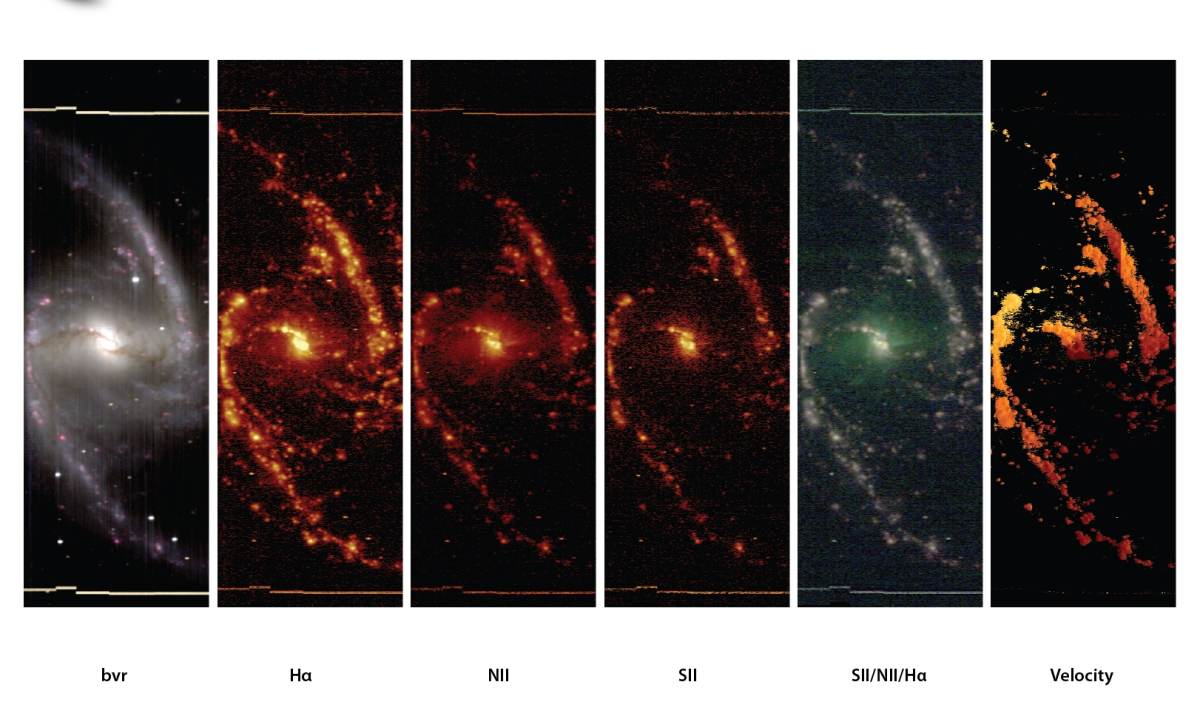
"It's very exciting to see our simulations matched so closely by data from another galaxy," said co-author Lars Hernquist, an astronomer of the Centre for Astrophysics at Harvard & Smithsonian. "This study shows that the astronomical processes we model on computers are shaping galaxies like NGC 1365 over billions of years." The study nicely sums up how NGC 1365, starting as a small galaxy, gradually grew and then evolved into a giant spiral via multiple mergers with smaller dwarf galaxies. “The astronomers establish extragalactic archaeology as a powerful new approach and tool that demonstrates that chemical fingerprints in a galaxy's gas can reveal its history,” said Kewley.
More on Starlust
Oxygen on exoplanets is not necessarily a sign of life: A new study delves deeper into the problem
NASA's JWST discovers massive Milky Way-like spiral galaxy just 1.5 billion years after the Big Bang