First discoveries from Subaru Telescope's OASIS survey reveal a massive planet and a brown dwarf
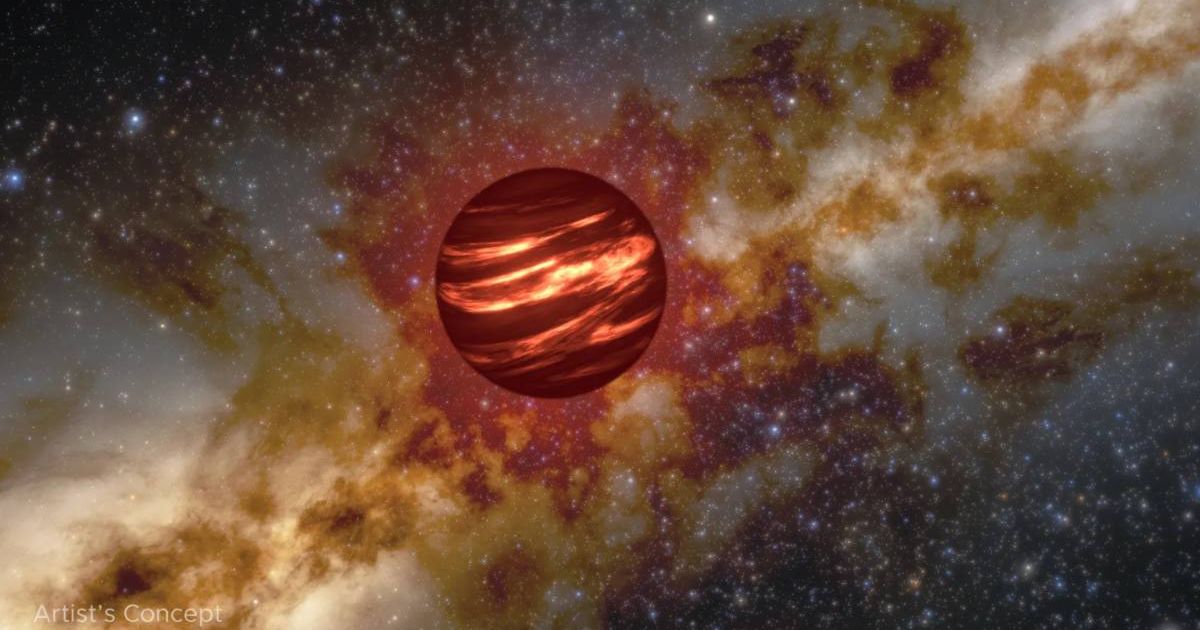
An international team of astronomers has just announced a breakthrough: the direct imaging of two previously unseen cosmic objects orbiting distant stars. These discoveries are among the first results from the OASIS program, which hunts for large planets and brown dwarfs, as per the Subaru Telescope.
New Release: First Discoveries from New Subaru Telescope Program
— NAOJ (@prcnaoj_en) December 4, 2025
The first results from OASIS (Observing Accelerators with SCExAO Imaging Survey), which combines space-based measurements with the Subaru Telescope’s advanced imaging to find hidden worlds. https://t.co/YuqS5etqHs pic.twitter.com/7fFuGM5Zmr
Finding these massive celestial bodies is notoriously difficult: only about 1% of stars host such kinds of companions, and even when they are young and glowing hot, their intense glare is easily hidden by that of their host star. OASIS solves this problem by making use of data provided by two European Space Agency (ESA) missions, Hipparcos and Gaia.
These missions track stars with precision to see if their movement is being subtly "tugged" by the gravity of some unseen companion. OASIS then targets those promising stars with the Subaru Telescope's SCExAO (Subaru Coronagraphic Extreme Adaptive Optics) system, a highly precise imaging tool to photograph these hidden objects. "With OASIS, we are able to find, weigh, and track the orbits of massive planets and brown dwarfs around stars we never thought of looking at before," Principal Investigator Thayne Currie of The University of Texas at San Antonio (UTSA) said.
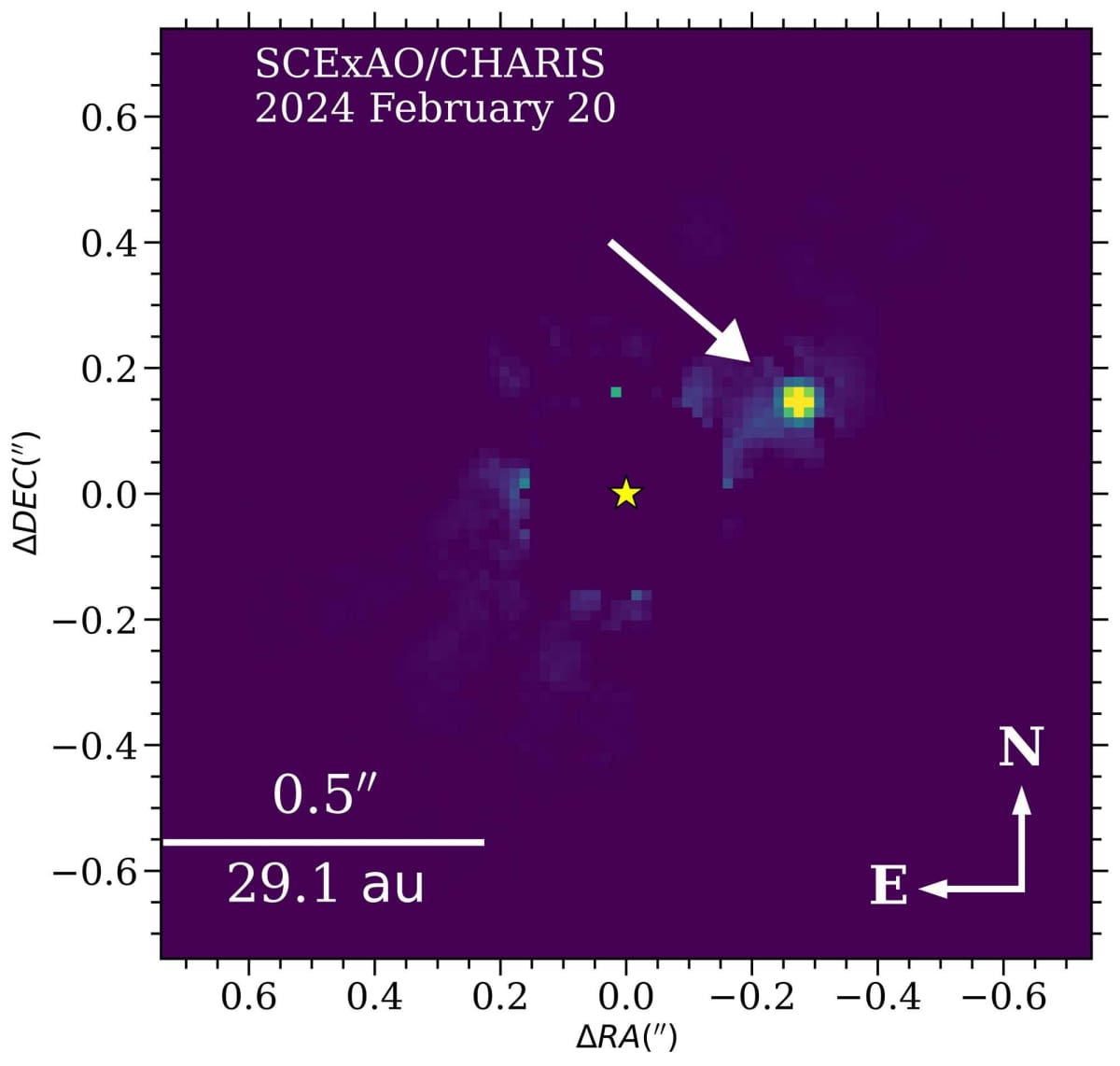
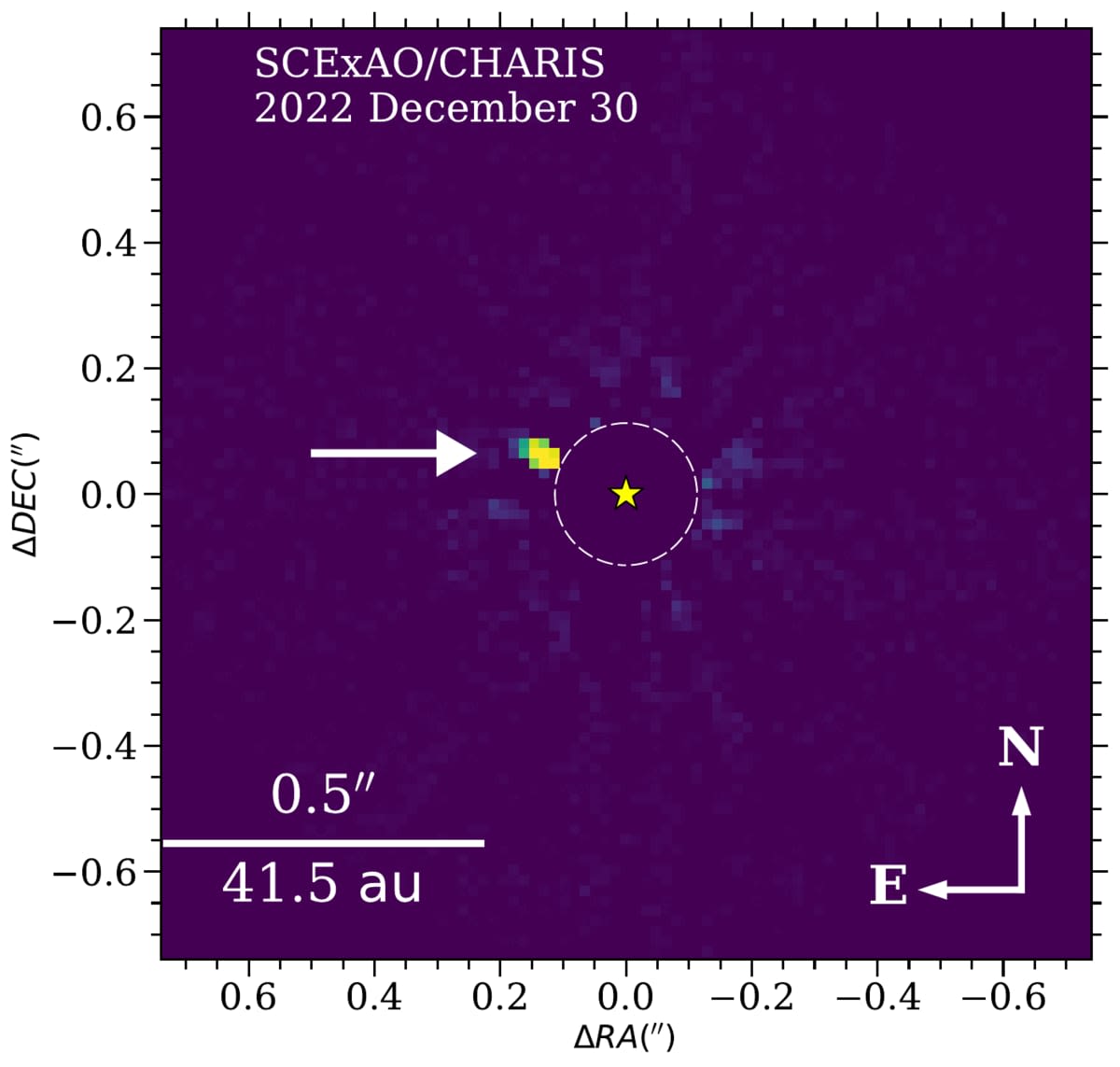
The first find, called HIP 54515 b, is a massive gas giant planet. It weighs nearly 18 times the mass of Jupiter and orbits a star twice the size of our Sun. The planet is positioned about 25 AU from its star, which is roughly the distance between Neptune and the Sun. With the system located 275 light-years away, the planet seemed very close to its star and demanded the high-precision imaging technology. "HIP 54515 b was imaged about 0.15 arc-seconds from its star. That’s roughly how small a baseball would appear from 100 km away, so we needed extremely sharp images enabled by Maunakea and SCExAO’s advanced technology," Currie said.
Moreover, this superjovian planet follows a slightly less circular path compared to lower-mass planets similar to Jupiter, which suggests that it might have formed through different means than the gas giants that populate our solar system. The second object, HIP 71618 B, orbits another star two times the size of the Sun, but it is classified as a brown dwarf, an object that forms like a star but doesn't have sufficient mass to be called one. This brown dwarf is about 60 times the mass of Jupiter and travels in a long, highly stretched-out, elliptical orbit.
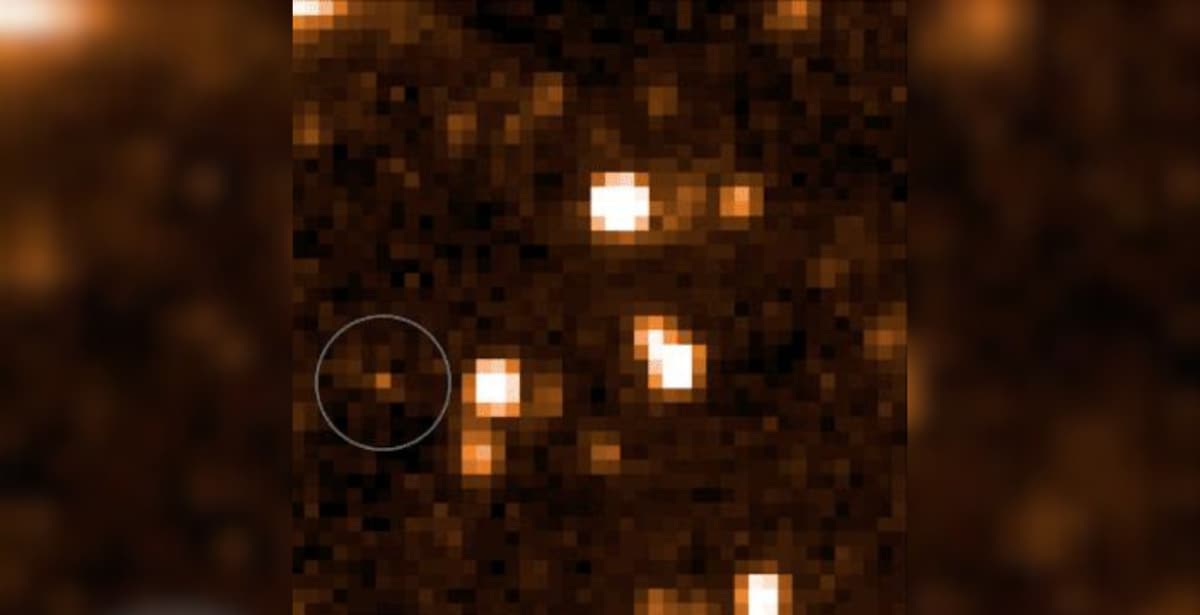
The discovery of HIP 71618 B holds particular importance for the future of astronomy, as it meets the strict requirements for the Roman Space Telescope's Coronagraph Instrument test, planned for 2027. This critical experiment is going to test new technologies designed to block out the light of Sun-like stars and will allow astronomers to eventually photograph rocky Earth-like planets ten billion times fainter.

These first results from OASIS illustrate that a combination of precise star-tracking from space and high-resolution imaging on the ground is a winning strategy in uncovering hidden worlds. The OASIS program carries on surveying dozens of other candidate systems, holding out the promise of further insights into how planets and brown dwarfs form and evolve-and ultimately helping develop the necessary tools to find habitable worlds in the future.
More on Starlust
Astronomers suggest gigantic 'lampshades' of dark matter may be hiding distant stars from our view