Did life come to Venus from Earth or Mars? New study offers clues
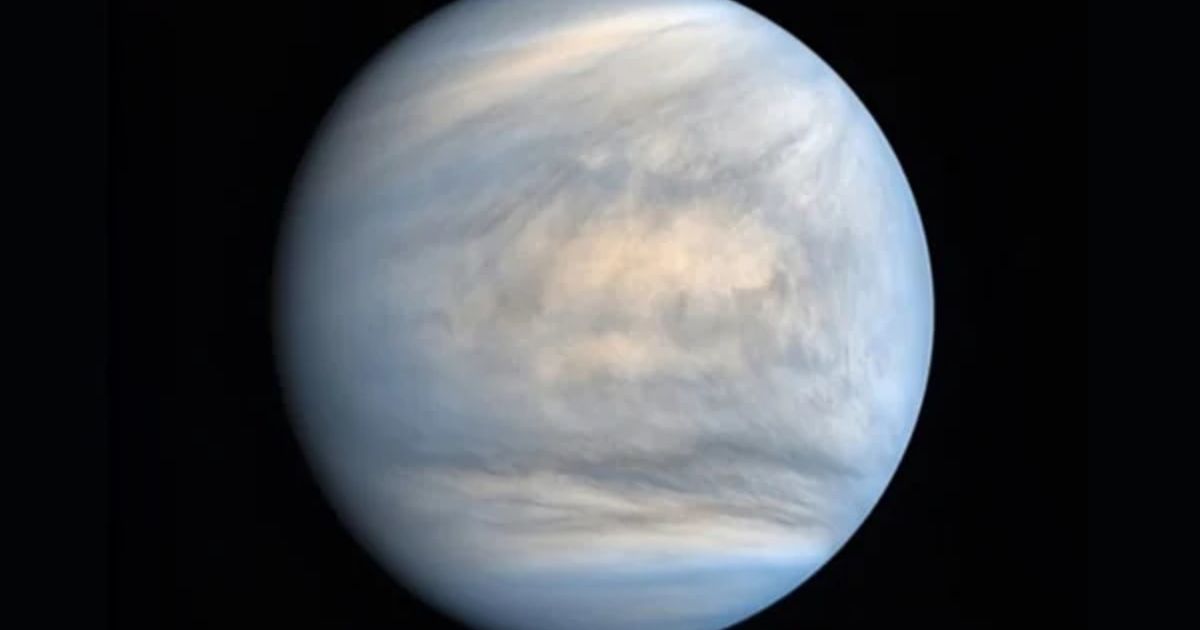
Could life have travelled from Earth to Venus? A recent research published in the Journal of Geophysical Research, and presented at the Lunar and Planetary Science Conference 2026, has reignited debate over whether life detected in Venus’s atmosphere might have originated on Earth. Researchers from the Johns Hopkins University Applied Physics Laboratory and Sandia National Laboratories examined the possibility that life can move across the Solar System through asteroids, comets, and planetary debris, and this concept is known as Panspermia. The research was titled "A Panspermia Origin for Venus Cloud Life."
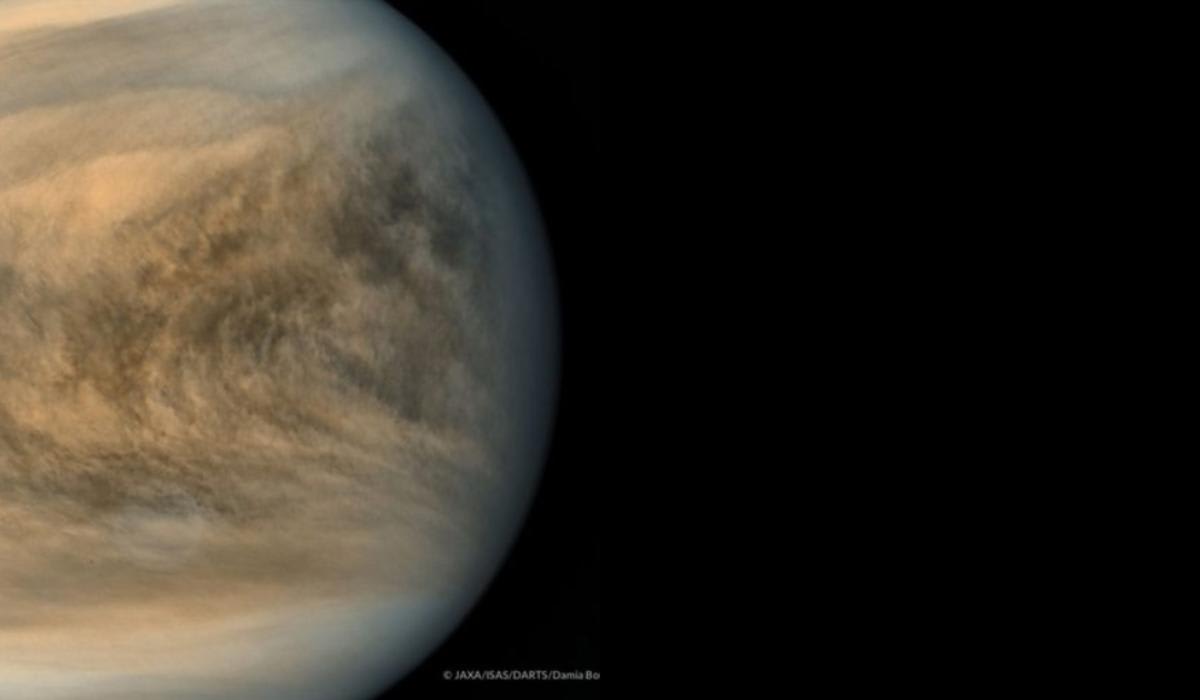
The theory of Panspermia quantifies through an equation, explaining how life can travel from one planet to another through asteroids, comets and other space objects, much like how humans cross from one country to another. Showing this in a probabilistic framework developed by Noam Izenberg and his colleagues in 2021, the team assessed that life could exist in Venus's cloud for at least a few days per century. Here, researchers have used a tool called the Venus Life Equation (VLA), which is inspired by the Drake equation. Expressed mathematically, the VLE breaks down as follows: L = O x R x C. In this model, L is represents overall 'probability of life' existing (0 to 1, where 0 is no chance and 1 is certainty), O represents "origination" that life existed on Venus itself, R is "robustness" (the potential for a biosphere to exist and withstand changes), and C is "continuity" (the chance that habitable conditions persisted until today). Using this framework, the team of Izenberg first focused on how any organic material, regardless of its origin, must survive the journey through space.
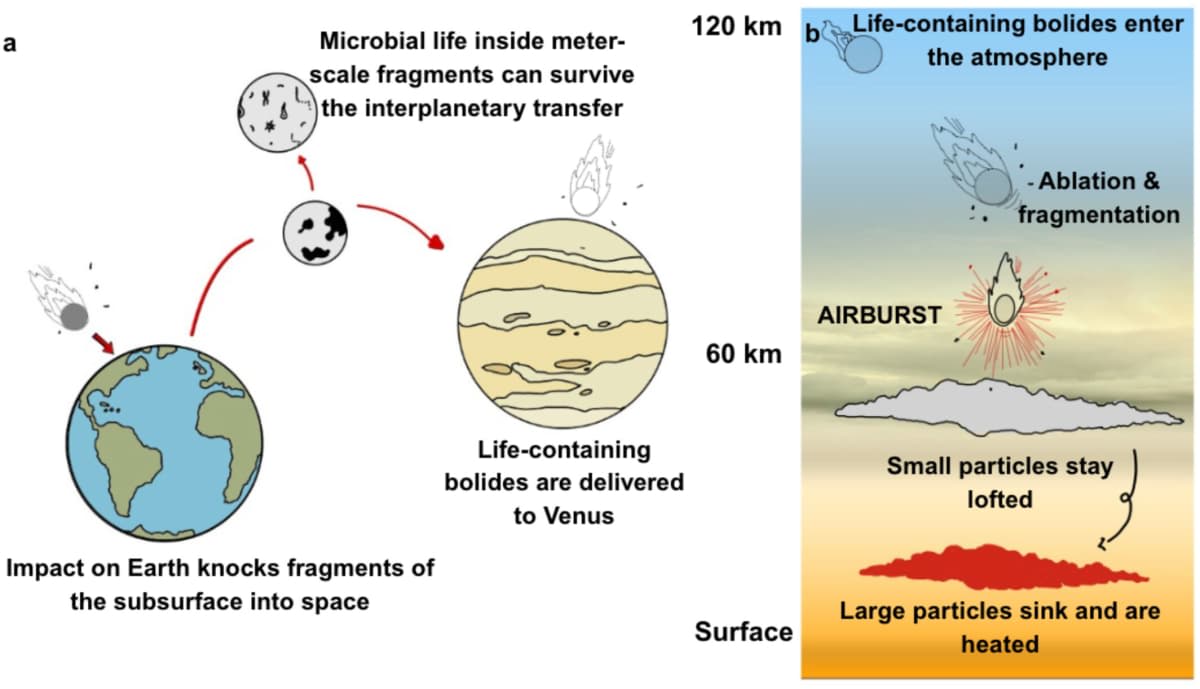
To understand if such life could survive on the surface of Venus, researchers studied how space rocks (called bolides) behave in Venus’ dense clouds. The above picture is about the simulations showing the fate of bolides entering the Venusian atmosphere and going through a series of processes, named ablation, explosion, and fragmentation, that determine whether any organic material could remain intact. Using the “pancake model,” researchers simulated how rocks explode and break into fragments as they pass through the atmosphere. These fragments could spread tiny life forms across the cloud layers, potentially allowing them to survive in the upper atmosphere. This creates a flattened cloud or “pancake” of debris, dispersing microscopic particles, referred to as “cells,” into the planet’s cloud layers.
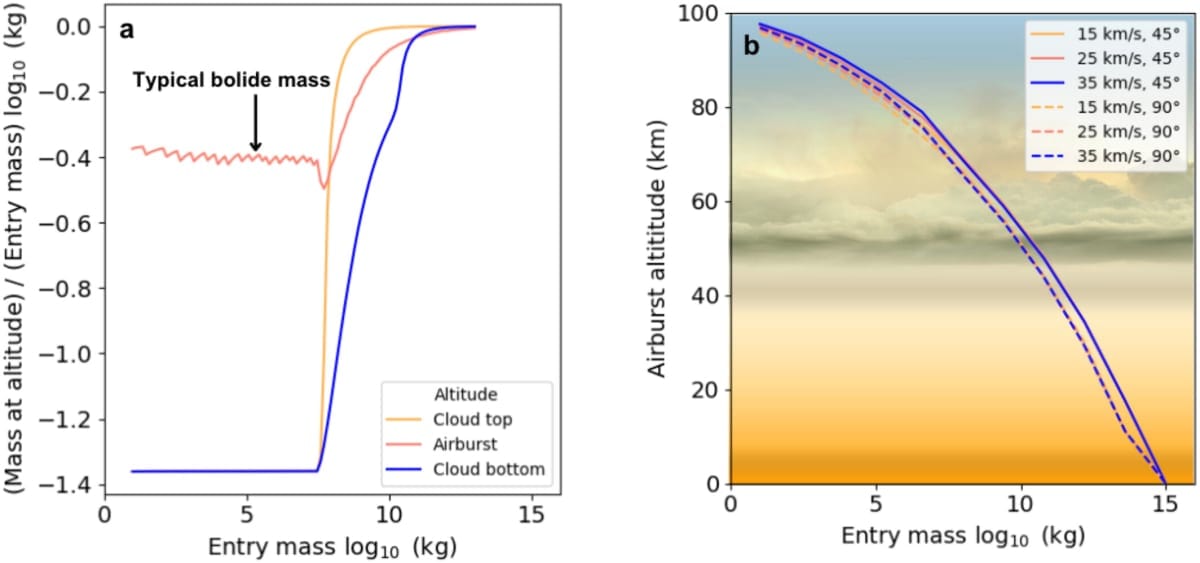
The figure illustrates how the model’s key results vary based on a bolide’s initial mass, speed, and angle of entry. Left side, in figure(a), shows how much mass is lost, due to burning (ablation) for bolides with a density of 3,000 kg/m³, entering the atmosphere at 25 km/s and at a 45° angle. Each curve represents the fraction of the original mass that remains at different altitudes—near the top of the cloud layer (around 70 km), at the altitude where the bolide explodes (airburst), and near the bottom of the clouds (around 40 km). In fig (b), the figure compares the altitude at which bolides explode for different entry speeds (15, 25, and 35 km/s) and angles (45° and 90°). The results show that, despite these variations, bolides tend to explode at similar altitudes. This suggests that the model’s conclusions are not significantly affected by differences in entry speed or angle.
While conditions are harsh, studies of meteorites on Earth show that some microbes and organic molecules can survive the violent ejection, the cold and vacuum of space, and even the fiery entry into another planet’s atmosphere. By combining the pancake model with earlier studies, the scientists estimated how many such bolides could have carried material from Earth or Mars to Venus. Their findings suggest that hundreds of billions of these cells may have been transferred to Venus’s atmosphere over time, with a significant fraction potentially remaining viable. On average, their best estimate indicates that around 100 cells could be deposited into Venus’s clouds each year, adding up to nearly 20 billion over the past one billion years.
Researchers are aware that the model overlooks major aspects of bolide atmosphere exchanges. Although data supports panspermia between Earth and Venus, the major VLE factors, like those in the Drake equation, still lack clarity. If in the future, life is discovered on Venus's cloud, scientists might conclude it came from Earth instead of forming alone. Hence, this research could change how we view planetary origins.
More On Starlust
NASA launches Pandora satellite to search for signs of life on distant exoplanets
Bacteria on Mars may hold the key to future human habitats on the planet