Dark matter powers the Milky Way’s heart instead of a black hole, new study claims
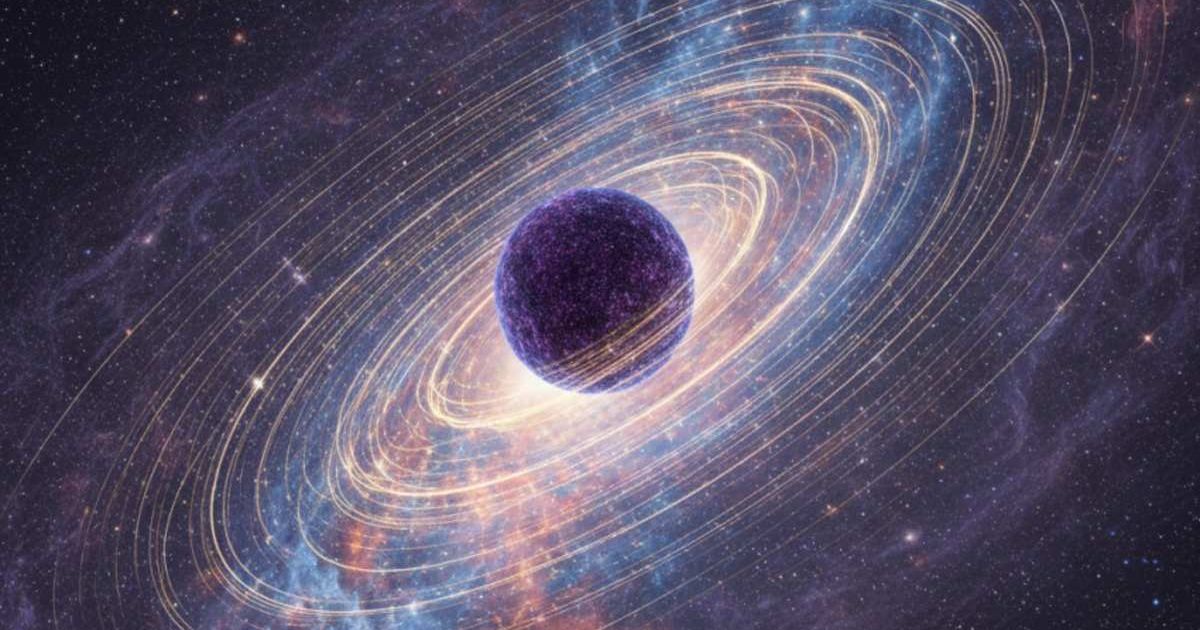
New research, published in the Monthly Notices of the Royal Astronomical Society, heralds the presence of dense dark matter at the center of the Milky Way despite the prevailing theory being that it is Sagittarius A*, a supermassive black hole, that sits at its heart. The dark matter concept not just fits into the Milky Way’s central cosmic structure but can explain the astrophysical phenomena there nicely, including the violent motions of stars around the galactic center. The theory of dark matter challenging the existence of the black hole has been put forward by an international research team that includes researchers from Argentina, Italy, Colombia, and Germany. "This is the first time a dark matter model has successfully bridged these vastly different scales and various object orbits, including modern rotation curve and central stars data," said study co-author Dr. Carlos Argüelles, of the Institute of Astrophysics La Plata, in a statement.

"We are not just replacing the black hole with a dark object; we are proposing that the supermassive central object and the galaxy's dark matter halo are two manifestations of the same, continuous substance," Arguelles added. The researchers propose that the dark matter is made up of fermions, or light subatomic particles, and would theoretically create a super compact, yet massive, halo-encircled core with a gravitational pull similar to that of a black hole. It would also explain the movement of S-stars and the orbits of G-sources, which are dust-shrouded objects existing nearby.
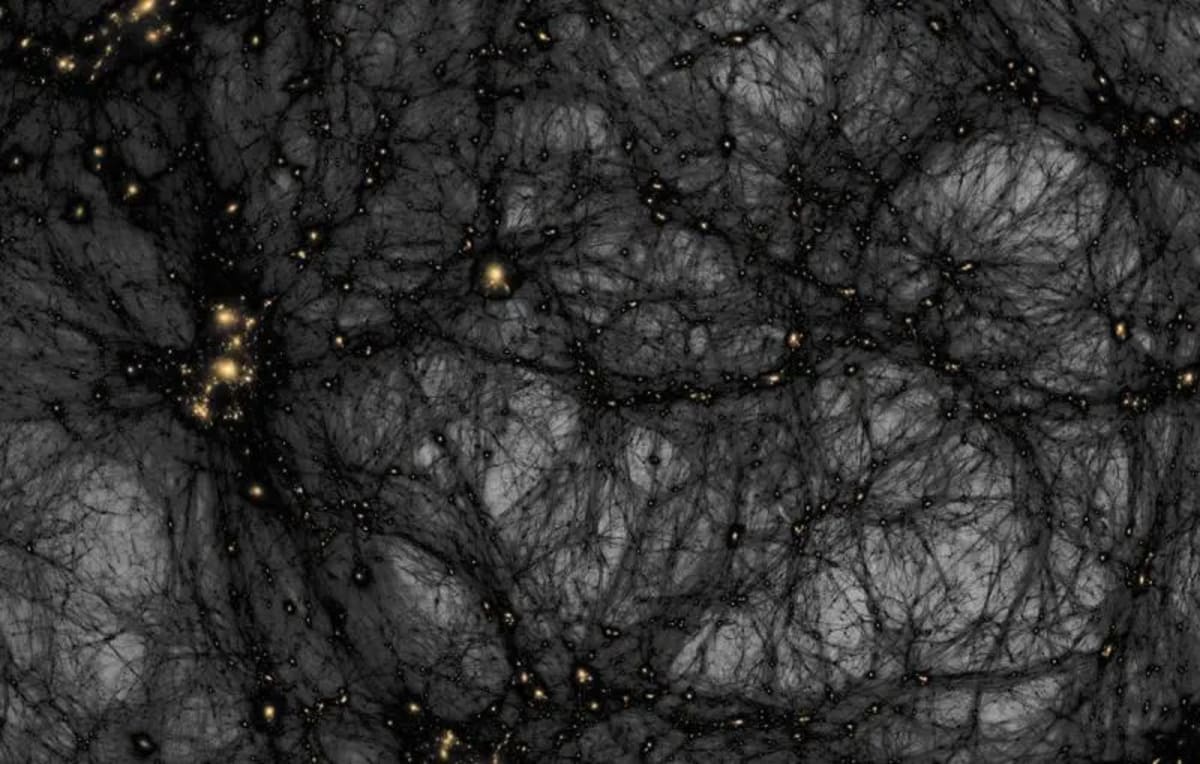
The data that fueled the research came from the European Space Agency's Gaia DR3 mission, which has mapped the rotation curve of the Milky Way's outer halo, showing how stars and gas orbit far from the center. Analysis of the Gaia data revealed a slowdown of our galaxy’s rotation curve, known as Keplerian decline. Per the researchers, this can be accounted for only by the outer halo of their dark matter model once it is put together with the traditional disk and bulge mass components of ordinary matter. This, the statement explains, "strengthens the 'fermionic' model by highlighting a key structural difference. While traditional Cold Dark Matter halos spread out following an extended 'power law' tail, the fermionic model predicts a tighter structure, leading to more compact halo tails."

Before this claim, the fermionic dark matter model was put to the test in a previous study. The study demonstrated that when an accretion disk shines on dense dark matter, the resulting shadow is not too different from the one captured by the Event Horizon Telescope collaboration for Sagittarius A*. Lead author Valentina Crespo, of the Institute of Astrophysics La Plata, said, "Our model not only explains the orbits of stars and the galaxy's rotation but is also consistent with the famous 'black hole shadow' image. The dense dark matter core can mimic the shadow because it bends light so strongly, creating a central darkness surrounded by a bright ring."
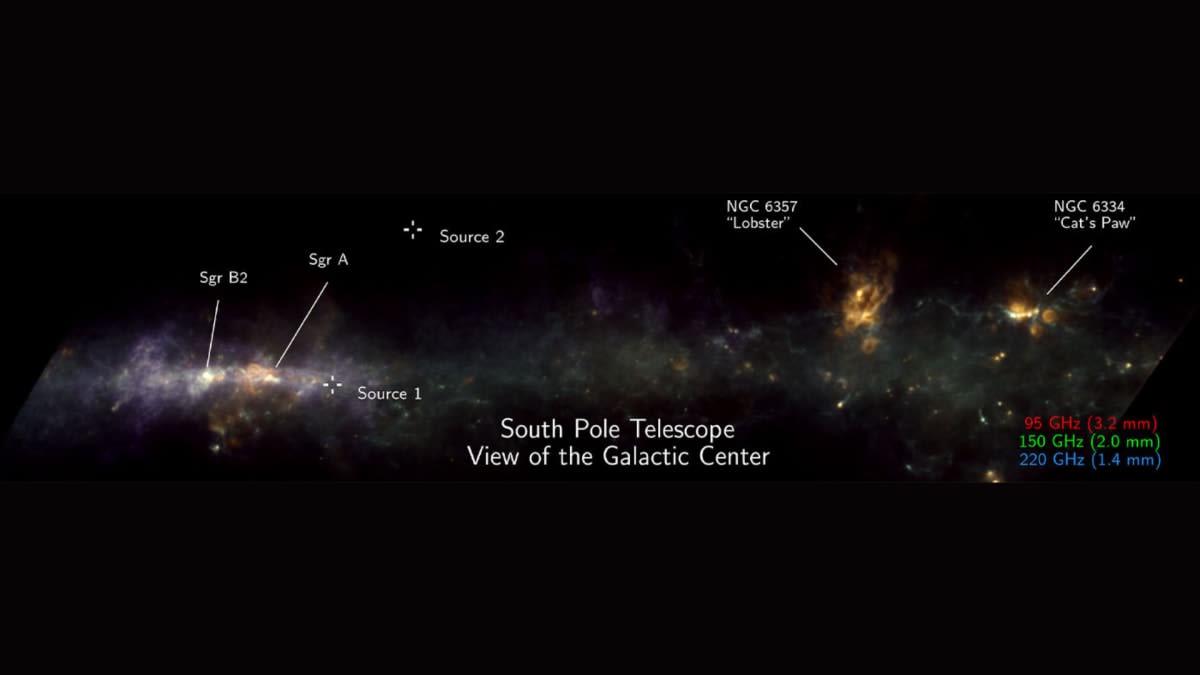
Comparing the dark matter model to the traditional black hole model, Crespo and her teammates found that while current data for the inner stars is unable to tell the two scenarios apart, the dark matter model presents a single, coherent explanation of both the galaxy at large and the galactic center (central stars and shadow). The authors now await data from the GRAVITY interferometer, the Very Large Telescope in Chile, and search for the signs of photon rings, which, they believe, will be important in testing their model.
More on Starlust
Scientists unveil the clearest image of the dark universe yet: 'The dream has come true'
Astronomers observe a black hole coming back to life after 100 million years of silence