Astronomers observe a black hole coming back to life after 100 million years of silence
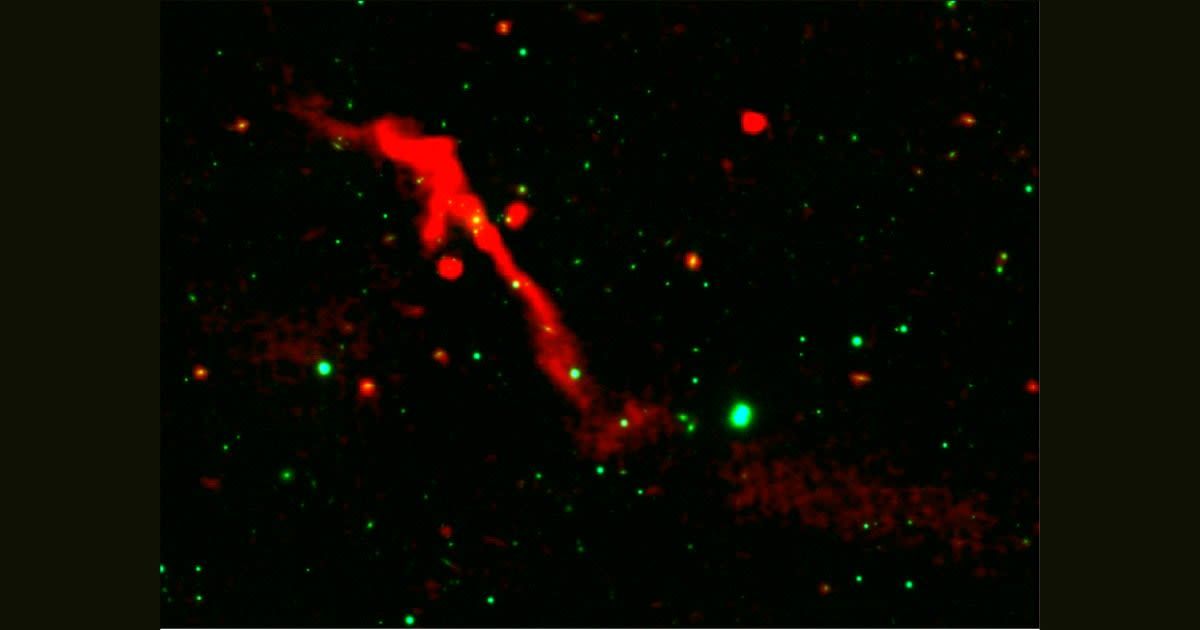
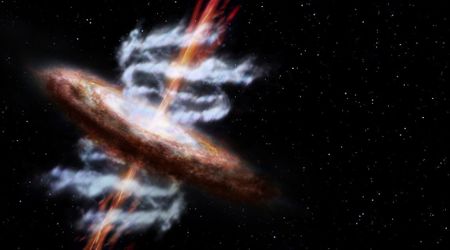
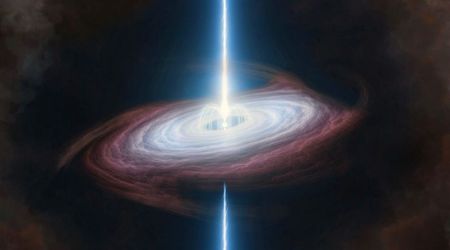
A massive radio galaxy has produced one of the most striking depictions of "reborn" black hole activity, which is comparable to the explosion of a "cosmic volcano" that spreads about a million light-years across space. The phenomenon was uncovered after astronomers noticed the supermassive black hole at the center of J1007+3540, which resides in a massive galaxy cluster filled with hot gas, resuming its jet emission after almost 100 million years of silence. The observations have been published in Monthly Notices of the Royal Astronomical Society.
Only a small number of galaxies produce large jets of magnetized plasma that emit radio waves, despite the fact that most galaxies contain supermassive black holes. The international team of researchers behind the latest study claims that J1007+3540 is unique because it exhibits unmistakable evidence of repeated eruptions, which is proof that its central engine has begun, then stopped, and restarted after extended periods of silence.
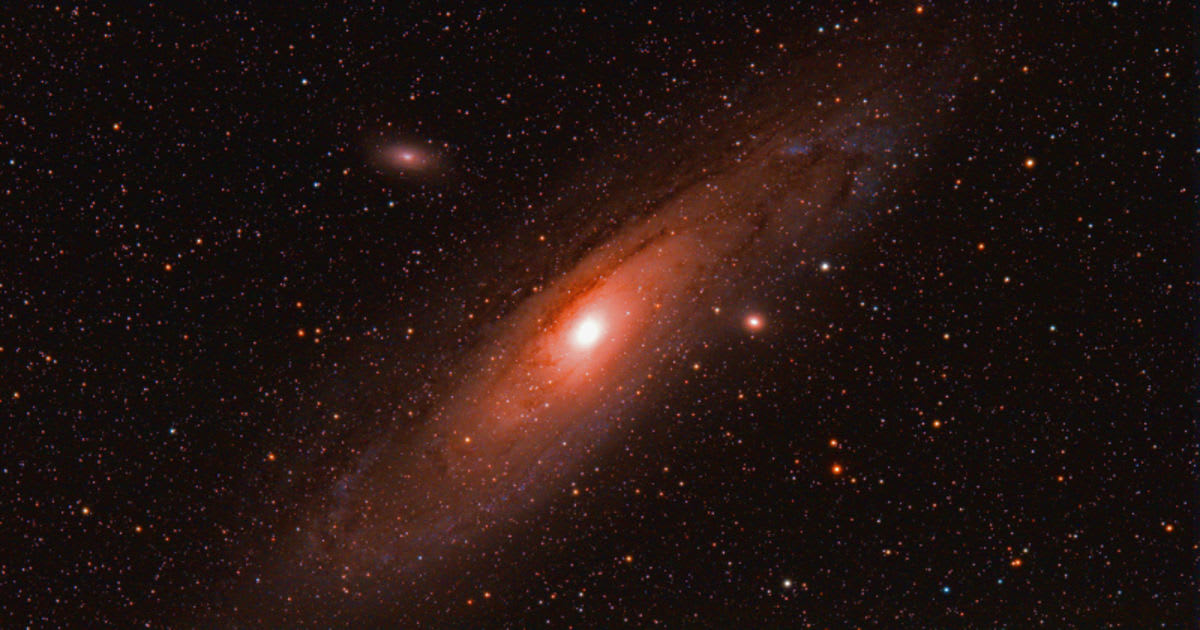
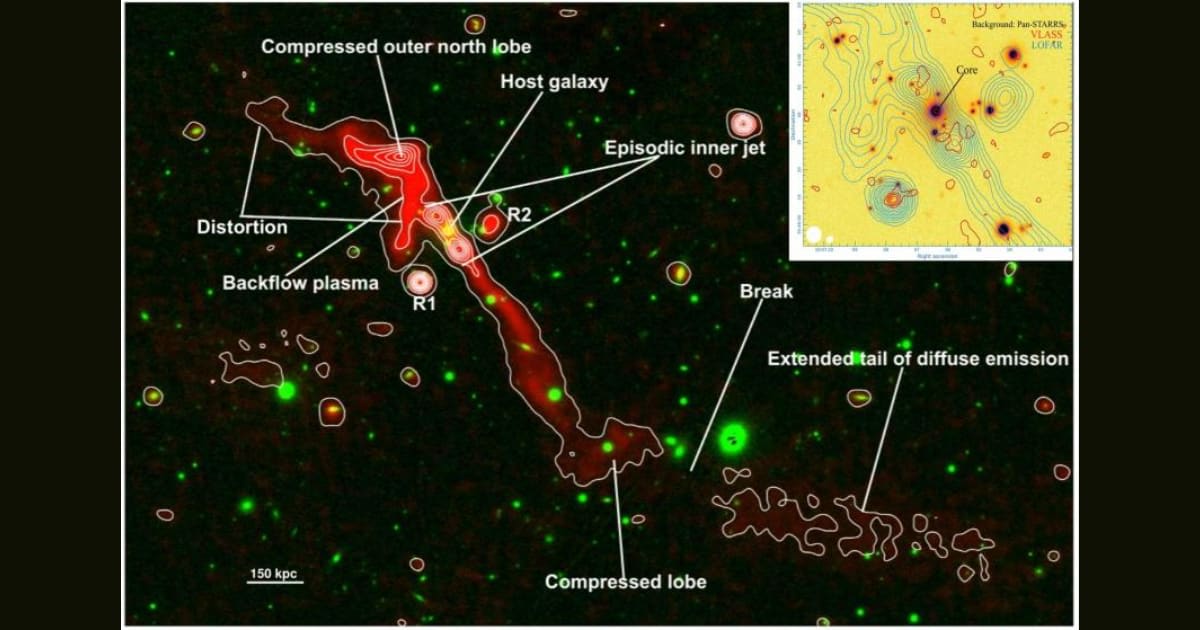
The radio images show a compact, bright inner jet which, lead researcher Shobha Kumari of Midnapore City College in India, said was the unmistakable sign of the black hole’s recent awakening. Just outside it lies a cocoon of older, faded plasma, leftover debris from the black hole’s past eruptions, distorted and squeezed by the hostile environment around it. "It’s like watching a cosmic volcano erupt again after ages of calm, except this one is big enough to carve out structures stretching nearly a million light-years across space," Kumari said, according to the Royal Astronomical Society's press release. "This dramatic layering of young jets inside older, exhausted lobes is the signature of an episodic AGN (Active Galactic Nucleus), a galaxy whose central engine keeps turning on and off over cosmic timescales.” “J1007+3540 is one of the clearest and most spectacular examples of episodic AGN with jet-cluster interaction, where the surrounding hot gas bends, compresses, and distorts the jets,” Dr. Pal said.
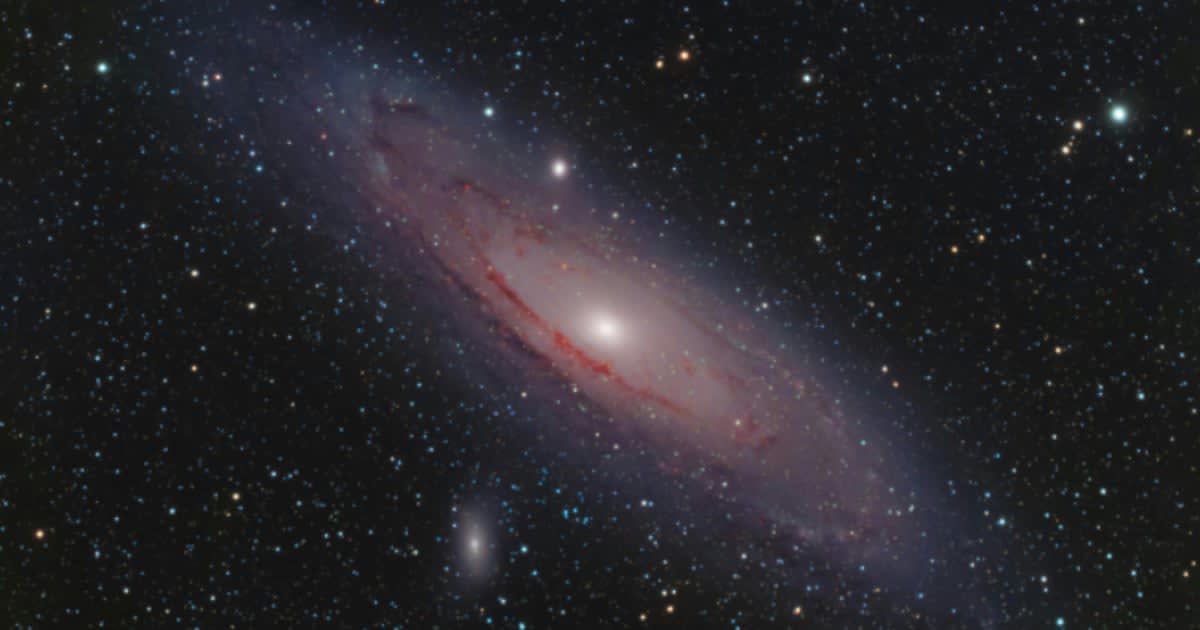
According to the scientists, the LOFAR (Low-Frequency Array) image shows a curving backflow signal of plasma that appears to be pushed sideways by the surrounding gas, indicating that the northern lobe is squeezed and drastically distorted. This compacted region's ultra-steep radio waves, which indicate that the particles there are very ancient and have lost a significant amount of energy, are another indication of the cluster's severe effect, according to the uGMRT (Giant Metrewave Radio Telescope) image. Meanwhile, the diffuse emission directed towards the southwest reveals a magnetized plasma that is being stretched in a long extension through the cluster and is leaving behind a trail that dates back millions of years. So the galaxy is not just producing jets; it is also being influenced by its intense surroundings.
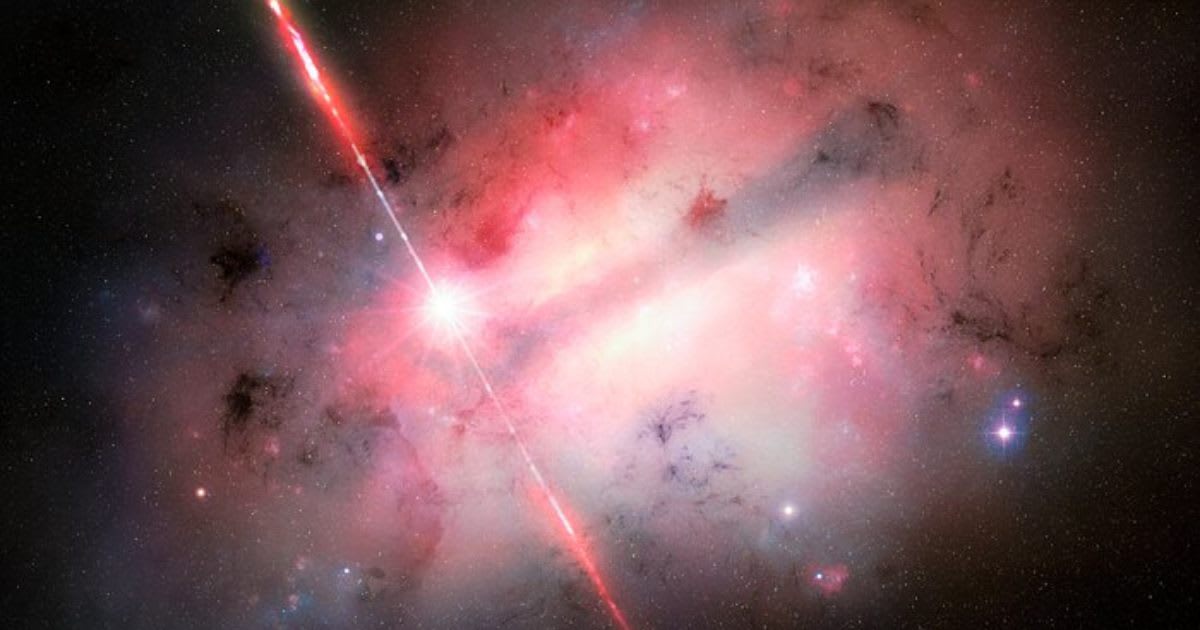
With its renewed activity, huge size, and intense interaction with its surroundings, J1007+3540 offers a striking snapshot of a galaxy-evolution-in-progress. The researchers claim that it highlights that galaxies do not evolve in a calm and steady manner. Instead, they do so via a dynamic struggle between violent outbursts driven by black holes and the immense pressure that comes from their environments.
More on Starlust
Astronomers achieve historic first image of two supermassive black holes orbiting each other
Astronomers just solved mystery behind bright blue flashes and traced it back to black holes