Artemis II: Reid Wiseman reveals 'pinnacle' moment; Victor Glover explains why they must return
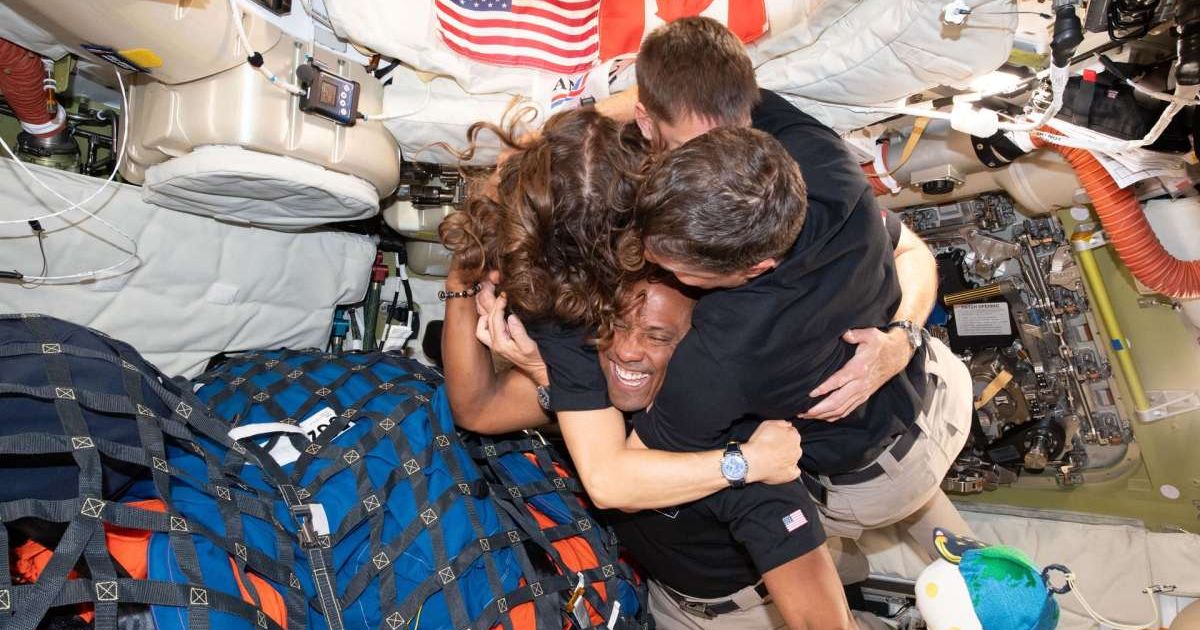
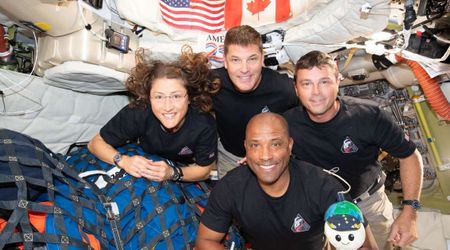
At 1:56 p.m. EDT on April 6, the Artemis II crew broke a record. "As we surpass the furthest distance humans have traveled from planet Earth, we do so in honoring the extraordinary efforts and feats of our predecessors in human space exploration," said CSA astronaut Jeremy Hansen on behalf of the entire crew. No doubt it was an emotional moment and one of the crowning achievements of the mission—a reminder that we are capable of doing extraordinary things should we set our hearts and minds to it. However, what really tugged at the heartstrings of all those watching around the world was another extraordinary moment that followed. In fact, for Commander Reid Wiseman in particular, it was really the "pinnacle moment of the mission."
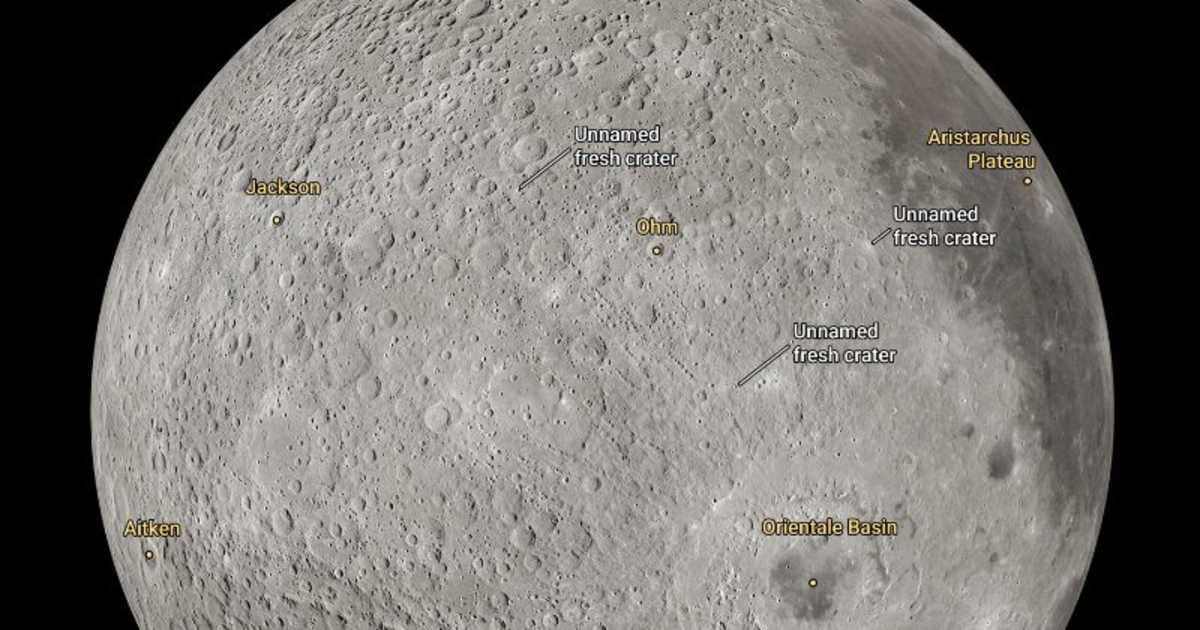
Soon after they broke the record, the crew took a moment to provisionally name a couple of fresh lunar craters that they could see with their naked eye. The first one, just northwest of the famed Orientale basin, they named 'Integrity,' after their spacecraft. The second one, they named 'Carroll,' after the Wiseman's late wife, who passed away battling cancer in 2020. Speaking of the emotions he went through when Hansen was announcing the tribute, Wiseman said, "I think when Jeremy spelled Carol's name, 'C-A-R-R-O-L-L,' I think for me that's when I was overwhelmed with emotion."
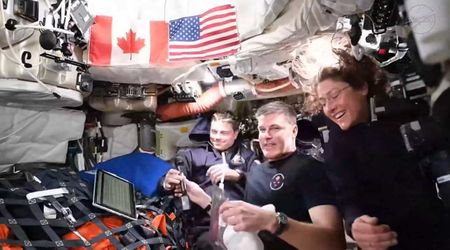
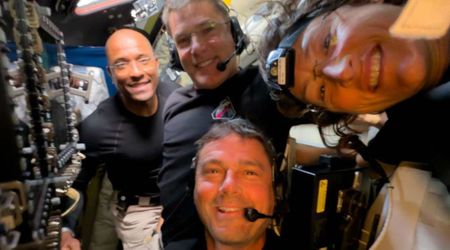
Christina Koch, Victor Glover, and Hansen had approached Wiseman with the proposal when they were in quarantine at NASA's Kennedy Space Center. "I just thought that was just a total treasure that they had thought through this, and they had offered this. And I said, 'Absolutely, I would love that,'" he recalled during the recently held news conference. But as touched as he was by the gesture, he had told his crew that he wouldn't be able to give the speech. Cut to April 6, as he put his hand down on Hansen's during the tribute, he realized the Canadian was trembling as he spoke, while Koch had tears in her eyes. "We all pretty much broke down right there. And just for me personally, that was kind of the pinnacle moment of the mission for me. That was, I think, where the four of us were the most forged, the most bonded, and we came out of that really focused on that day ahead."

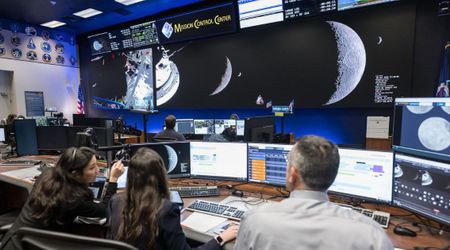
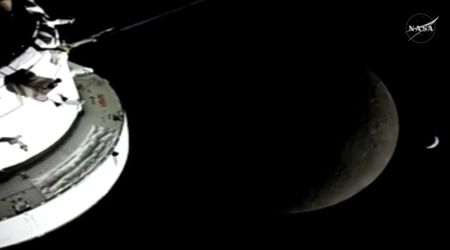
What followed was the historic lunar flyby, which was essentially the main event of the mission. And the crew was focused indeed. NASA administrator Jared Isaacman noted that they obtained over 175 GB of data, which includes both imagery and audio, during the flyby alone. A lot of this data has already been downlinked back to Earth and is already helping scientists understand the Moon better.
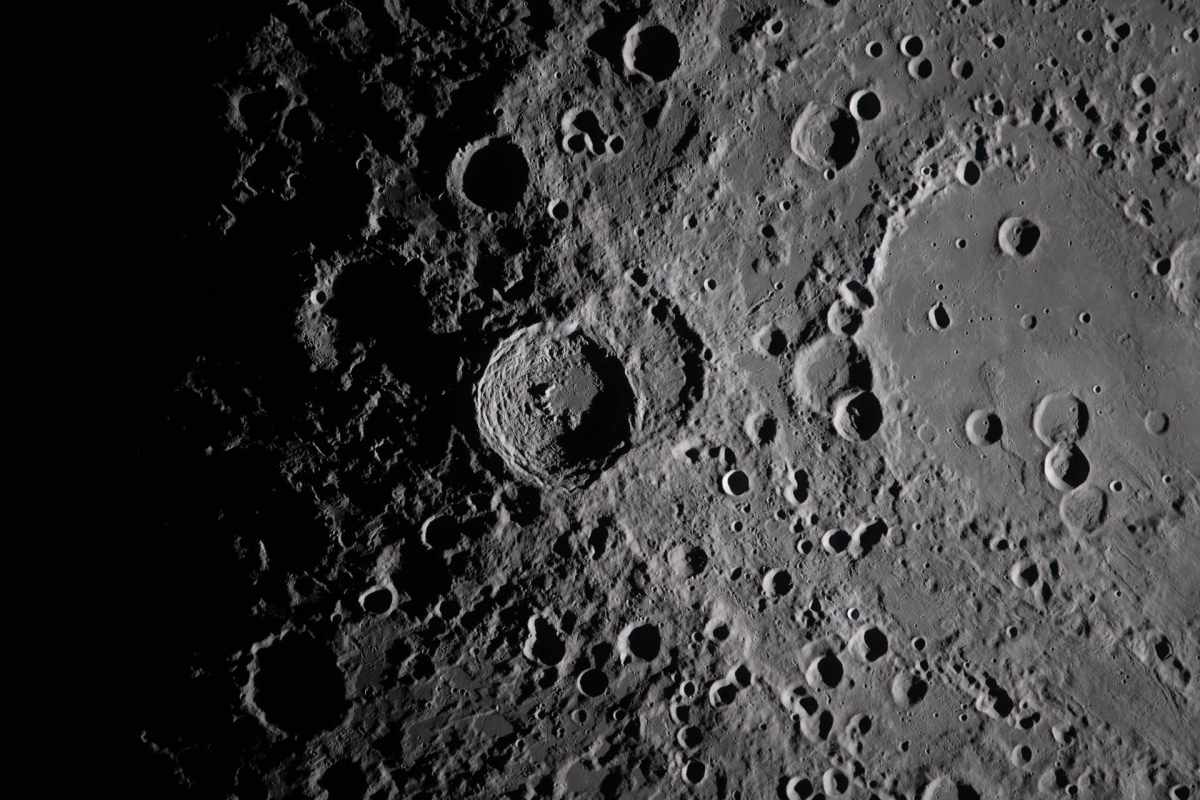
During the flyby, the team also got to witness a solar eclipse as the Moon completely obscured the Sun from their view. And as they have been saying throughout this mission, no amount of training or simulation, no matter how rigorous, can prepare you for the real deal. Not really. "We saw really amazing simulations made by our lunar science team about what the eclipse would look like when the Moon was, you know, 30-35 times bigger than the Sun," noted Glover. "But when that actually happened, it just blew us all away." Because they launched on April 1, the crew could only see 20% of the far side of the Moon illuminated by the Sun. But the eclipse, which Glover went on to call "one of the greatest gifts of that part of the mission," did more than just make up for it.

The crew is now preparing for reentry, with splashdown scheduled for 8:07 p.m. EDT on April 10. The re-entry will be one of the trickiest bits of the mission, as the crew will be traveling at a speed of nearly 35,000 feet per second (24,000 miles per hour). That's close to Mach 32, which is 32 times the speed of sound. As far as Glover is concerned, he has been looking forward to a successful re-entry ever since it all started three years ago. "I'll be honest and say I've actually been thinking about entry since April 3, 2023, when we got assigned to this mission. And one of the first press conferences we were asked, what are we looking forward to? And I said, 'splashdown.'... We've still got two more days, and riding a fireball through the atmosphere is profound as well."

Glover thinks it's a little funny but also stressed that it is extremely important that they return home safely, largely because of what they still have in store for us. "We have to get back. There's so much data that you've seen already, but all the good stuff is coming back with us. There's so many more pictures, so many more stories," he said. Moreover, once the mission is complete and the crew has made it back to Earth, the proposals for naming the two fresh craters will also be submitted to the International Astronomical Union, which looks over the naming of features in space.
More on Starlust
Artemis II mission update: NASA cancels final manual piloting test of Orion capsule
First set of Artemis II lunar flyby photos shows solar eclipse, Earthset, Earthrise and more