America must dominate in 'all the domains of space,' says acting NASA chief

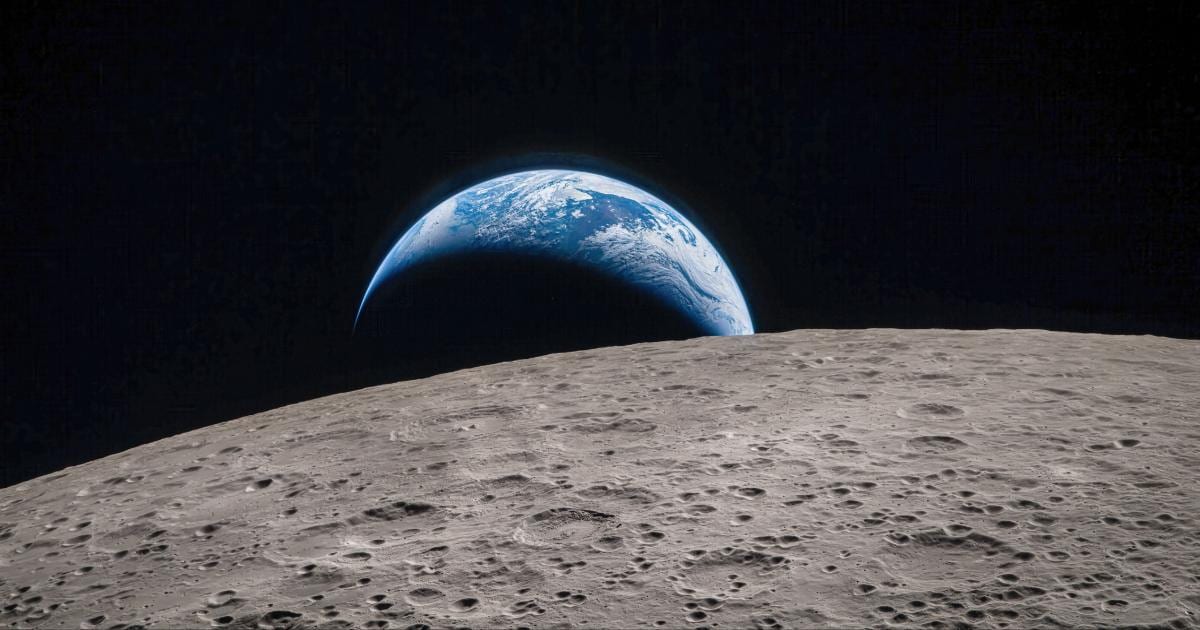
Firefly Aerospace’s Blue Ghost Mission 1 moon lander successfully descended onto the lunar surface at 3:34 a.m. EST (2:34 a.m. CST) on March 2, 2025. It landed near a volcanic feature within the Mare Crisium called Mons Latreille, a 300-mile-wide basin on the northeast quadrant of the Moon’s near side. The probe carried 10 instruments to study the Moon as the agency worked towards its Artemis program to take astronauts back to the lunar surface by 2027, as per Space.com. NASA’s acting chief, Janet Petro, seemed visibly excited as she addressed the successful mission.

It was a milestone soft landing for a privately built spacecraft, and Petro stated, “To get to be here and experience a landing on the moon that’s coming up, that’s very, very exciting.” When asked about the significance of this success to NASA and the US space program, Petro remarked, “I think this administration really wants to keep America first, and I think the way that we keep America first is by dominating in all the domains of space.” This mission was a successful conquest of a space domain that fit the Trump administration’s rhetoric.

NASA’s commercial partner, Firefly, initiated the Blue Ghost mission under NASA’s Commercial Lunar Payload Services program (CLPS). It was essential to the Artemis campaign and was needed to build a lunar economy for the United States. “So as long as we keep dominating that space, I think we’re going to be putting America first. We’re going to make America proud. We’re doing this for the US citizens,” she added. The 10 science and technology instruments aboard the lander will operate on the surface for 14 Earth days or one lunar day, according to NASA.

Petro was delighted with the results and applauded NASA and American companies for leading the way in space exploration. “The technological and science demonstrations onboard Firefly’s Blue Ghost Mission 1 will improve our ability to not only discover more science, but to ensure the safety of our spacecraft instruments for future human exploration,” she added. The Blue Ghost was launched from NASA’s Kennedy Space Center in Florida on January 15, 2025, and showed that the same positioning systems used on Earth can be used on the Moon.
It's a new dawn, it's a new day, and we're feeling good.
— NASA (@NASA) March 3, 2025
@Firefly_Space's Blue Ghost lander witnessed lunar sunrise—the start of a new day on the Moon and two weeks of activities, including a lunar eclipse (from the Moon's perspective) and lunar sunset. Let's go! pic.twitter.com/fNbgv9FuDo
NASA and Firefly Aerospace hosted a news conference at 2 p.m. EDT on March 18, 2025, from NASA’s Johnson Space Center in Houston to discuss the successful Blue Ghost Mission 1. The panel addressed the “exciting payloads onboard the lander and that they were immediately moving into the payload operations,” according to the NASA video. These would demonstrate lunar drilling technology, regolith (lunar rocks and soil) sample collection capabilities, a global navigation satellite system, radiation-tolerant computing, and lunar dust mitigation.

The panel included Joel Kearns, deputy associate administrator for exploration, Science Mission Directorate, NASA Headquarters in Washington; Jason Kim, CEO, Firefly Aerospace; Ray Allensworth, spacecraft program director, Firefly; and Adam Schlesinger, CLPS project manager, NASA Johnson. According to NASA, they shall continue to collaborate on the CLPS initiative to ensure the delivery of science and technology to the lunar surface, and collect essential data that would benefit the agency’s future missions to dominate space.