3I/ATLAS' anti-tail longer than Earth–Moon distance, Harvard's Avi Loeb reiterates technological possibility

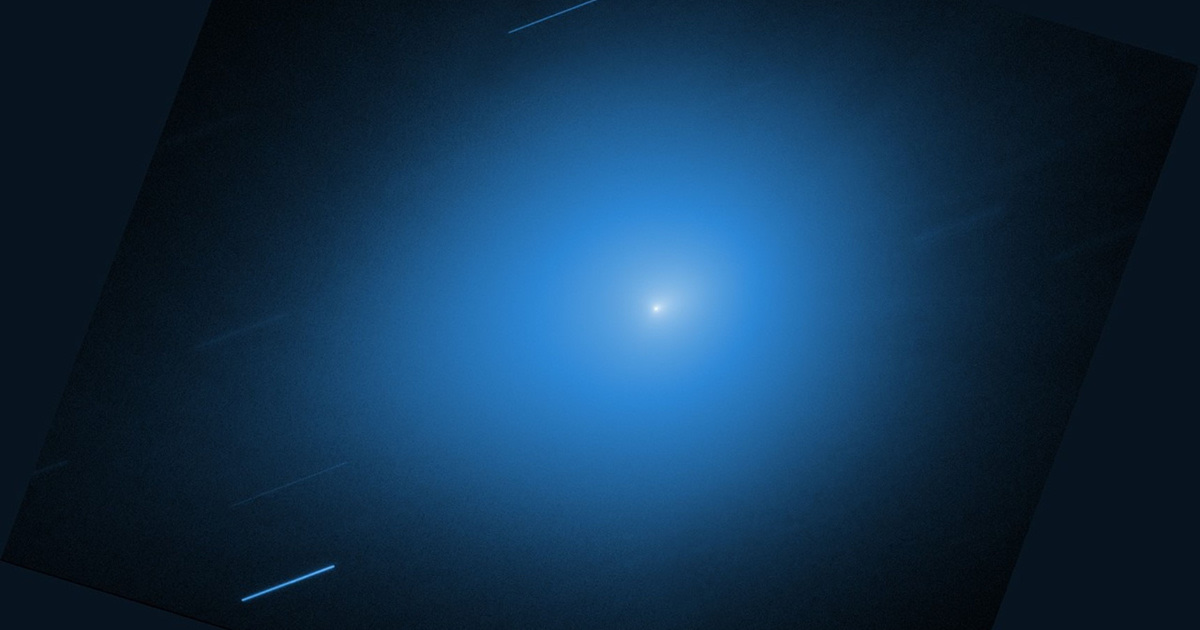
Despite considerable backlash from the scientific community studying 3I/ATLAS, Harvard astronomer Avi Loeb continues to explore the possibility that the interstellar visitor is an object of technological origin. His latest discussion (posted on his Medium blog) is based on the comet's anti-tail as observed in the images taken on December 14 and December 15, 2025.
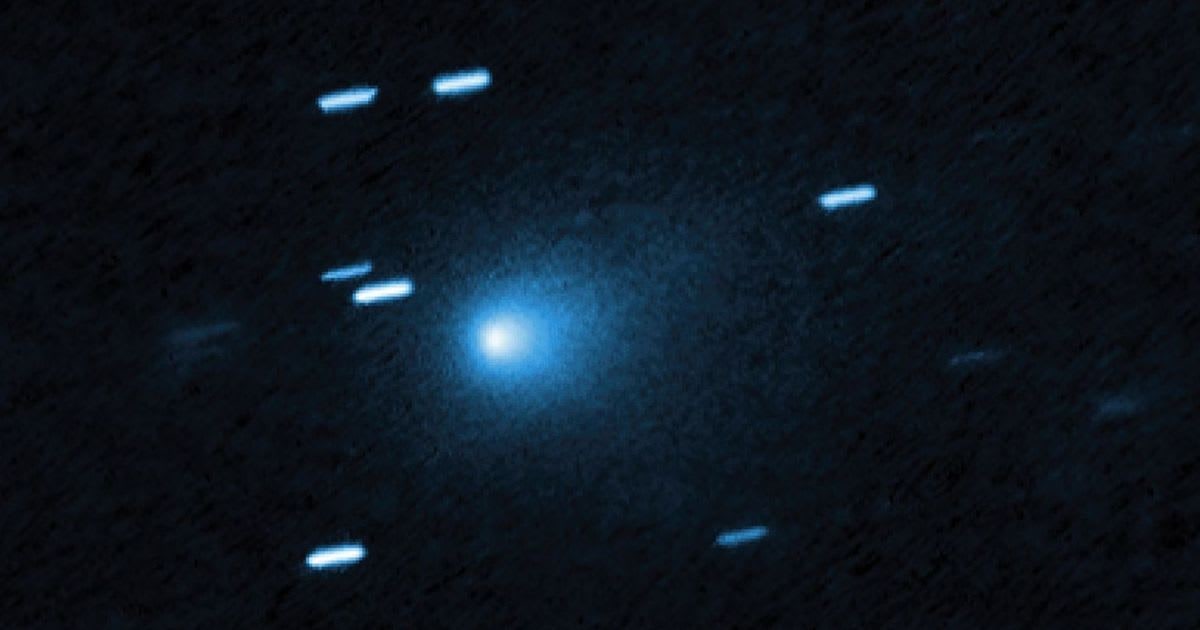
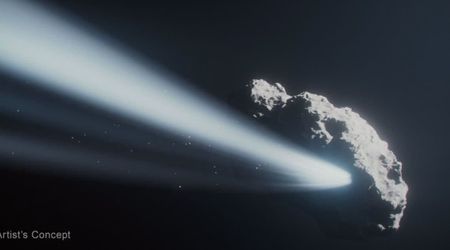
More specifically, it's the size of the anti-tail that Loeb is concerned about. Extending to half a million kilometers away from the nucleus of the comet, the sunward tail is the longest that has ever been observed. For the sake of providing perspective, Loeb notes that the length dwarfs even the average distance to the Moon, which is 384,400 kilometers.
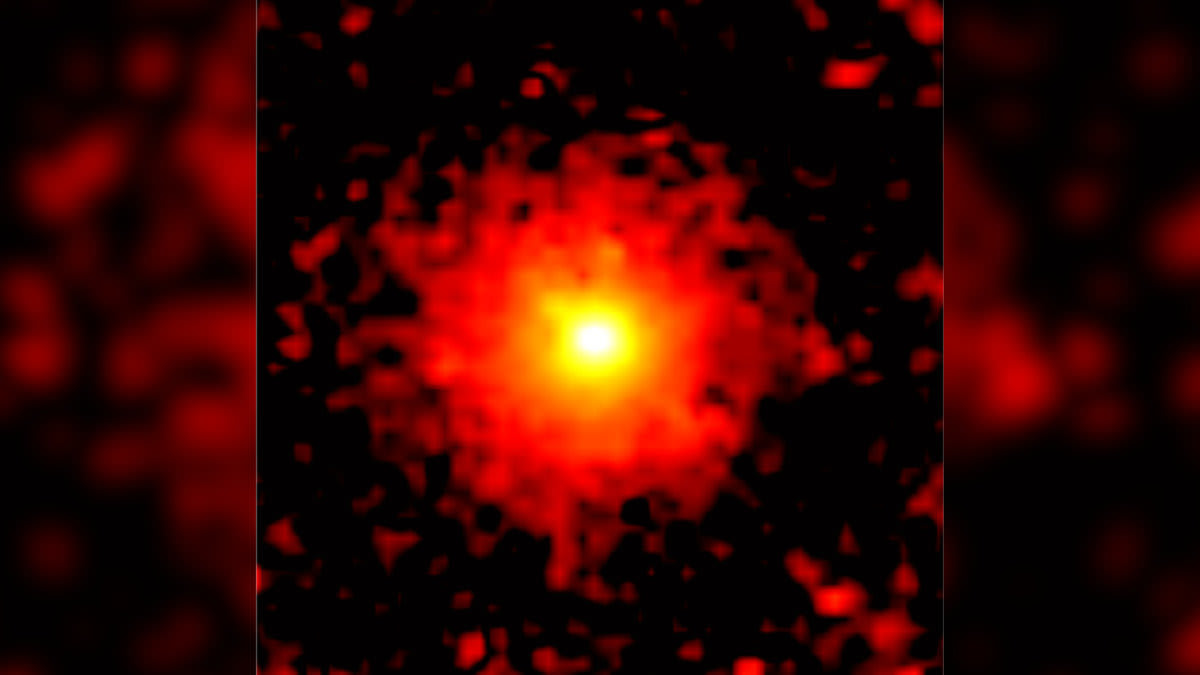
According to the Harvard astronomer's calculations, for the length of the anti-tail to reach a length of half a million kilometers within 45 days of perihelion, the sunward speed of its constituent materials should be no less than 130 meters per second relative to the comet's nucleus. The uncertainty for Loeb lies in whether the dust and gas evaporating from the icy nucleus alone can generate that kind of speed. That is something that still needs to be examined. "The alternative is a jet from a technological thruster," Loeb wrote.

Back in October, in a Q&A on his Medium blog, Loeb had claimed that there was a 30-40% chance that 3I/ATLAS could have technological origins. "This low-probability scenario includes the possibility of a black swan event akin to a Trojan Horse, where a technological object masquerades as a natural comet," he had written. The claim was based on a list of anomalies (one of them was the anti-tail) that has only grown since then. However, as controversial as his assessment was, it was not set in stone. In the same blog, he had noted that his views could change based on the data that was to come as the comet journeyed through our solar system and made its closest approach to our planet.

In fact, even as he claimed that the unusual length of the tail could have technological factors behind it, he also issued a reminder that our pool of interstellar objects is fairly small. After all, 3I/ATLAS is only the third known interstellar object to enter our solar system. Likening the challenge to that of someone seeking a partner after dating a small number of people, Loeb assured, "Our assessment will be more reliable as the sample of interstellar objects gets larger."
Loeb, like everyone else following the developments in and around the comet, is hoping that the data yet to come reveals more about the comet's nature. Currently in the constellation Leo, 3I/ATLAS will make its closest approach to our planet later this week on December 19, 2025. On the day, it will come as close as 167 million miles from Earth.
More on Starlust
Comet 3I/ATLAS displays greenish hue in new Gemini North images