With the grounding of SpaceX's Falcon 9, what happens to Crew-12’s mission to the ISS?
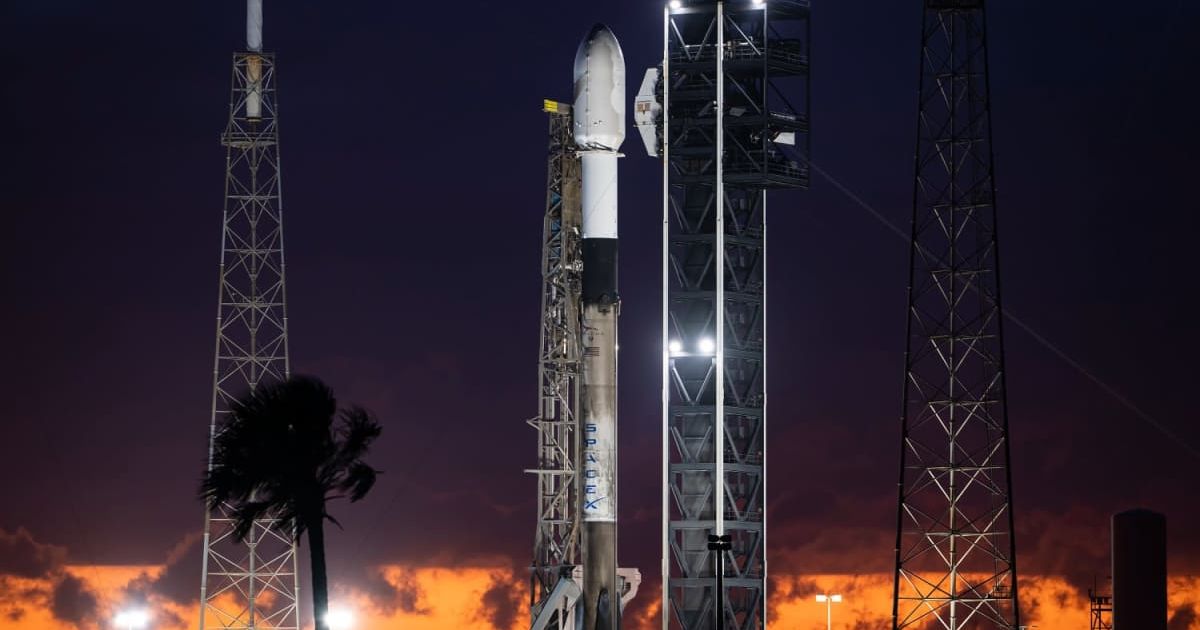
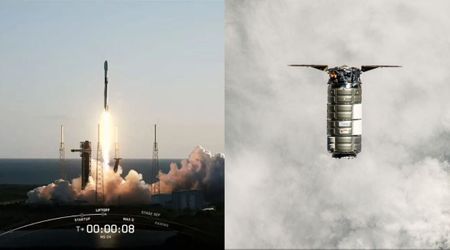
SpaceX has been forced to ground its workhorse Falcon 9 rocket after a second-stage anomaly during a Starlink mission on Monday, February 2, 2026, from Vandenberg Space Force Base. This has put NASA's SpaceX Crew-12 mission to the International Space Station at risk of delay. The Federal Aviation Administration (FAA) is overseeing SpaceX's investigation into the "off-nominal condition" that hit the upper stage of the rocket as it got into position for deorbit, having already deployed 25 Starlink satellites as it had in January. This has triggered a voluntary pause of all Falcon 9 flights until the root causes are found and fixed. Crew-12, set to launch no earlier than February 11 from Space Launch Complex 40 at Cape Canaveral Space Force Station, Florida, is now left hanging in the balance as the ISS runs with just three crew members following Crew-11's early return.
During today’s Falcon 9 launch of @Starlink satellites, the second stage experienced an off-nominal condition during preparation for the deorbit burn. The vehicle then performed as designed to successfully passivate the stage. The first two MVac burns were nominal and safely…
— SpaceX (@SpaceX) February 3, 2026
Though further details are likely to be shared soon, instances of FAA probes in the past can offer clues on how long this one might last, with resolutions often quick for non-catastrophic issues. Given the high number of overall flights, there has been a previous case of SpaceX’s Falcon 9 being grounded. For instance, in September 2024, a malfunction of the second stage of the Crew-9 Falcon 9 rocket resulted in investigations that lasted more than 10 days, showing missions with humans on board draw extra caution, but teams still press ahead as long as no safety threats come to light. SpaceX leads these reviews under the watch of the FAA, and with no payload loss or debris risks reported this time, the second stage safely vented its fuel in a process known as passivation. The current halt, though caused by the same stage as the last, doesn’t have a firm timeline as of February 4, 2026.
Dragon arrives at the hangar at pad 40 ahead of the upcoming Crew-12 launch to the @Space_Station pic.twitter.com/Sq18mdmR39
— SpaceX (@SpaceX) February 3, 2026
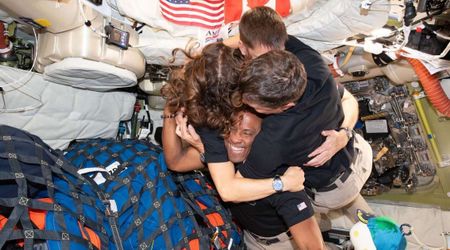
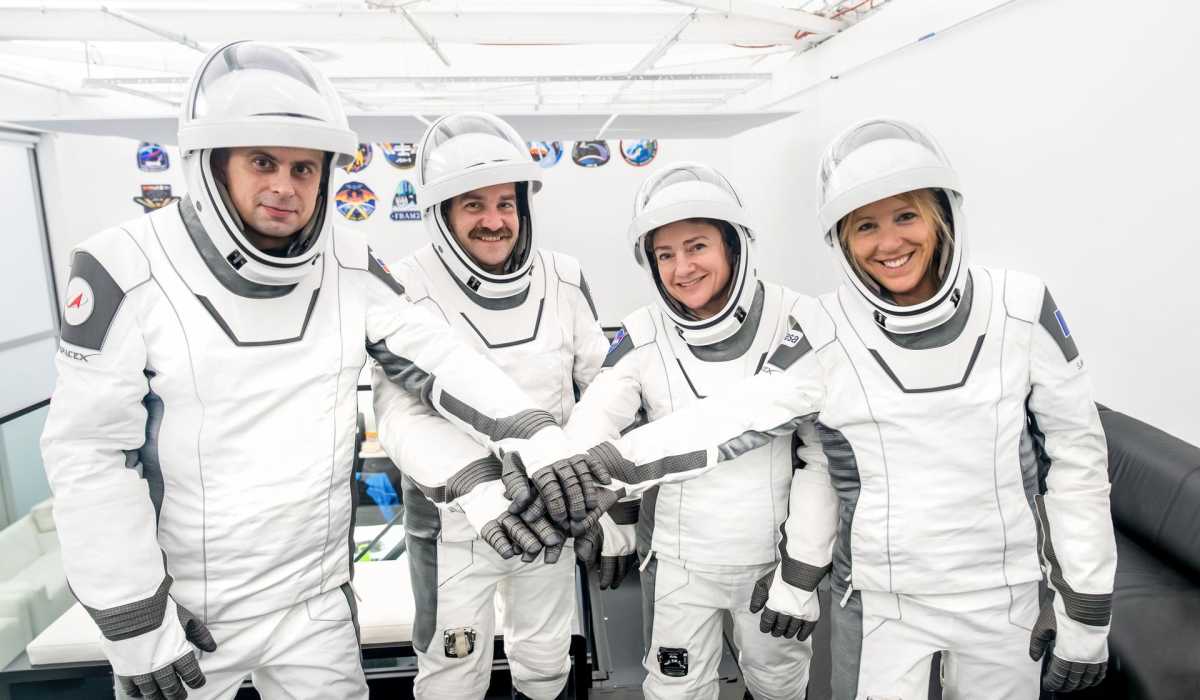
Crew-12 carries the responsibility to restore the full complement of crew members on the ISS for a long-duration stay, carrying NASA commander Jessica Meir, pilot Jack Hathaway, ESA astronaut Sophie Adenot, and Roscosmos' Andrey Fedyaev in the Dragon capsule for roughly nine months of science work and station upkeep. The mission got bumped up from the middle of February after Crew-11’s time aboard ISS was cut short, its stint ending due to a medical evacuation, leaving the outpost short-handed and heightening the urgency to send the next crew earlier. NASA’s original plan for launch was set for the February 11 slot, but in the aftermath of recent developments, it is contingent on FAA sign-off, with the crew currently in quarantine.
During Monday evening's Artemis II press conference, officials underscored the FAA’s role amid the snag. Amit Kshatriya, NASA Associate Administrator, addressed the question regarding the SpaceX Falcon 9 anomaly and the upcoming Crew-12 launch by stating, “SpaceX did report as soon as it happened on a Starlink flight that they had an upper stage anomaly. They're working that with the FAA. So I don't want to get in front of that. FAA is the lead investigative body. We do have our teams with Commercial Crew embedded in that investigation. And so in terms of how it affects our plans for Crew-12, etc., we're pressing towards our Crew-12 window. We're planning towards, you know, just a week, a little bit more than a week from now to start that preparation. But again, that's going to be contingent on the return-to-flight rationale; we're heavily partnered with both FAA and SpaceX."
The ISS, and NASA for that matter, have all hands on deck for now to keep the plates spinning, but for the former, prolonged grounding could put strain on thinned crews handling experiments and maintenance, while NASA has its hands full with the preparations for the launch of the Artemis II mission in March 2026. Though Falcon 9's reliability, evidenced by its 165 launches in 2025 alone, makes it seem like fixes are more likely to arrive soon rather than not, yet anomalies, like the latest one and the one that happened back in March last year, show what can go wrong. As SpaceX and the FAA sift through data, NASA will look for solutions on board the ISS to keep the crew’s morale high, with history pointing to some possible disruption.
More on Starlust
Post SpaceX's Falcon 9 launch, a glowing spiral stunned skywatchers — here's what caused it
SpaceX plans to lower thousands of Starlink satellites in 2026—here's why