What would happen if you walked on Mars without a spacesuit?

Mars has fascinated humans for centuries, but without oxygen, a single breath there will be fatal.
PUBLISHED 2 HOURS AGO
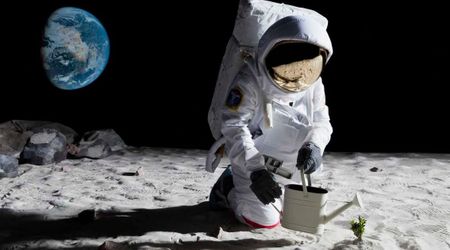
An astronaut walking on other planet in cosmos. (Representative Cover Image Source: Piranka | Getty Images)

It has been centuries since Galileo became the first man to observe Mars through a telescope, and yet our interest in the red planet has refused to wane. If anything, it has grown. We not only continue to send spacecraft to study the planet from afar but also aim to establish a self-sufficient city there, thanks to Elon Musk and SpaceX. But would you want to put on a spacesuit every time you step out on Mars for a stroll in the future? What would happen if you didn't bother?

Paul Tudor Jones appears onstage in a spacesuit during the Robin Hood Benefit 2022 at Jacob Javits Center on May 09, 2022 in New York City. (Representative photo by Kevin Mazur/Getty Images for Robin Hood)

Even if we are to consider Mars as our next home, its environment isn't 'homely' enough. That's largely because Mars is a cold, dry desert with an atmosphere whose pressure is just about 0.6% of the atmosphere on Earth, per NASA. Most importantly, it lacks something fundamental to our survival—oxygen.Illustration of a satellite in front of Mars (Representative Image Source: Getty | 	SCIEPRO/SCIENCE PHOTO LIBRARY)
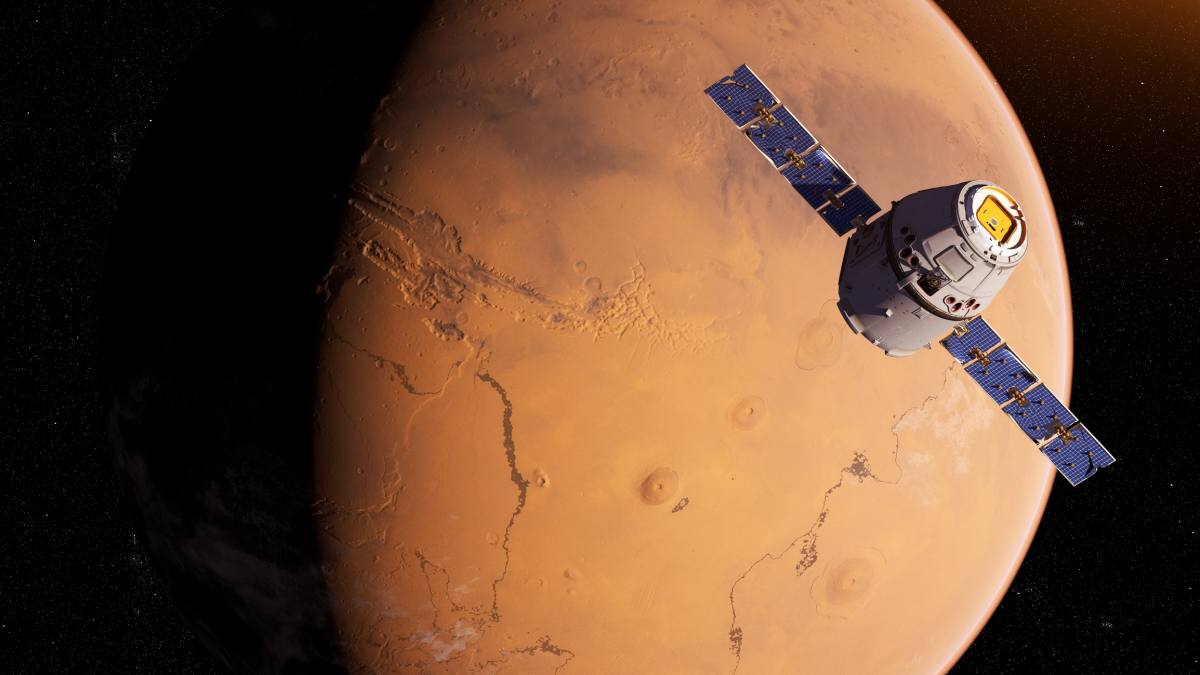
Illustration of a satellite in front of Mars (Representative Image Source: Getty | SCIEPRO/SCIENCE PHOTO LIBRARY)

To put it simply, one cannot survive on Mars without a spacesuit; the moment one takes off their spacesuit, they will choke and die. After all, the red planet's atmosphere is chiefly carbon dioxide (95.3%) with about 2.7% nitrogen and 1.6% argon. Oxygen? It's present only in traces—a far cry from the 21% concentration that we are used to here on Earth.Illustration of a rover on the surface of Mars (Representative Image Source: Getty | MARK GARLICK/SCIENCE PHOTO LIBRARY)
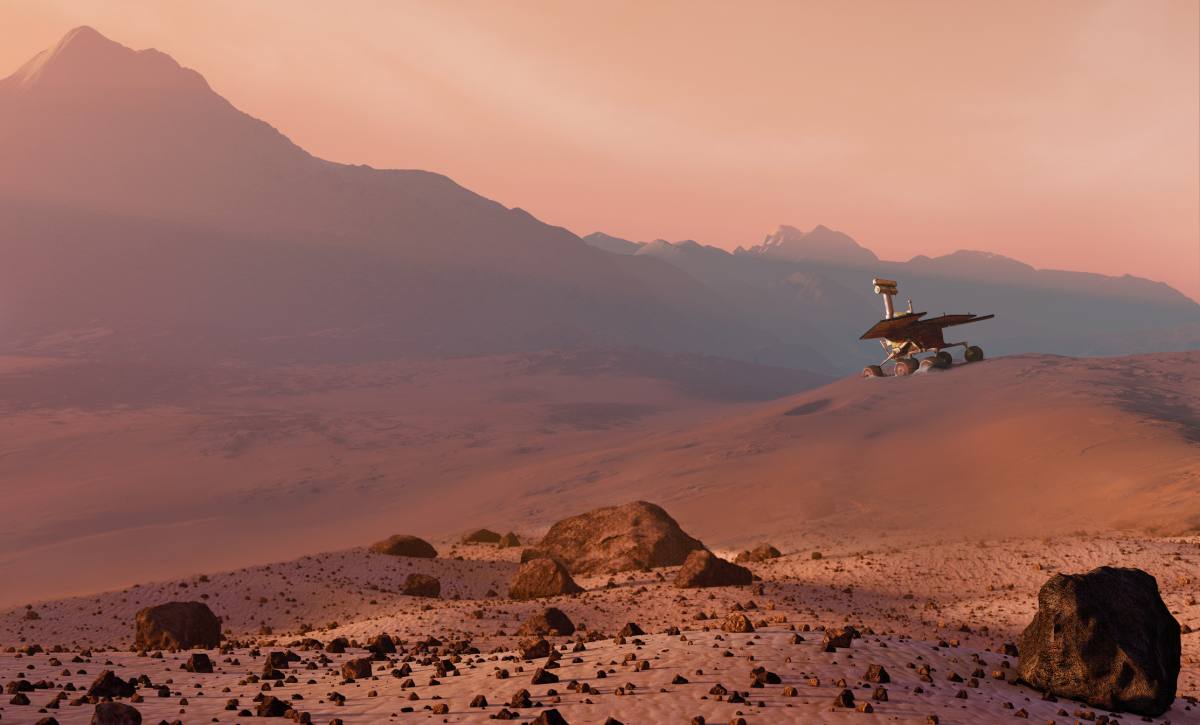
Illustration of a rover on the surface of Mars (Representative Image Source: Getty | MARK GARLICK/SCIENCE PHOTO LIBRARY)

After someone removes the spacesuit, the onslaught that follows is very painful, as described by Space.com. Without a specialized suit supplying you with oxygen, you will suffocate and die in a matter of moments. At the same time, your blood will start boiling, literally, because of the low atmospheric pressure.
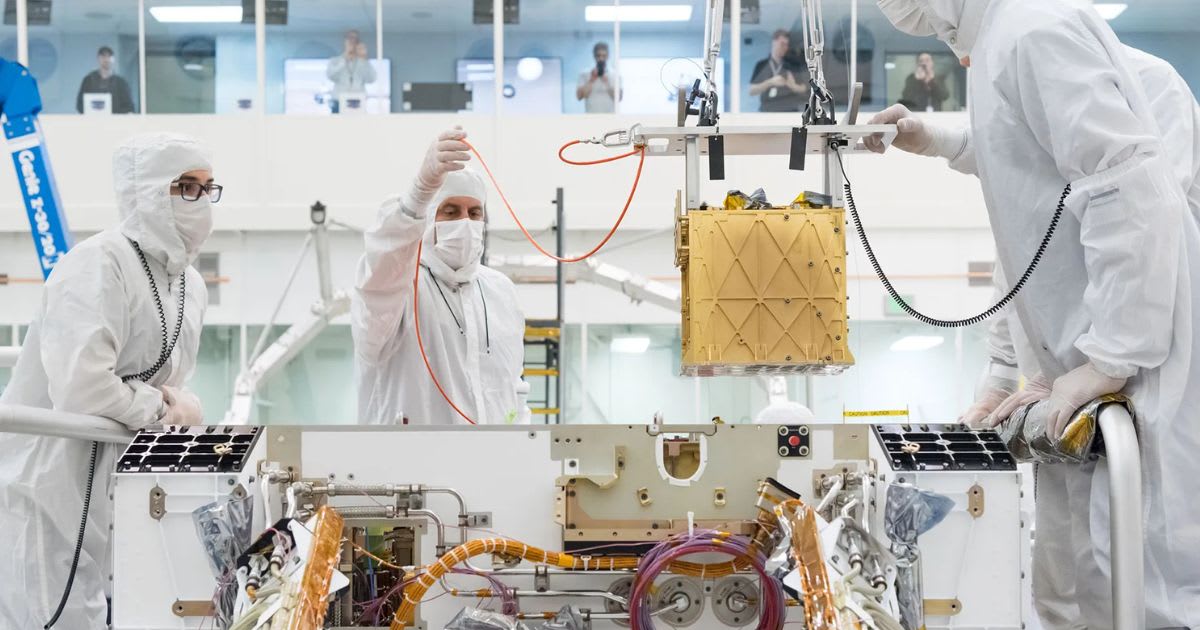
MOXIE (Mars Oxygen In-situ Resource Utilization Experiment) is lowered into the chassis of NASA’s Perseverance in 2019. (Image Source:  NASA/JPL-Caltech)
MOXIE (Mars Oxygen In-situ Resource Utilization Experiment) is lowered into the chassis of NASA’s Perseverance in 2019. (Image Source: NASA/JPL-Caltech))

But do not worry! It isn't all so bleak. The key to our survival up there may be an oven-sized device called MOXIE. It stands for Mars Oxygen In-Situ Resource Utilization Experiment. Mounted on the Perseverance rover, MOXIE generated oxygen 16 times over the duration of its mission on the red planet. In total, it was able to produce 122 grams of oxygen.
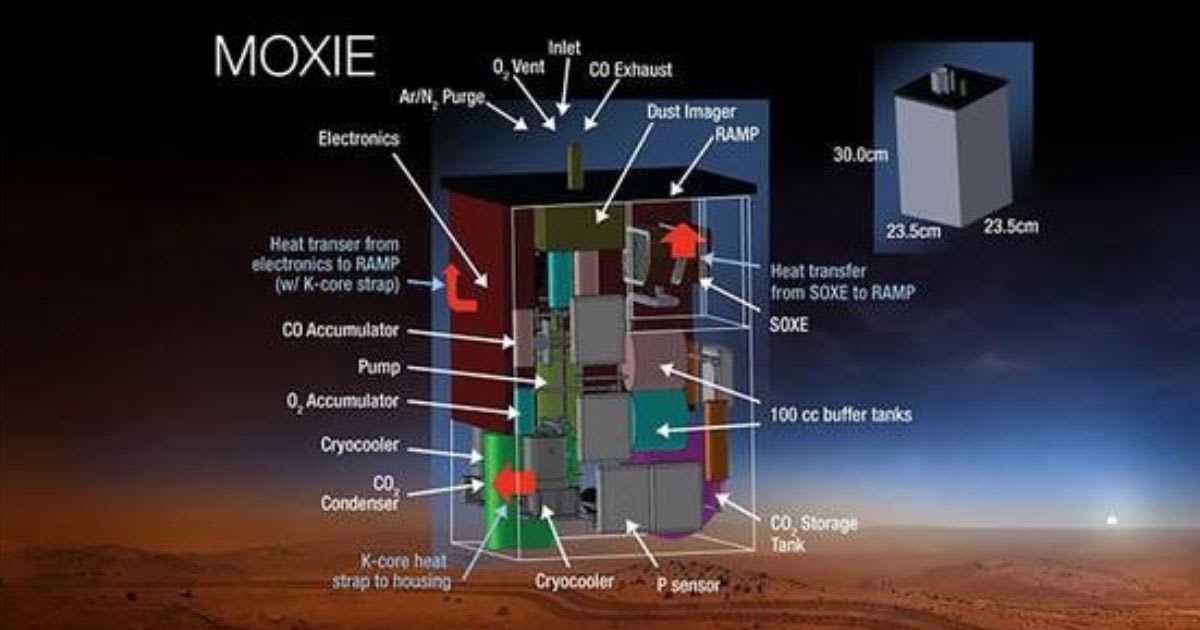
Labelled Diagram of MOXIE. (Image Source: NASA)

Well, even though that may not sound like much, it’s roughly the amount a small dog would breathe in about 10 hours. At its best performance, MOXIE was able to make 12 grams of oxygen per hour, which was twice the amount that NASA had originally aimed for. The oxygen produced was also very pure (98% or better). During its final run on August 7, MOXIE created 9.8 grams of oxygen. 

The Mars Rover explores the surface of the planet and records its findings about the hills and rock formations (Representative Cover Photo by piranka / Getty Images)

MOXIE worked by pulling in Mars’ thin carbon-dioxide-rich atmosphere. Using an electrochemical process, it split each carbon dioxide molecule and removed one oxygen atom, forming molecular oxygen. An oxygen-producing system like MOXIE could be crucial for future manned missions to Mars, as it will not only help astronauts breathe but will also make returning to Earth easier. The next step isn’t simply building another version of MOXIE; it's to create a full-scale system, one that not only produces oxygen but also liquefies and stores it in large quantities for human use. Until then, tighten your spacesuits and don't even think about taking a single breath on Mars.

More on Starlust

Stunning new study claims Mars may have supported life longer than initially suspected
From NASA's first lunar excursion in 50 years to first Starships aimed at Mars—launches scheduled for 2026

MORE STORIES

The year has been extraordinary for the astronomical community, as groundbreaking findings have defined 2025.
1 day ago
The first radio signal was sent out on 24 December 1906, and since then it has been travelling through space.
2 days ago
This is the first detailed detection of a jet of gas and dust shooting out from an interstellar comet's center.
3 days ago
Cicero Lu, a science fellow at Gemini Observatory, found a cloud of warm carbon monoxide gas circling the star HD 131488.
3 days ago
NASA seems ready to build on the success of its ongoing solar missions.
4 days ago
These events, known as Luminous Fast Blue Optical Transients (LFBOTs), were originally thought to be a rare type of supernova.
5 days ago
A scientist suggests our first alien signal may come from a loud, unstable civilization in crisis.
Dec 19, 2025
Texas astrophotographer Raman Madhira is questioning the object’s identity, claiming it fails to meet the standard criteria for a comet.
Dec 19, 2025
Most telescopes capture comets in visible light, but XMM-Newton deployed its high-sensitivity EPIC-pn camera for a 20-hour deep dive into 3I/ATLAS.
Dec 19, 2025
Research suggests Titan lacks a unified sea; instead, it may have a 'slushy' interior where liquid water exists only in scattered pockets.
Dec 18, 2025