SpaceX's Falcon 9 rocket launches 29 Starlink satellites from Florida
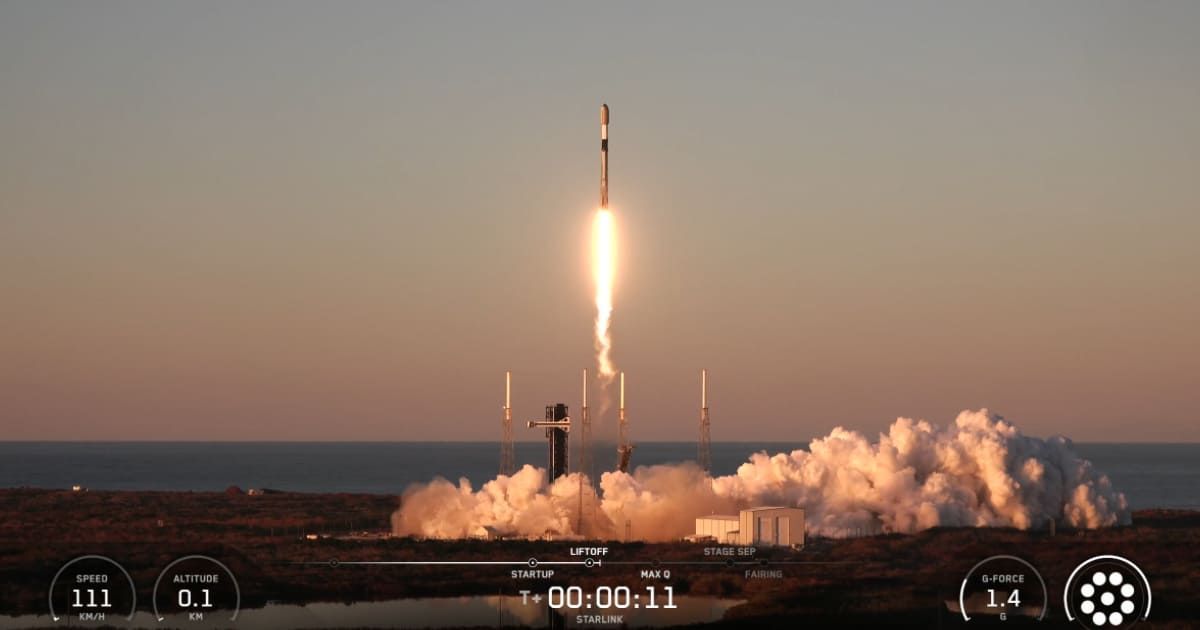
SpaceX has confirmed the successful launch of 29 Starlink satellites on February 24, 2026. The company’s workhorse rocket Falcon 9 lifted off with its payload from Cape Canaveral Space Force Station in Florida at 6:04 PM EST on Tuesday. At around 8 minutes and 21 seconds after launch, the first stage landed on SpaceX’s 'Just Read the Instructions' droneship in the Atlantic Ocean.
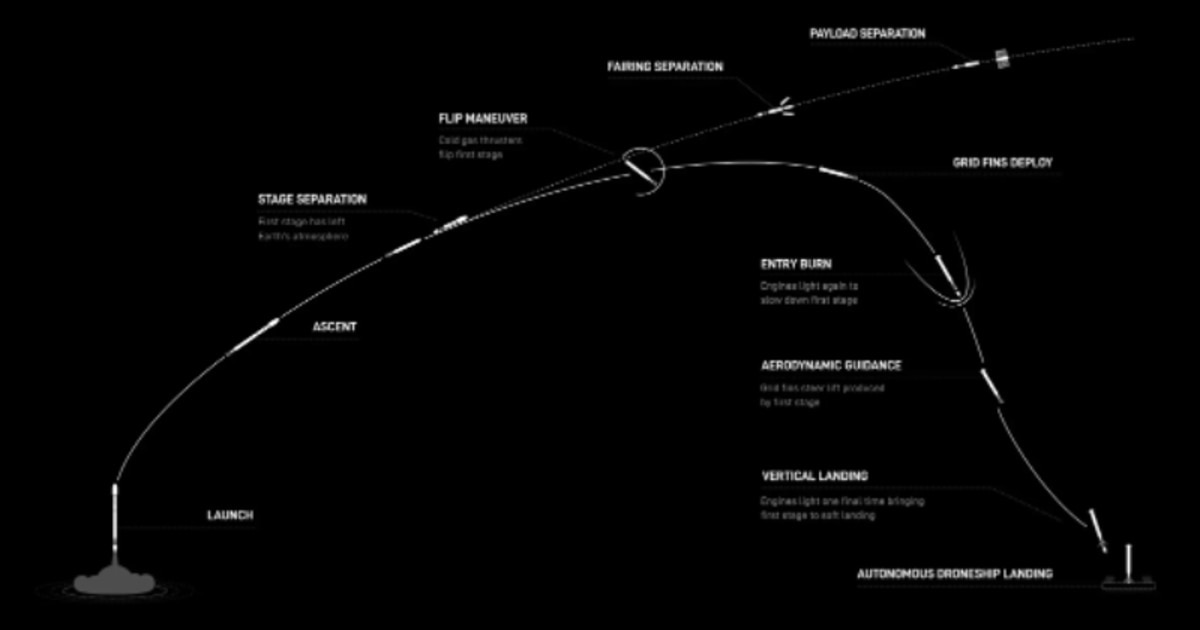
A few seconds later, the second-stage engine was shut off. An engine restart and cut-off followed (with a second between them) before the satellites were put into orbit at around the 1 hour, 5 minute mark post lift-off from Space Launch Complex 40. No issues were reported, in contrast to a previous anomaly that recently resulted in the grounding of Falcon 9 rockets entirely.
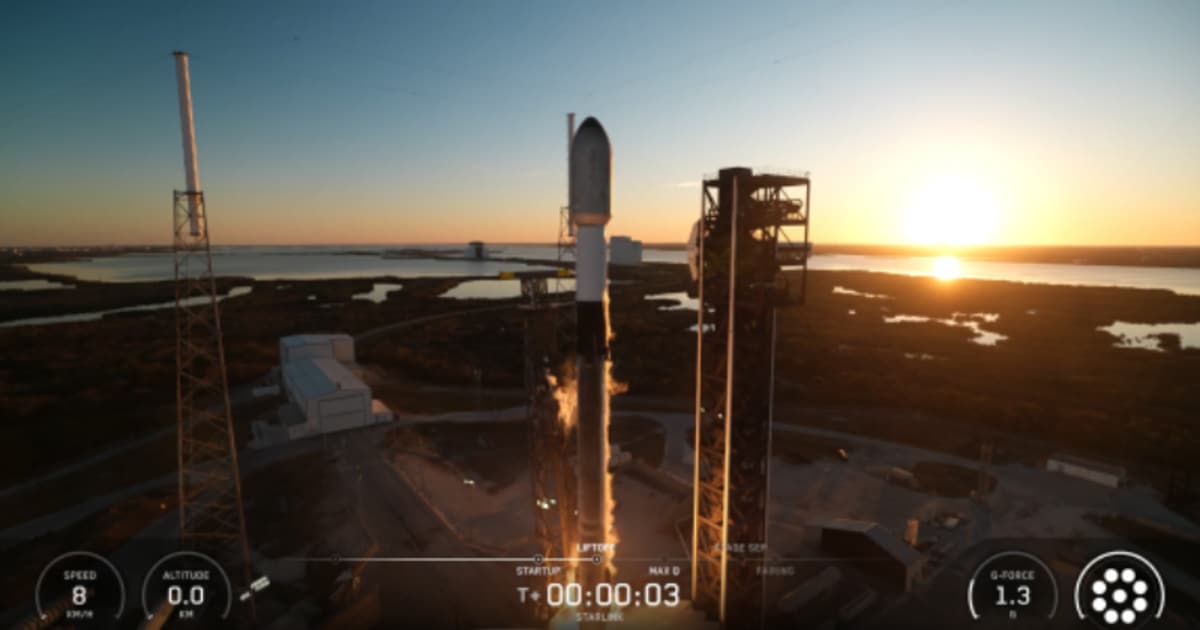
The first stage to return to Earth for reuse was on its 10th assignment. It has previously flown in order to deploy missions such as Commercial Resupply Services (CRS-32), NROL-69, GPS III-7, USSF-36, and five other Starlink missions. This is the ninth Starlink launch this month alone by SpaceX, all making use of Falcon 9 as their vehicle. January saw the same number of Starlink launches as well. The company had earlier also informed of a change in altitude of the constellation of Starlink satellites throughout 2026, owing to the growing space traffic at certain altitudes.
This month, another two missions are in the pipeline. The launch of the first one is slated for the morning of February 25, 2026, while the other is scheduled for the 27th. So far, SpaceX has notified of four more launches within the first five days of March. By moving forward at such expeditious rates, SpaceX has plans to strengthen its network of tens of thousands of Starlink satellites. The company, last year, had even proposed to make this network an alternative to GPS (Global Positioning System).
Falcon 9 launches 29 @Starlink satellites from Florida pic.twitter.com/rawNG0fJgq
— SpaceX (@SpaceX) February 25, 2026
The Starlink constellation was established by SpaceX to provide low-latency, high-speed internet for subscribers of the service. While the technological architecture behind this mission is something to marvel at, SpaceX has not been above scrutiny. Recent reports of a study examining the pollution caused by space debris directly found links to a Falcon 9. The plume left behind by Falcon 9’s second stage used for a launch was one of the primary focus areas of the study. Another report had emerged of an unexpected de-orbit of a Starlink satellite that left debris. That said, to SpaceX’s credit, they have perfected the reusability of the first stage to offset the downsides, even as experts warn that measures must be taken against large-scale deployments of satellites.
More on Starlust
SpaceX pauses Mars plans, shifts focus on building a 'self-growing city' on Moon within a decade
SpaceX Dragon spacecraft to depart ISS on February 26 with research samples and hardware