NASA’s Juno spacecraft reveals new details about the thickness of Europa’s icy shell
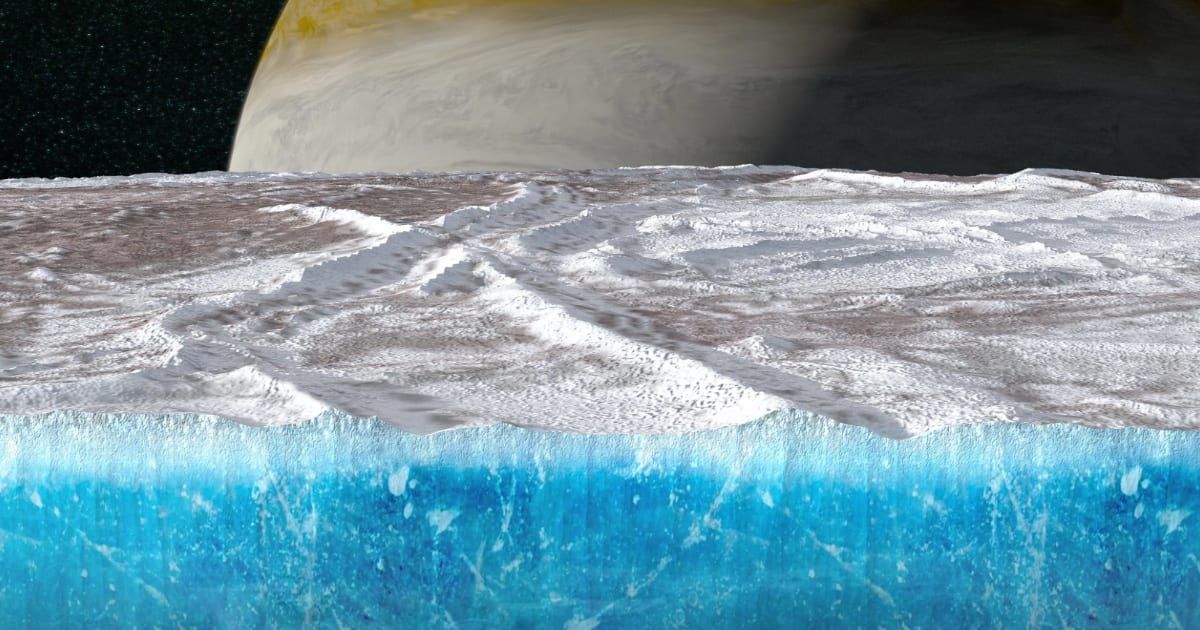
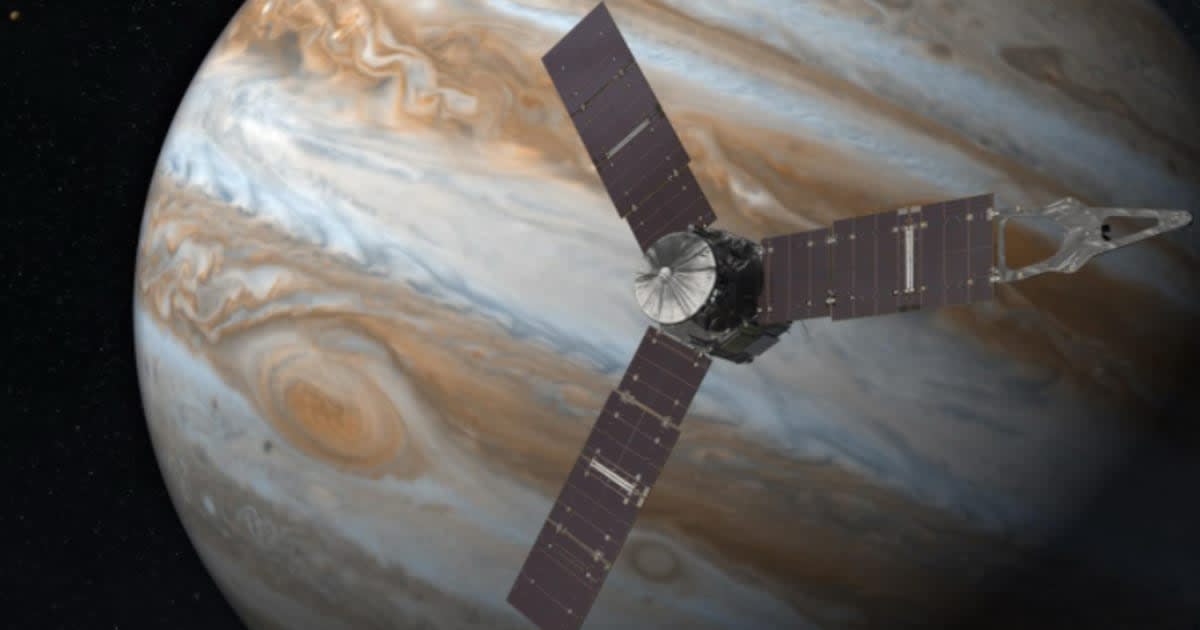
NASA’s Juno spacecraft, which had been deployed to study the Jovian system and is set to complete its 81st flyby of Jupiter on February 25 this year, has provided data suggesting the thickness of the ice crust of the moon Europa. Per data collected by Juno’s Microwave Radiometer (MWR) during a flyby of Jupiter’s moon in 2022, a region of Europa’s surface was observed to be about 18 miles (approx 29 km) deep on average, reported NASA.
Europa is one of the primary targets for scientists to look for habitability in our solar system due to evidence pointing to the presence of liquid saltwater underneath a deep layer of ice crust that traverses the entire surface of the moon. Speaking of the aforementioned estimates, which were published in a Nature article on December 17, 2025, Juno Project Scientist Steve Levin stated, “The 18-mile estimate relates to the cold, rigid, conductive outer-layer of a pure water ice shell." Levin, who is also a co-investigator at NASA’s Jet Propulsion Laboratory in Pasadena, added, “If an inner, slightly warmer convective layer also exists, which is possible, the total ice shell thickness would be even greater. If the ice shell contains a modest amount of dissolved salt, as suggested by some models, then our estimate of the shell thickness would be reduced by about 3 miles.”
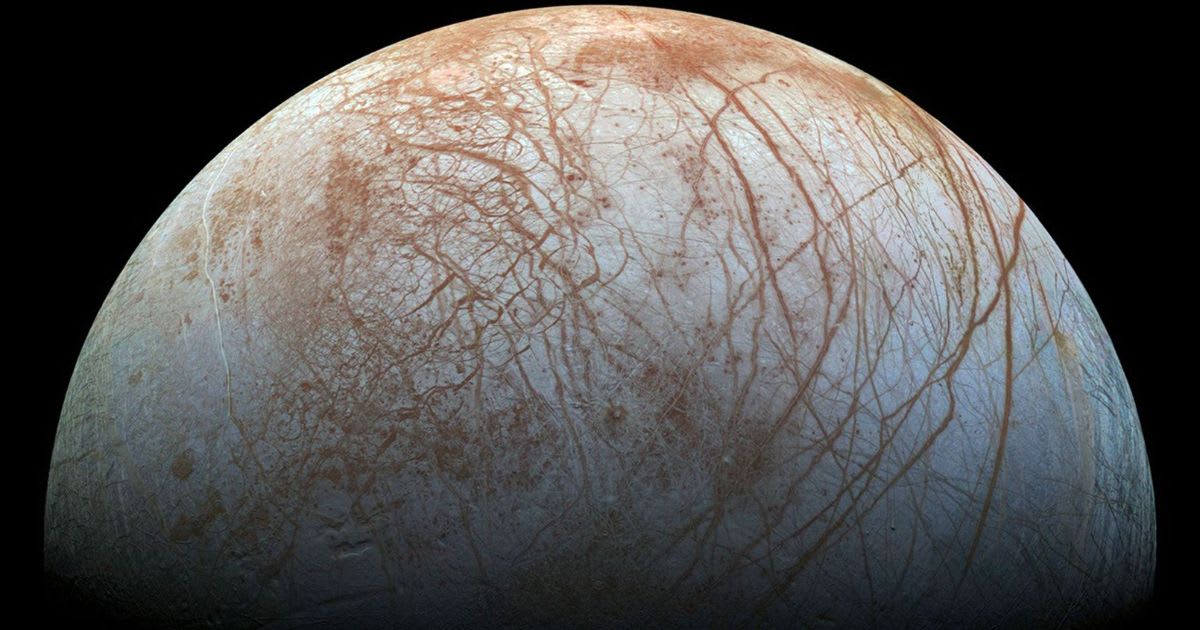
Besides the thickness of the icy crust on Europa, the MWR aboard Juno also observed surface irregularities on the Jovian moon’s surface, such as voids, pores, and cracks, which did not appear to extend beyond a few hundred feet below the surface. Compared to the overall depth of the ice shell, these irregularities can be ruled out as notable carriers of oxygen and other life-sustaining nutrients down to the salty oceans. “How thick the ice shell is and the existence of cracks or pores within the ice shell are part of the complex puzzle for understanding Europa’s potential habitability,” said Scott Bolton, principal investigator of Juno from the Southwest Research Institute in San Antonio.

The JPL-managed mission, Juno, arrived in Jupiter’s vicinity in 2016 after launching in August 2011, and has been peering at the composition of the gas giant and its moons ever since. It was slated to carry out its mission objectives till September 2025, after which the plan is to have it deliberately descend into Jupiter’s stormy atmosphere. This will not mark the end of exploration of Jupiter’s moons, as its legacy is to be carried on via two dedicated probes currently enroute to the outer planet’s surroundings, providing a more holistic understanding of Europa and its features.
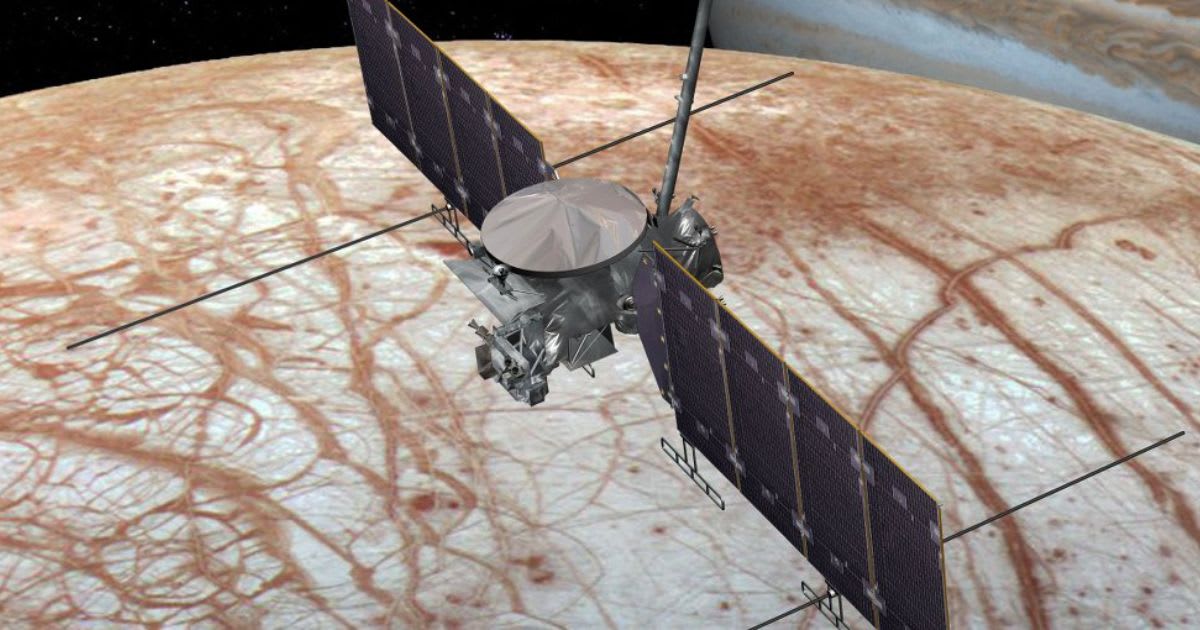
ESA’s Jupiter Icy Moons Explorer, or Juice, is set to further advance our understanding of Europa, amongst 2 other Jovian moons, when it arrives in July 2031. Furthermore, NASA’s Europa Clipper mission will also arrive in 2030 to specifically study the habitability of the icy moon. Remarking on Europa’s surface features mentioned before, Bolton added, “They provide critical context for NASA’s Europa Clipper and the ESA Juice spacecraft — both of which are on their way to the Jovian system.”
More on Starlust
NASA's Europa Clipper captured a unique ultraviolet view of 3I/ATLAS