NASA's Artemis program could benefit from this new map of small mare ridges on the Moon
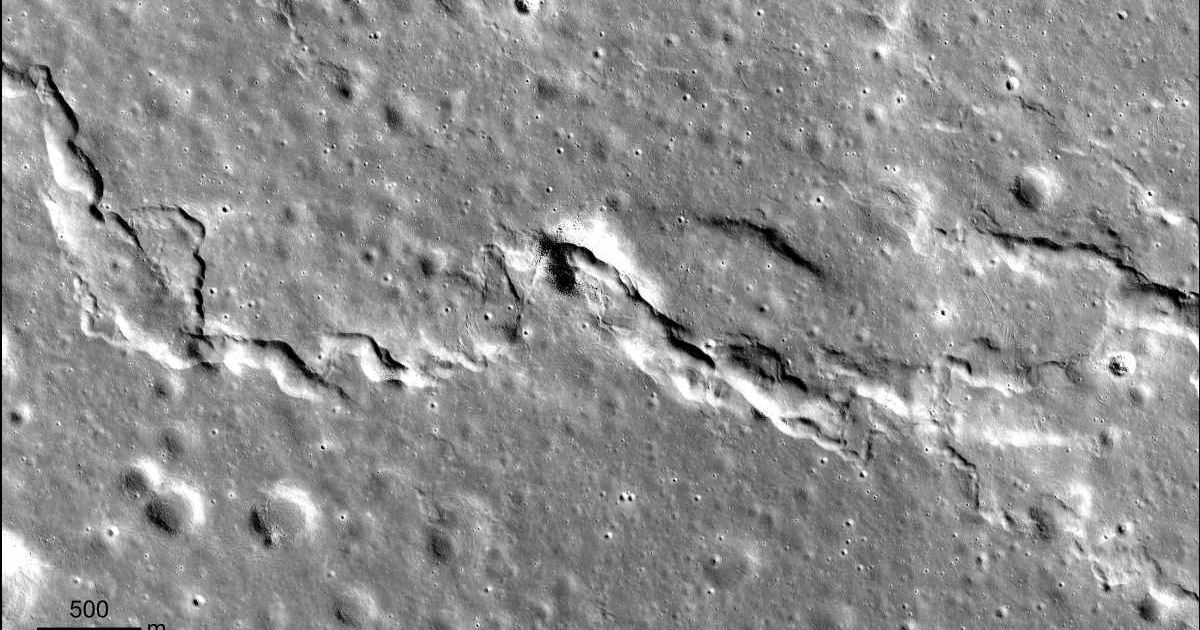
In their attempt to better understand the tectonic activity on the Moon, scientists have created the first-ever global map and analysis of small mare ridges (SMRs). The analysis conducted by scientists at the National Air and Space Museum’s Center for Earth and Planetary Studies and colleagues was published in The Planetary Science Journal on December 24, 2025. It shows that SMRs are rather young and are spread across the vast lunar plains that are referred to as the maria. More importantly, the map could potentially aid the selection of future landing sites as NASA races to return humans to the Moon through its Artemis III and subsequent flights.
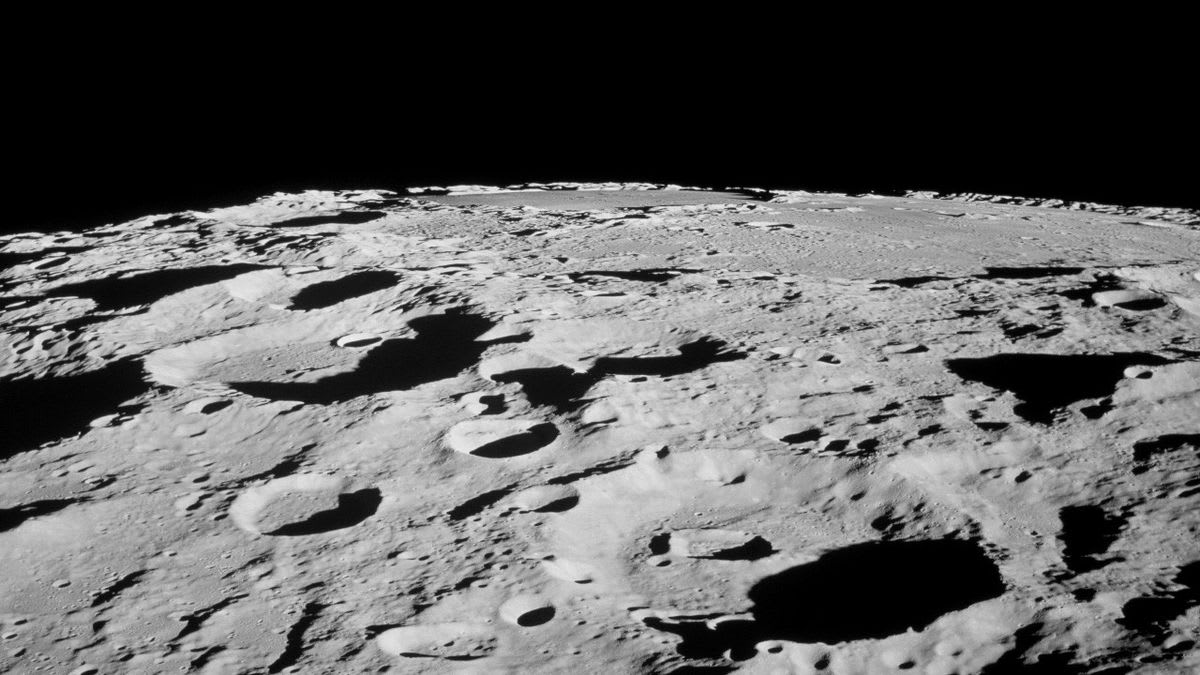
Both the Moon and Earth are geologically active, but the forces that shape each are different. Earth’s crust, the outermost layer, consists of plates that have moved, collided, and even slid past each other, creating mountain ranges, deep ocean trenches, and volcanoes around the Pacific Ocean. The Moon’s crust, on the other hand, is not divided into plates. But stresses arising within the lunar crust create landforms such as lobate scarps. Found in the lunar highlands, these geological features form by pushing crust materials up and over an adjacent crust along a fault, creating a ridge. The scarps were formed within the last billion years of the Moon's history.

Clues to such recent geological activity were discovered in 2010 when Tom Watters, co-author of the present paper and a senior scientist emeritus at the Centre for Earth and Planetary Studies, showed that the Moon is shrinking. This led to the formation of lobate scarps. But then again, lobate scarps alone cannot explain the contractional landforms that have appeared fairly recently on the Moon. This is where the SMRs come in.

The mapping added 1,114 new SMRs to existing ones, increasing the total number to 2,634. “Since the Apollo era, we’ve known about the prevalence of lobate scarps throughout the lunar highlands, but this is the first time scientists have documented the widespread prevalence of similar features throughout the lunar mare,” said first author Cole Nypaver, a postdoctoral research geologist at the Center for Earth and Planetary Studies, in a statement. The team determined that the average age of the SMRs is 124 million years old. The average age of the lobate scarps, which was previously estimated, is 105 million years old, indicating that both are geologically young.

The analysis showed that the forces that help form lobate scarps also trigger the formation of SMRs. In fact, lobate scarps in the highlands often give way to SMRs in the mare. The discovery that the origin of the two features lies in the same tectonic activity suggests that moonquakes could occur at any place that has an SMR. Now that the list of known SMRs is more exhaustive than ever, scientists will have a better understanding of tectonics on the Moon. At the same time, the sheer number of these SMRs is a warning that humans who will explore the Moon in the future might have to face seismic activity. “We are in a very exciting time for lunar science and exploration,” Nypaver said. “Upcoming lunar exploration programs, such as Artemis, will provide a wealth of new information about our moon. A better understanding of lunar tectonics and seismic activity will directly benefit the safety and scientific success of those and future missions.”
More on Starlust
Dust collected by Apollo 17 astronauts in 1970s reveals the moon’s true age
Scientists may have finally uncovered why the Moon appears lopsided