Mysterious 'Little Red Dots' found by James Webb Telescope may not be baby black holes after all
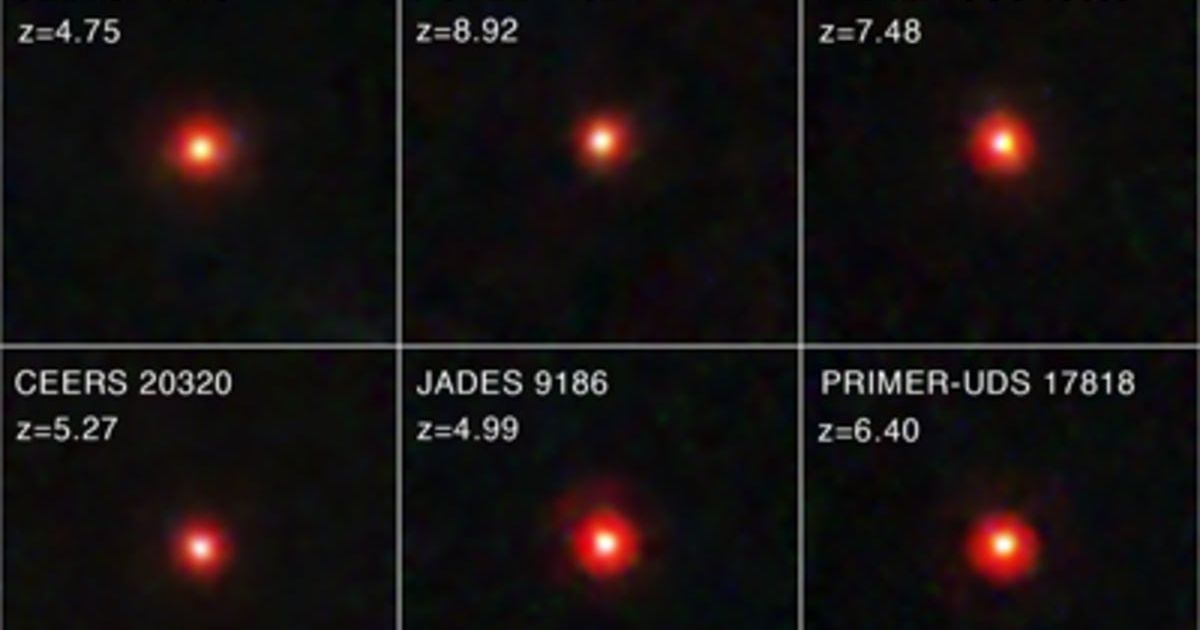
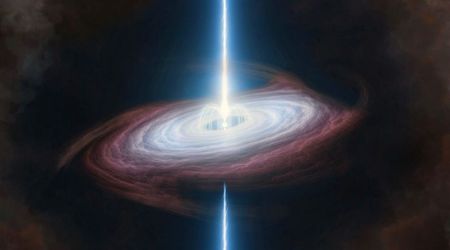
Imagine the ability to peek into the early years of the cosmos, right where everything began, and catch bright red dots staring back at you from this distant past. Such is the case of the 'Little Red Dots' (LRDs) that were revealed by the James Webb Space Telescope (JWST). These LRDs were first thought to be black holes that were feeding on the gas surrounding them—an assumption that has recently been challenged by a team of researchers in a new study published on arXiv. It proposes a bold new idea: What if these LRDs are not young black holes at all but actually baby galaxies under construction?

These compact objects are one of the most enigmatic entities to be observed by astronomers, as we witness these distant specks in the form they appeared in the early universe. Their light has been elongated to longer, redder wavelengths due to the expansion of the universe and is characterized by a striking V-shaped spectrum showing a blue ultraviolet continuum and red optical light. As astronomers delved deeper into these LRDs, they realized the distinctive properties these blazing dots carried differed from various black hole populations. This is where the new study came in.

It suggests that these LRDs are teeming globular clusters, which are tightly bound collections of millions of stars. Now, the researchers state that the bright glow of these dots originates from a young stellar formation, with their unusual V-shaped spectrum explained by a hypothetical, highly luminous, and extremely massive star, known as a supermassive star (SMS). Researchers estimate the total number density of these red specks formed across all redshifts to be around 0.3 per cubic megaparsec, matching those of local globular clusters. Another thing that the study found was that the observed redshift range for LRDs aligns with the age range of metal-poor globular clusters, which are associated with the primordial stages of structure formation in the universe.
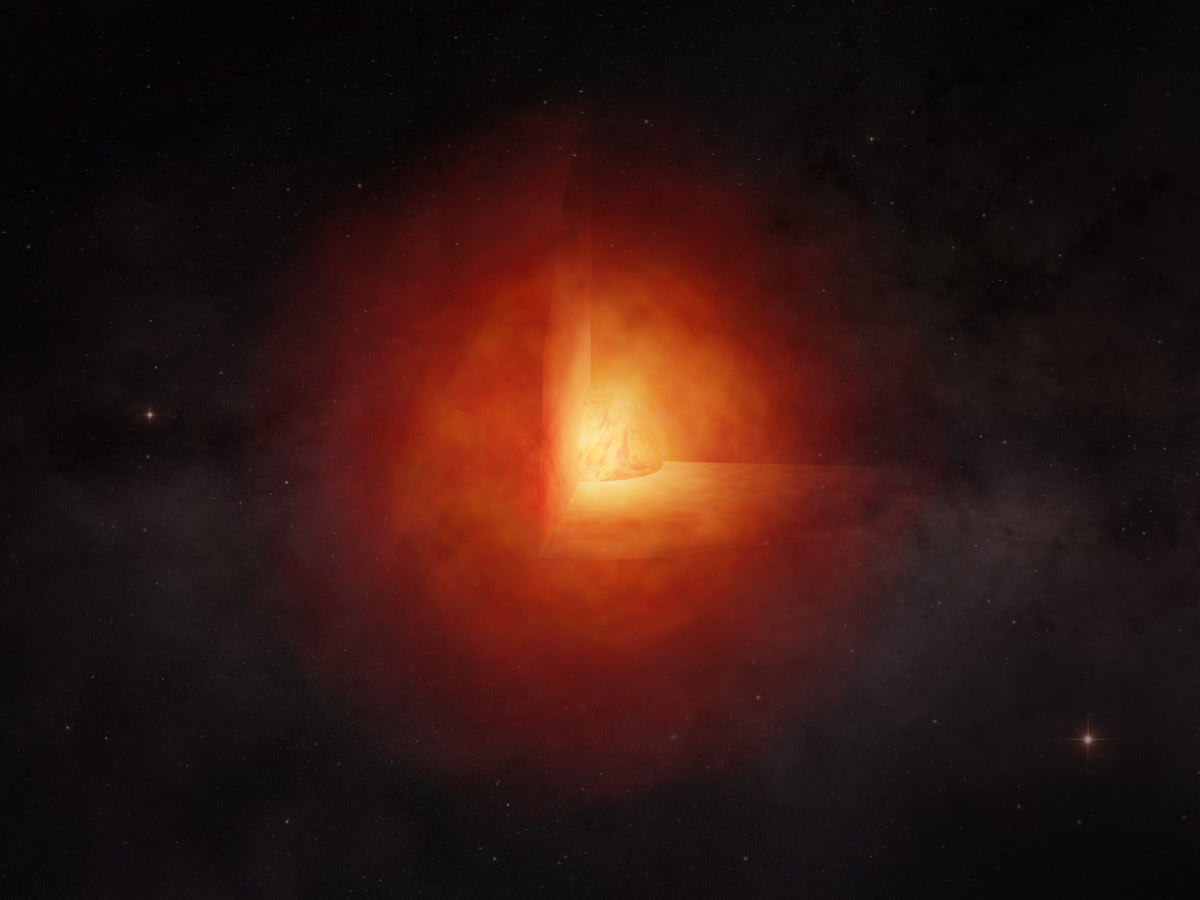
There are still a few challenges to the premise of the study, especially when it comes to the transition zone in the V-shaped spectrum. The spectral profiles of the LRDs are broadly consistent with the scenario, yet the observed temperatures and sheer brightness of the light emitted from the LRDs point to a different direction. It alludes to powerful winds that current models of supermassive stars do not account for, with these red dots being cooler and comparatively more luminous. Moreover, if the LRDs are actually infant globular clusters, then we can detect chemical abundance patterns that are actually similar to various stellar populations, which will include the presence of enhanced helium and nitrogen, with potential anti-correlation between sodium and oxygen or aluminum and magnesium.

Our SMS atmosphere models also need to account for molecular opacities and models for stars cooler than 7,000 Kelvin. Nonetheless, these current results are a huge step toward understanding these distant objects. This study opens up new realms in the field of extreme stellar astrophysics, allowing us to gain a better understanding of the evolution of the universe.
More on Starlust
XRISM observes a supermassive black hole 'wake up' and fire winds at near-light-speed