Massive gas giants in an alien star system may have formed the same way as Jupiter
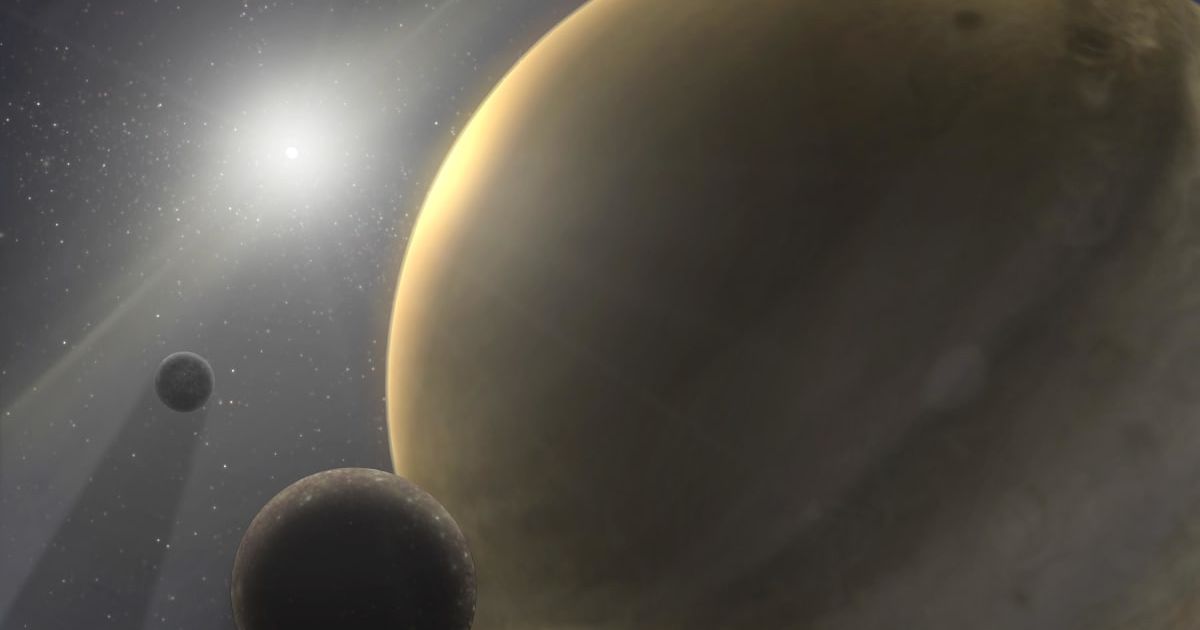
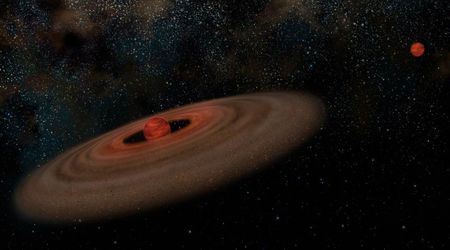
Gas giants are truly fascinating. While our solar system has Jupiter and Saturn that are categorized under the umbrella, several gas giants exist outside our neighborhood as well. The largest of them, in fact, often evade easy categorization, as their size treads a fine line between planets and brown dwarfs (also called 'failed stars' because of their inability to fuse hydrogen). But how do these giants form? The answer is more complicated than you think. There are two primary theories. One is core accretion, which involves solid cores growing by pulling in rocky and icy pebbles, ultimately growing massive enough to pull in gas from the surrounding stars. The second one is gravitational instability, where the gas around a star collapses into a brown dwarf. With the intention of finding answers, a team of astronomers studied the HR 8799 star system using NASA’s James Webb Space Telescope (JWST). Their findings have been reported in a paper published in Nature Astronomy.
![NASA’s James Webb Space Telescope has provided the clearest look yet at the iconic multi-planet system HR 8799. [Cover Image Source: NASA, ESA, CSA, STScI, Laurent Pueyo (STScI), William Balmer (JHU), Marshall Perrin (STScI); Image Edited by Starlust Staff]](https://de40cj7fpezr7.cloudfront.net/51653dc2-70d6-4c98-abd5-a20338c06b59.png)
“This discovery hints at a shared origin for the heavy-element enrichment of giant planets across a wider range of planet masses and orbital separations than previously anticipated,” the scientists have written in their paper. The findings suggest that the process that enriched our solar system’s gas giants with heavy elements may be common for gas giants beyond it as well. Located about 133 light-years away, the system has its gas giants orbiting their parent star at enormous distances, with even the closest star floating 15 times farther than the Earth is from the Sun. Not to forget, these planets are also huge—between 5 and 10 times the mass of Jupiter.
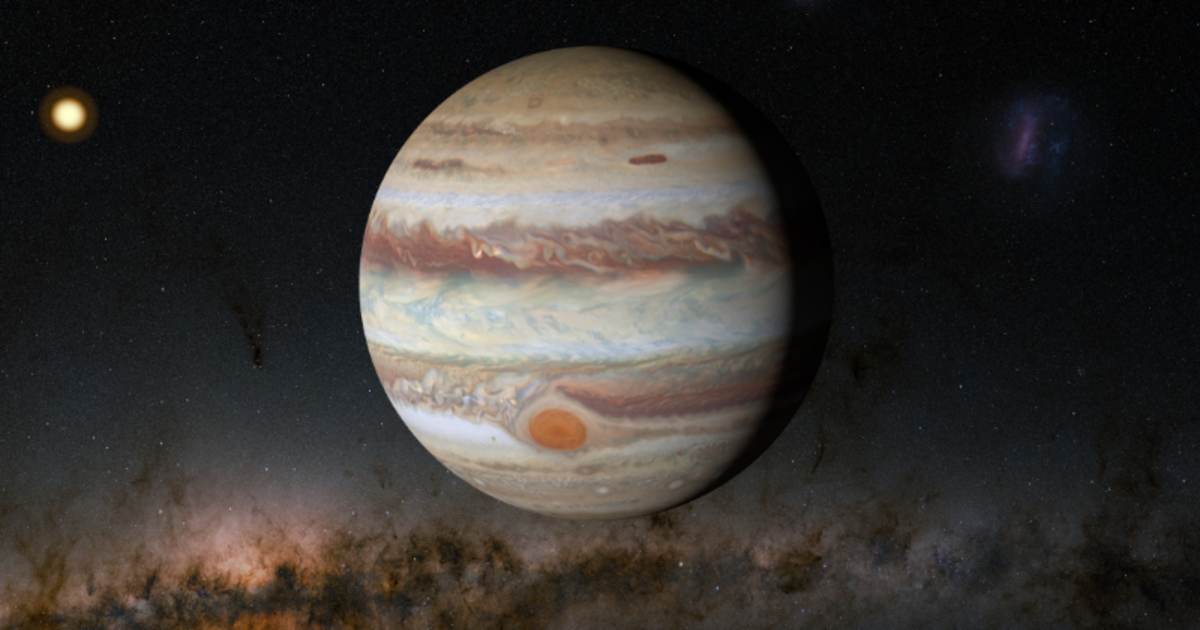
Piqued by such tantalizing leads, the astronomers turned to JWST to ascertain whether these massive planets, orbiting their star at such huge distances, could have formed through core accretion like Jupiter and Saturn. To their surprise they detected water, carbon monoxide, methane, carbon dioxide, and other molecules. But, one molecule stood out—hydrogen sulfide. "With the detection of sulfur, we are able to infer that the HR 8799 planets likely formed in a similar way to Jupiter despite being five to ten times more massive, which was unexpected," explained Jean-Baptiste Ruffio, a research scientist at UC San Diego and first co-author of the paper, in a statement.

Although the researchers detected sulfur clearly in the third planet in the system, they think that it may even be present on all three inner planets. There are many models of planet formation to consider. I think this shows that older core accretion models are outdated,” said UC San Diego Professor of Astronomy and Astrophysics Quinn Konopacky, another of the paper’s co-authors. “And of the newer models, we are looking at ones where gas giants can form solid cores really far away from their star.” HR 8799 is quite unique in that it is the only system with four massive gas giants to be captured. That being said, other systems with even bigger planets also exist, and, more importantly, their formation is yet to be understood. “I think the question is, how big can a planet be?” Ruffio wondered. “Can a planet be 15, 20, 30 times the mass of Jupiter and still have formed like a planet? Where is the transition between planet formation and brown dwarf formation?”
More on Starlust
Mercury is not a 'dead planet': Bright streaks on the planet indicate activity
New study shows how Jupiter's moon Europa gets life-supporting nutrients for its ocean