Penn State astronomer rebuts Avi Loeb’s claims of 10 'anomalies' in 3I/ATLAS
Penn State astronomer Jason Wright (PSETI Center) explicitly rejects Avi Loeb's calculation that the comet 3I/ATLAS has a 40% probability of being artificial.
Published: Nov 14, 2025 | By Raj Naik
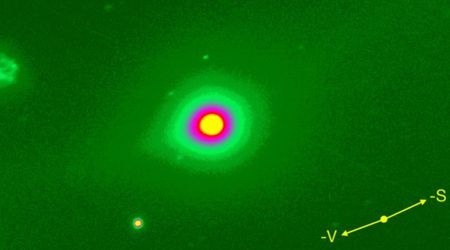
Harvard's Avi Loeb says 3I/ATLAS may be more than a typical 'icy rock' after surviving perihelion as a single body
The object 3I/ATLAS made it past the Sun in one piece, which led Harvard astronomer to double down on his earlier argument about the object's nature.
Published: Nov 13, 2025 | By Raj Naik
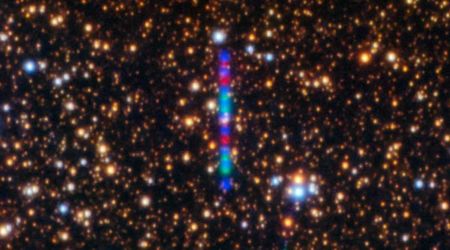
New telescope image confirms interstellar comet 3I/ATLAS is growing a bright ion tail
Data captured by a robotic telescope indicate the ion tail now extends a minimum of 0.7 degrees toward the northeast.
Updated: Dec 15, 2025 | By Raj Naik
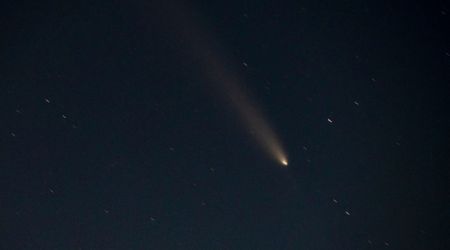
If 3I/ATLAS didn’t break up during perihelion, it may not be a natural comet, says Harvard astronomer Avi Loeb
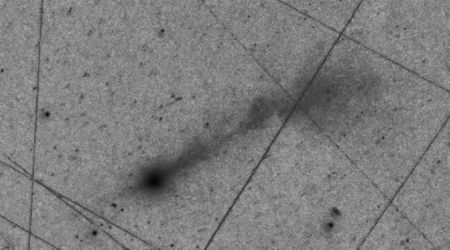
Recent images of 3I/ATLAS's massive, multi-directional jets taken on November 9 reveal a critical anomaly in the object's physics.
Published: Nov 13, 2025 | By Raj Naik
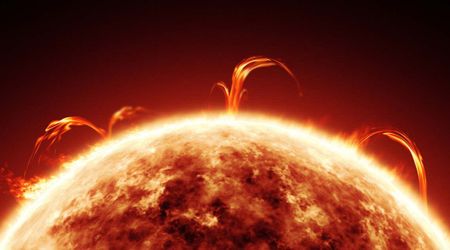
A strong G3 storm persists, with an even more powerful G4 blast set to strike Earth this week
The third coronal mass ejection (CME) arrived on November 12, but its initial impact was surprisingly weaker than expected.
Published: Nov 13, 2025 | By Raj Naik
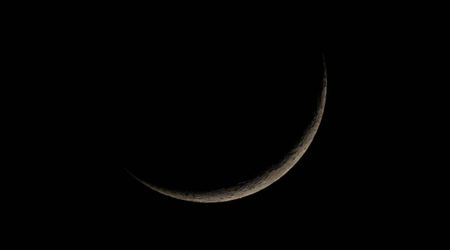
November’s New Moon will be the most distant from Earth until 2043
The celestial event this month is a rare one, with the Moon retreating to an apogee from Earth's center.
Published: Nov 12, 2025 | By Raj Naik
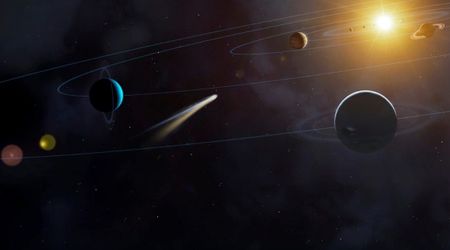
How does 3I/ATLAS differ dynamically and physically from earlier interstellar visitors 1I/‘Oumuamua and 2I/Borisov
The three interstellar objects are unique, billion-year-old fragments and kinetic artifacts collected from countless extrasolar systems across the galaxy.
Published: Nov 12, 2025 | By Raj Naik

Physicist Brian Cox reveals what he finds 'remarkable' about interstellar comet 3I/ATLAS
English physicist and science communicator Professor Brian Cox draws parallels between the journey of 3I/ATLAS and that undertaken by humanity.
Published: Nov 12, 2025 | By Devanshee Singh
First-ever radio signal from 3I/ATLAS detected—confirming typical comet activity
Conspiracy theories can be put to rest as new evidence from the MeerKAT radio telescope has emerged.
Published: Nov 11, 2025 | By Mahalekshmi P
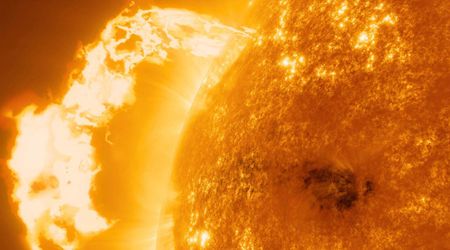
Strong solar eruptions to trigger auroras and possible geomagnetic storms on November 11-12
Consecutive X-class solar flares have set the stage for severe space weather to strike on November 11 and 12.
Published: Nov 11, 2025 | By Raj Naik
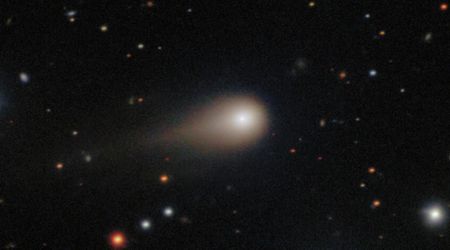
Massive tail and anti-tail jets reveal unexpected structure of interstellar comet 3I/ATLAS
The observation, made on November 9, unveiled a shockingly complex jet system that overshadows prior data, immediately casting doubt on the comet's origin.
Published: Nov 10, 2025 | By Raj Naik
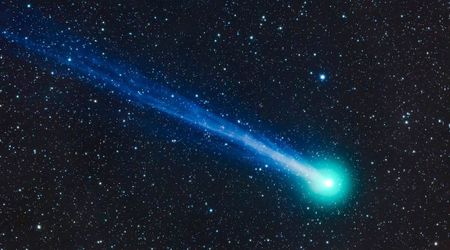
A 'nearly interstellar' object has just been discovered. Harvard astronomer clarifies possible link to comet 3I/ATLAS
The object, discovered by Gennady Borisov on November 2, 2025, quickly became the focus of speculation amid the curiosity surrounding 3I/ATLAS.
Published: Nov 10, 2025 | By Raj Naik

New research suggests common baker's yeast could withstand harsh conditions on Mars
To assess Martian viability, scientists subjected yeast cells to Mach 5.6 shock waves and the corrosive perchlorate salts common on the Red Planet.
Published: Nov 6, 2025 | By Raj Naik
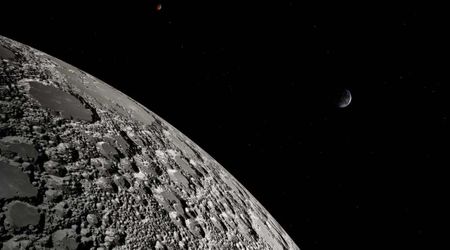
Japanese astronomer captures double impact flashes on the Moon’s surface
These impacts pack surprising power; a mere 11-pound meteoroid can blast a 30-foot (9-meter) crater, ejecting 75 metric tons of lunar soil.
Published: Nov 5, 2025 | By Raj Naik
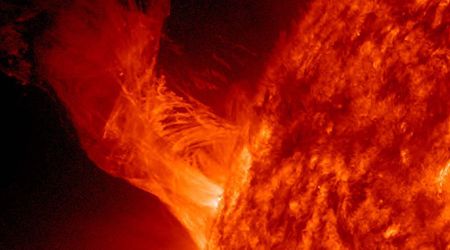
Powerful solar flare erupts from the Sun, triggers radio blackout over South America
Sunspot AR3474 detonated with an X1.8 solar flare on November 4, sending an ultraviolet wave silencing South America's shortwave radio communications.
Published: Nov 5, 2025 | By Raj Naik
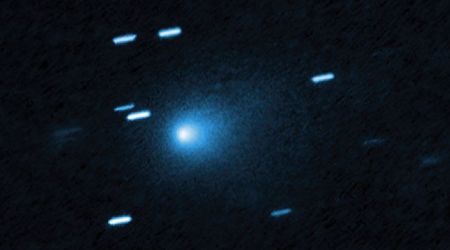
Astronomers stunned as interstellar comet 3I/ATLAS unexpectedly turns blue and bright near the Sun
Observations were maintained using imagery from solar imagers on the STEREO-A, SOHO, and GOES-19 missions near the Sun.
Updated: Dec 4, 2025 | By Raj Naik

Interstellar comet 3I/ATLAS is visible again after perihelion, right on its predicted trajectory
PUNCH satellites secured the initial images of the comet, which had just emerged from behind the Sun.
Updated: Dec 4, 2025 | By Raj Naik
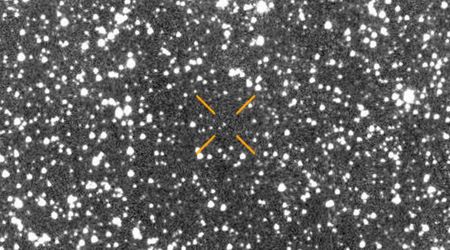
Harvard astronomer Avi Loeb calls on NASA to release scientific data on interstellar comet 3I/ATLAS
Four weeks after its acquisition on October 2–3, 2025, the vital MRO HiRISE data remains inaccessible to researchers.
Updated: Dec 4, 2025 | By Raj Naik
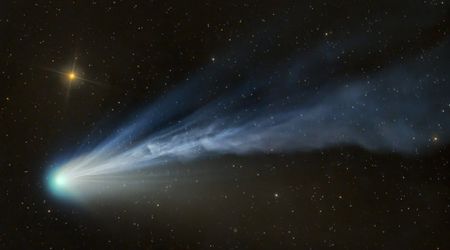
NASA report detects first signs of non-gravitational acceleration in interstellar comet 3I/ATLAS near perihelion
JPL navigation engineer Dr. Davide Farnocchia compiled the data that captured the phenomenon as the comet reached perihelion.
Updated: Dec 4, 2025 | By Raj Naik
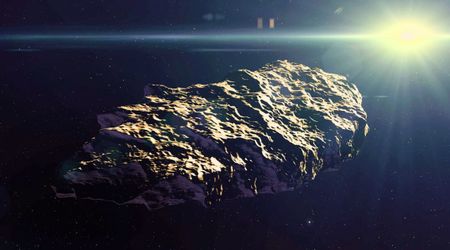
Harvard astronomer says 8 key anomalies suggest comet 3I/ATLAS may have a 30% chance of being an alien technology
NASA, on the other hand, continues to assert that 3I/ATLAS is a comet of natural origin.
Updated: Dec 4, 2025 | By Raj Naik