Interstellar comet 3I/ATLAS reaches rare Earth-Sun alignment on January 22

On January 22, 2026, interstellar comet 3I/ATLAS will align itself to within an exceptionally small angle with the Earth-Sun axis. At this alignment, the comet will allow the measurement of a novel effect called ‘the opposition surge’ for its dust. Such a cosmic event may not happen for decades, providing a unique opportunity for astronomers to study the albedo, structure, and composition of the comet. The study predicting this alignment was authored by Harvard astronomer Avi Loeb and collaborator Mauro Barbieri of Padova Observatory and has been published in a paper on arXiv.

Discovered on July 1, 2025, by the Asteroid Terrestrial-impact Last Alert System (ATLAS), the comet has a hyperbolic orbit, and in its closest position to the Sun, it was 1.356 astronomical units (AU) away (1 AU is the distance between Earth and the Sun). These features pointed to its interstellar origin. Relative to the Sun, its interstellar velocity is 57.7 kilometers per second, which is faster than that of other known interstellar comets — I/Oumuamua with 26.4 kilometers per second and 2I/Borisov with 32.3 kilometers per second.
Interstellar objects are rare, but they provide a scope to probe the cometary materials that originate in other stellar systems. That being said, not all interstellar objects are so interesting. For instance, 1I/Oumuamua didn’t have traces of gas or dust around it. Some never reach a small enough phase angle to spill their secrets. The phase angle is the angle between the observer, the observed object, and the source of light. For the solar system, the light source is the Sun, and the observer is generally on Earth. Here, the observed object is the comet. 2I/Borisov was observed at phase angles greater than 16 degrees. At this angle, the opposition surge doesn’t happen. The study by Loeb and Barbieri shows that 3I/ATLAS reaches a never-seen-before near-opposition alignment on January 22, 2026 at 13:00 UTC.

This is a rare time when Earth will continue to orbit, passing between the Sun and 3I/ATLAS. The phase angle value will be 0.69 degrees. Unlike typical cometary alignments that last for hours, this comet will travel, maintaining phase angles smaller than 2 degrees for a week, starting from January 19 up to January 26, 2026. According to the JPL Horizon trajectory, the comet will be at a distance of 3.33 astronomical units from the Sun and around 2.35 astronomical units from Earth on Thursday. After this, the phase angle will remain small as it moves away from the Sun. It will lose brightness and will be fainter, needing larger telescopes to view it.
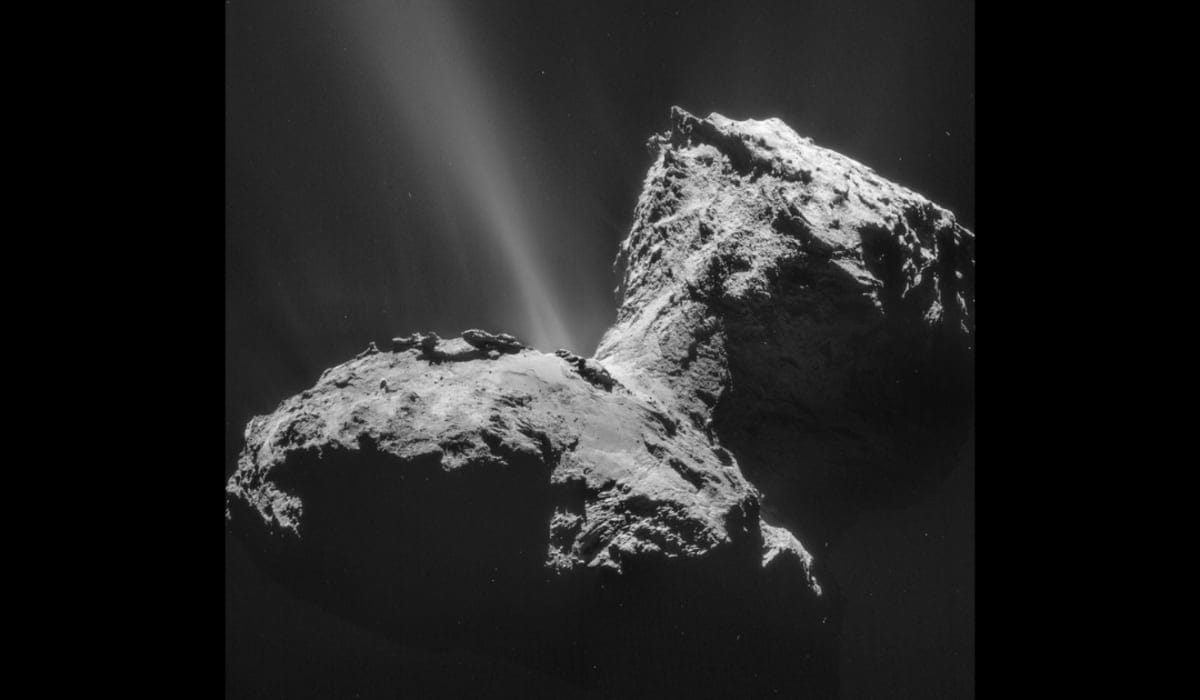
To date, only one comet has shown a well-measured opposition surge, and that is 67P/Churyumov-Gerasimenko. Its surge was observed from the Rosetta spacecraft. The week-long alignment, he says, is a golden opportunity for astronomers to find what is the composition of the dust shed by 3I/ATLAS. "Here’s hoping that many observers with access to suitable telescopes will take advantage of the extraordinary fortune that we are about to have through the rare alignment of 3I/ATLAS with the Sun-Earth direction," Loeb wrote in his Medium blog.
More on Starlust
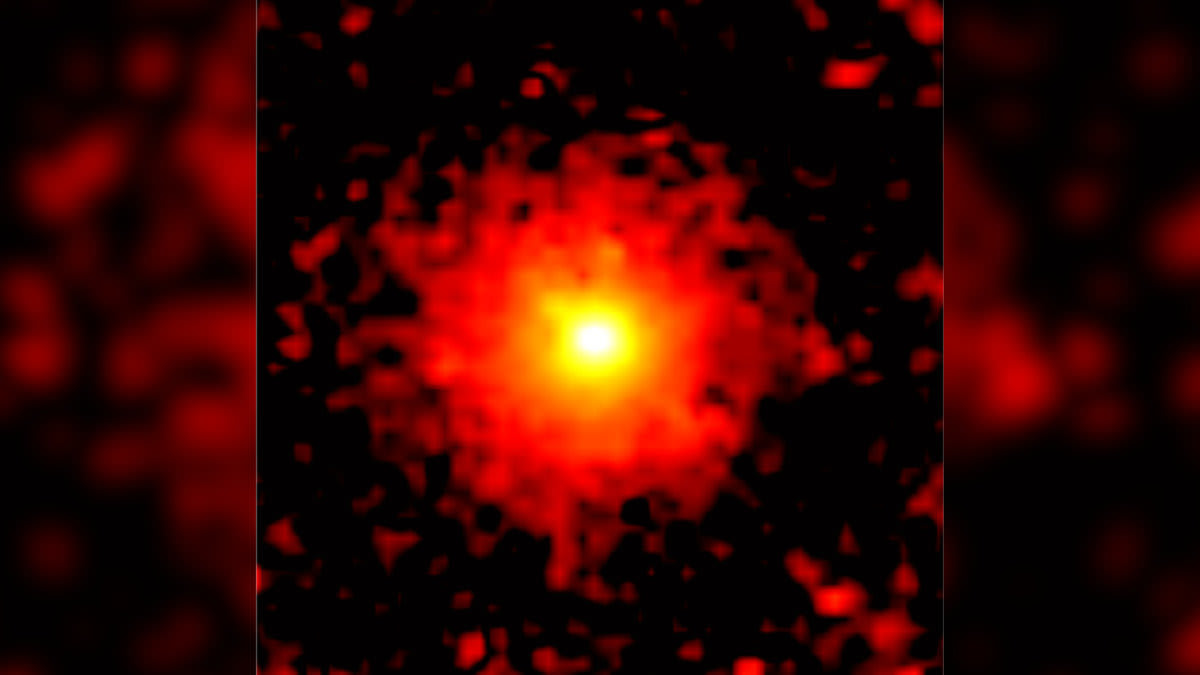
SPHEREx images show a marked difference in 3I/ATLAS' activity before and after perihelion
Where is interstellar comet 3I/ATLAS now? Current position and visibility