High-speed solar wind from coronal hole expected to result in auroras on March 14-15
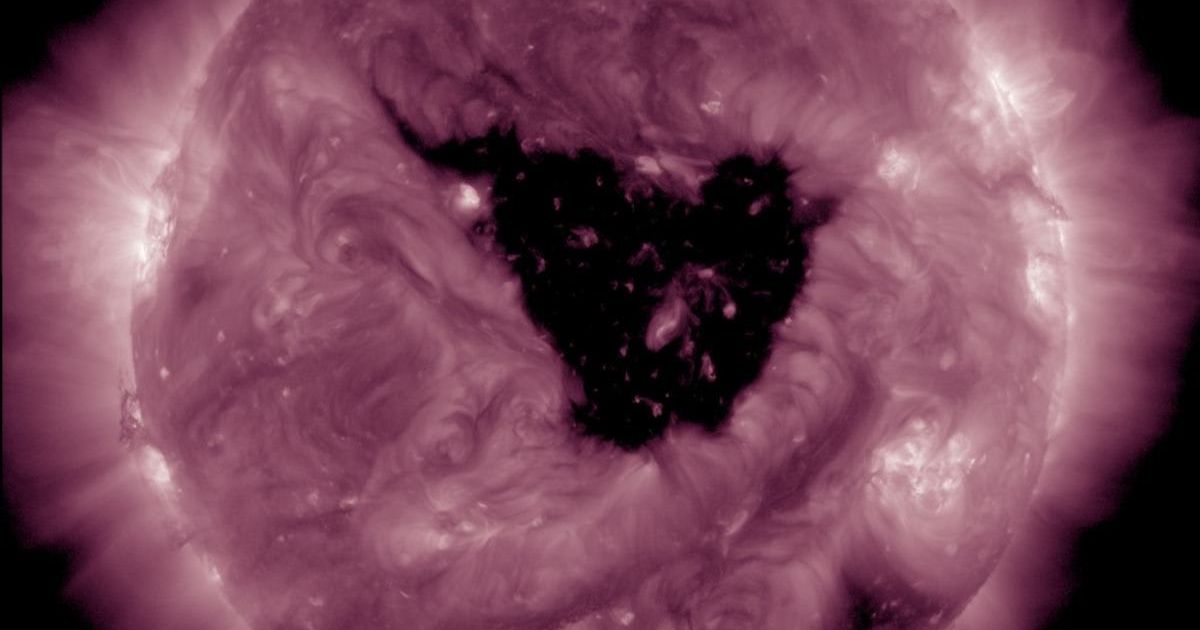
The coronal hole is a recurrent feature, having appeared in the last rotation as well.
UPDATED 4 HOURS AGO
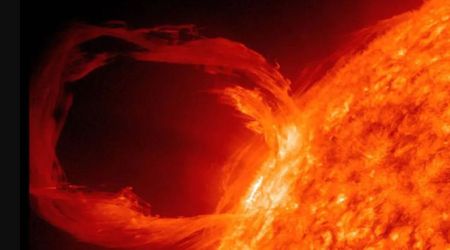
Outer atmosphere of the Sun - the corona at 3.6 million Fahrenheit. (Cover Image Source: NASA SDO)

NOAA's Space Weather Prediction Center reports that a stream of fast solar wind is expected to arrive later today or tomorrow as a result of a lengthy coronal hole on the Sun rotating into a favorable position. This may result in minor (G1) geomagnetic storm conditions today and tomorrow (March 14), with effects expected to last till Sunday (March 15) before gradually declining.
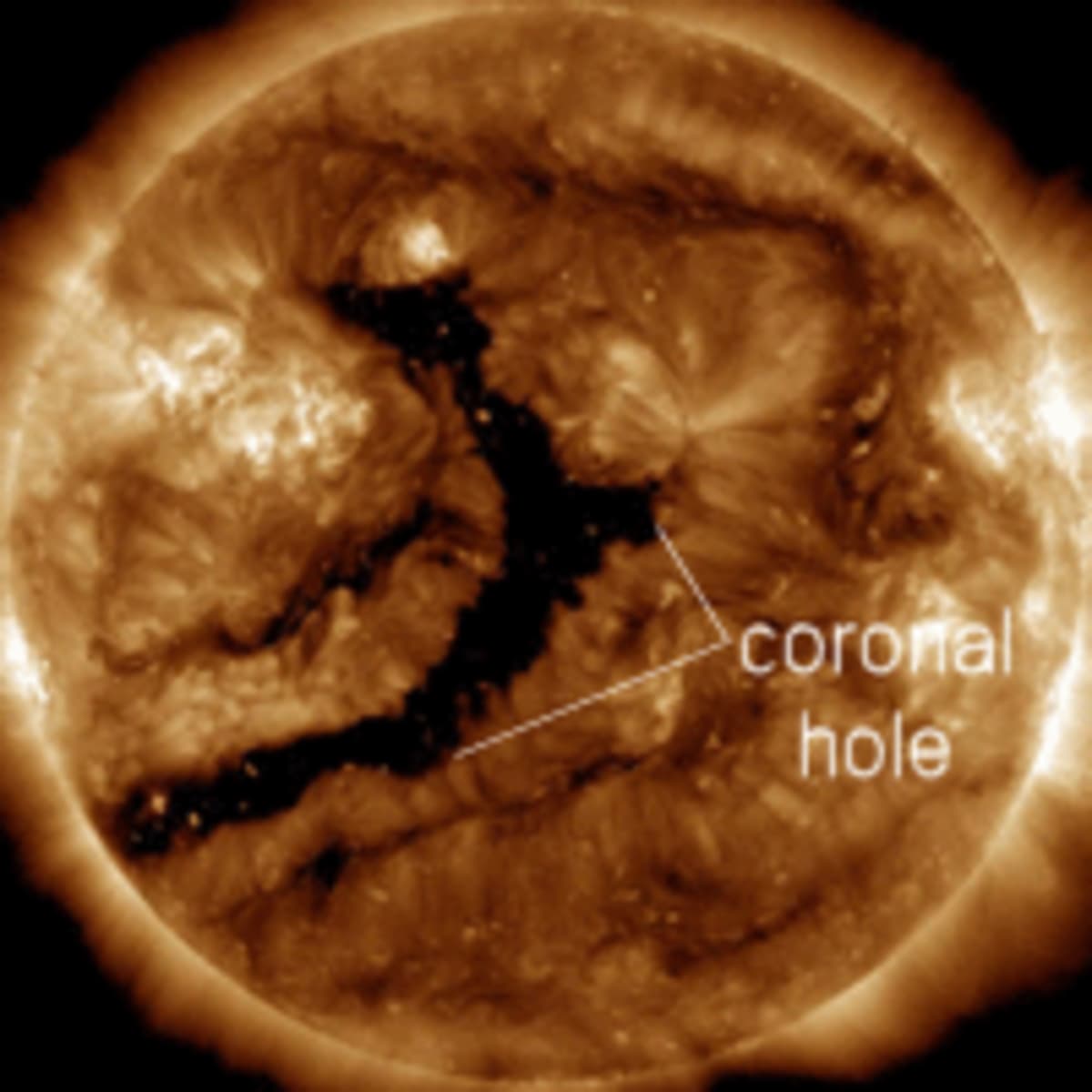
Solar wind flowing from this narrow coronal hole should reach Earth on March 14-15 . Image Credit: NASA/SDO |
Solar wind flowing from this narrow coronal hole should reach Earth by March 14, 2026. (Image Credit: NASA/SDO)

The enhanced solar wind conditions may also result in the visibility of northern lights in high-latitude regions like Alaska, northern Canada, northern Scotland, and northern Scandinavia, where the skies are clear. As far as the Southern Hemisphere is concerned, auroras might be visible from the far south of New Zealand. The Sun continuously spews charged particles into the solar system. When these particles interact with Earth's magnetic field, they deposit a lot of energy there. Auroras are formed when this energy is released and rains down on our atmosphere.
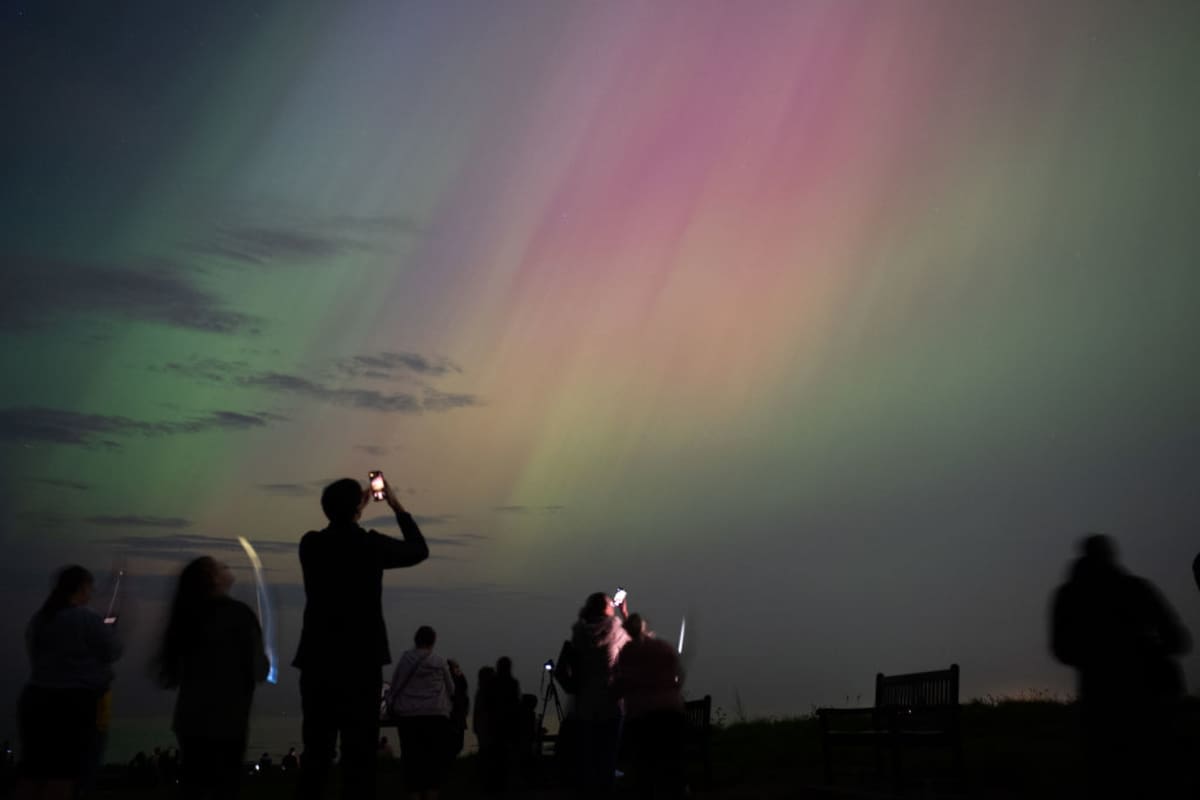
People visit St Mary's lighthouse in Whitley Bay to see the aurora borealis, commonly known as the northern lights, on May 10, 2024, in Whitley Bay, England (Image Source: Getty | Ian Forsyth)

The coronal hole at the center of all the predictions is a recurring feature in that it was present in the last rotation as well, about 27 days ago. However, last time around, it was also accompanied by a weak coronal mass ejection (CME)— a large burst of plasma and magnetic field from the corona—which heightened its effects here on Earth. If a CME is confirmed this time as well, the geomagnetic activity could become even more pronounced.
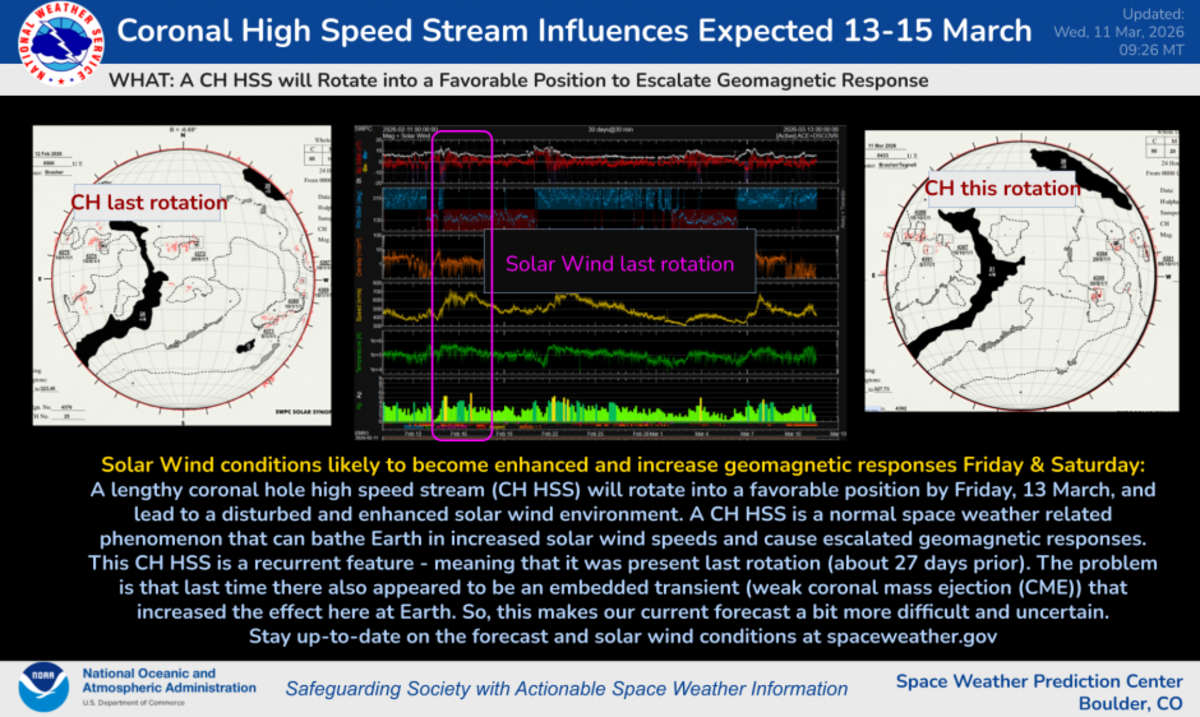
CH HSS Influences Expected Going into the Weekend (13-15 March). (Image Source: NOAA Space Weather Prediction Center)

For the uninitiated, coronal holes are areas in the Sun's corona that are dark, cooler, and less dense than their surrounding plasma, indicating regions of open magnetic fields. They can develop anywhere on the Sun at any time and often persist through several 27-day rotational periods, as is the case with this one. They are usually associated with G1 or G2 (moderate) geomagnetic storms but can, on occasion, result in higher storm levels as well. A G1 storm, like the one predicted to persist over the weekend, can impact power grids and satellites, albeit weakly. 
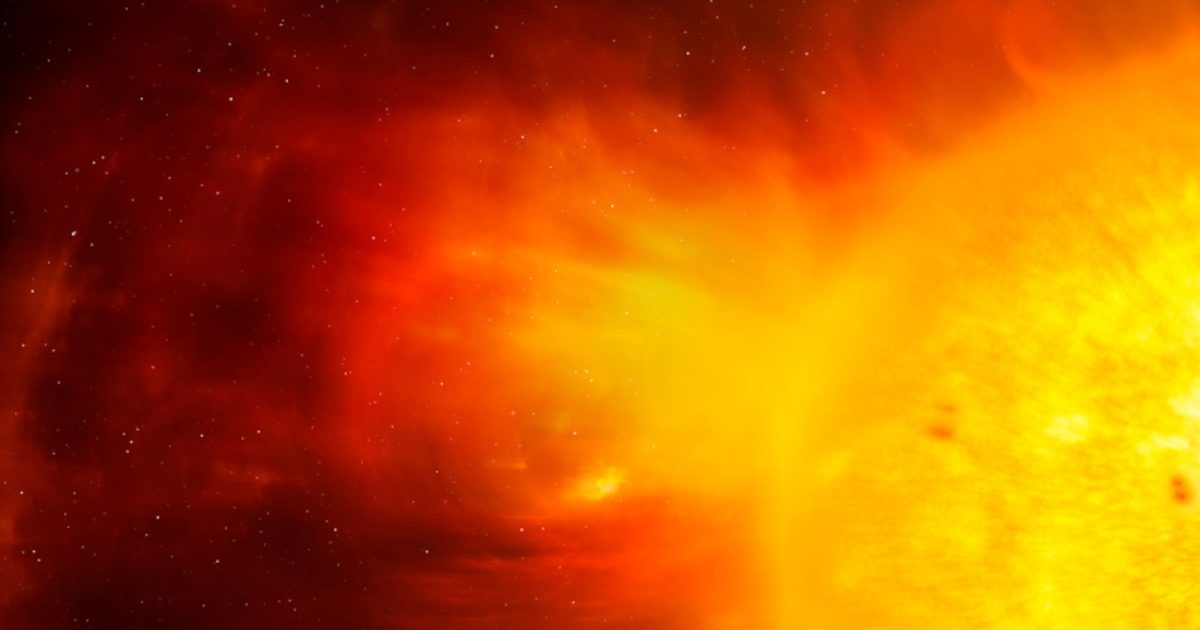
Illustration of a coronal mass ejection (CME) emanating from the Sun. 
(Representative Image Source: Getty Images | Mark Garlick | Science Photo Library.)
Illustration of a coronal mass ejection (CME) emanating from the Sun. (Representative Image Source: Getty Images | Mark Garlick | Science Photo Library.)

While the influence of the coronal high-speed streams is expected to ease on Sunday, and no Earth-directed coronal mass ejection has been detected yet, the U.K. Met Office forecasts a low risk of slight peripheral influence into 16 March. 

More on Starlust

40 years of data reveal how the Sun's internal structure behaves in its quieter phases

How to spot Comet C/2026 A1 (MAPS) in the evening sky this week: Best viewing tips
MORE STORIES

Elena Tomasetti of the University of Bologna discusses her team's calculation of the estimated age of the universe in an exclusive interview with Starlust.
6 hours ago
Far from the harsh galaxy center, they reached a location that is hospitable for life.
9 hours ago
GW200105 reveals an eccentric orbit before merger, challenging formation models.
1 day ago
While Jupiter's main aurora has a great deal of hot materials, a snapshot showed a cold spot in Io's auroral footprint.
1 day ago
As a civilization, we currently just don't have the industrial might to make terraforming a reality.
2 days ago
Damage reports have come from the Hunsrück region, the Eifel mountains, and Koblenz, among others.
3 days ago
This reason is enough to delay the Artemis II mission further, says a Mexican nuclear physicist to the Starlust team.
3 days ago
The researchers used Deinococcus radiodurans, an extremely resilient bacterium, to test their hypothesis.
3 days ago
The Cat's Eye Nebula is located 4,400 light-years away in the constellation Draco.
4 days ago
This is big leap forward to how astronauts can be provided food during their sojourn on the Moon.
7 days ago