Why do many people still believe Moon landings were faked?
How a 1976 book fueled Moon landing conspiracy theories
NASA made history when Buzz Aldrin and Neil Armstrong became the first human beings to set foot on the lunar surface. As history was made, the landing was witnessed by almost 600 million people from all over the world. Surprisingly, despite all this, a former US Navy officer and Rocketdyne technical writer, Bill Kaysing, sparked controversy about the legitimacy of the moon landing in his self-published 1976 book, ‘We Never Went To The Moon: America’s Thirty Billion Dollar Swindle.’ And since then, there have been conspiracy theorists who believe that the entire moon landing might have been faked!
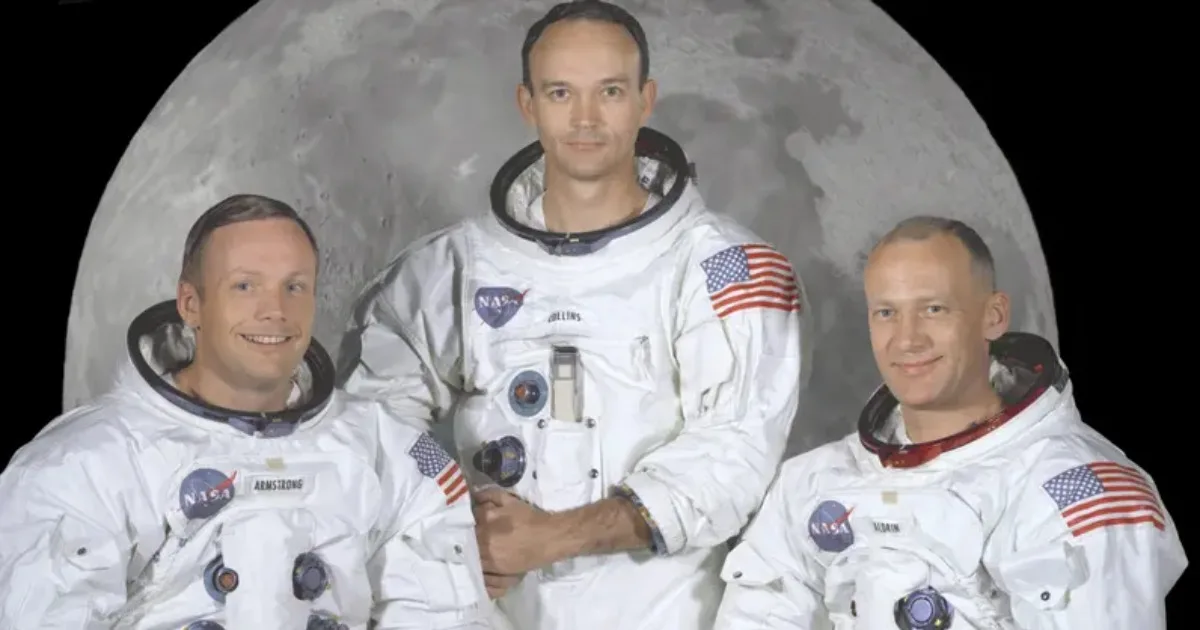
This image is the official portrait of the Apollo 11 crew. Commander Neil A. Armstrong, Command Module Pilot Michael Collins and Lunar Module Pilot Edwin E. Aldrin Jr. (left to right) posed for the image before the Apollo 11 mission.
Why Apollo astronauts cast seemingly non-parallel shadows on the Moon
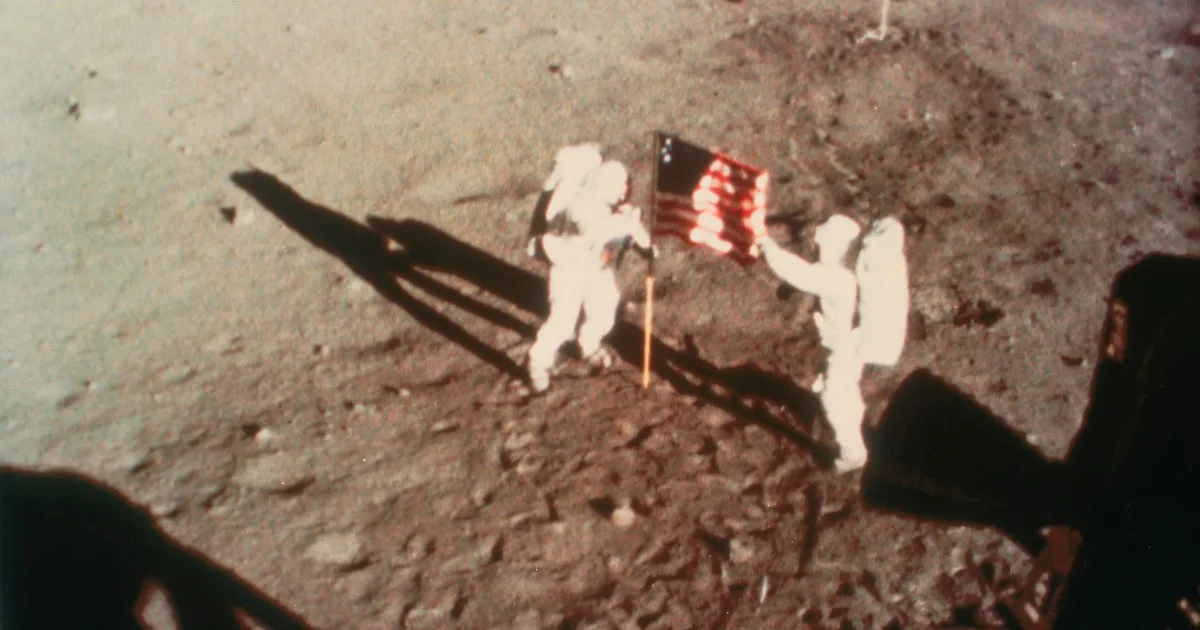
After NASA released pictures of their astronauts on the Moon, some people quickly noted how the shadows cast by the astronauts and other objects were not parallel. They argued that with the Sun being the only light source, the shadows should have been parallel.
However, the shadows themselves are not actually non-parallel on the Moon; they only appear that way in photographs due to standard optical perspective. When a three-dimensional scene is captured in a two-dimensional photograph, parallel lines appear to converge—the exact reason as to why parallel train tracks in photos appear to meet at a point in the distance. Furthermore, the lunar terrain is highly uneven. As shadows fall over the Moon's rugged topography, they naturally bend and warp, appearing at different lengths and angles.
In this image, Neil Armstrong and Buzz Aldrin can be spotted unfurling the US flag on the surface of the Moon in July 1969. As Buzz Aldrin and Armstrong stepped on the Moon, becoming the first men to walk on the lunar surface, the third member of the Apollo 11 crew, Michael Collins, remained in lunar orbit.
Why NASA's Moon landing photos showed no visible stars
Another supposed anomaly that the conspiracy theorists found with the moon landing pictures was the lack of visible stars. They argued that with no atmosphere and clouds to obstruct the view, the sky from the Moon should have been filled with stars.
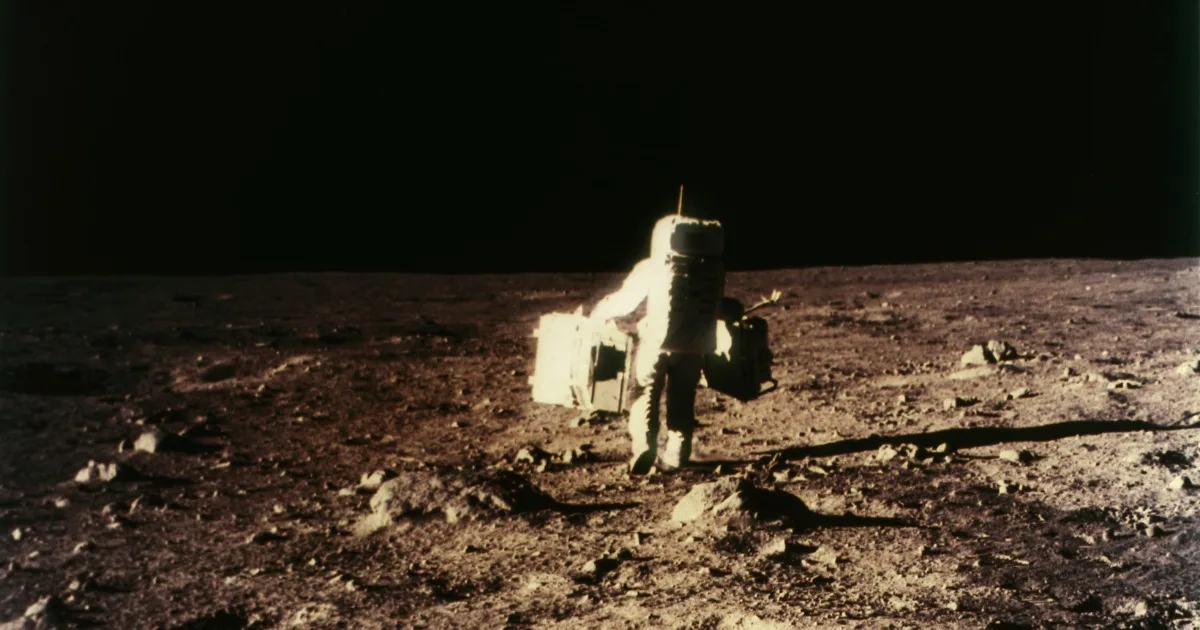
Well, there is a simple explanation for this, and it comes down to basic photography. The sunlit lunar landscape and the astronauts' white spacesuits were highly illuminated by the Sun. To properly expose these incredibly bright subjects without the image becoming pure white, the cameras required a very fast shutter speed and a short exposure time. This fraction of a second was just right for capturing the astronauts, but it was far too short to be able to capture the faint, distant light of the background stars.
This image is of Apollo 11 astronaut Buzz Aldrin deploying a scientific experiment on the Moon on July 21, 1969. This image was captured by Neil A. Armstrong.
Why the Moon landing flag appeared to be waving
With the US establishing supremacy over the Soviet Union in the space race, the picture of Buzz Aldrin saluting the American national flag on the Moon became an iconic image. However, this very flag became the centre of controversy when conspiracy theorists questioned how, with no atmosphere on the Moon, the flag could be waving.
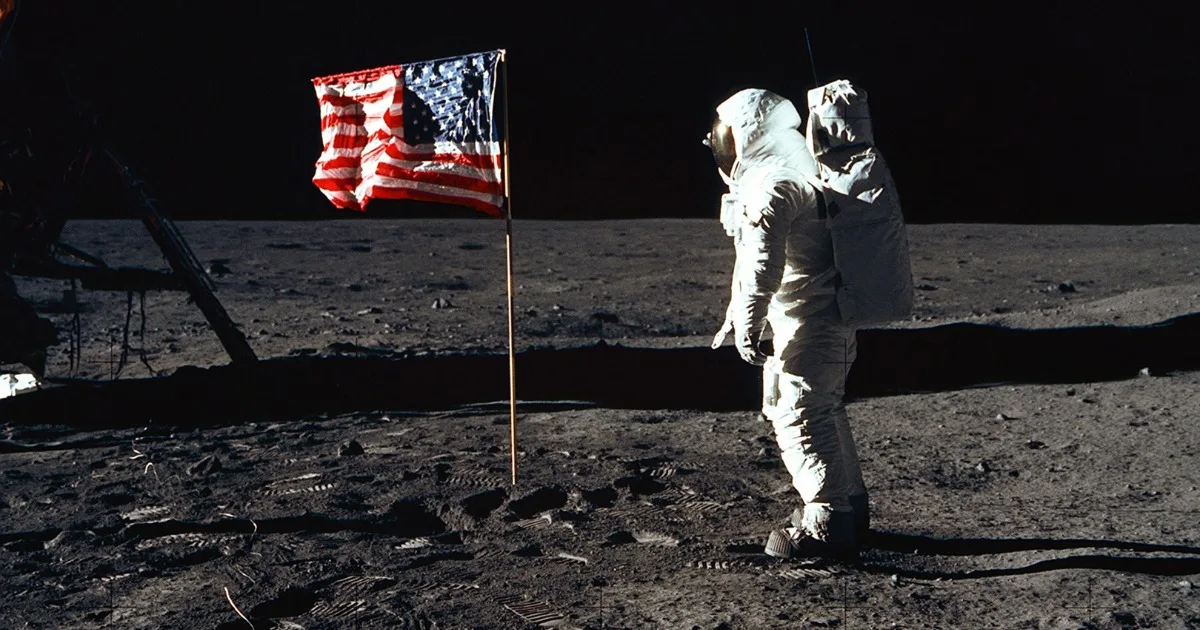
Well, a closer look at the image reveals that the top edge of the flag had a telescoping rod attached to it. This provided the flag with rigidity in the absence of wind. However, because the astronauts could not extend this rod all the way, the fabric bunched up, creating permanent wrinkles that look like rippling wind in still photographs. Additionally, as the astronauts forcefully twisted the pole back and forth to plant it into the lunar soil, the momentum caused the flag to swing like a pendulum—an effect that lasts much longer in the vacuum of space.
In this image, astronaut Buzz Aldrin can be spotted standing beside the deployed United States flag during an Apollo 11 Extravehicular activity (EVA) on the surface of the Moon. In the left corner of the picture, the lunar module can be spotted. The footprints of the astronauts are clearly visible on the lunar surface. The image was captured by Commander Neil A. Armstrong with a 70mm Hasselblad lunar surface camera.
Why the lunar module left no major blast crater behind
Pictures of the lunar module showed that there were no prominent blast craters on the lunar regolith. This once again made the conspiracies about a possible fake moon landing gain traction.
However, the physics of space travel can easily debunk this theory. While the rocket exhaust absolutely did blast away a massive amount of loose surface dust in all directions—which is clearly visible in the Apollo descent footage—it did not carve out a deep crater for two distinct reasons. First, in the vacuum of space, rocket exhaust expands outward in a wide cone rather than being constrained into a narrow jet like we see on Earth. Second, the descent engine was heavily throttled down just before touchdown, and beneath the top inch of loose dust, the lunar regolith is actually densely compacted, hard rock.
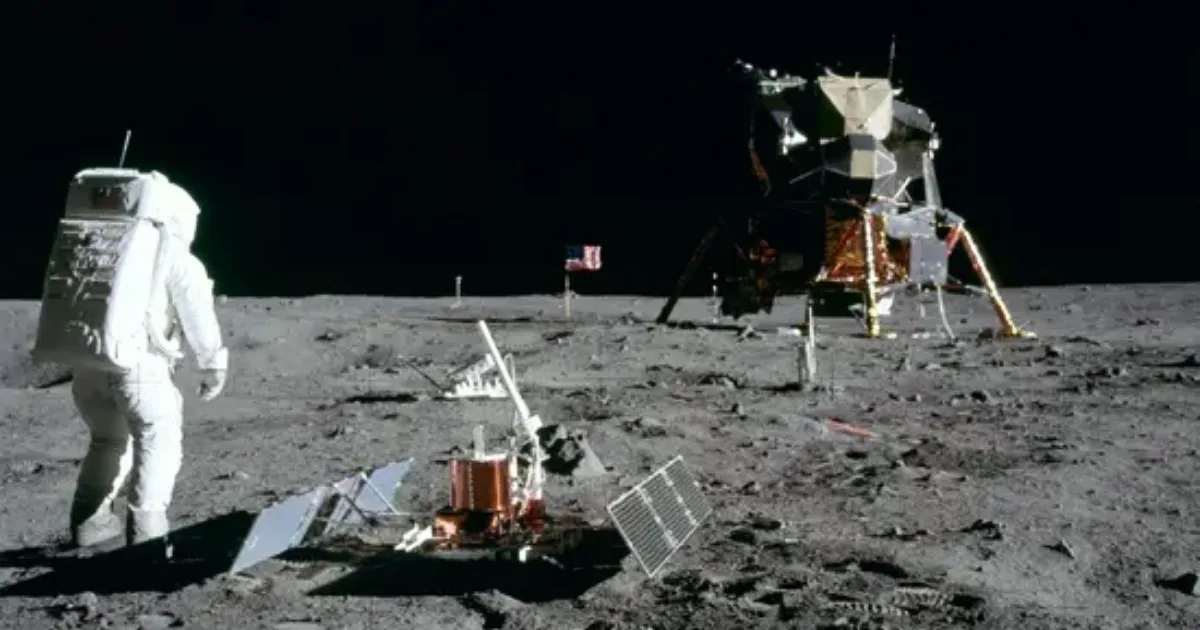
In this image, astronaut Buzz Aldrin, who was the Lunar Module Pilot for the Apollo 11 mission, can be spotted standing near the lunar module 'Eagle' and setting up the PSEP.