Colorado startup Lux Aeterna closes $10 million seed funding to develop reusable satellites by 2027

Lux Aeterna, a space infrastructure startup from Colorado, the US, secured funding of $10 million on March 10, 2026, a move now accelerating its ambition of developing reusable satellites. Companies like Decisive Point, Cubit Capital, and Wave Function took part in the initial round of funding, led by Konvoy Ventures. They were followed by Space Capital, Channel 39, and Dynamo Ventures. This investment is meant for Lux Aeterna to pursue the development of a spacecraft it deems will “solve a bottleneck” existing in the aerospace industry. The company is referring to the huge amount of engineering effort and money being wasted when satellites re-enter the atmosphere and burn up. The Mars Global Localization is proof that equipment can be repurposed even as its original purpose is served.

While reusable rockets are already in vogue in modern-day spaceflight, the concept of satellites being reused is being championed by Lux Aeterna. Its CEO and founder, Brian Taylor, said in a statement, "The future of the space economy will be built on fleets that return to Earth reliably and relaunch almost instantly. Our approach moves space operations away from a 'launch-and-burn' cycle and toward a more capable, cost-effective paradigm that supports downstream mass, manufacturing, and defense applications. As a result, we're unlocking use cases, economics, and business models that were previously impossible or impractical to execute."
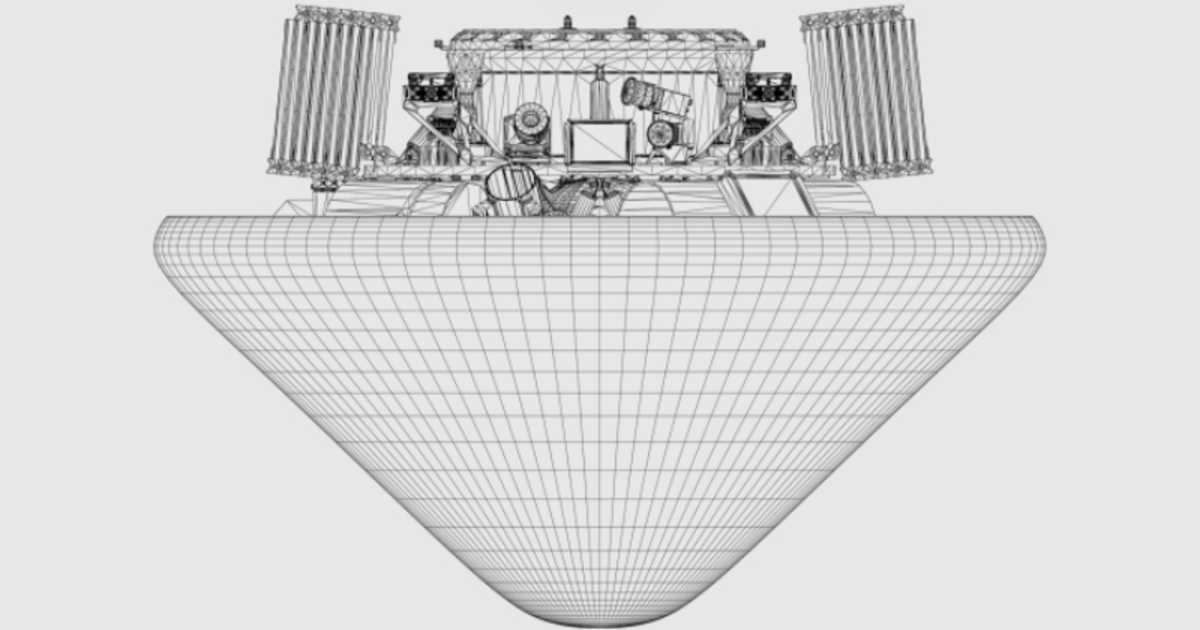
In order to realise this goal, the company had been seeking funds for developing and manufacturing its spacecraft, Delphi. Its first-ever mission, set for the first quarter of 2027, already has payloads lined up. This mission will mark the company’s first-ever launch and re-entry demonstration, as well. While the providers of their specific payloads were not named, the payloads themselves are composed of hypersonic testing equipment, on-orbit compute, and mechanisms for making manufacturing possible in space. These payloads will be designed for more than one orbit and are provided by commercial partners and defense entities. Once the mission is complete, success would look like a scenario where the same satellites can be refurbished and redeployed for more missions.

This capacity for engineers to be able to get back their innovations and work iteratively is something the company and its investors, and perhaps eventually the entire industry, value greatly. According to the company, reusable satellites will not only reduce the costs of missions that study the Earth, our solar system, and the objects in the depths of our universe, but will also make them more frequent. The company believes that this will allow for failure of missions that involve smaller adjustments or quick fixes. In agreement with this optimism, Josh Chapman, the managing partner at Konvoy, said, "Lux Aeterna is the first company building a returnable fleet that truly compresses mission timelines and costs".

The company, besides the progress with its funding and research so far, has a considerable foothold in its pursuits through approval from the US government, having secured the Space Act Agreement with NASA Ames and a couple of Cooperative Research and Development Agreements, or CRADAs. The company has also formed a Defense Advisory Board to put its best foot forward in being able to cater to the US defense requirements. This news comes with the dawn of increased pursuit of space ventures and innovation by private entities, including Vast, amidst growing support from NASA, with contracts being handed for private astronaut missions as well.
More on Starlust
Breaking down the NASA Authorization Act of 2026 and what it means for the space agency
NASA selects United Launch Alliance to provide upper stage for Artemis IV and V