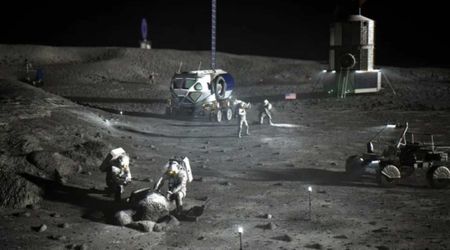
China eyes lunar water ice as Chang’e 7 gets ready for the Moon's south pole
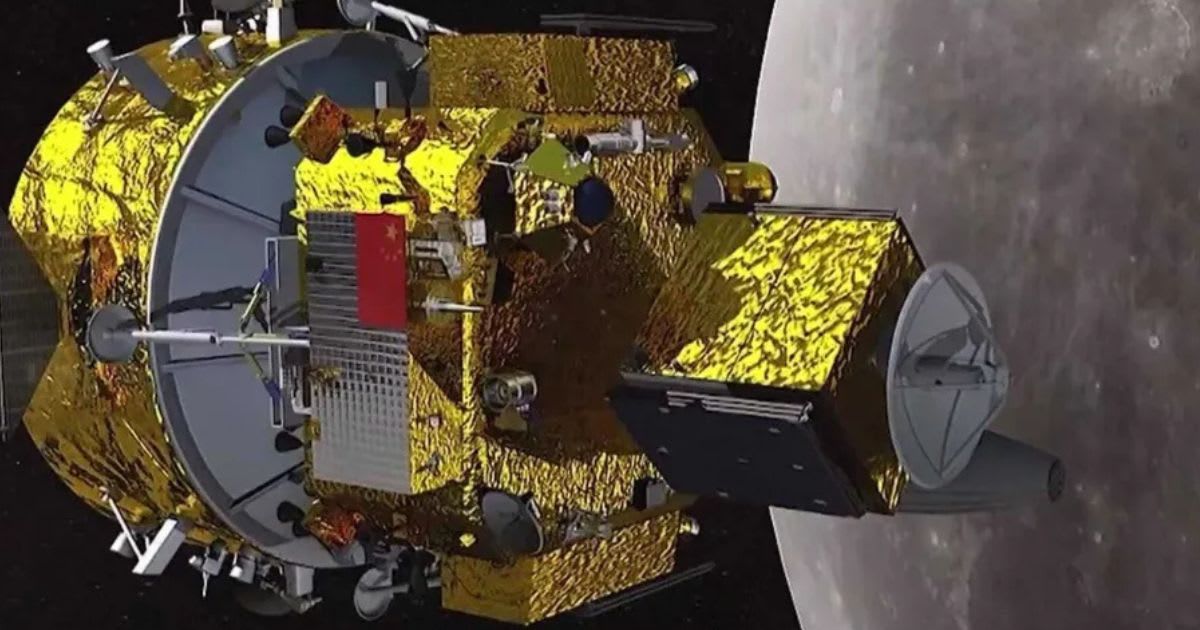
Water ice at the Moon's south pole has become one of the most closely watched targets in modern lunar science, and China's upcoming Chang'e 7 mission is designed to take a major step toward understanding it. Scheduled to launch in the second half of 2026, the robotic mission will investigate one of the coldest regions of the Moon, where permanently shadowed craters may have been preserving ice for billions of years.
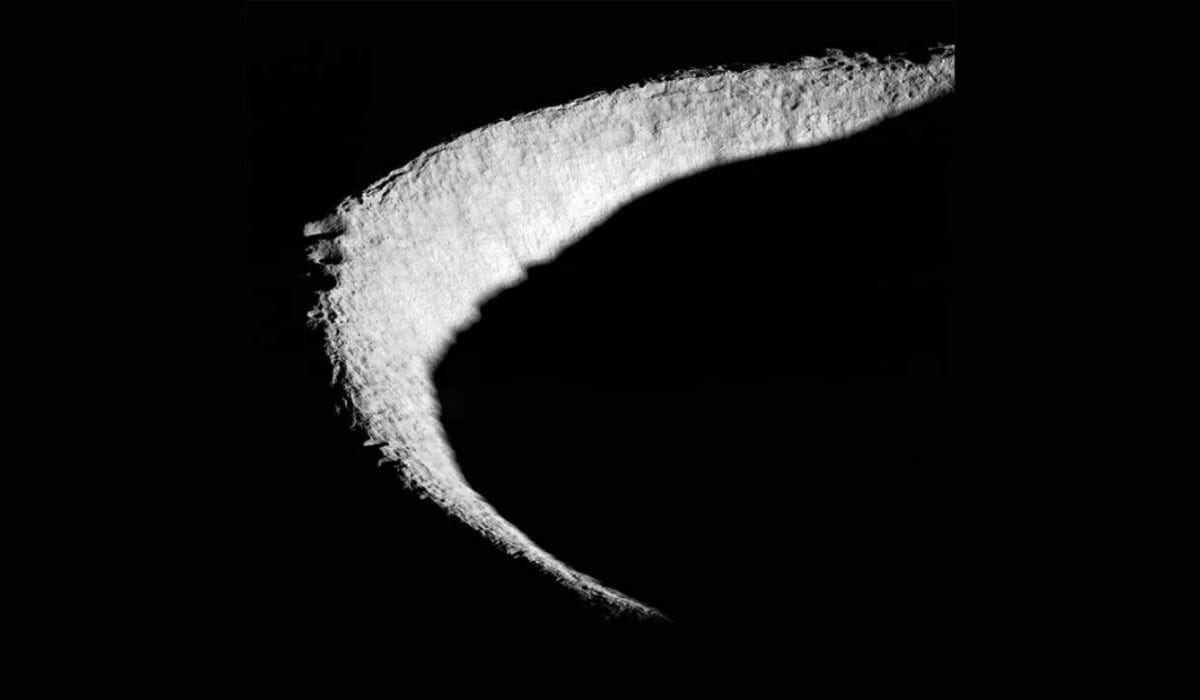
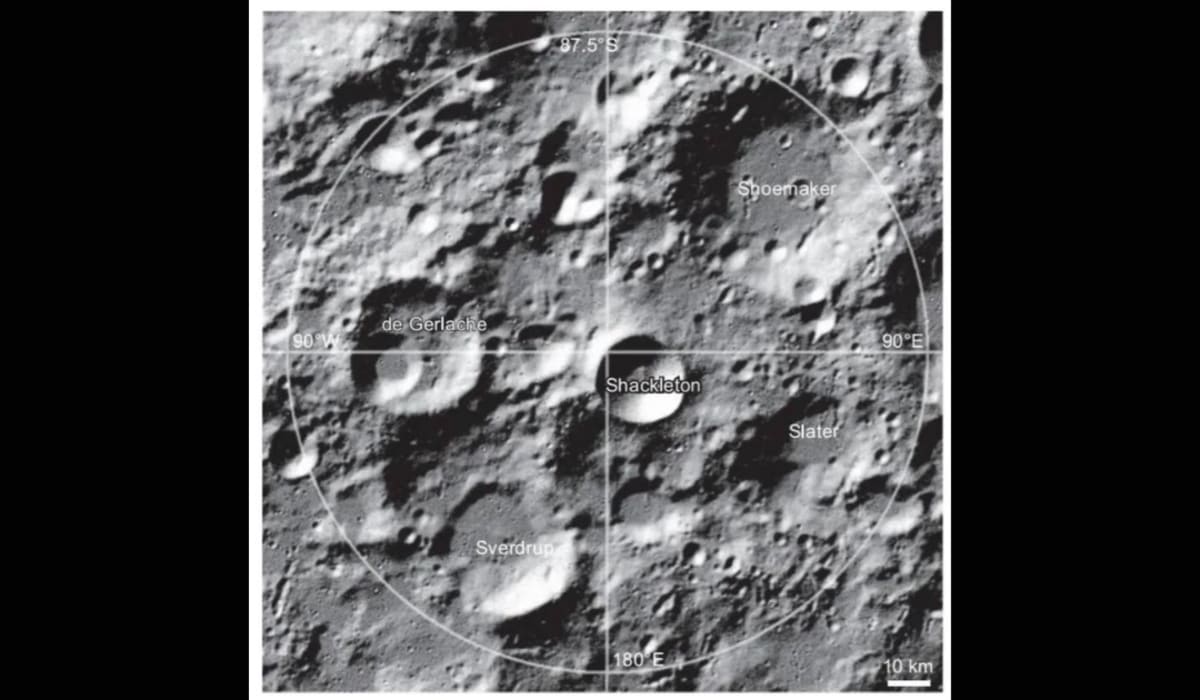
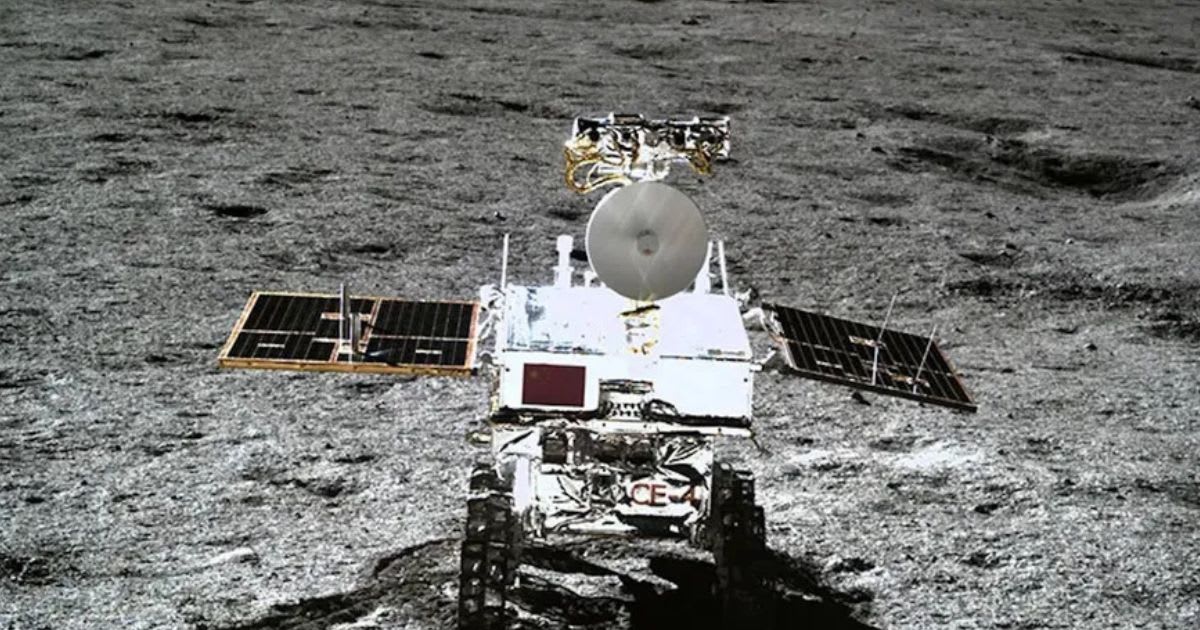
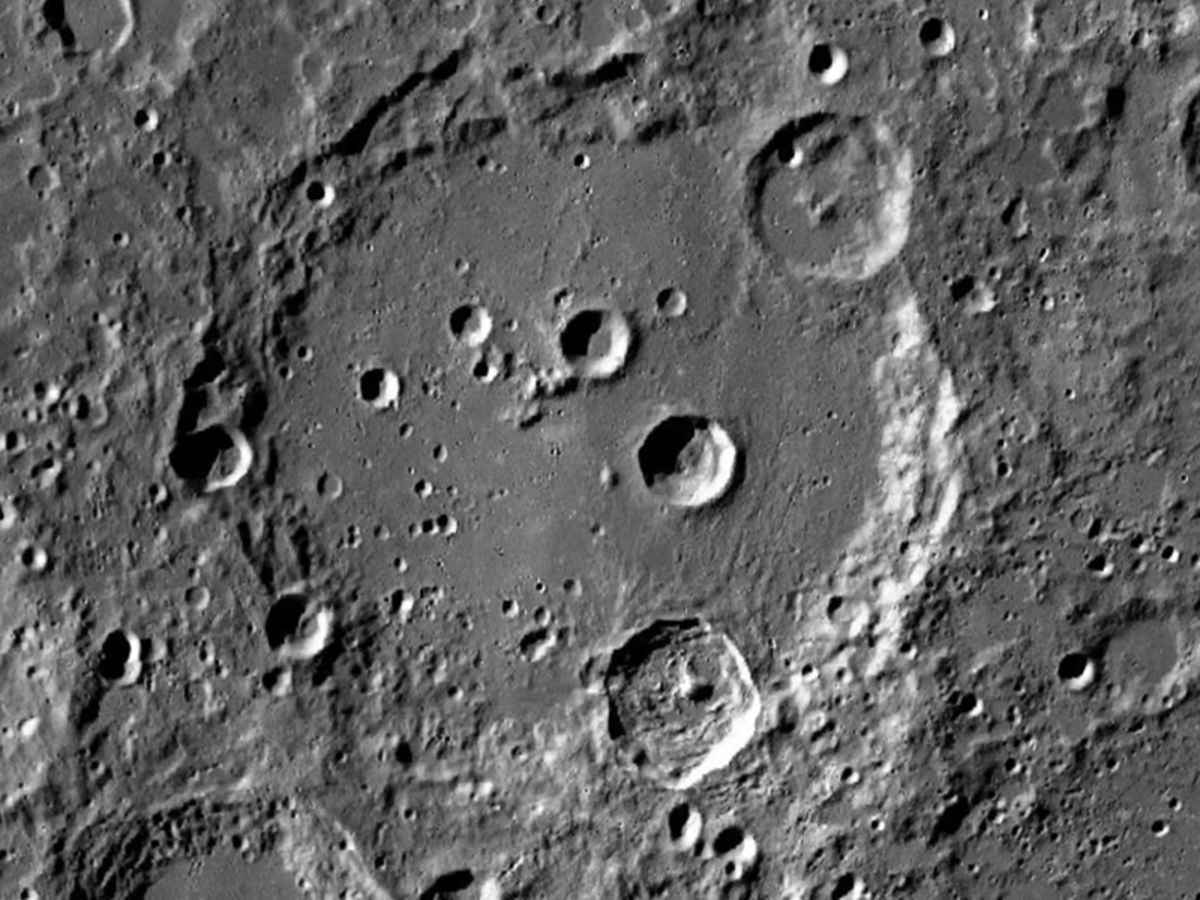
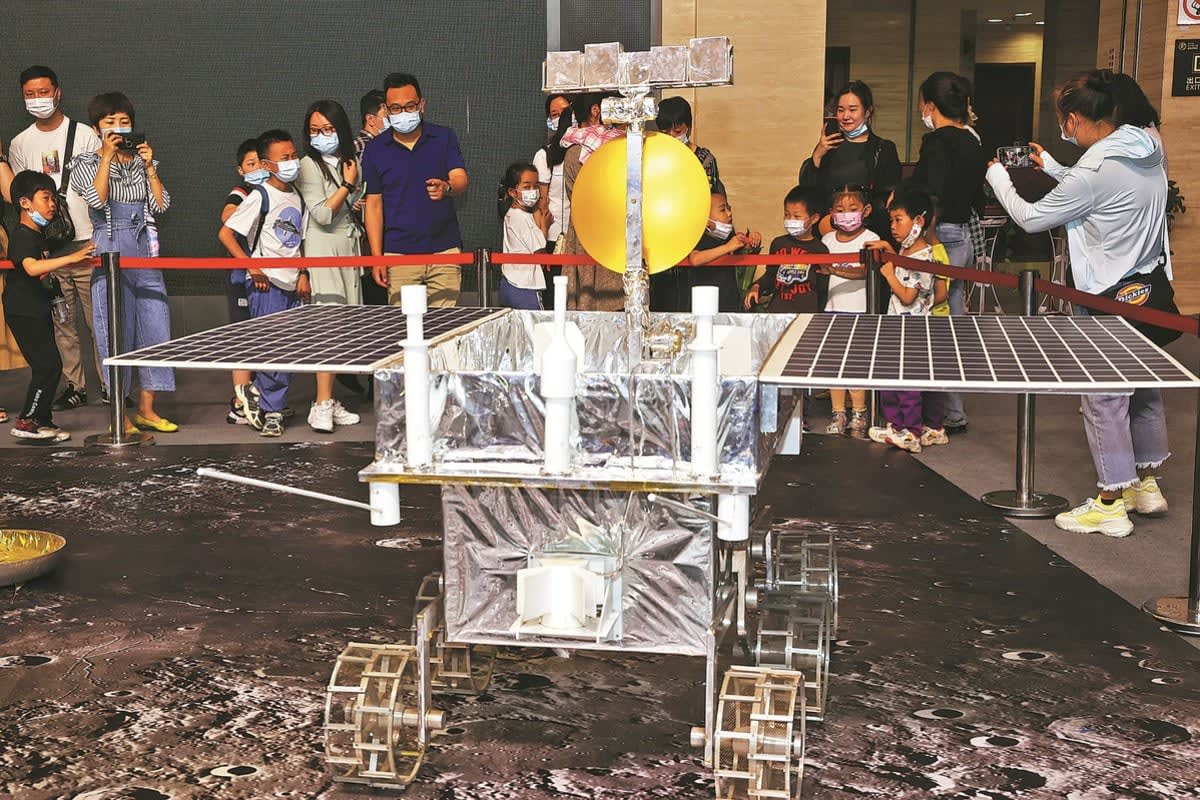
Chang'e 7 will consist of four separate elements: an orbiter, a lander, a rover, and a small flying probe known as a hopper. Together, they will carry 18 scientific instruments aimed at studying the south polar environment and directly examining water ice. The mission’s candidate landing site lies near the rim of Shackleton Crater, a location that offers access to both sunlight and nearby shadowed terrain. One of Chang’e 7’s most distinctive features is the hopper, which is designed to reach areas that wheeled vehicles cannot. Built to safely land on steep slopes using shock-absorption technology, the hopper will carry a key instrument known as the LUnar soil Water molecule Analyzer (LUWA). This payload is intended to measure the form, abundance, and origin of water ice inside permanently shadowed regions.
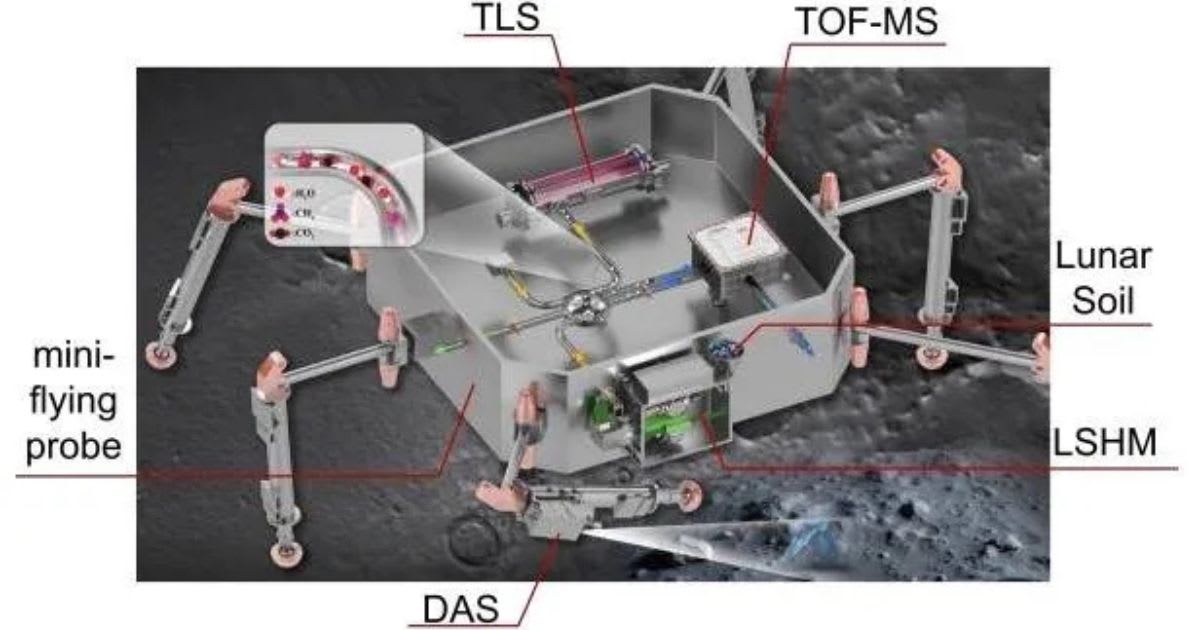
“Mapping the thermal stability of water ice at high spatial resolutions in these regions can help to identify high-priority locations with great potential for hosting water ice,” said Jie Zhang of the National Space Science Center in Beijing. Laboratory simulations, Zhang and colleagues reported, support the idea that much of the regolith inside Shackleton Crater could preserve ice in stable conditions. The rover and orbiter will complement the hopper's work with spectrometers, radar, and infrared imaging systems to detect water-related signals from orbit and at the surface.
Scientists see Chang’e 7 as a milestone in lunar exploration. “It's hard to know for sure what China is planning in the longer term, but since they have a successful lunar exploration program and lots of government resources, I'd fully expect they will construct a lunar base soon, perhaps using their own advanced robots,” Norbert Schörghofer, a senior scientist at the Planetary Science Institute in Honolulu, Hawaii, told Space.com.
Schörghofer expects the mission to deliver the Moon’s first direct measurements of water ice. “Chang'e 7 is destined to find water ice and make the first in-situ measurements of water ice on the Moon,” he said. While the mission will not answer every question, its impact could be significant. “Chang'e 7 will not settle how water ice is exactly distributed geographically, but it will certainly make relevant discoveries,” he said. “The Chinese will be ahead of everyone else by at least one year, but probably several years. Chang'e 7 is a key mission for the study of lunar volatiles, but we need more missions.”
Chang’e 7 also reflects China’s growing emphasis on international cooperation. Under an agreement signed last year, the mission will carry a Russian instrument called Dust Monitoring of the Moon, which will study lunar dust, micrometeorites, and plasma near the surface. Additional payloads will come from Egypt, Bahrain, Italy, Switzerland, and Thailand. A wide-field telescope will also fly aboard the mission. Developed by the University of Hong Kong’s Laboratory for Space Research and the International Lunar Observatory Association (ILOA), the camera is designed to observe the galactic plane from the Moon.
“This advanced astronomical camera is set to launch aboard China's Chang'e 7 mission, scheduled to land near the illuminated rim of Shackleton Crater in the lunar south pole region in November 2026,” said Steve Durst, ILOA’s founding director. “The telescope aims to capture stunning images of the galactic plane, contributing to lunar science and inspiring future generations.” Beyond its scientific goals, Chang’e 7 is closely tied to China’s long-term plans. The mission is a key step toward the International Lunar Research Station, a multinational project China hopes to begin building in the 2030s.

It also sets the stage for Chang’e 8 in 2028, which will test construction technologies using lunar soil. “We hope that on the basis of phase four of our lunar exploration program, there will be a large international scientific-technological research project initiated by China, with the participation of multiple countries,” said Wu Weiren, the chief designer of the Chinese Lunar Exploration Program. Wu has said the lunar research station could ultimately support future Mars missions, adding, “I believe this is a very important goal for us,” in an interview with the China Global Television Network.
More on Starlust
NASA's Hubble traces a glowing 'wake,' uncovering evidence of Betelgeuse’s elusive companion star
10 jaw-dropping images captured from the International Space Station in 2025