Aurora alert: One of the fastest solar storms in decades just hit Earth, triggering severe G4 storm

The CME unleashed by Sunday’s X1.9-class solar flare has struck Earth’s magnetosphere earlier than expected at a near-unprecedented speed, prompting NOAA’s Space Weather Predictions Center (SWPC) to issue a G4-rated geomagnetic storm watch for January 20, 2026 (UTC). The storm also brought about opportunities for people living as far south as Alabama and northern California in the U.S. — far beyond the aurora's usual high-altitude reach — to catch some spectacular sightings of the auroras.
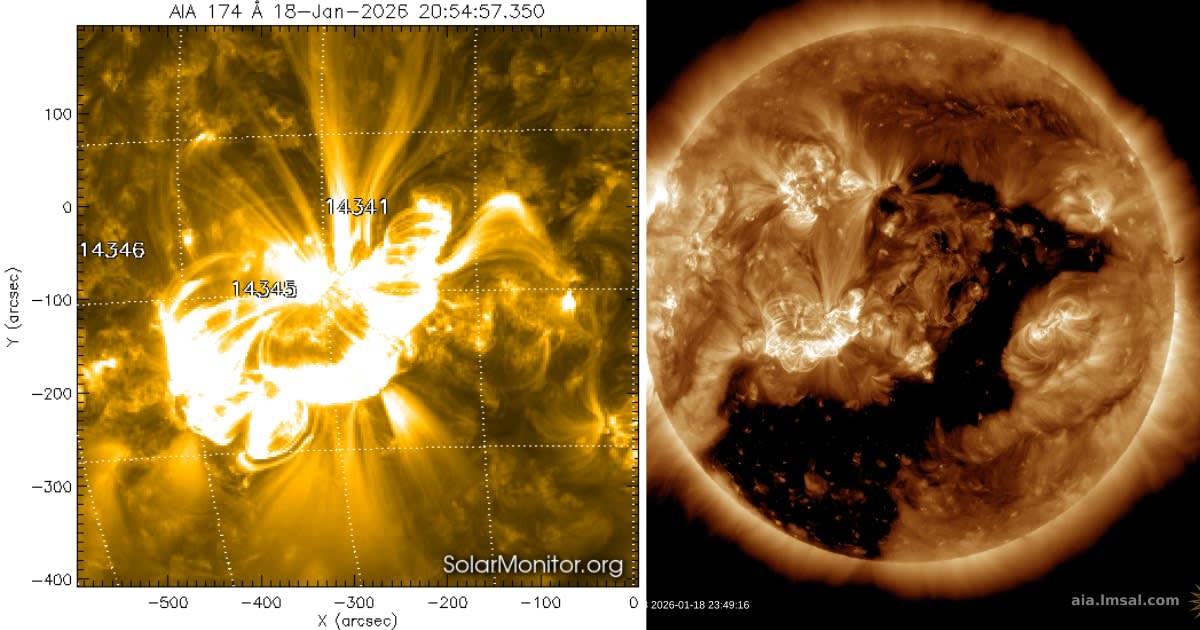
As reported by Spaceweather.com, the aforementioned CME was one of the fastest to strike Earth’s atmosphere since observations first began to be made 30 years ago via the Solar and Heliospheric Observatory (SOHO). With most solar storms traveling towards Earth at roughly 450 km/s, this one raced through space at around 1660 km/s, covering the Sun-Earth distance in about 25 hours rather than 3 to 4 days. Solar winds of up to 800 km/s that came on the heels of this fast CME will continue to strike the Earth’s magnetosphere until January 21, 2026, triggering auroras to the likes of the ones reported last Christmas Eve.
Using the data made public by NOAA’s SWPC, we have come up with a list of US states or regions — ranked by likelihood — where auroras may be visible on the 20th and 21st of January, 2026:
1. Alaska
2. Washington state
3. Montana
4. North Dakota
5. Minnesota
6. Michigan (Upper Peninsula)
7. Maine
8. New York State
9. Idaho
10. Wyoming
11. South Dakota
12. Wisconsin
13. Vermont
14. New Hampshire
15. Massachusetts
16. Michigan (Lower Peninsula)
17. Oregon
18. Illinois
19. Pennsylvania
20. Iowa
21. Nebraska
22. Ohio
23. Indiana
24. Missouri
25. Colorado
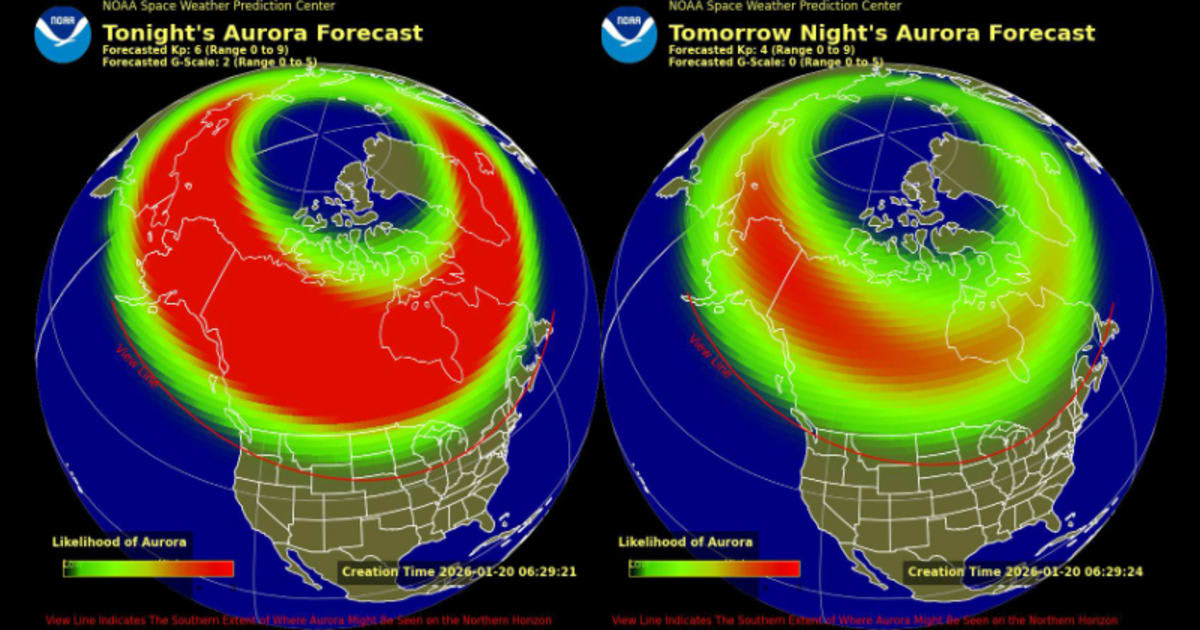
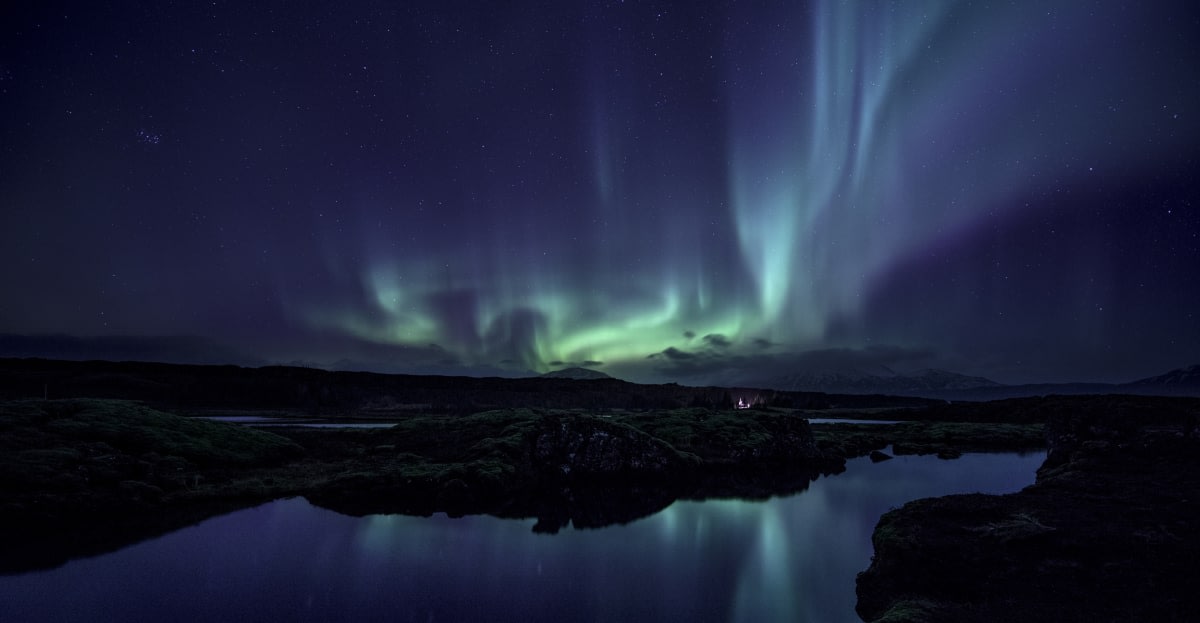
Aurora sightings have been reported on social media platform X (formerly Twitter) from multiple locations across the United States and the UK. In the U.S., people have shared images and videos from several states, including Iowa, Illinois, and Michigan’s Upper Peninsula, capturing green arcs in the night sky. Additional reports from Washington state to New York indicate widespread visibility during the early stages of the G4 storm. These shared observations align with SWPC forecasts, confirming the aurora oval’s expansion southward due to heightened geomagnetic activity. Many users have posted time-lapse videos and photographs taken under clear skies, highlighting the event’s reach beyond typical high-latitude regions.
In the northeast, right on the Baltic Sea. It was one of the most amazing experiences.#auroras pic.twitter.com/GzyQimNGFg
— Stefan Schwerdt (@antwort42x) January 20, 2026
Aurora over the Lake Ontario Snow band that is crushing Upstate NY right now.
— Will McWeather (@Billy_Ch4os) January 20, 2026
Taken at 11:15pm in Wilson NY, 42.5°n #Aurora pic.twitter.com/j0wPri8you
The X1.9 solar flare peaked at 18:09 UTC on January 18 from sunspot region 4341, then near the Sun’s center disk, causing R3 radio blackouts across the Americas. This active region has rotated to S11W05 as of January 20, remaining geoeffective. G4 storms like this arise when magnetic fields of CME reconnect with Earth’s, accelerating particles into the atmosphere.
While auroras dominate headlines, G4 conditions may affect high-frequency radio, satellite drag, and stress power grids via geomagnetically induced currents. No major disruptions noted so far, similar to a G4 event last November that resulted from an X5 flare. For best viewing opportunities, skywatchers should choose dark locations with a clear view of the northern horizon. SWPC’s Aurora Dashboard provides real-time Kp updates and 30-minute forecasts.
More on Starlust
Triple coronal mass ejections are headed to Earth and could trigger auroras in northern skies
A G2-level geomagnetic storm helped skywatchers catch Northern Lights further south than usual