Atypical Martian dust storm provides clues about how some of the water on the Red Planet was lost
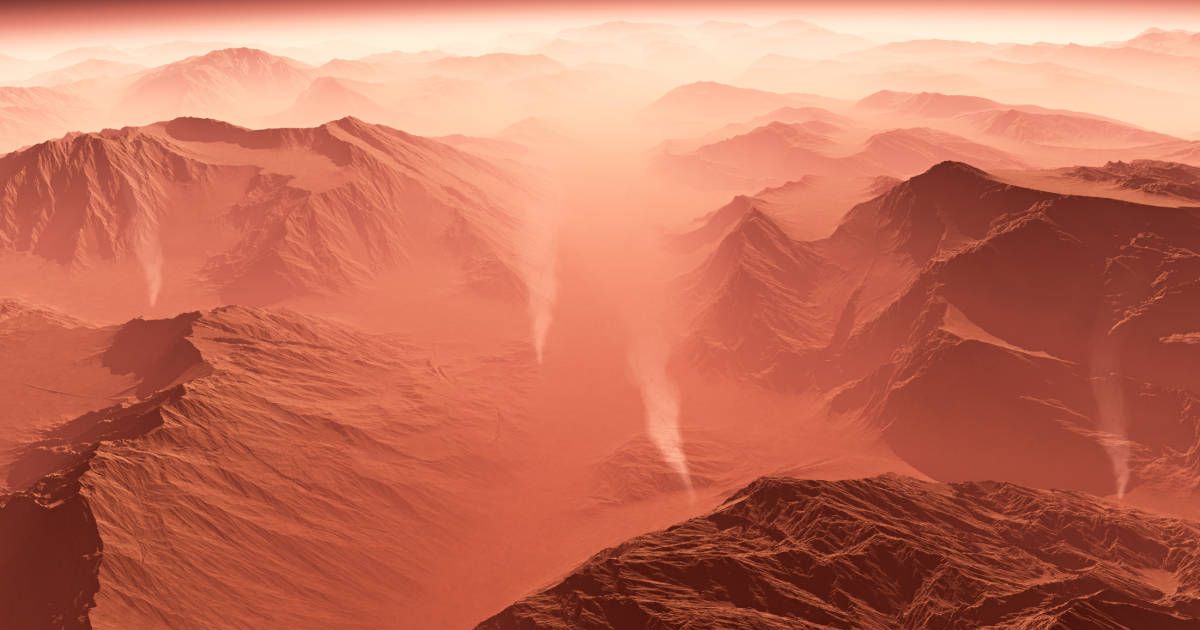
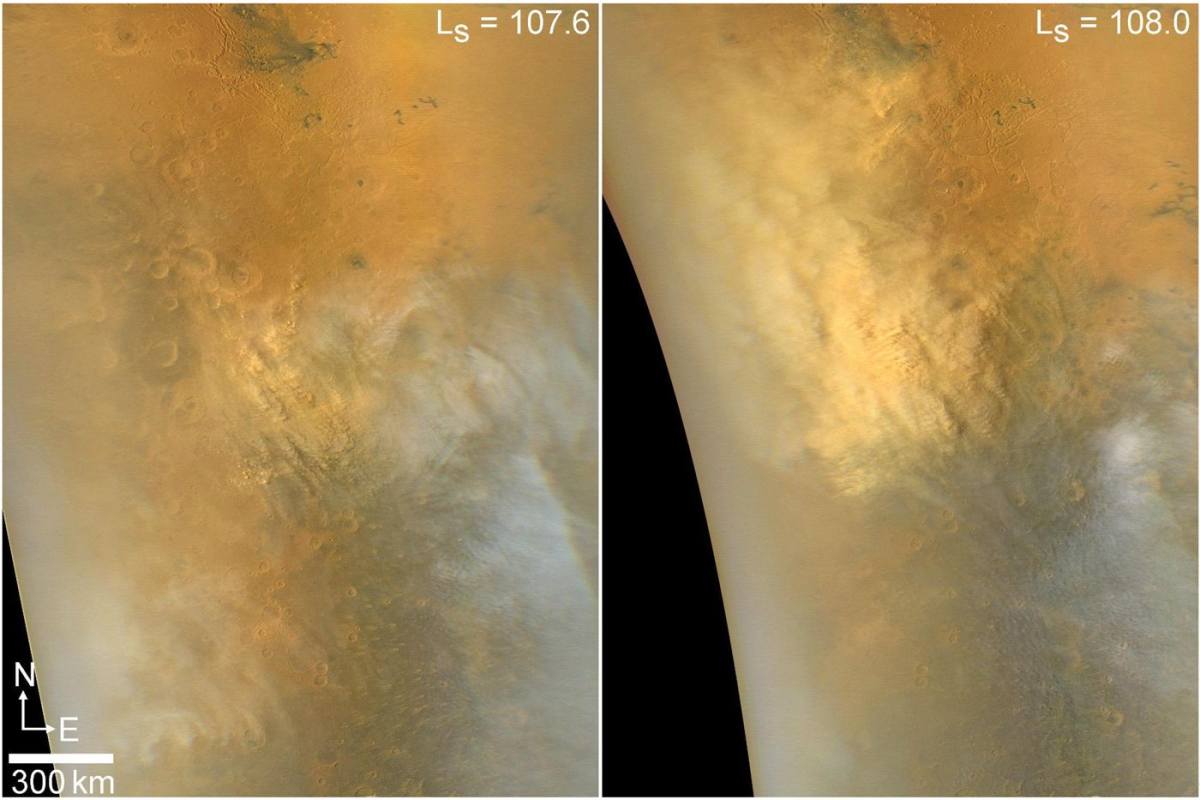
In August 2023, a powerful yet localized dust storm swept across Mars’ northern high latitudes during its summer season in the northern hemisphere, unexpectedly making water vapor rise to extreme heights in the atmosphere and accelerating the planet’s long-term water loss to space. Scientists using data from three orbiting spacecraft, namely the ESA’s ExoMars Trace Gas Orbiter (TGO), NASA’s Mars Reconnaissance Orbiter (MRO), and the Emirates Mars Mission, observed water vapor concentrations surge up to ten times the normal levels above 25 miles (40 km) just days after the storm peaked. This event was detailed in a study led by Adrián Brines from Spain’s Instituto de Astrofísica de Andalucía and Shohei Aoki, Department of Complexity Science and Engineering, University of Tokyo/Department of Geophysics, Graduate School of Science, Tohoku University. The study was published on February 2, 2026. The water-loss event marked the first documented case of such water escape during Mars’ northern summer, when conditions were typically believed to suppress it. Hydrogen detections at the exobase, the upper atmospheric boundary, rose 2.5 times after the event, confirming water broke into constituent atoms and molecules and escaped.
There is plenty of geographical and mineralogical evidence to suggest Mars once had liquid water flowing on its surface, but over billions of years, it lost vast amounts to space. This is further suggested in the study by the deuterium-to-hydrogen (D/H) ratio in its atmosphere, which is five to eight times higher than Earth’s at around 0.001, because hydrogen, being the lightest atom, escapes more easily than the heavier deuterium (an isotope of hydrogen), leaving the ratio as a fingerprint of this loss. Recent studies estimate Mars shed the equivalent of hundreds of meters of global water layer over 4 billion years, turning a once-wet world into today’s dry desert.
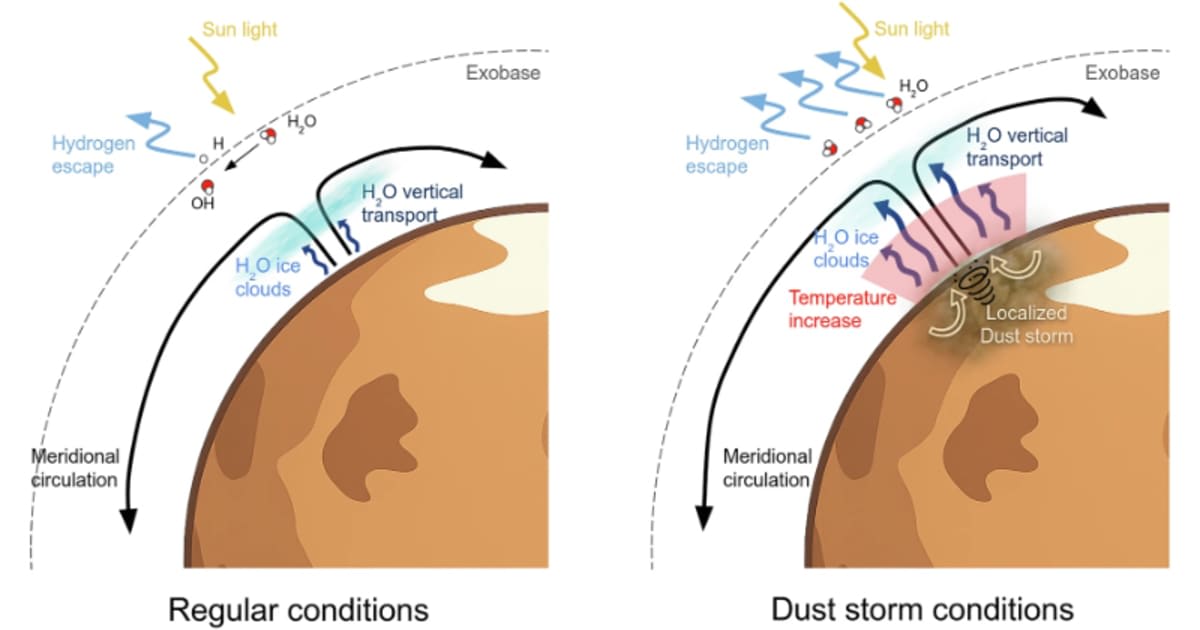
Like Earth, Mars has four seasons due to its tilted axis, but its elliptical orbit adds extremes: northern summers occur far from the Sun, making the air cold and free from dust, while southern summers near perihelion bring heat, strong winds, and, as a consequence, frequent dust storms from the planet’s southern highlands. These storms heat the atmosphere further, worsening the overall north-south divide of atmospheric conditions. In northern summer, water vapor usually stays trapped below 12 miles (20 km) as ice clouds, unlike southern summer’s warm air that lifts it above 62 miles (100 km) for sunlight to break it apart, triggering hydrogen escape at the exobase, the end of the Martian atmosphere going into space.

This particular storm broke the pattern by heating the northern air enough to lift vapor high, where photolysis split it into escaping hydrogen at the exobase. This is very similar to events that occur in the southern south despite the opposite season in the north. Observations from Mars Express and TGO highlight this usual contrast, but the anomaly of the titular storm proves local dust can trigger water loss at any time of the year. Such bursts refine our view of Mars’ drying, which wasn’t just limited to seasonal storms, but surprising ones like the Martian Year 37 storm chipping away at ancient water, whose evidence can be found in river valleys.
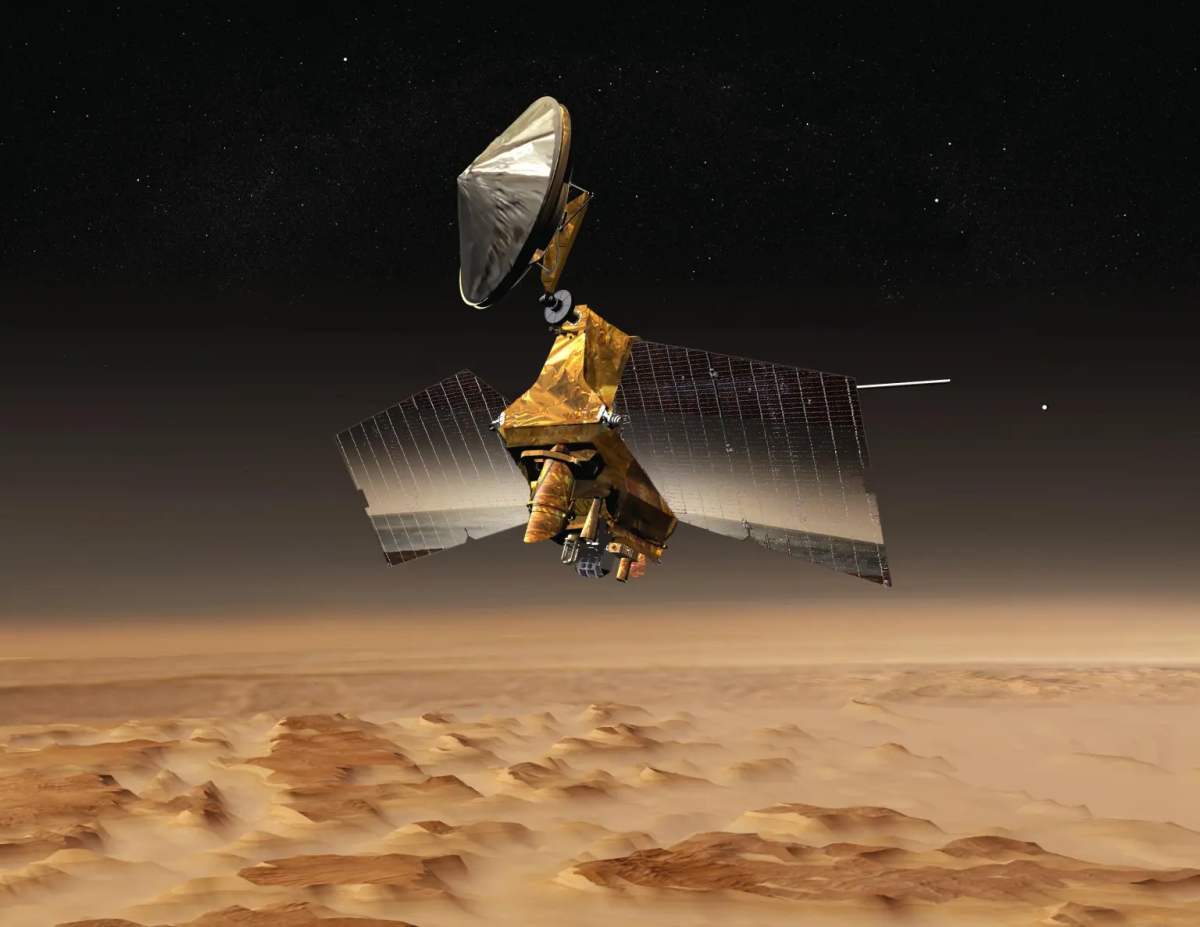
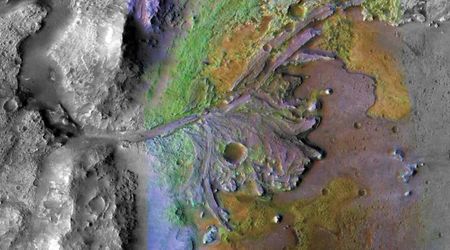
Because of its interesting Earth-like features that survived from its seemingly habitable past, many orbiters like TGO, MRO, and others have been made to throw light on these Martian dynamics over the decades since it was first explored. Viking missions in the 1970s first detected signs of water cycles. MAVEN, dedicated to observing the Martian upper atmosphere, now measures escaping particles directly. Rovers such as Perseverance search for life in ancient riverbeds. NASA’s Artemis program will send humans to the Moon, where it plans to build bases for fuel production and research, but these steps are meant to ultimately prepare astronauts for Mars landings, perhaps in the 2030s. Thanks to these efforts, future crews will study water loss firsthand despite dust storms, scarce resources, and inhospitable conditions.
More on Starlust
NASA's Perseverance rover successfully completes first AI-directed drive on Mars
Mars may be tiny but its impact on Earth's ice ages has been immense