Ahead of Artemis II launch, know all about the last man to walk on the Moon
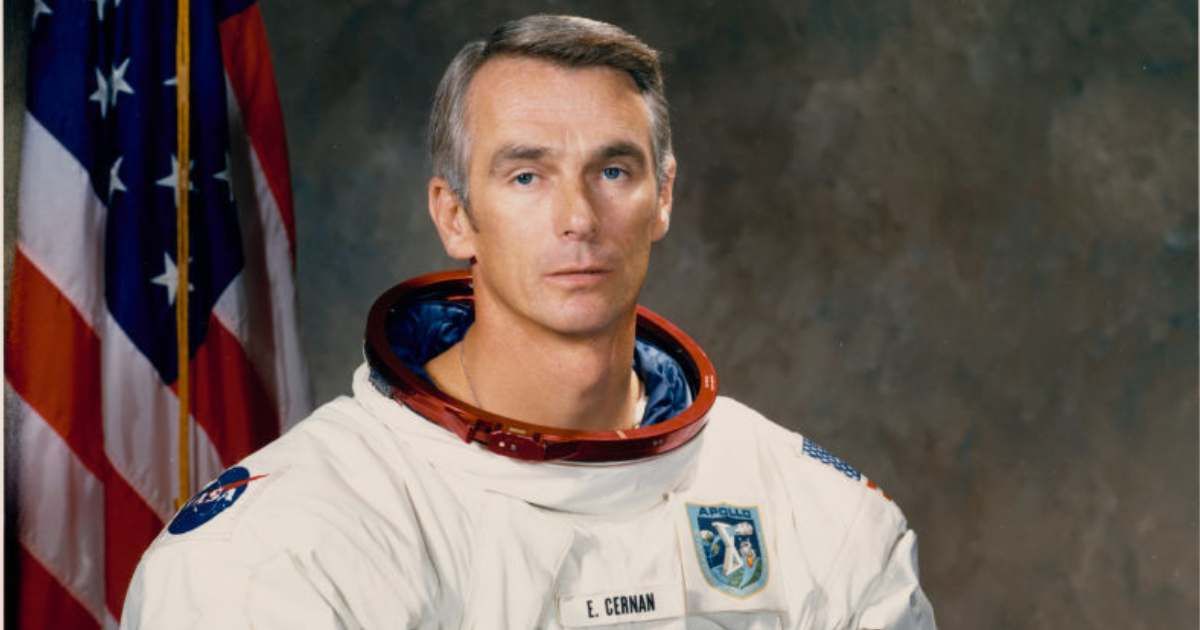
'We leave as we came and, God willing, as we shall return with peace and hope for all mankind,' were American astronaut Eugene Cernan's closing words while leaving the Moon.
PUBLISHED 1 HOUR AGO
American astronaut Eugene Andrew Cernan (1934 - 2017) wearing a space suit at the Johnson Space Center in Houston, Texas, December 1971. (Cover Image Source: Getty Images | Photo by Space Frontiers)

Eugene Andrew Cernan, the commander of Apollo 17, left his mark on the history of exploration by flying three times in space, twice to the moon. He also holds the distinction of being the second American to walk in space and the last human to leave his footprints on the lunar surface, according to NASA.
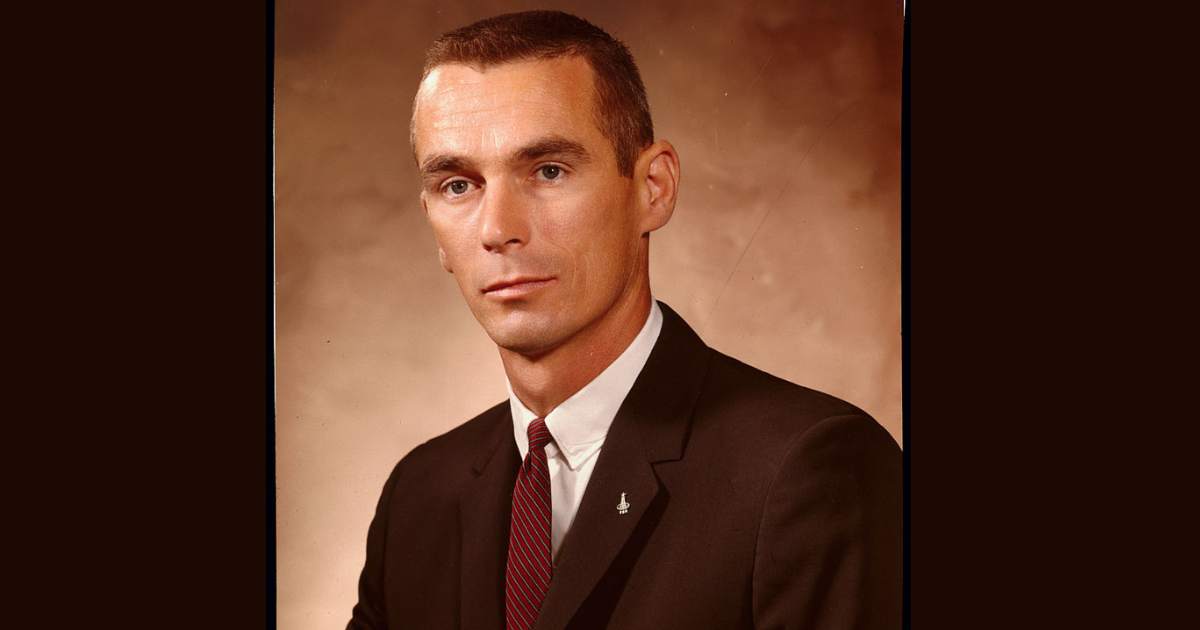
Closeup of Astronaut Eugene A. Cernan taken on October 9, 1964. (Representative Image Source: Getty Images)
Close-up of Astronaut Eugene A. Cernan taken on October 9, 1964. (Image Source: Getty Images)

Cernan began his journey into space with the Gemini IX mission on June 3, 1966, serving as pilot alongside Thomas Stafford. During the three-day flight, Cernan became the second American to walk in space, spending over two hours in extravehicular activity. The mission tested complex rendezvous techniques in orbit and concluded with a near-perfect splashdown, underscoring NASA’s growing confidence in human spaceflight operations.
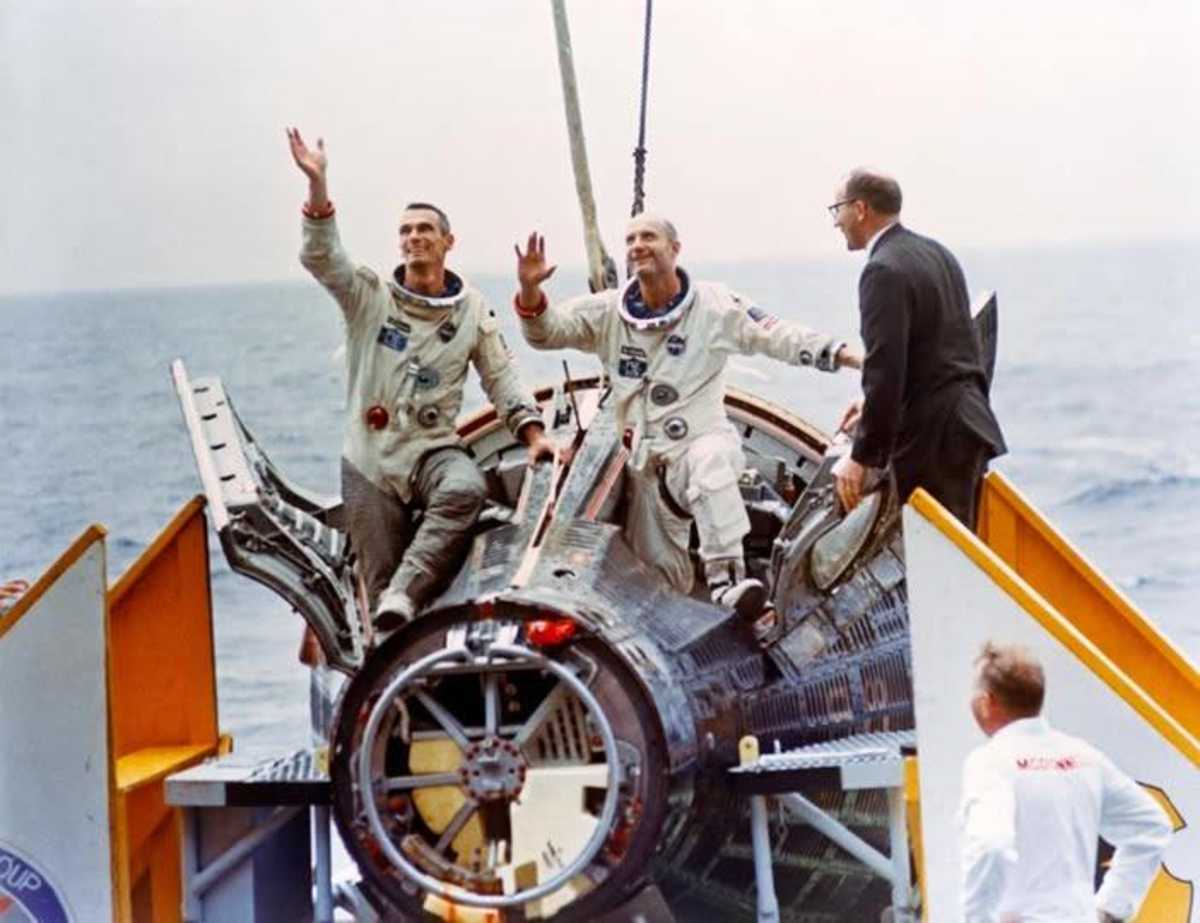
Astronauts Thomas Stafford (right) and Eugene Cernan wave to the crowd aboard the aircraft carrier USS Wasp as they emerge from their Gemini-9 capsule. John C. Stonesifer (far right), with the Manned Spacecraft Center's Landing and Recovery Division, was onboard to greet the astronauts. (Image Credit- NASA)
Astronauts Thomas Stafford (right) and Eugene Cernan wave to the crowd aboard the aircraft carrier USS Wasp as they emerge from their Gemini-9 capsule. John C. Stonesifer (far right), with the Manned Spacecraft Center's Landing and Recovery Division, was on board to greet the astronauts. (Image Source: NASA)

His second journey came with Apollo 10 on May 18, 1969, a crucial rehearsal ahead of the first Moon landing. As lunar module pilot, Cernan joined Stafford and John Young in a mission that pushed the boundaries of precision navigation. The crew descended and this near-touchdown mission proved that astronauts could safely operate in the Moon’s gravitational field and laid the groundwork for the success of subsequent lunar landings.
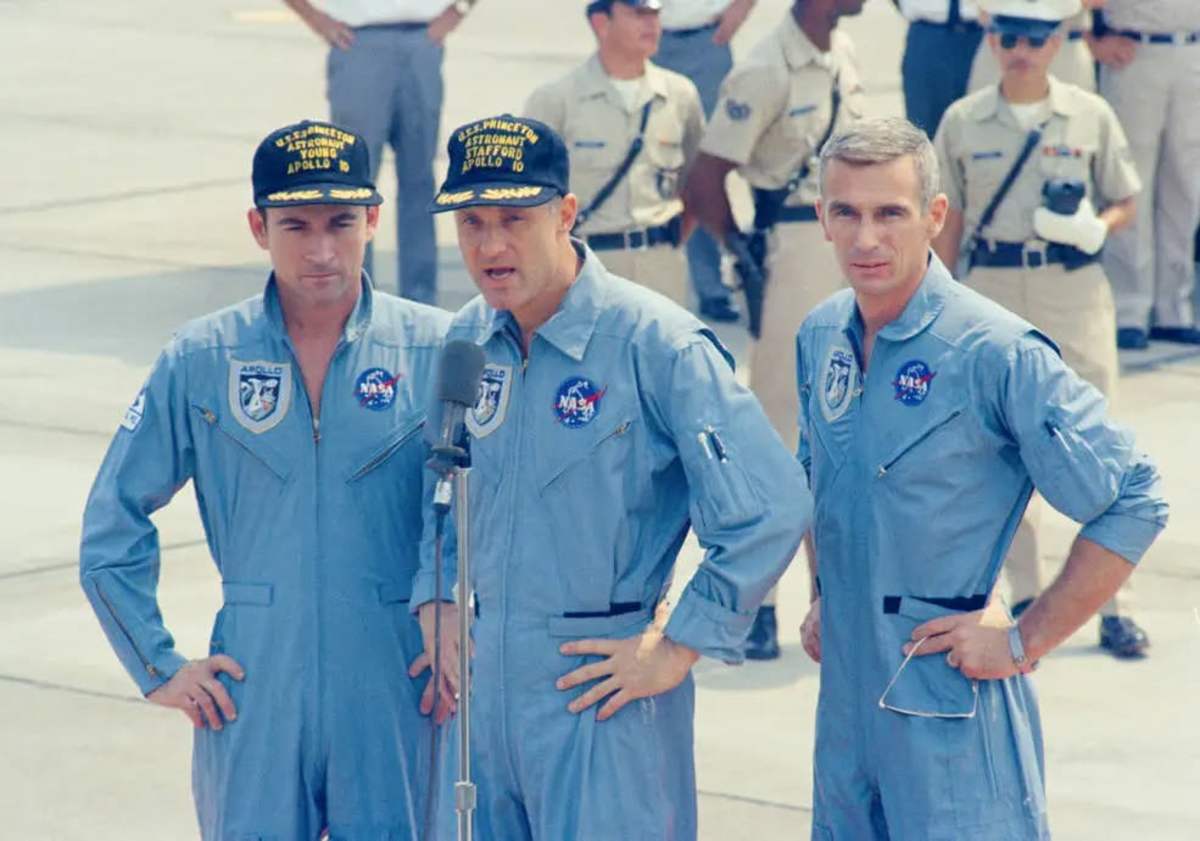
The Apollo 10 crew (left to right) John Young, Tom Stafford, and Gene Cernan are shown upon their return to Ellington Air Force Base in Houston (Image Source- NASA)
The Apollo 10 crew (left to right) John Young, Tom Stafford, and Gene Cernan are shown upon their return to Ellington Air Force Base in Houston (Image Source: NASA)

Cernan’s final voyage came with Apollo 17 on December 7, 1972, where he served as commander on humanity’s last mission to the Moon. The flight began with the first nighttime launch of a crewed lunar mission and culminated in an extended stay at the Taurus-Littrow valley. Alongside Harrison Schmitt, Cernan spent over three days exploring the surface, setting records for the longest lunar stay and the largest collection of Moon rocks returned to Earth. The Apollo program defined America’s first era of lunar exploration.
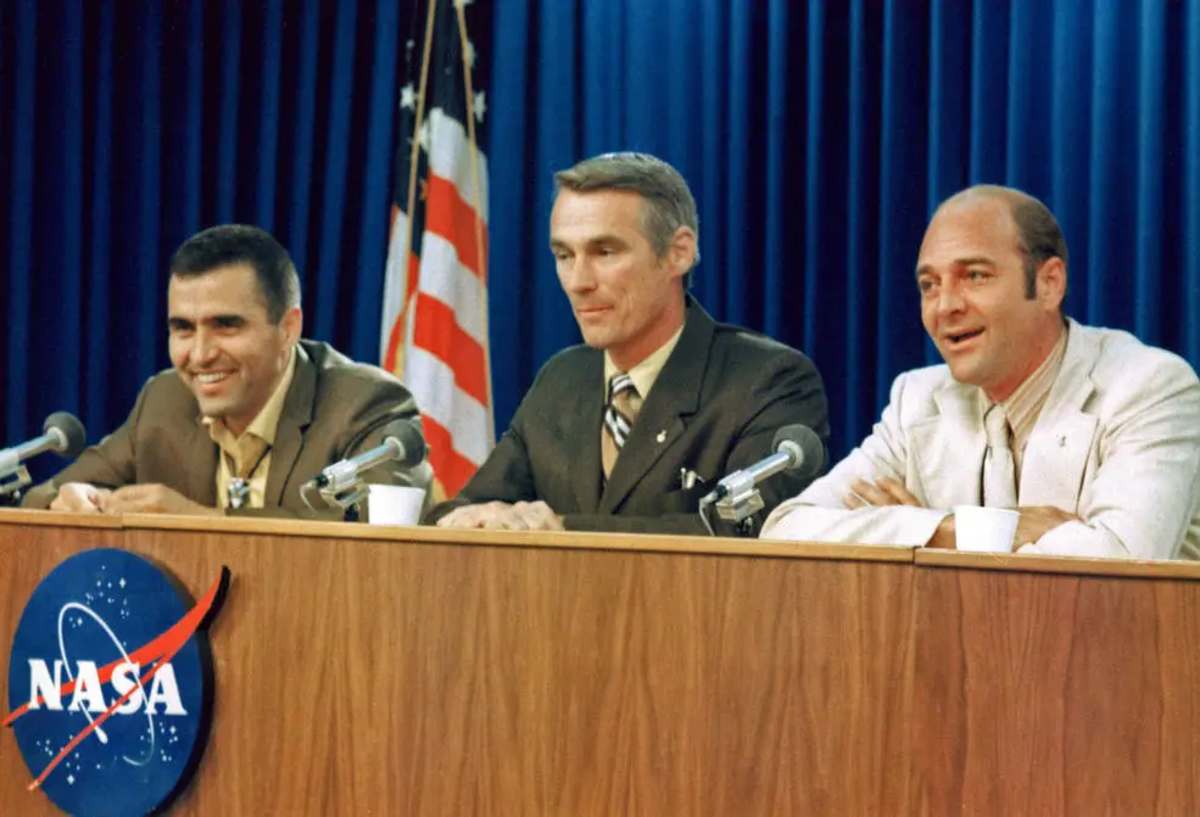
The Apollo 17 crew of Harrison H. “Jack” Schmitt, left, Eugene A. Cernan,
and Ronald E. Evans during their first press conference.(Image Source- NASA)
The Apollo 17 crew of Harrison H. “Jack” Schmitt, left, Eugene A. Cernan, and Ronald E. Evans during their first press conference. (Image Source: NASA)

Apollo 17 is seen as one of the cleanest and most productive in Apollo history. The mission established several new records for human space flight, including the longest lunar landing flight (301 hours, 51 minutes); longest lunar surface extravehicular activities (22 hours, 6 minutes); largest lunar sample return (nearly 249 pounds); and longest time in lunar orbit (147 hours, 48 minutes). “We leave as we came and, God willing, as we shall return with peace and hope for all mankind,” were Eugene's closing words while leaving the moon.
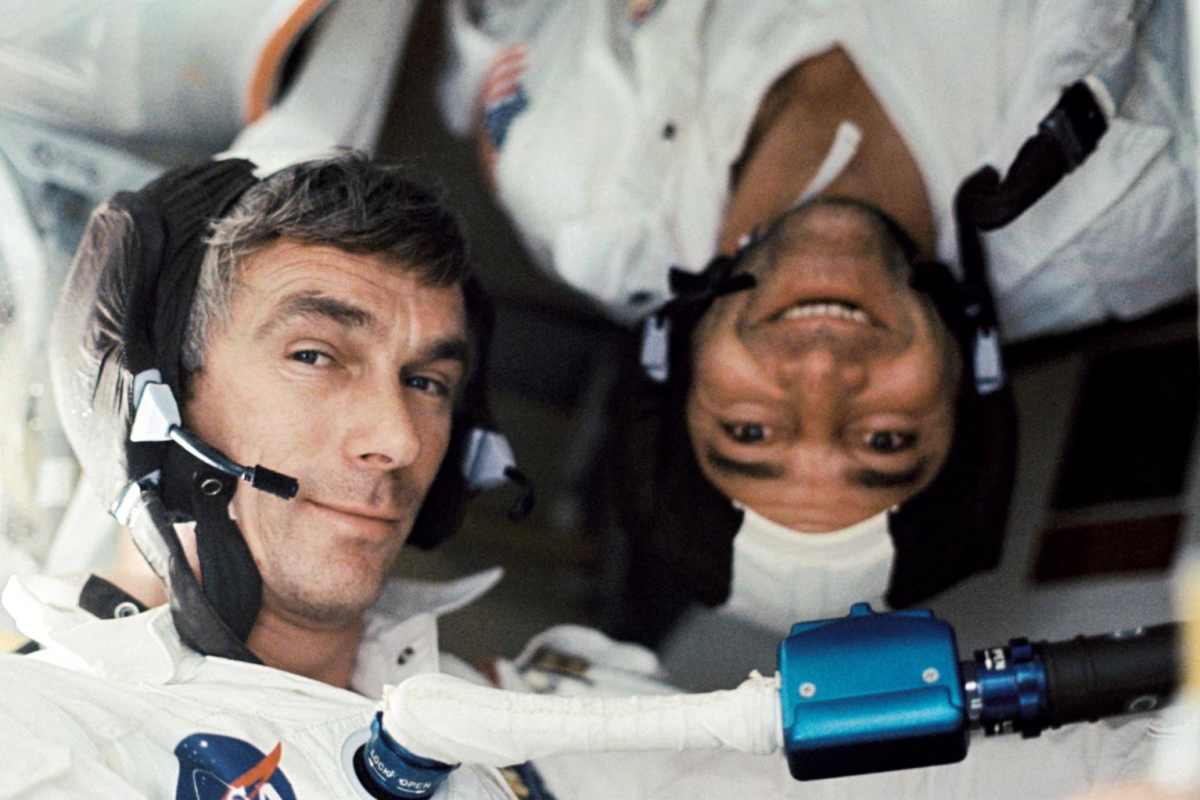
Harrison Schmitt and Gene Cernan, Apollo 17 (Representative Image Source- NASA / JSC/AS17-162-24053)
Captured by Harrison H. Schmitt aboard Apollo 17, this zero-gravity snapshot shows Commander Eugene A. Cernan floating “right side up,” while Ronald E. Evans appears “upside down. (Image Source: NASA / JSC/AS17-162-24053)

The April 1, 2026, launch of Artemis II, which is happening today at 6:24 P.M. EDT, will differ significantly from Apollo 17 in both purpose and execution. Artemis II is a 10‑day crewed lunar flyby using NASA’s larger Space Launch System (SLS) and the Orion capsule, which carries four astronauts instead of Apollo’s three. It follows a free‑return trajectory around the Moon, relying on gravity for much of its return, rather than a landing‑and‑ascent profile. The Artemis II mission also includes the first woman and first person of color headed toward the Moon, emphasizing diversity and long‑term lunar exploration, whereas Apollo 17 was the final Apollo landing focused on surface science and symbolic presence. NASA looks to that moment when planning new steps toward returning to the moon.

More on Starlust

‘We are ready': NASA mission managers confident ahead of April 1 launch
MORE STORIES

The study shows how some stars churn out heavy elements with no roadblock.
2 hours ago
It can even alert occupants of a moon base if there is radioactive debris to hit the lunar surface.
1 day ago
Back in 2004, Cassini noticed that Saturn's rotation rate was slowly changing. But this was not possible as planets are not known to do that.
1 day ago
"This is the first time we have been able to show that gravity is an important factor in sperm’s ability to navigate through a channel like the reproductive tract."
2 days ago
'It’s like pushing a merry-go-round,' said one of the scientists who studied recent data on Jupiter-family comet 41P/Tuttle–Giacobini–Kresak.
2 days ago
A research paper described a region between Earth and the Moon where cosmic rays are deflected by our planet's magnetic field.
4 days ago
A hidden white dwarf feeding on the star is the source of the unusual X-ray emissions from the stellar system.
5 days ago
Black hole growth peaked about 10 billion years ago during a period known as the 'cosmic noon.'
5 days ago
The two images are helping researchers figure out how the gas giant's atmosphere works as a connected three-dimensional system.
5 days ago
It was first recorded in 185 AD by Chinese astronomers as a bright ‘guest star’ that remained in the sky for eight months, marking the birth of RCW 86.
6 days ago