We may be missing signals from alien civilizations. Astronomer reveals why

We may be missing out on ultra-narrow radio signals sent by technologically advanced civilizations, a new study claims. The study shows that a star’s violent eruptions near an alien planet may distort the signals before they leave their home system. This smears the original signals across more frequencies, making it harder to detect. “Yes, it is possible that we may have missed genuine signals because our search algorithms are specifically designed to detect extremely narrow, spike-like features — you can think of them as needles,” co-author and astronomer Vishal Gajjar at the SETI Institute told Starlust in an exclusive interview. “However, due to the star’s environment, these signals may no longer remain needle-like and instead become broadened, more like an arrowhead.” Gajjar and his colleague Grayce C. Brown have reported their findings in a paper published in The Astrophysical Journal.
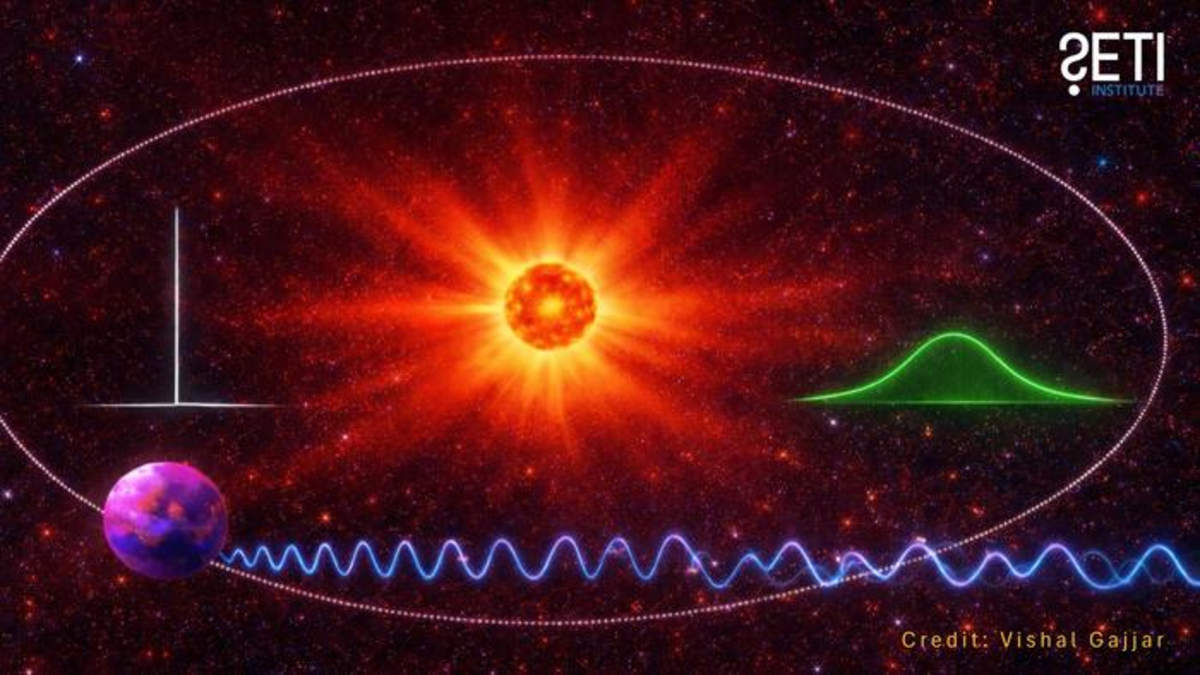
In the search for extraterrestrial intelligence, narrowband signals have been the gold standard. Such signals are technological indicators of the presence of intelligent life on a planet. Furthermore, they require low power to produce and to travel long distances without attenuation. They also stand out from cosmic noise. The seed was sown in a 1959 Nature paper in which Giuseppe Cocconi and Philip Morrison, physicists at Cornell University, suggested that any extraterrestrial civilization might send out signals at 1.42 GHz, which is emitted by hydrogen atoms, the most abundant element in the universe. This is also a frequency an advanced civilization would perceive.
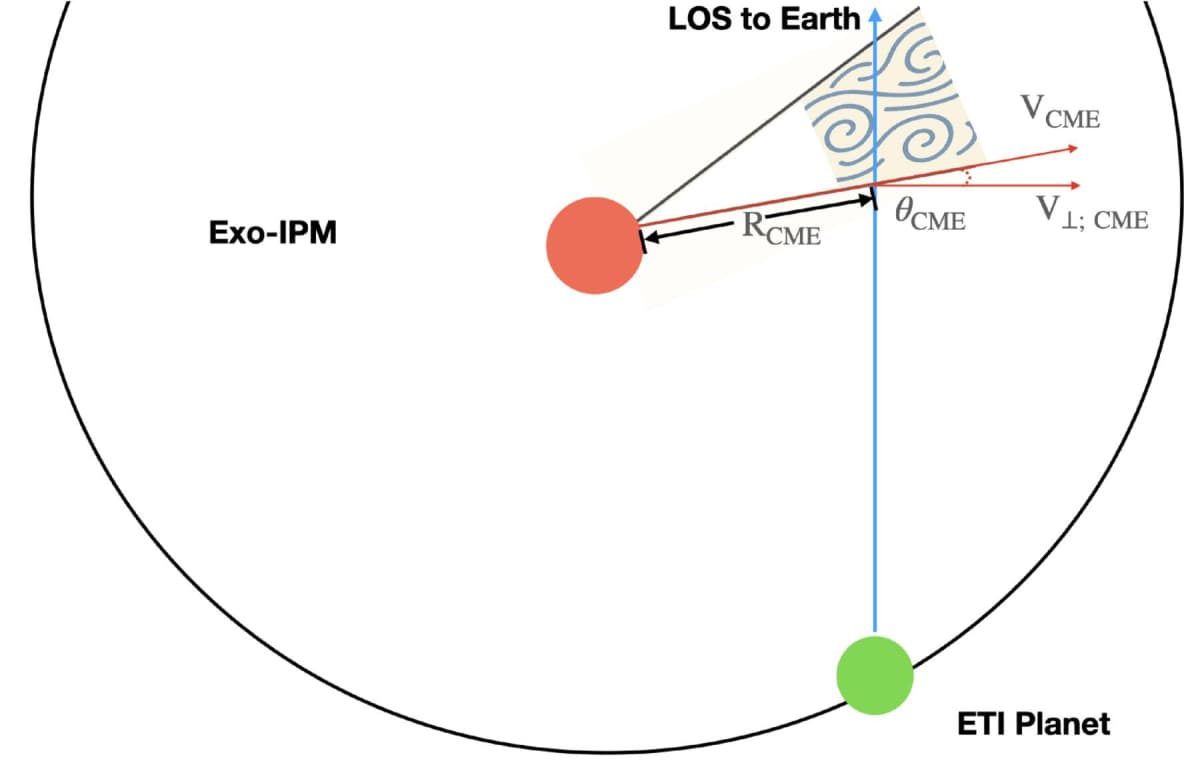
Although Cocconi and Morrison were not wrong, they and other alien hunters overlooked the chaotic environment that prevails around a star. If any alien civilization wants to transmit narrow radio signals toward Earth, their signals will have to pass through the interplanetary medium (IPM). Every star, including the Sun, is surrounded by an IPM, a region that is shaped by stellar winds, flares, and sporadic violent eruptions called coronal mass ejections (CMEs). It is this unforgiving environment, the researchers say, that can prevent narrowband signals from reaching outer space. To assess how severe such effects could be, the team probed what happened to radio signals that came from spacecraft such as Mariner, Pioneer, Helios, Cassini, and Voyager in our solar system. They then developed a model based on this analysis and applied the model to a simulated survey of 1 million nearby stars at varying conditions.
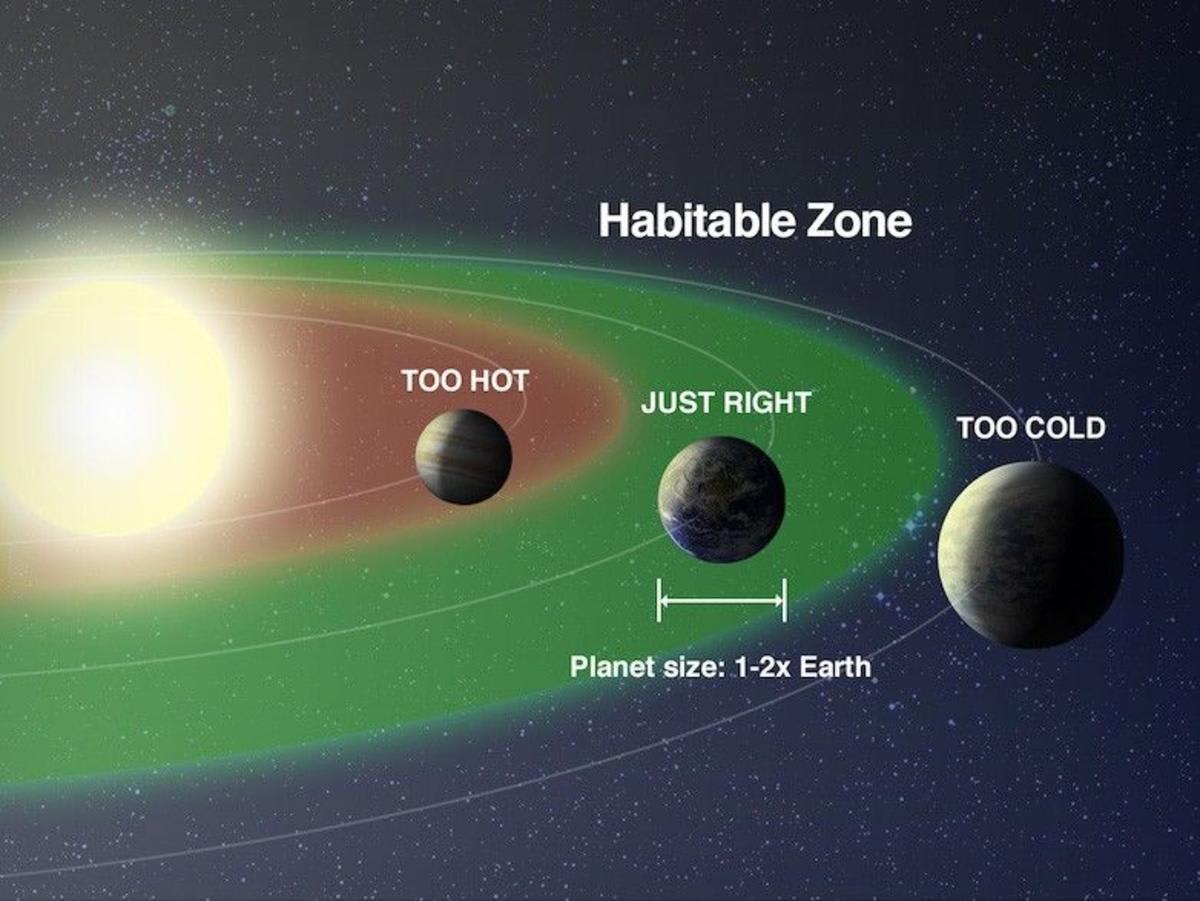
If any alien civilization sends a signal at 1 GHz, M-dwarf stars in the Milky Way are likely to broaden this signal before it escapes IPM. Such stars are dominant in our galaxy and have habitable planets around them. “The maximum broadening occurs when the signal passes closest to its host star, where it likely originated,” said Gajjar. “Once it moves beyond that region, the interstellar medium does not significantly broaden the signal over typical distances.” The chances of the signal passing close to another star along its journey are extremely small, since space is mostly empty. “However, in the rare case that it does pass near another star, it could experience additional broadening,” he added.

So, how can we detect the missing signals? “The alternative is to design search methods that are better suited for these broadened signals. If a signal is spread out over a wider range of frequencies, we can combine or average those nearby frequency channels,” said Gajjar. “By doing this, we can recover part of the lost signal strength—roughly proportional to the square root of how much it has spread. While we can’t restore the original signal, this approach helps us detect signals that would otherwise be missed.” Gajjar hopes that it is possible to do so by tweaking the search strategies of the upcoming radio telescopes. “We are also encouraging future technosignature searches — especially with next-generation, highly sensitive radio telescopes — to take this effect into account when designing their search strategies,” he suggested.
More on Starlust
Some of the galaxy's unusually cold 'stars' could actually be alien megastructures