Scientists trace the most energetic neutrino ever detected on Earth to blazars
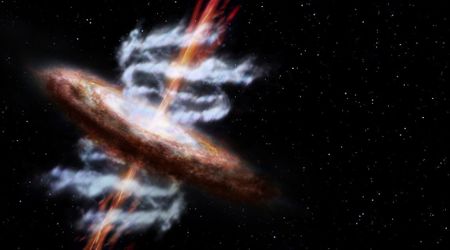
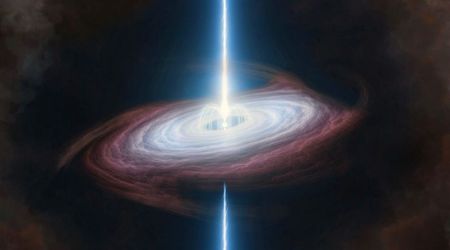
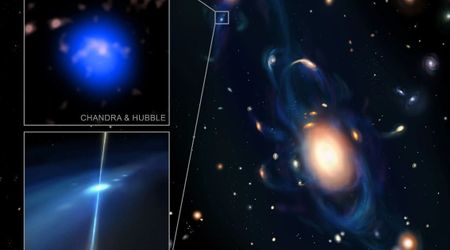
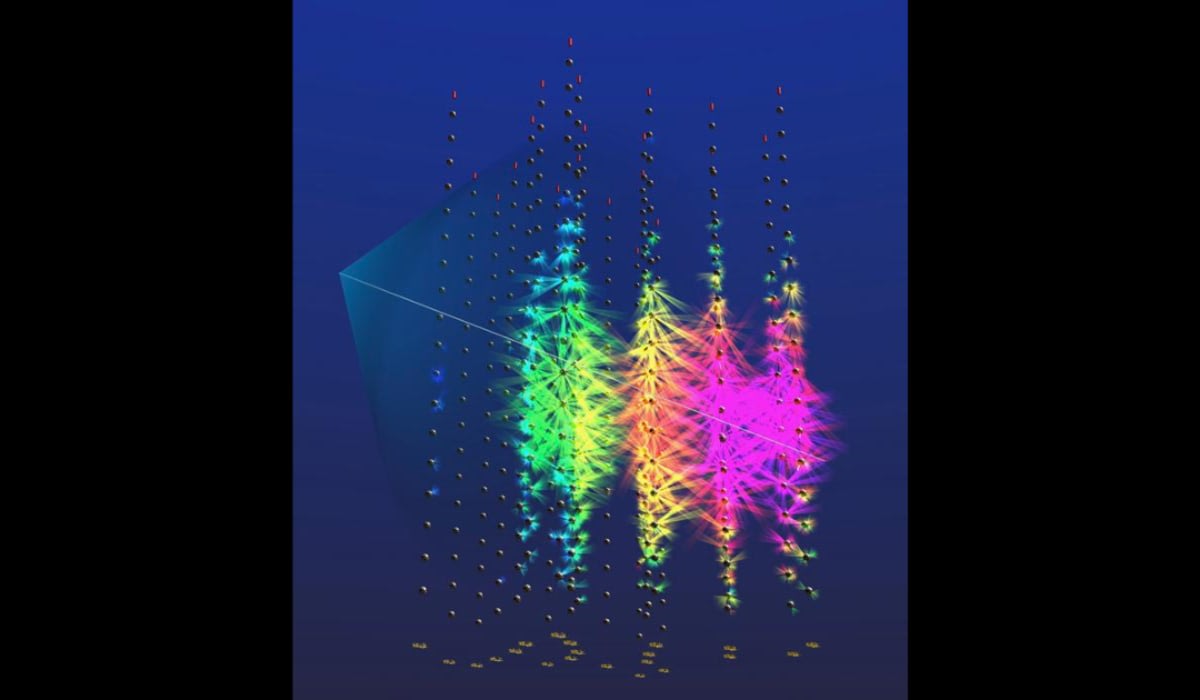
Back on February 13, 2023, the KM3NeT/ARCA detector located deep beneath the Mediterranean Sea off the coast of Sicily captured the passage of an energy-packed neutrino. In fact, at 220 PeV, it was the most energetic neutrino passage ever detected, and it rightfully caught the attention of the scientific community and the media alike. But its origins remained unknown. Now, a new study published in the Journal of Cosmology and Astroparticle Physics claims that it may have come from a population of blazars, which are supermassive black hole-hosting active galactic nuclei (AGN) shooting a plasma jet towards Earth.
Neutrinos are born every time atoms come together or break apart. They don’t interact with matter, and trillions of them zip through space and even the human body. To find out where the neutrino from 2023 originated, the scientists first built a hypothesis and then simulated a chain of events that might have led to the birth of the neutrino and its subsequent journey to Earth. They then compared the results of simulations with those of actual observations.
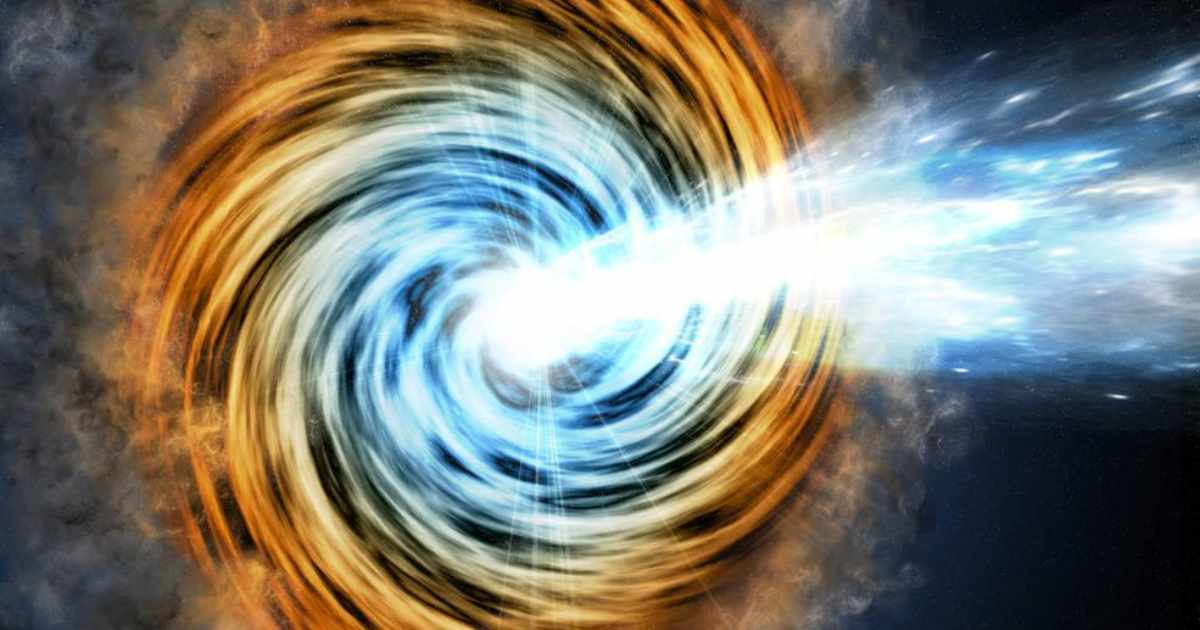
“There are several possible explanations for the origin of this particle,” said Meriem Bendahman, a researcher at Istituto Nazionale di Fisica Nucleare (INFN) Naples and a member of the KM3NeT collaboration, in a statement. “For example, it has been proposed that such neutrinos are generated when ultra-high-energy cosmic rays interact with the cosmic microwave background radiation, the residual light from the early Universe. But there is also the possibility that the neutrino originates from a diffuse flux produced by a population of extreme accelerators, such as blazars.” Bendahman believes that a single sudden event, such as an explosion or flare, didn’t create the neutrino. The scientists didn’t detect any such event or signal in radio, optical, X-ray, or gamma-ray emission in the same region of the sky from where the particle had come, causing them to exclude such a possibility.

“This does not completely rule out the possibility of a point-like source, but it leads us to consider that our neutrino may come from a diffuse background—that is, from a flux of neutrinos including contributions from many sources,” Bendahman added. “We therefore simulated a population of blazars using an open-source software called AM3, with physically motivated parameters.” They varied two key parameters in their simulations. One is baryonic loading, which is the energy carried by protons compared to electrons. This reveals how many neutrinos can be produced. The other is the proton spectral index that shows proton energy distribution and how it rises to extreme energies. They also considered neutrino flux and gamma-ray flux and then compared the simulations with observational data.
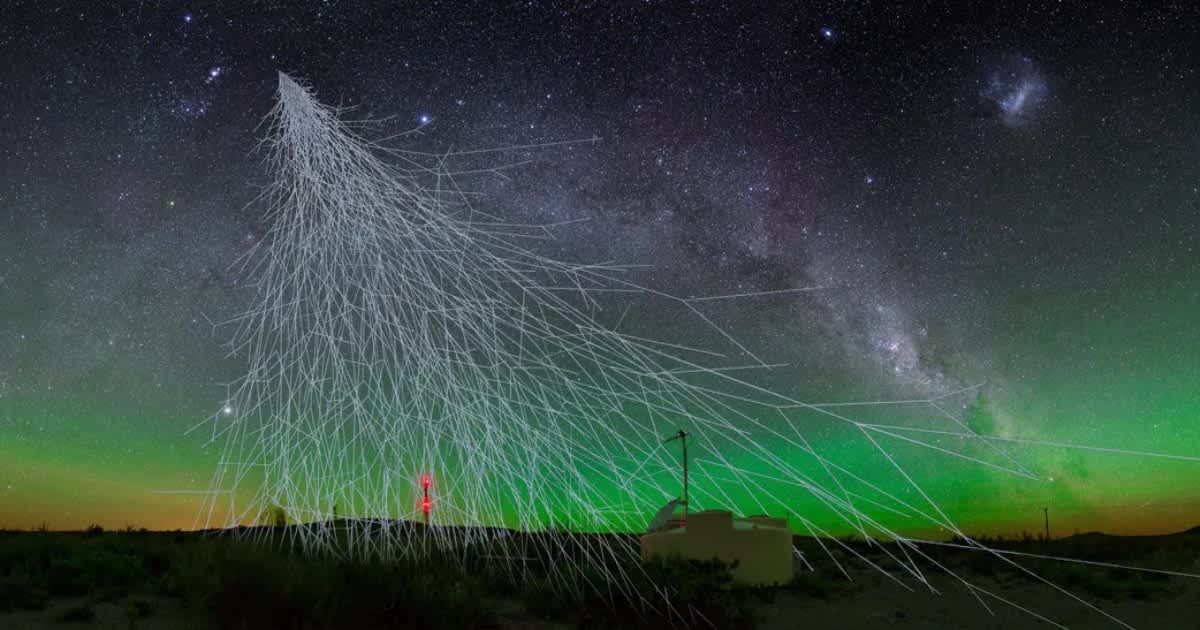
In addition to KM3NeT/ARCA data, Bendahman and colleagues sifted through observations from the IceCube Neutrino Observatory and the Fermi Gamma-ray Space Telescope. They didn’t find any traces of ultra-high-energy neutrino events in these databases. The researchers also found that the contribution made by blazars also does not exceed the extragalactic gamma-ray background measured by Fermi, thus establishing blazars as a plausible source for the high-energy neutrino. This assumption is promising, but it needs to be tested with more data. “We need more observational data,” noted Bendahman. “KM3NeT is still under construction, and we detected this ultra-high-energy neutrino with only a partial configuration. With the full detector and more data, we will be able to perform more powerful statistical analyses and open a new window on the ultra-high-energy neutrino universe.”
More on Starlust
New model maps the ghost particles that the Milky Way sends towards Earth