Newly-formed sunspot triggers dozens of solar flares, including the strongest in nearly two years
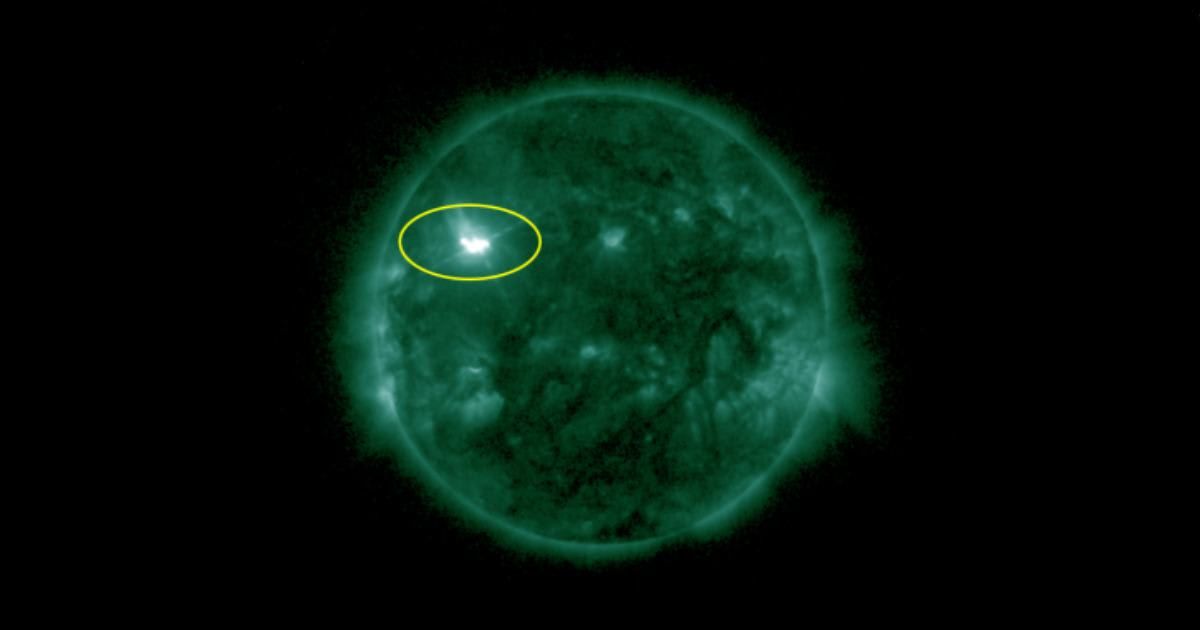
The National Oceanic and Atmospheric Association’s (NOAA) Space Weather Predictions Center (SWPC) observed a massive and brand-new sunspot cluster known as Region 4366 fire off an X8.1-class flare at 6:57 p.m. ET on February 1, 2026. It was the strongest solar flare since October 2024, which was rated X9, according to SpaceWeatherLive.com. The intense radiation from the flare ionized the upper layer of Earth's atmosphere, triggering a shortwave blackout across the South Pacific Ocean, with ham radio operators in Australia and New Zealand possibly experiencing loss of signal below 30 MHz for hours.
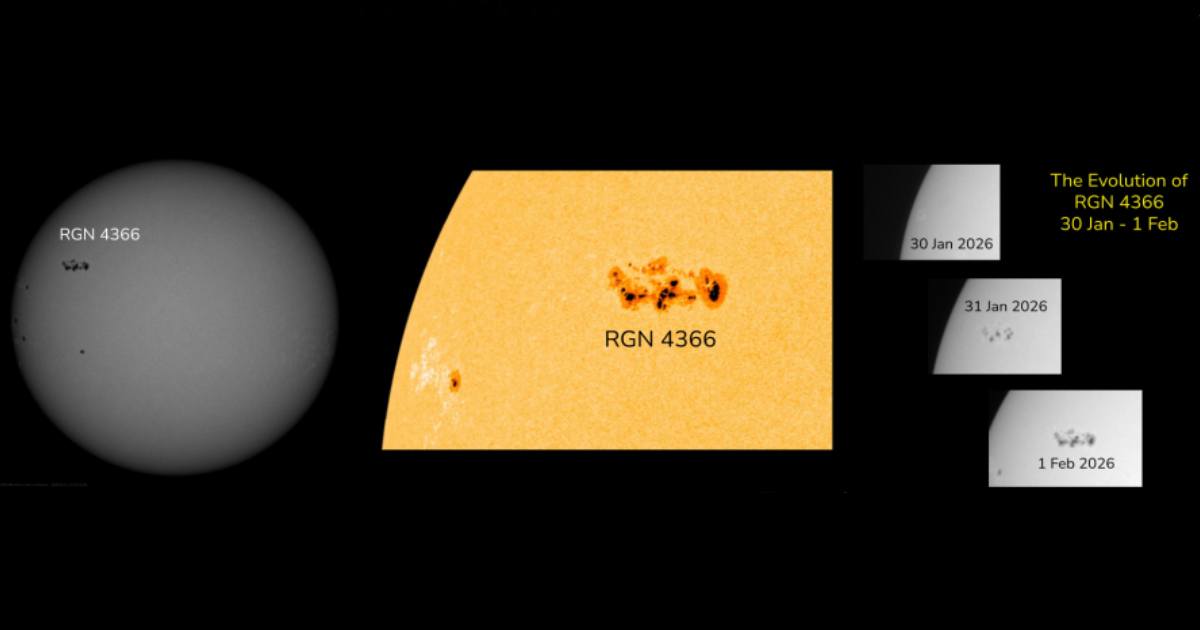
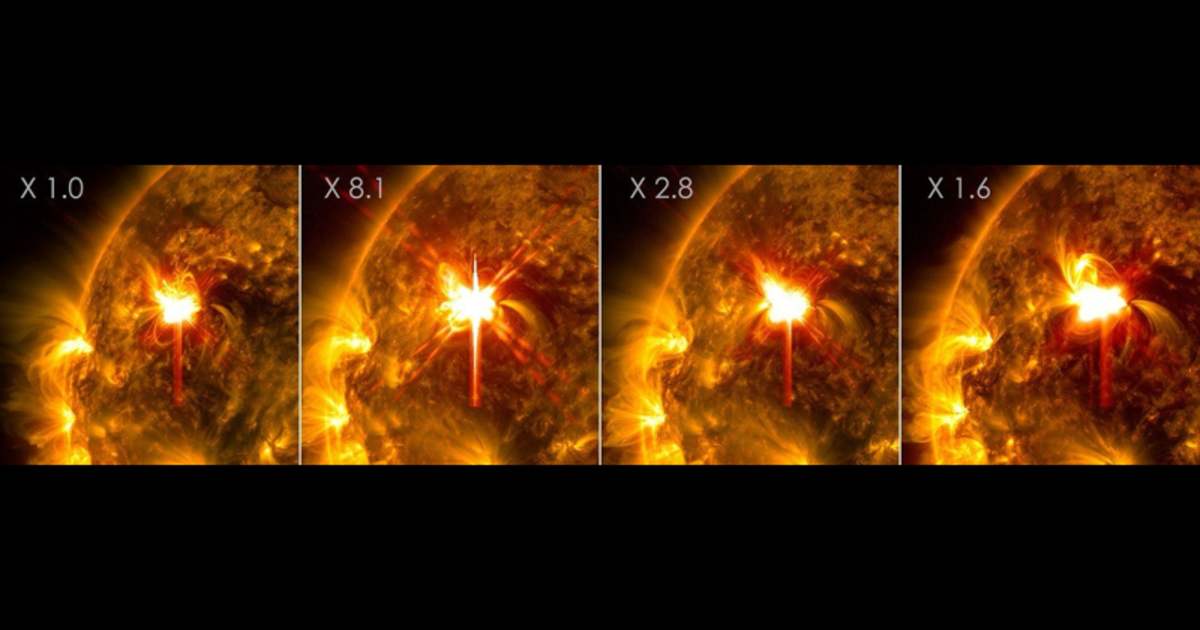
Until a few days ago, the sunspot region didn't exist. It appeared all of a sudden in the Sun's northeast quadrant and grew very fast into a giant, nearly half the size of the infamous Carrington sunspot that, in 1859, unleashed the largest geomagnetic storm in recorded history. Besides the X8.1 flare, Region 4366 emitted three other strong solar flares rated X1.0, X2.8, and X1.6, which peaked at 7:33 a.m. and 7:36 p.m. on February 1 and 3:14 a.m. on February 2, respectively, per NASA. In fact, Spaceweather.com reported that the sunspot also unleashed as many as 23 M-class flares, all in a span of 24 hours.
Solar flares are the most powerful explosions in the solar system. These flashes span the entire electromagnetic spectrum—X-rays, gamma rays, radio waves, ultraviolet, and visible light—with the strongest ones having as much energy as a billion hydrogen bombs, according to NASA. The classes go from A (weakest), B, C, M, and X (strongest). X-class means the most amount of energy, and the number after that shows how strong in intensity it is. Each class step-up means 10 times more energy than the last. These flares are not dangerous for people on the ground because our atmosphere soaks up the radiation. But they do affect high-frequency communication negatively by ionizing the lower layers of the ionosphere. A powerful X-class flare can even cause airline passengers to be exposed to radiation.
WATCH: Geomagnetic Storm Category G1 Predicted
— NOAA Space Weather Prediction Center (@NWSSWPC) February 2, 2026
Highest Storm Level Predicted by Day:
Feb 03: None (Below G1) Feb 04: None (Below G1) Feb 05: G1 (Minor)
Issue Time: 2026 Feb 02 1031 UTChttps://t.co/ZbtuNtJdza
As for whether a coronal mass ejection, or CME, is headed Earth’s way, SWPC reported that the modeling indicated that a bulk of solar material will skim past Earth to the north and east late on the 05 Feb UTC-day, delivering possible glancing influences, which may lead to a G1 (minor) geomagnetic storm. A CME is a massive cloud of material from the sun’s corona, weighing up to a billion tons, shot into space. These end up causing geomagnetic storms and glowing auroras. The SWPC, in their weekly update published on February 1, had already declared Region 4366 as the one to watch between February 1 and 7, with forecasters expecting more “exciting activity” from the region over the coming days.
More on Starlust
South Pole Telescope detects unexpected intense stellar flares in the heart of the Milky Way
ESA's Solar Orbiter captures unprecedented view of magnetic avalanche on Sun