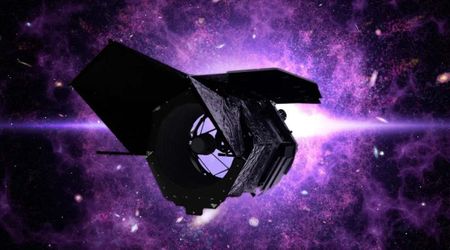
NASA’s SPHEREx maps the entire sky in over a hundred colors
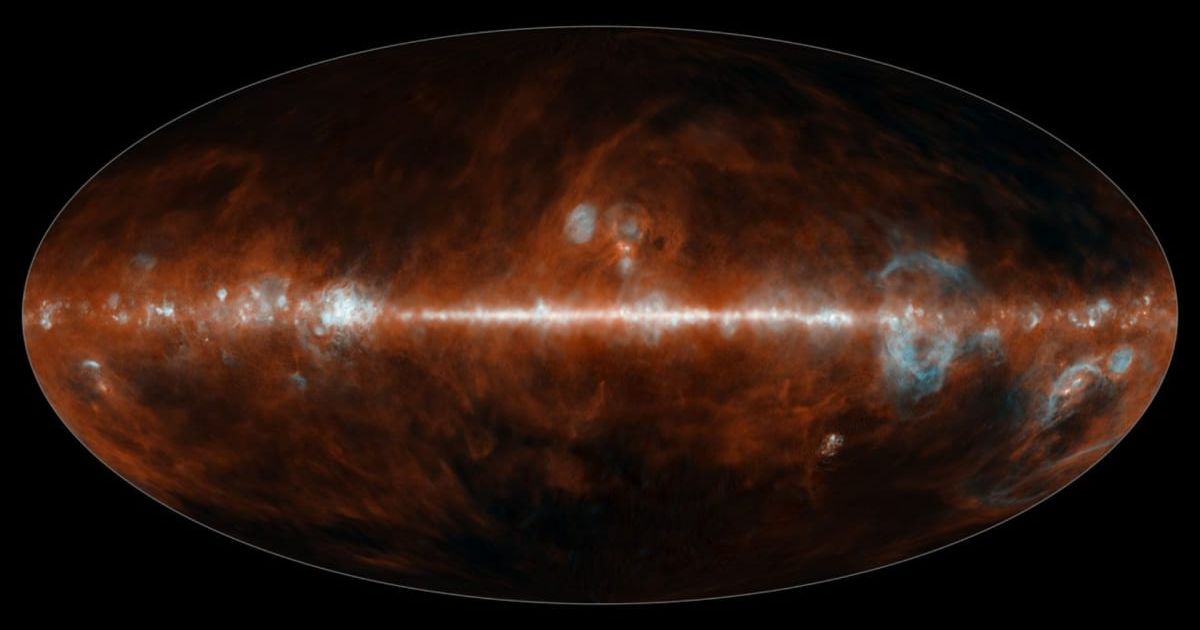
NASA’s SPHEREx space telescope has taken its first infrared map of the entire sky in 102 colors. These 102 infrared wavelengths present in the cosmos cannot be seen by the naked eye, but looking at the sky this way does help scientists better navigate the big questions of the universe, according to the NASA Jet Propulsion Laboratory. The questions include those surrounding the events that took place in the first billionth of a trillionth of a trillionth of a second after the Big Bang and influenced the distribution of galaxies across the universe. Additionally, the data will also help study the evolution of galaxies over billions of years.
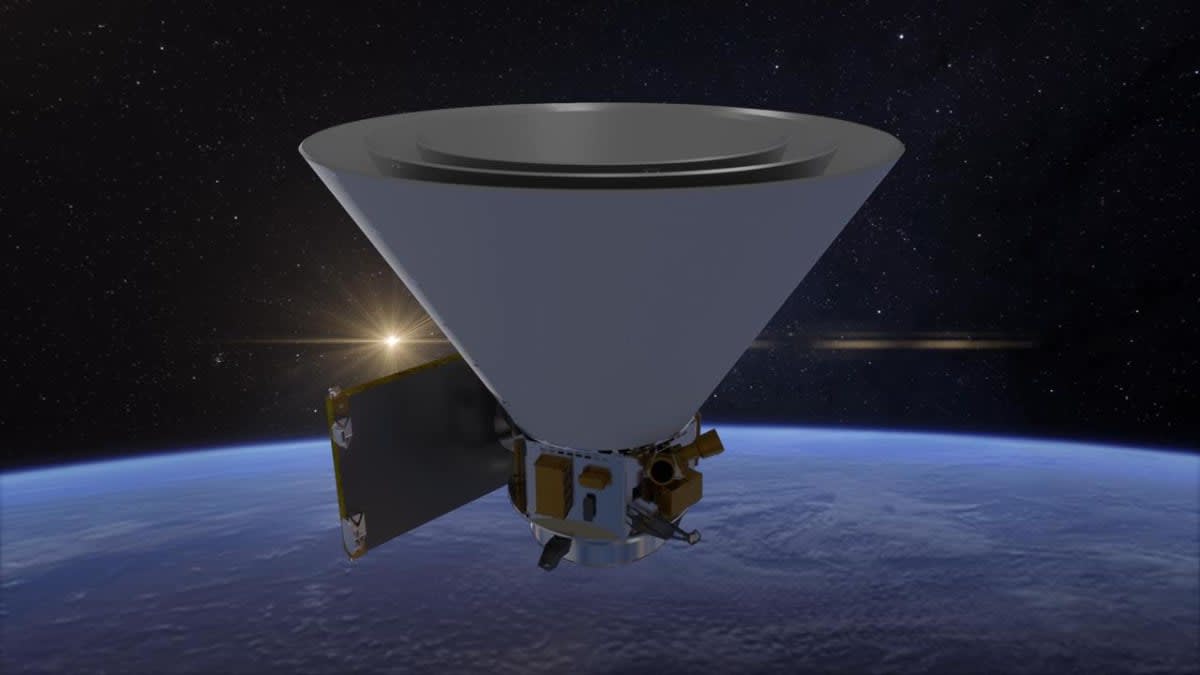
SPHEREx (Spectro-Photometer for the History of the Universe, Epoch of Reionization, and Ices Explorer) orbits from north to south, passing over the poles of our planet. It circles the Earth around 14½ times a day and captures 3,600 images of one circular region of the sky, shifting its field of view with the movement of the planet. The observatory completed its capture of the entire sky in 360 degrees after six months of observing space in every direction. The mission began mapping the sky in May and completed the first portrait in December.
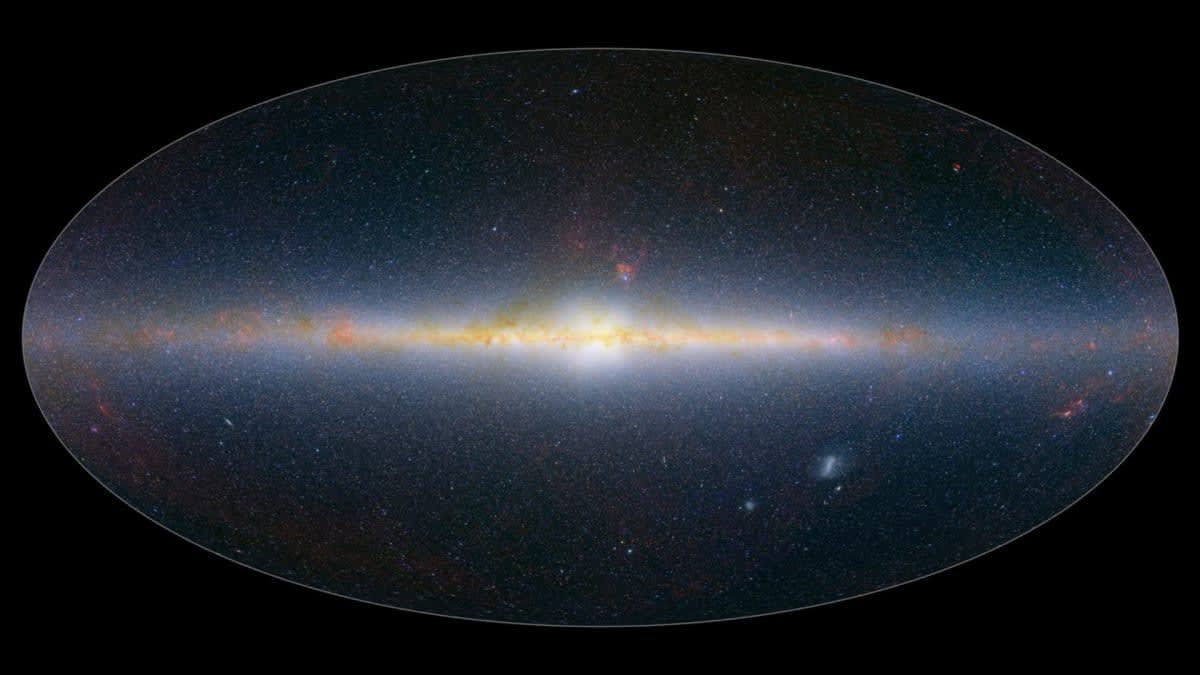
“It’s incredible how much information SPHEREx has collected in just six months — information that will be especially valuable when used alongside our other missions’ data to better understand our universe,” said Shawn Domagal-Goldman, director of the Astrophysics Division at NASA Headquarters in Washington. The two-year primary mission is scheduled to conduct three additional all-sky scans. The complete dataset will merge all the maps, which will increase the sensitivity of the measurements.

“We essentially have 102 new maps of the entire sky, each one in a different wavelength and containing unique information about the objects it sees,” Domagal-Goldman added. Individual colors of the 102 detected by the observatory represent a wavelength of infrared light. Each wavelength carries unique details about the galaxies, stars, planet-forming regions, and other cosmic features observed. For instance, dense dust clouds where stars and planets form might emit no light in one wavelength but might shine bright in others. SPHEREx is equipped with six detectors, each of which is paired with a special filter containing 17 colors. The colors will be used to measure the distance from the Earth to hundreds of millions of galaxies.

SPHEREx’s map will be in 3D, unlike the two-dimensional position maps provided by other observatories. This helps in identifying the subtle variations in the positions of galaxies and how they are placed and distributed. The moment called inflation, when the universe grew trillion-trillionfold, could be looked at better. And its importance cannot be overstated, considering that nothing like it has ever happened again in the universe. As JPL Director Dave Gallagher put it: "SPHEREx is a mid-sized astrophysics mission delivering big science."
More on Starlust
Take a tour through Milky Way's star-forming regions with Gaia's first 3D fly through map