NASA’s James Webb Space Telescope captures the farthest galaxy ever detected
![NASA’s James Webb Space Telescope shows galaxy MoM-z14 as it appeared only 280 million years after the universe began in the Big Bang. [Cover Image Souce: NASA, ESA, CSA, STScI, Rohan Naidu (MIT); Image Processing: Joseph DePasquale (STScI)]](https://d3hedi16gruj5j.cloudfront.net/789325/uploads/c5ebba50-fcd1-11f0-b46b-179bc0763cc6_1200_630.jpeg)
NASA’s James Webb Space Telescope has confirmed the existence of MoM-z14, an unusually bright galaxy from just 280 million years after the Big Bang. As the farthest galaxy detected to date, it breaks the glass ceiling as far as observing the universe close to its early moments is concerned.

Astronomers used Webb’s NIRSpec (Near-Infrared Spectrograph) instrument spectroscopy to verify that it has a cosmological redshift of 14.44, meaning that its light has been moving through the expanding universe for 13.5 of the estimated 13.8 billion years of the universe's existence. “With Webb, we are able to see farther than humans ever have before, and it looks nothing like what we predicted, which is both challenging and exciting,” said Rohan Naidu of MIT’s Kavli Institute for Astrophysics and Space Research, the lead author of the study.
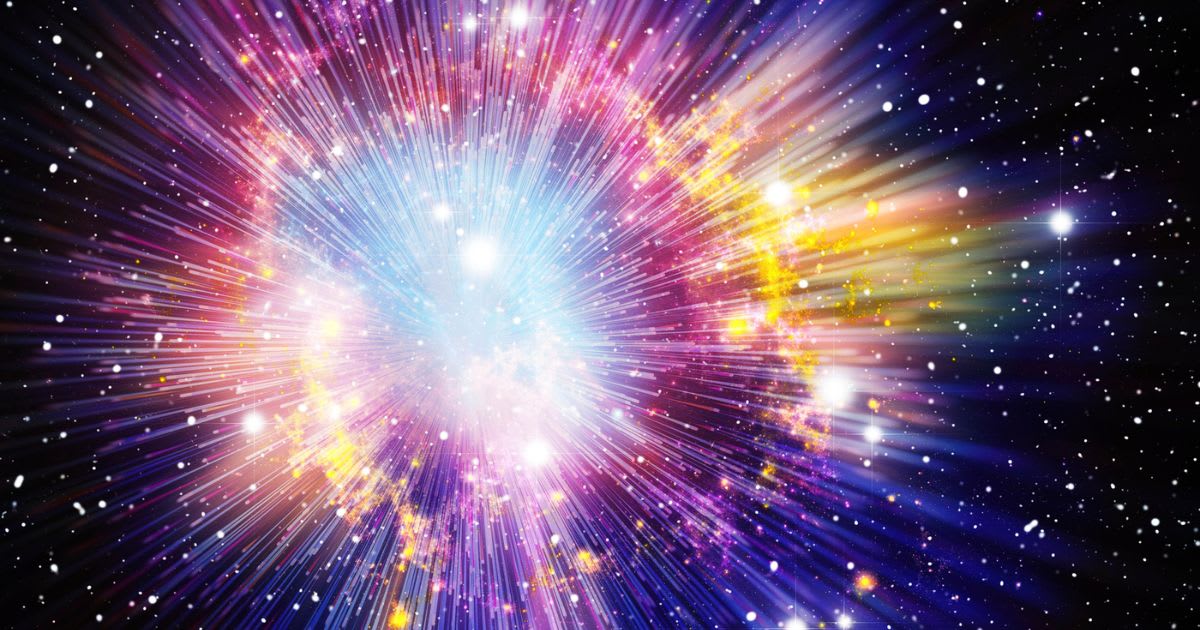
Besides being among the surprisingly bright galaxies from the early universe, MoM-z14 contains unusually high levels of nitrogen—something that has been seen in but a small percentage of the oldest stars in the Milky Way. “There is a growing chasm between theory and observation related to the early universe, which presents compelling questions to be explored going forward,” said Jacob Shen, a postdoctoral researcher at MIT and team member. Moreover, analysis shows MoM-z14 actively ionizing the hydrogen gas around it, contributing to a process referred to as reionization. This process began after the Big Bang, when ultraviolet light from early massive stars split hydrogen atoms into electrons and protons, allowing starlight to travel farther.
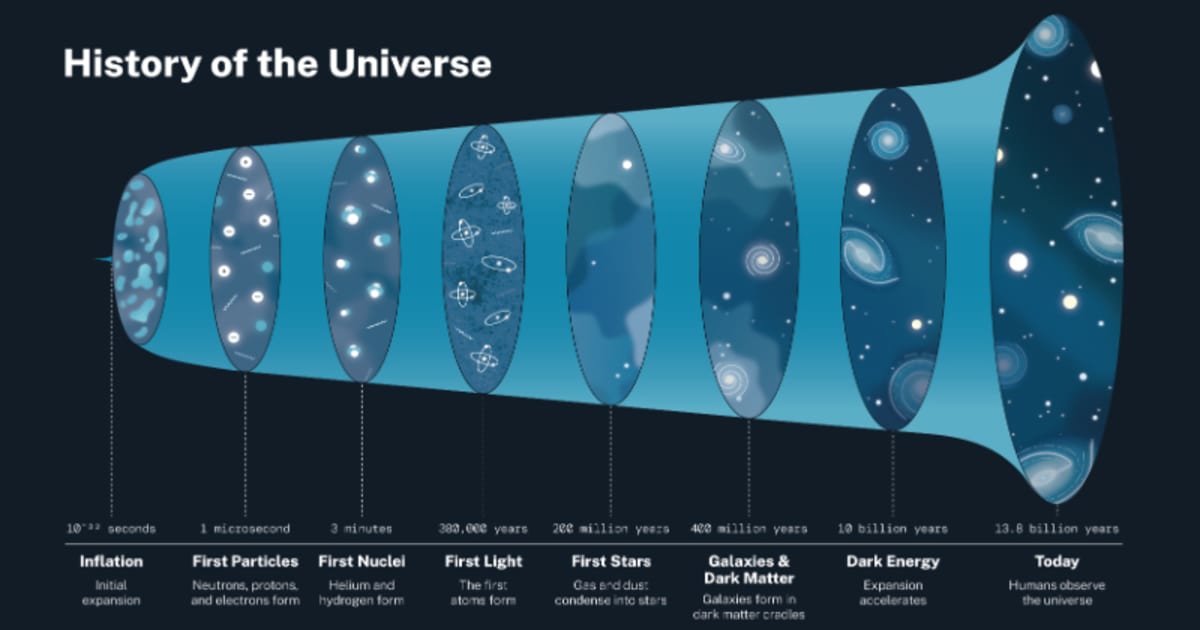
That we could see surprising things in the early universe was already hinted at by the Hubble Telescope's observation of the bright galaxy GN-z11, which dates back to 400 million years after the Big Bang—the most distant galaxy at the time. “We can take a page from archeology and look at these ancient stars in our own galaxy like fossils from the early universe, except in astronomy, we are lucky enough to have Webb seeing so far that we also have direct information about galaxies during that time. It turns out we are seeing some of the same features, like this unusual nitrogen enrichment,” Naidu explained.

NASA’s Nancy Grace Roman Space Telescope, slated to launch in May next year, is set to complement Webb’s observations with its wide field of view and high-resolution infrared imaging capabilities. “To figure out what is going on in the early universe, we really need more information—more detailed observations with Webb, and more galaxies to see where the common features are, which Roman will be able to provide,” stated Yijia Li, a Penn State graduate student on the team. “It’s an incredibly exciting time, with Webb revealing the early universe like never before and showing us how much there still is to discover,” Li added.
More on Starlust
NASA’s James Webb Space Telescope observes young star ejecting common Earth crystals
James Webb Telescope's new map is strong proof that there would be no life without dark matter