NASA's Hubble captures new view of 3I/ATLAS as ESA’s Juice spots heightened comet activity

On Wednesday, November 19, NASA released exclusive images of 3I/ATLAS following the end of a 43-day-long government shutdown. And now, just days after the briefing assured that several NASA missions have been keeping an eye on the comet, the agency has released fresh imagery of the interstellar visitor obtained by the Hubble Space Telescope.
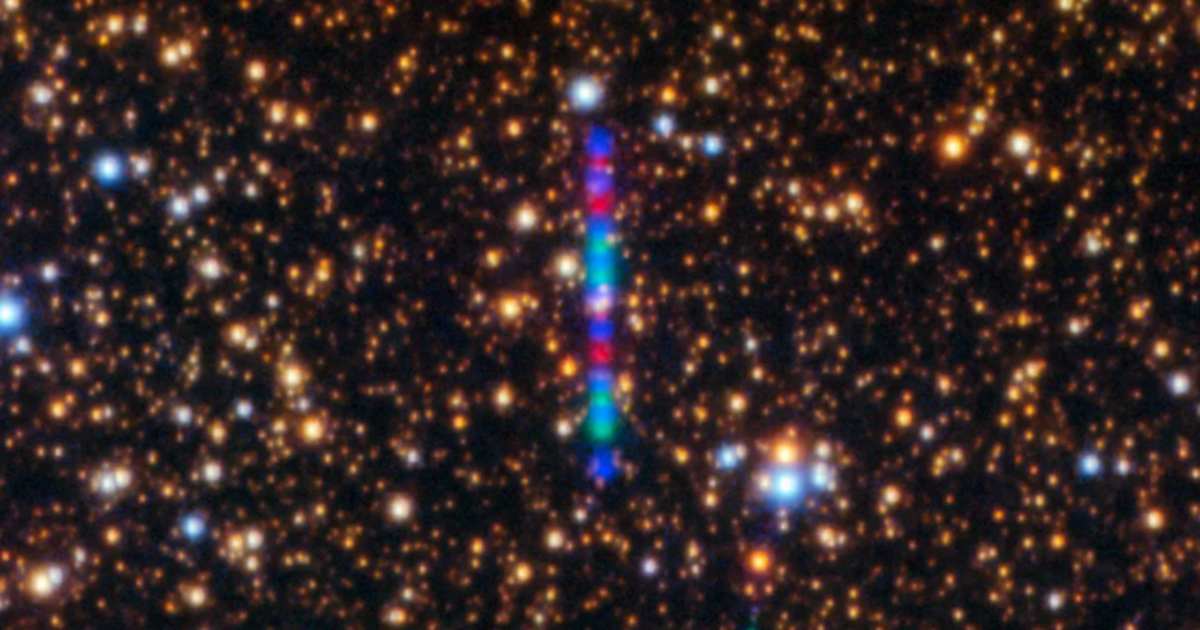
The famed telescope captured the image on November 30, 2025, with its Wide Field Camera 3 instrument at a time when 3I/ATLAS was about 178 million miles (286 million kilometers) from our planet. In the image, the comet is visible as a small white dot in the center surrounded by a brilliant light blue halo.
The stars in the background shine as diagonal streaks of blue light in the image. The last time the Hubble Telescope observed 3I/ATLAS was on July 21, 2025, shortly after the comet was first spotted by the ATLAS survey telescope. At the time, it was about 277 million miles from Earth.
![Hubble captured this image of the interstellar comet 3I/ATLAS on July 21, 2025, when the comet was 277 million miles from Earth. [Image Source: NASA, ESA, David Jewitt (UCLA); Image Processing: Joseph DePasquale (STScI)]](https://de40cj7fpezr7.cloudfront.net/c49eeb4e-e60a-46c0-b39f-68fbb2ee9297.jpeg)
In addition to NASA, the European Space Agency (ESA) has also released a fresh image of the comet taken by its Jupiter Icy Moons Explorer (Juice). Last month, the mission used five of its science instruments in an attempt to get more insight into how the comet was behaving and what it is composed of. In what was a rather amazing feat, its Navigation Camera (NavCam) was able to capture an image of the fascinating interstellar visitor despite not being designed to take high-resolution images. As its name suggests, it was built to help Juice navigate Jupiter's icy moons after its arrival on the planet in 2031. While the data from the science instruments won't be here until February of next year, the ESA team managed to download one quarter of a single NavCam image.
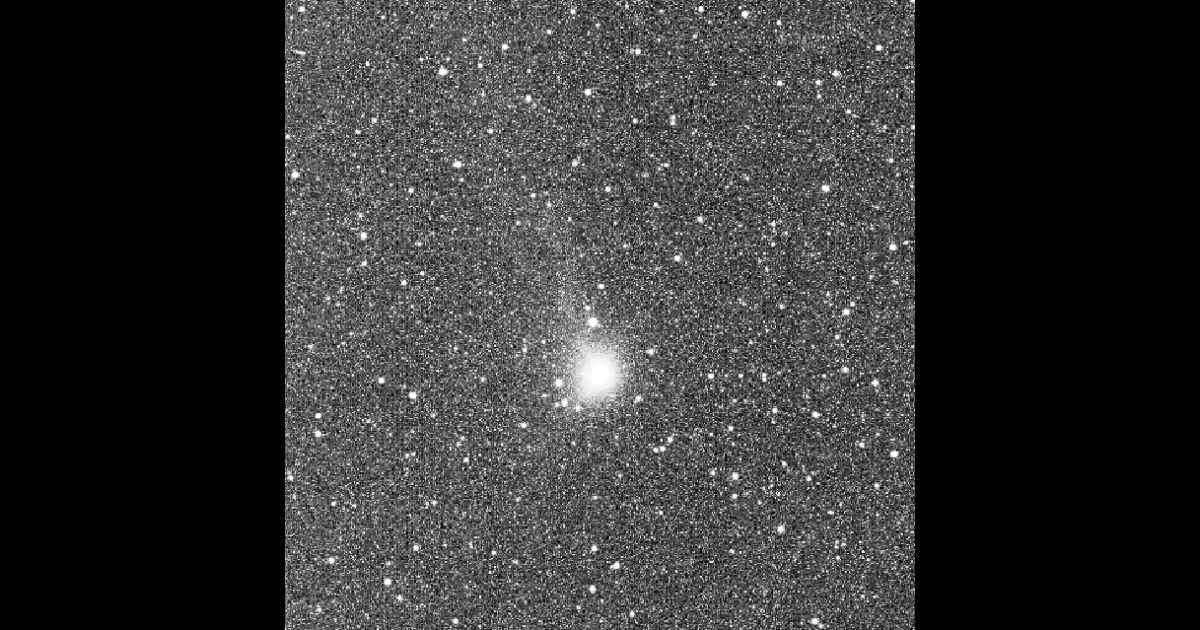
Apart from the bright halo of gas surrounding the nucleus, the NavCam image taken on November 2, 2025, shows not only the bright halo of gas surrounding its nucleus, but also its plasma tail made up of electrically charged gas. What's more, the NavCam may have also caught a hint of its dust tail, composed of small solid particles. The NavCam was able to catch 3I/ATLAS in such a heightened state of activity because the observation happened soon after the comet's perihelion (closest approach to the Sun).
The data from JANUS, MAJIS, UVS, SWI, and PEP—the five instruments switched on during Juice's observation of 3I/ATLAS—is due to reach us on February 18 and 20, 2026. JANUS will be furnishing the agency with high-resolution images of the comet, MAJIS and UVS will send back spectrometry data, while SWI and PEP will be providing composition and particle data, respectively. ESA attributed the delay to Juice's main high-gain antenna being engaged in protecting the mission from the Sun. This has shifted the responsibility of sending the data back to Earth onto the smaller medium-gain antenna, which has a much lower rate of transmission.

Observations of the comet will continue as 3I/ATLAS heads to make its closest approach to Earth (within 170 million miles) on December 19, 2025, before leaving the Solar System.
More on Starlust
Harvard astronomer Avi Loeb criticizes NASA’s big 3I/ATLAS reveal: 'Boring messages'