NASA's Chandra spots a young 'Sun' blowing bubbles for the first time
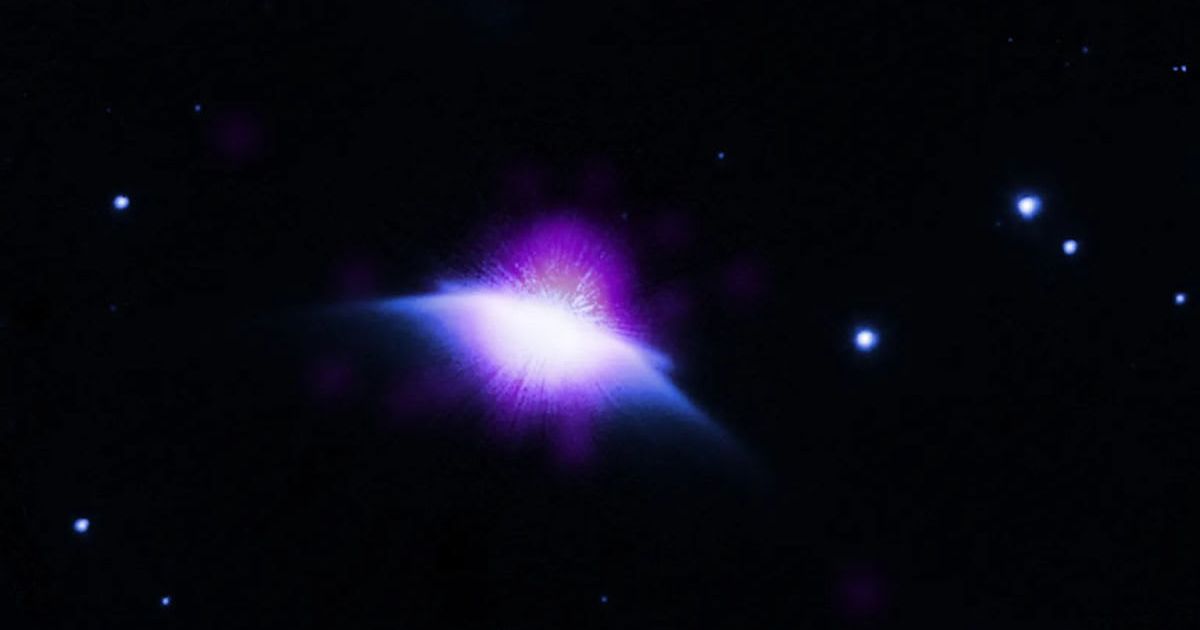
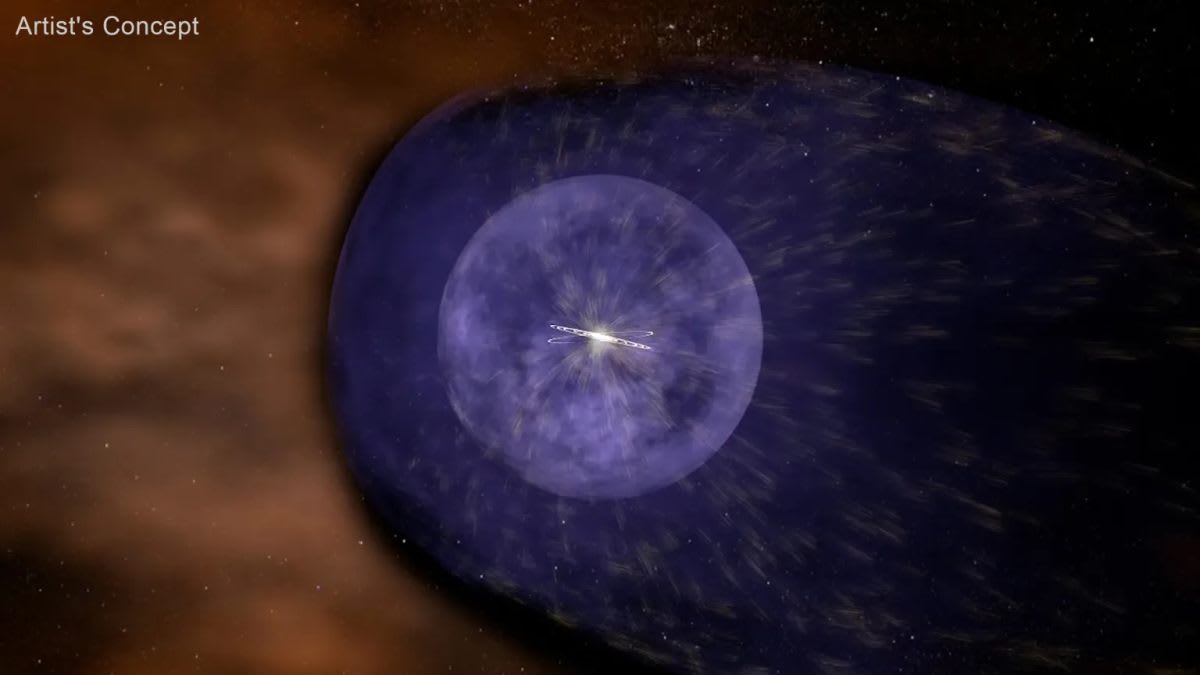
Astronomers using NASA's Chandra X-ray Observatory have, for the first time, captured the young star HD 61005 blowing bubbles, known as an 'astrosphere,' in the galaxy. This juvenile doppelganger of our Sun, in mass and temperature, is completely surrounded by the astrosphere, which is expanding into a cooler galactic gas and dust.
What is HD 61005?
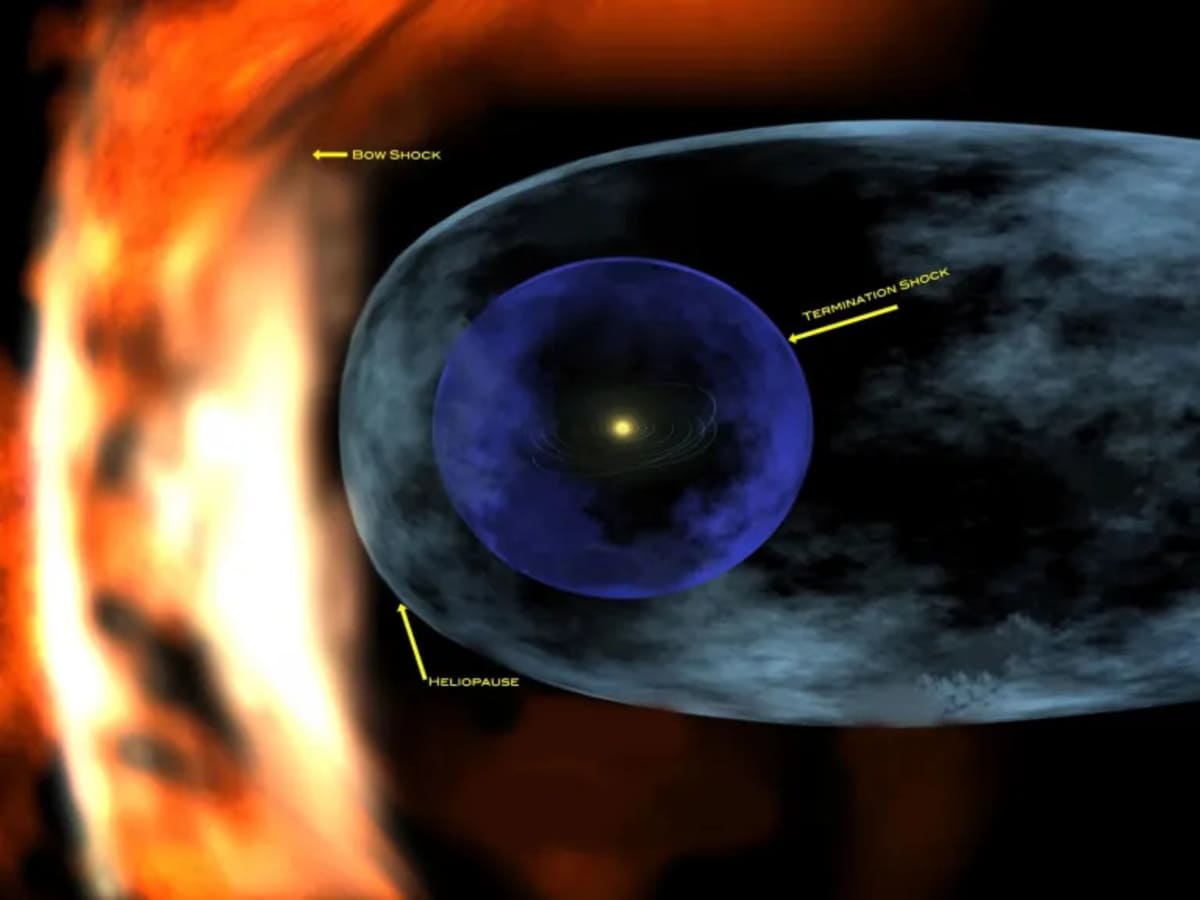
HD 61005, also known as 'The Moth' because of how its dust looks in infrared imagery, is a young star located 120 light-years from Earth. While it has nearly the same mass and temperature as the Sun, it is about 100 million years old, compared to the Sun’s age of about 5 billion years. The Sun also has a bubble similar to that of HD 61005, known as the heliosphere.
Astrosphere/Heliosphere: The significance
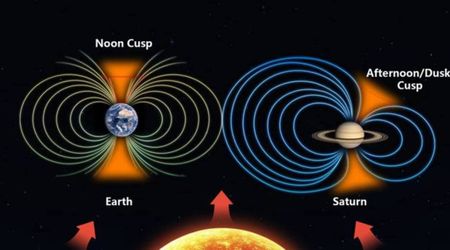
The interaction between the outflow of plasma from our Sun—referred to as the solar wind—and the low particle density region between stars—the interstellar medium (ISM)—is what determines the extent of the Sun's heliosphere. Much like how Earth's magnetosphere has a role to play in protecting the Earth's atmosphere from suffering a fate similar to that of Mars, the heliosphere also plays an important role in shielding the planets inside it from Galactic Cosmic Rays (GCRs). GCRs travel all across the galaxy and can cause radiation damage and mutations in DNA. As has already been seen, other stars like HD 61005 also naturally have their own astrospheres, which are also defined by the interaction between their stellar winds and the ISM around them, among other factors.
Stars don't just shine—they create "galactic weather": large-scale flows of charged particles and radiation. These winds push against interstellar gas, forming bubbles, shock fronts, and cavities.
— Hafsa (@throne77_hafsa) February 24, 2026
The young Sun-like star HD 61005 is blasting such powerful winds that they reshape… https://t.co/sJrT9SAwfl
What does this occasion mean?
Brian E. Wood and Jeffrey L. Linsky, in their paper, have stated that it is imperative to "understand the evolution of stellar winds and their effects on exoplanets," as the solar wind and heliosphere have affected the planets in our solar system over the course of the Sun’s 5-billion-year lifetime. This pioneering capture of the astrosphere by astronomers enables us to gain a deeper understanding of the Sun’s past and its evolution. “We have been studying our Sun’s astrosphere for decades, but we can’t see it from the outside,” said Carey Lisse of Johns Hopkins University in Baltimore, who led the study, which was published in the Astrophysical Journal.
“This new Chandra result about a similar star’s astrosphere teaches us about the shape of the Sun, and how it has changed over billions of years as the Sun evolves and moves through the galaxy.” It is not only possible that the Sun also passed through a similar developmental phase in its younger days, but also traveled through a denser layer of gas and dust than its current location. It is amazing to think that our protective heliosphere would only extend out to the orbit of Saturn if we were in the part of the galaxy where the Moth is located, or, conversely, that the Moth would have an astrosphere 10 times wider than the Sun’s if it were located here," Lisse added.
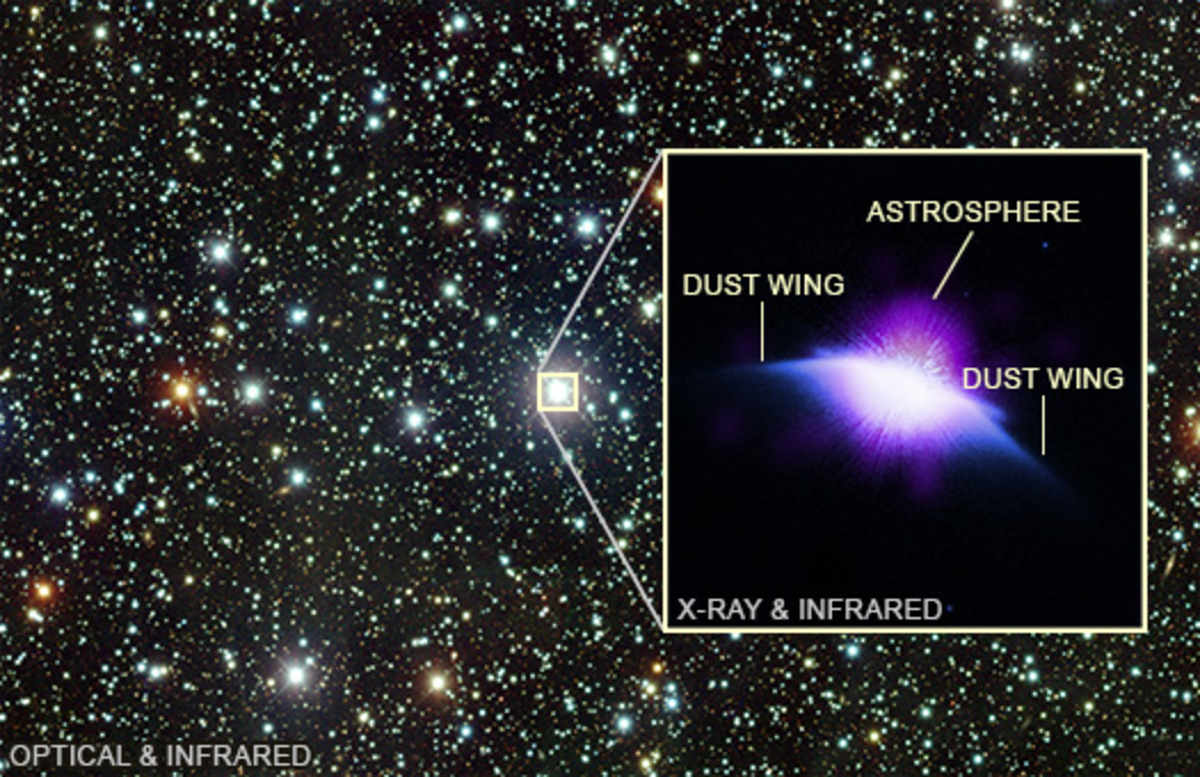
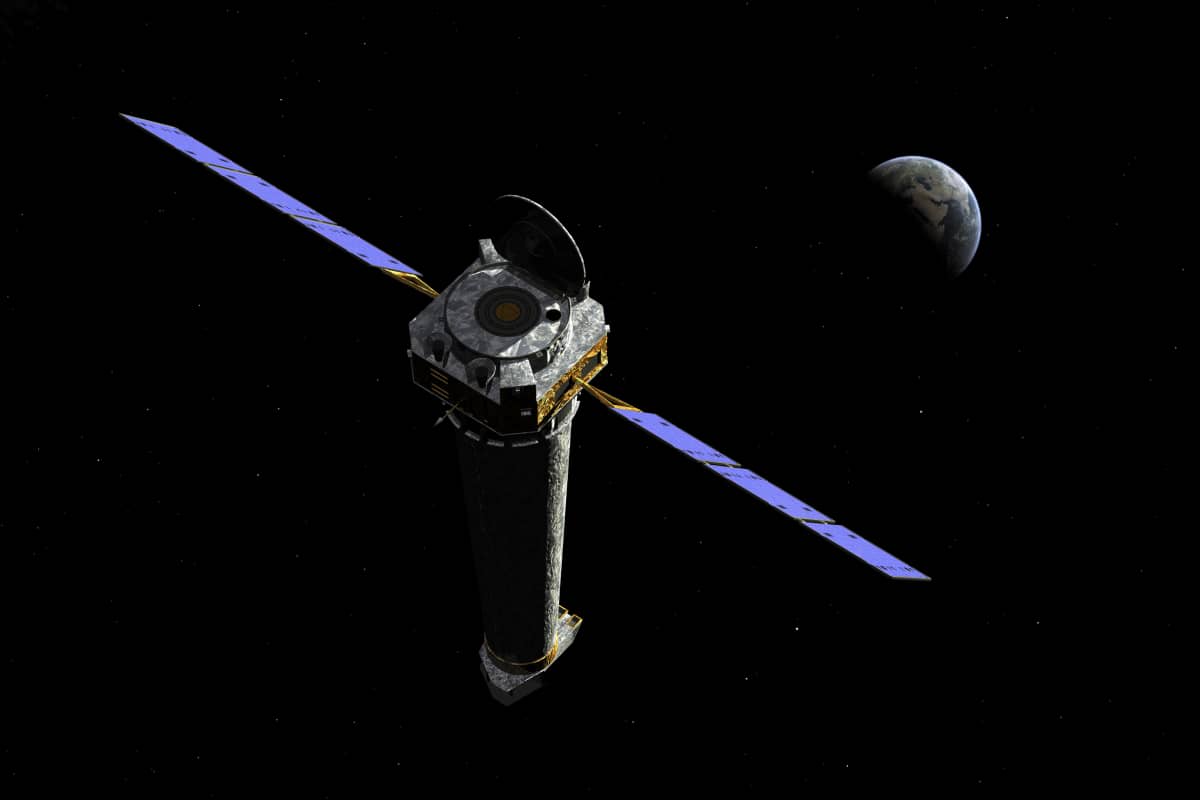
Astronomers have been trying since the 1990s to capture an image of an astrosphere enveloping a Sun-like star to understand the Sun’s evolution. The stellar wind from HD 61005 is running into cooler interstellar medium of gas and dust, producing X-rays. This is what enabled Chandra's high-resolution X-ray vision to capture the astrosphere. “There’s a saying about a moth being drawn to a flame,” said co-author Brad Snios, formerly of CfA and now at MITRE, a non-profit that participates in federally funded research. “In the case of HD 61005, the ‘Moth’ can’t easily escape from the flame because it was born around it and might be sustained by a disk around it.”
More on Starlust
NASA’s Chandra stitches decades of data on supernova remnant into its longest video yet
James Webb Space Telescope maps Uranus’s upper atmosphere for the first time ever