Massive M-class solar flare may trigger auroras on January 1
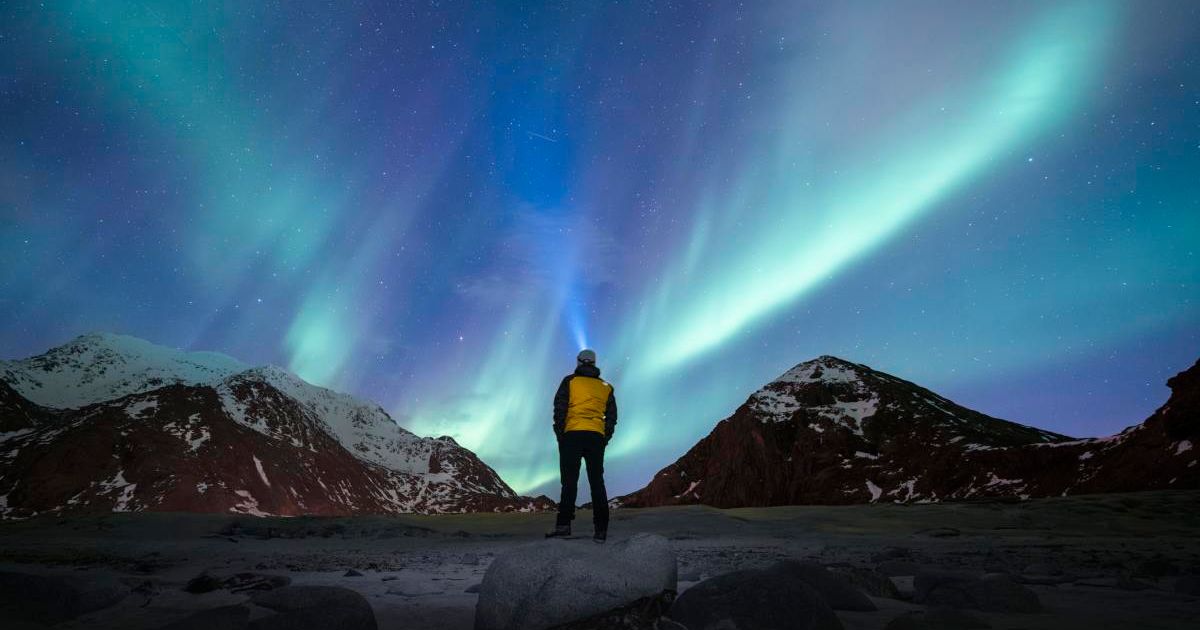
A massive solar eruption has already set Earth up for a heavenly light display on the first day of the New Year. The solar region responsible for this? Sunspot 4317.
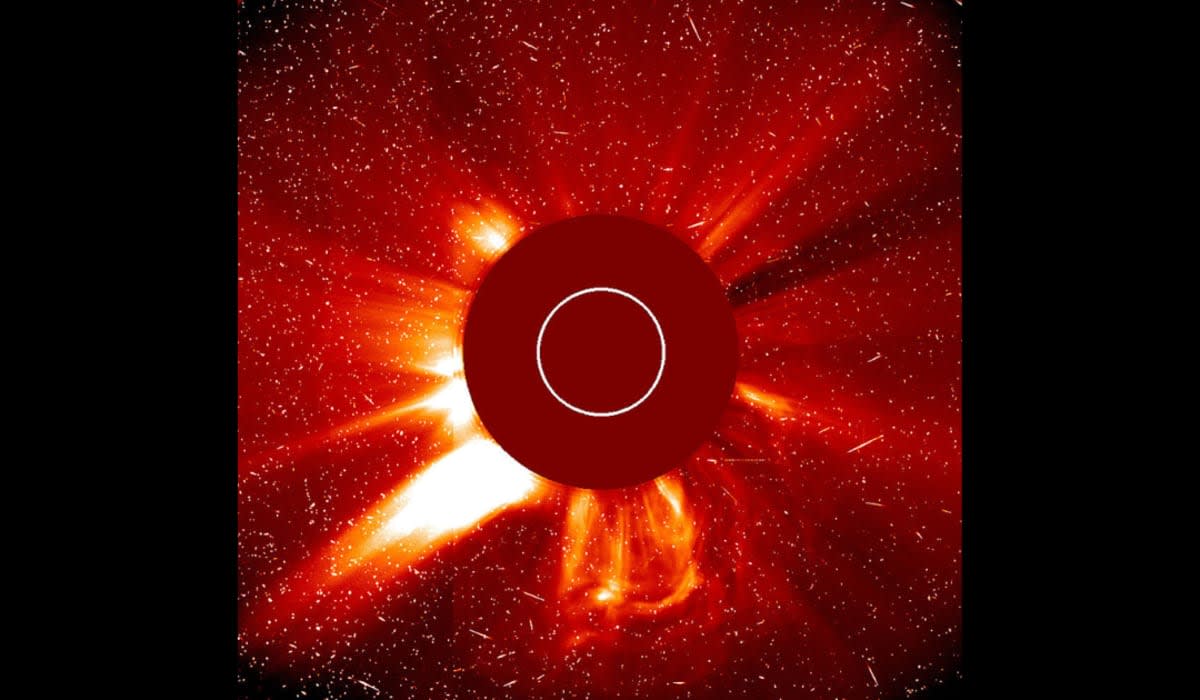
The region was not considered a major concern by space weather specialists, and yet it produced a large M4-class solar flare at about 2239 UTC on December 28, according to SpaceWeather.com. The blast was caught by NASA’s Solar Dynamics Observatory and hurled a huge cloud of solar particles, called coronal mass ejection (CME), into space.
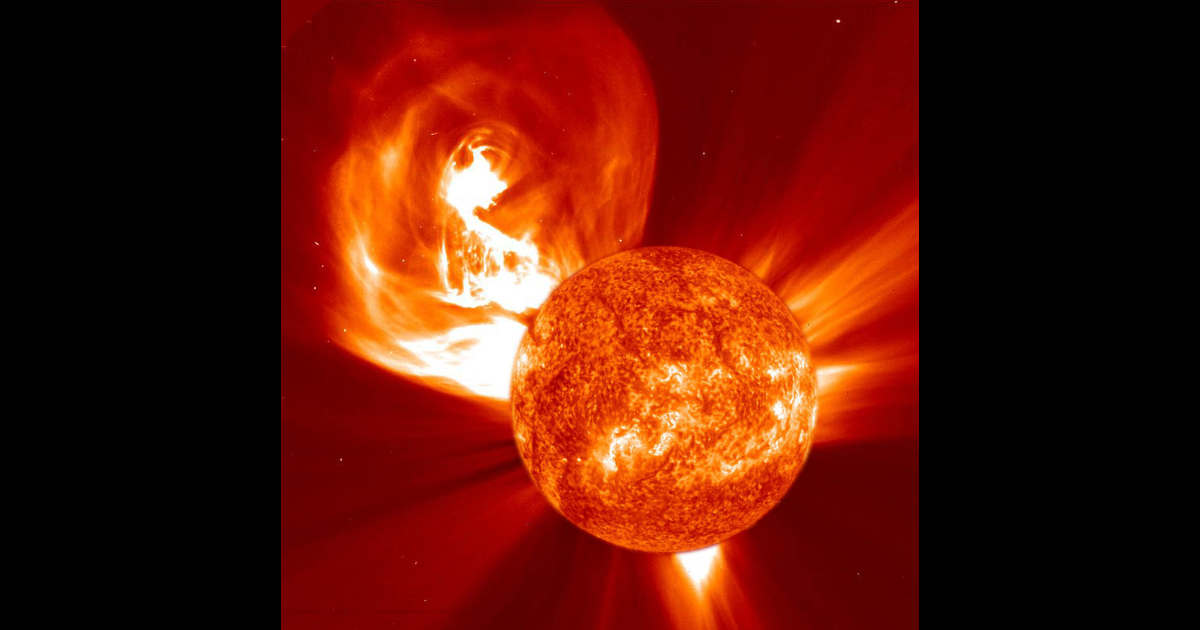
Newly acquired data from NOAA’s latest satellite equipment indicate that part of this solar ejection is coming straight to Earth. NASA’s preliminary model indicates that it will reach our atmosphere on January 1. Should the timing be accurate, the event could cause limited degradation of high-frequency (HF) communication across the sunlit side of the planet. On the brighter side, the CME also has the potential to trigger the first auroras of the New Year.
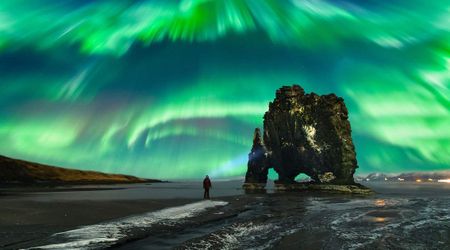
The famous auroras are nothing but spectacular manifestations of high-stakes interaction between solar energy and our planet's magnetic shield. The sun is continually sending charged particles, named solar wind, toward the Earth. When solar wind, which is continuously released into space by our host star, reaches Earth, it deposits energy into the planet's magnetic field. When this stored energy is finally released, it rains down on the atmosphere, resulting in colorful displays called auroras that we appreciate so much.
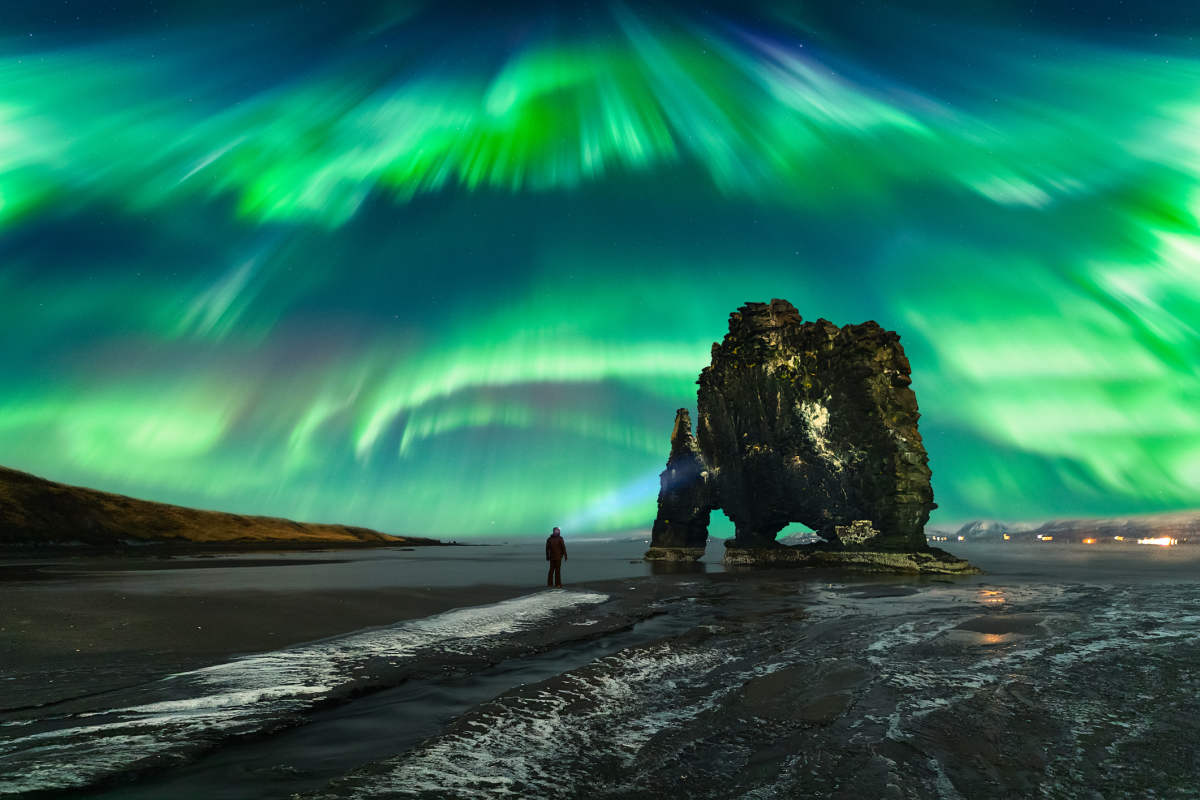
As far as their range of colors is concerned, auroras owe that to the various gases that populate our atmosphere. Upon being hit by space particles, the molecules of these gases get charged with extra energy, which is released as light. The classic green color of an aurora is produced by the oxygen present at altitudes of roughly 60 to 120 miles. Meanwhile, red auroral displays are a result of reactions occurring at altitudes above 120 miles.
While auroras are definitely a sight to behold, light pollution can really play spoilsport and ruin your experience by completely obscuring their beauty even when they are at their peak. So, for those scouting for the best place to see the sky from, experts consider Crater Lake National Park, located in southern Oregon, as the best place in the U.S. for stargazers. As per the research conducted by the vacation rental site Lake.com, which analyzed the data from the National Park Service, Crater Lake emerged as the leader in a list of 20 best U.S. national parks for stargazing. The park got a perfect score of 100 on the index due to the unparalleled views it offers on account of being away from light pollution. More specifically, it is estimated that the park allows nearly 99% of the stars to be seen, and it has a very low light pollution ratio of only 0.03.
More on Starlust
Arctic auroras could paint northern skies green this Christmas Eve as a solar storm approaches Earth
New tool helps scientists predict dazzling auroras lighting up the Martian sky