Interstellar comet 3I/ATLAS found to 'wobble' as it spews gas and dust
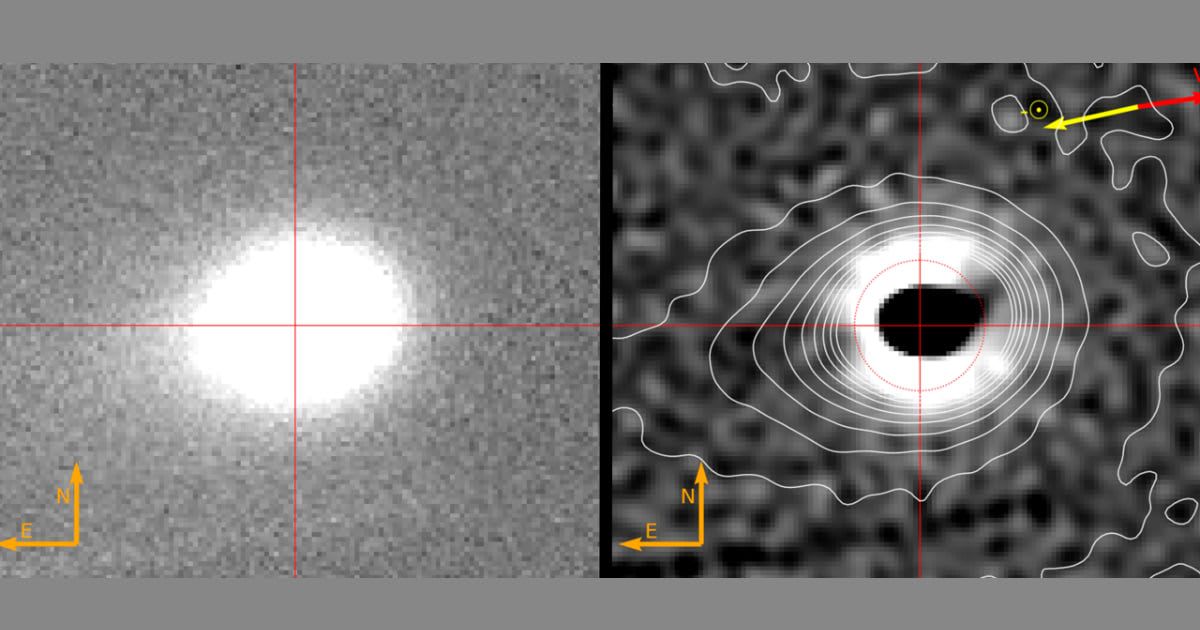
Astronomers at the Teide Observatory have utilized the Two-metre Twin Telescope (TTT) to give us a glimpse of an object from a different star system, and they have even depicted the core of the comet as a source of a "wobbling" jet of material that is erupting from it. The object, named 3I/ATLAS, is the third one confirmed to be an interstellar traveler that has passed through our solar system, according to the Instituto de Astrofísica de Canarias.
🔭 El telescopio #TTT del Observatorio del Teide detecta por primera vez un jet periódico y oscilante en un cometa interestelar, el 3I/ATLAS.
— IAC Astrofísica (@IAC_Astrofisica) December 19, 2025
El hallazgo confirma su periodo de rotación y abre nuevas vías para estudiar cuerpos de fuera del Sistema Solar.
👉https://t.co/SxVTbAHosL pic.twitter.com/q4sxayD6cc
The discovery is unprecedented as it is the first time that a scientist has ever witnessed a jet, which is a focused stream of gas and dust, coming from the interstellar nucleus. Astronomers speculate that although 3I/ATLAS was formed in a distant and unknown planetary system, it still exhibits very comet-like behavior in our own neighborhood. Miquel Serra-Ricart, who is the leading researcher and scientific director of Light Bridges, stated, "‘3I/ATLAS is an extraordinarily normal interstellar comet." He added that "the detection of this jet allows us to make a direct comparison with the mechanisms of activity observed in comets in our own Solar System."
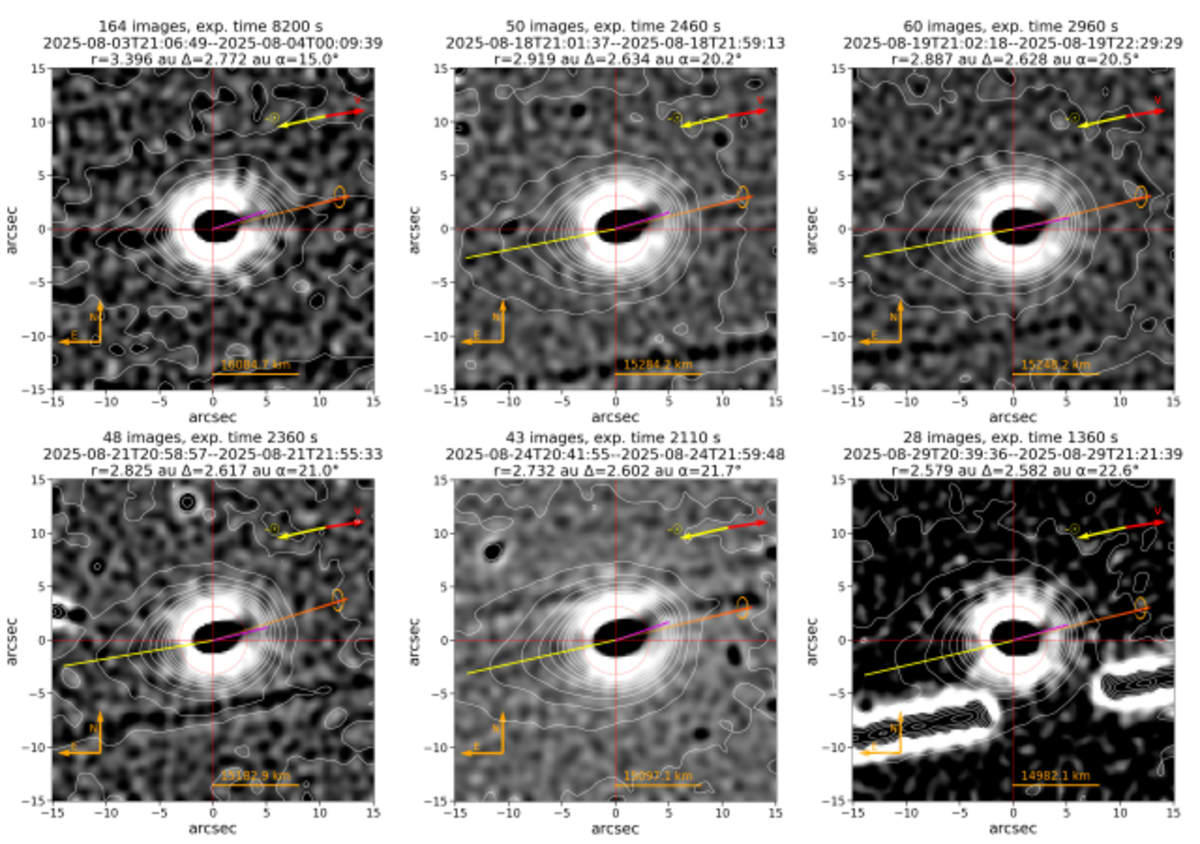
The collaboration of the Instituto de Astrofísica de Canarias (IAC) and Light Bridges formed an astronomical team that, during 2025, tracked comet 3I for a total of 37 nights from July through September. A faint jet that was not fixed and therefore mobile was spotted quivering or "wobbling" around the axis of the comet. The comet's rotation speed was consequently determined by the movement of the jet. The research that the team published in Astronomy & Astrophysics claimed that 3I/ATLAS had a rotation period of 14 to 17 hours.
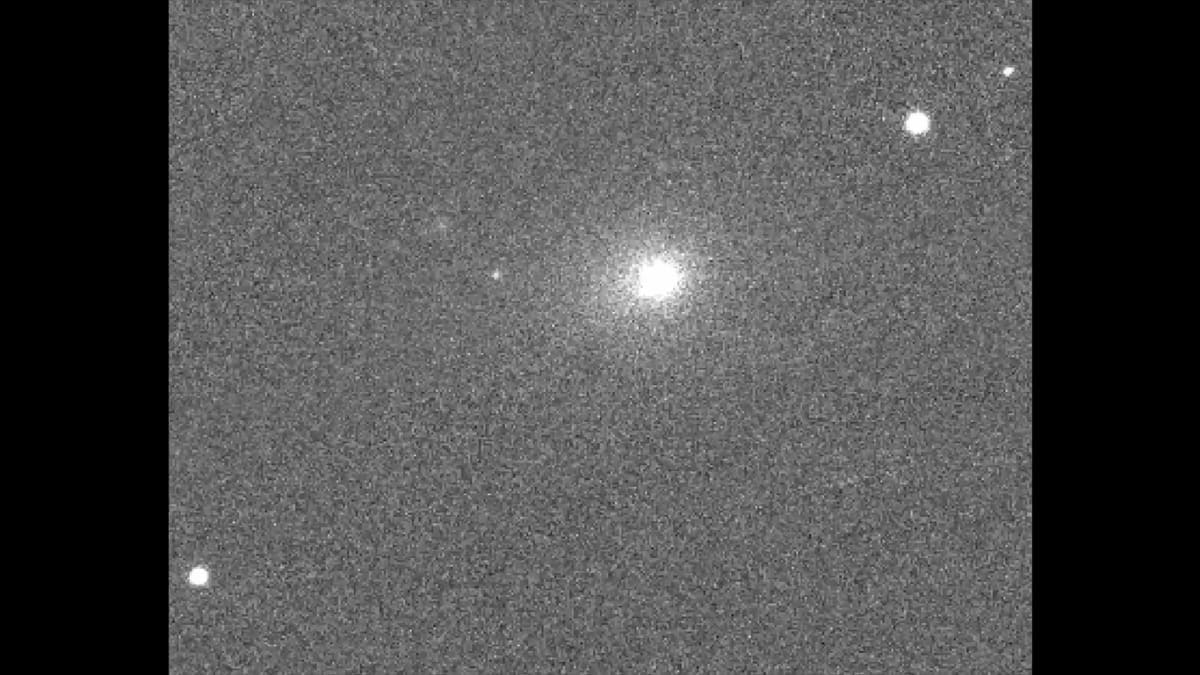
Interstellar comets, such as 3I/ATLAS, which are regarded as pristine remnants of the formation of other solar systems, serve as time capsules. The study of this comet's gas and dust release gives clues to the question of whether or not the planetesimals in the galaxy have the same properties as Earth's. "Characterising jets in a body such as 3I/ATLAS represents a unique opportunity to investigate the physical behaviour of a pristine body formed in another planetary system," commented IAC scientist Javier Licandro.
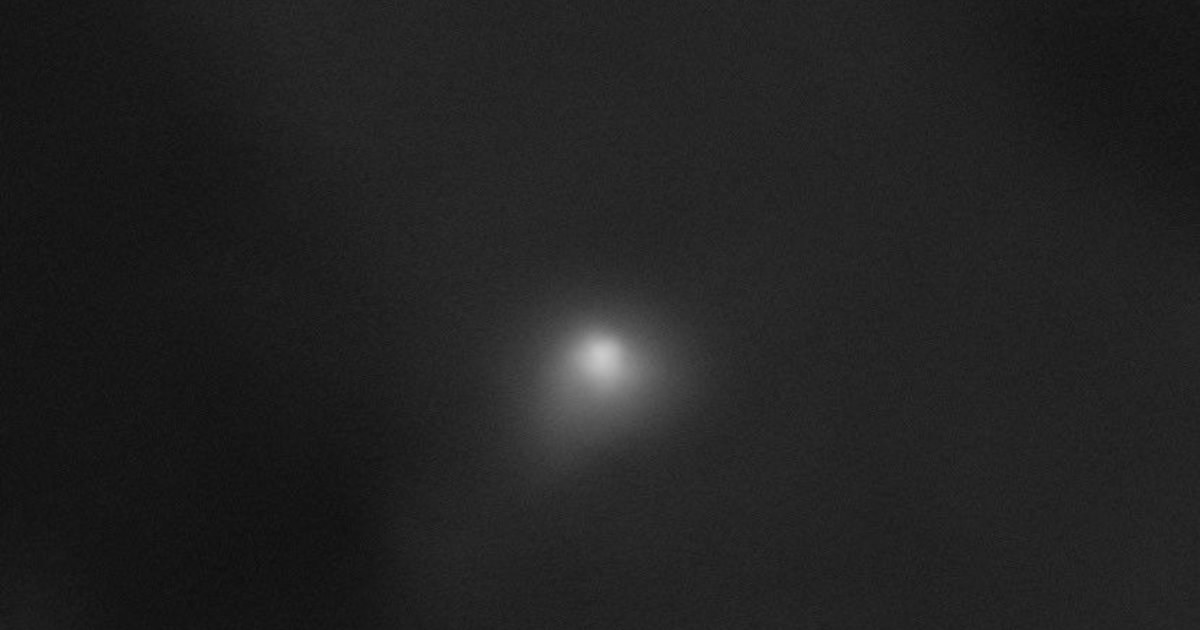
After doing a flyby of the Earth on December 19, the comet is now speeding up and heading toward the outer solar system. It was a record-breaking flyby for the comet, but still, it was very far away — 167 million miles away, which is almost twice the distance from the Earth to the Sun. The next rendezvous of the comet will be much more personal.
According to NASA's data, 3I/ATLAS is on its way to a dramatic passing by Jupiter on March 15, 2026. It is anticipated that the flying visitor will be only 33 million miles away from the mighty planet. The comet's close approach to Jupiter, where the main part of the solar system is, is a great opportunity for space scientists and researchers. They are looking forward to Juno, NASA's spacecraft that is currently in orbit around Jupiter, taking high-quality pictures of the interstellar traveler as it quickly moves through the solar system's most gigantic planet.
More on Starlust
Are materials from 3I/ATLAS on their way towards Earth? Avi Loeb shares his thoughts
NASA's Europa Clipper captured a unique ultraviolet view of 3I/ATLAS