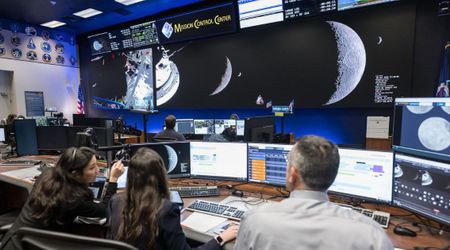
How will Artemis II astronauts stay connected to mission controllers on Earth?
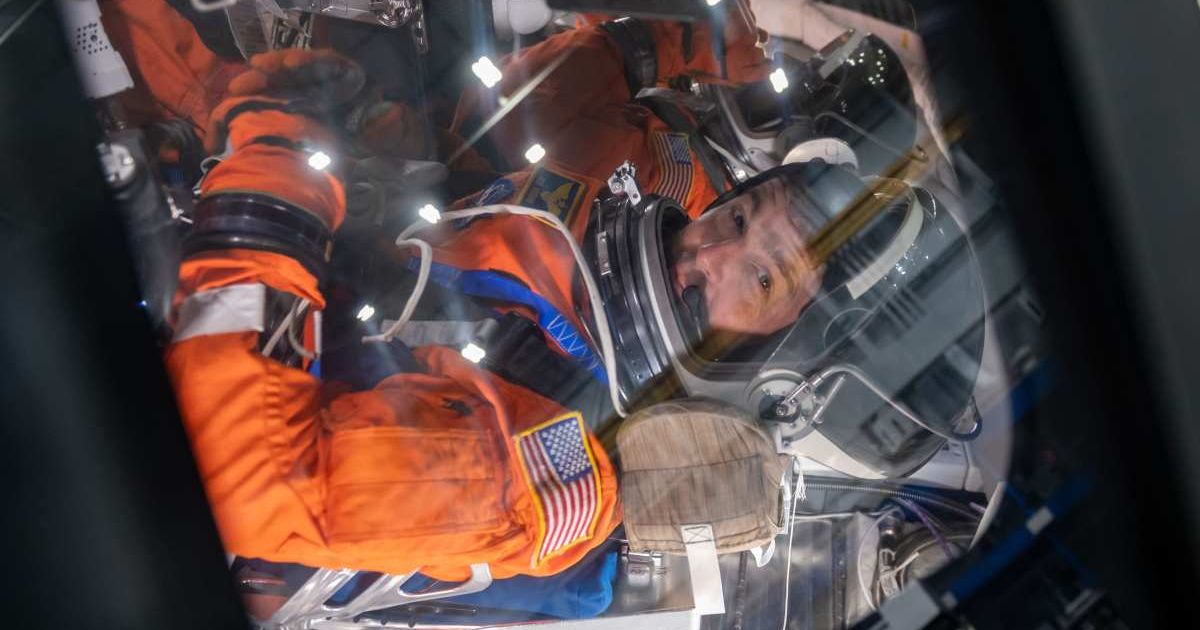
NASA's Artemis II mission, slated for launch no earlier than early March 2026, relies on advanced communication networks to keep its crew of four astronauts—Commander Reid Wiseman, Pilot Victor Glover, and Mission Specialists Christina Koch and Jeremy Hansen—linked to mission controllers on Earth throughout their 10-day journey. NASA has shed some light on the role of the Space Communications and Navigation (SCaN) Program, which oversees the Near Space Network and Deep Space Network to handle voice, video, and images across vast distances. Though these systems are universally used for all crewed and uncrewed missions by NASA, these systems will ensure near-constant contact for Artemis astronauts from launch on the Space Launch System (SLS) rocket, all the way through Orion's journey around the Moon and splashdown at the end. Only a brief blackout when Orion traverses the lunar far side will occur with Artemis II, though even this is to be alleviated by the time Artemis III comes around.
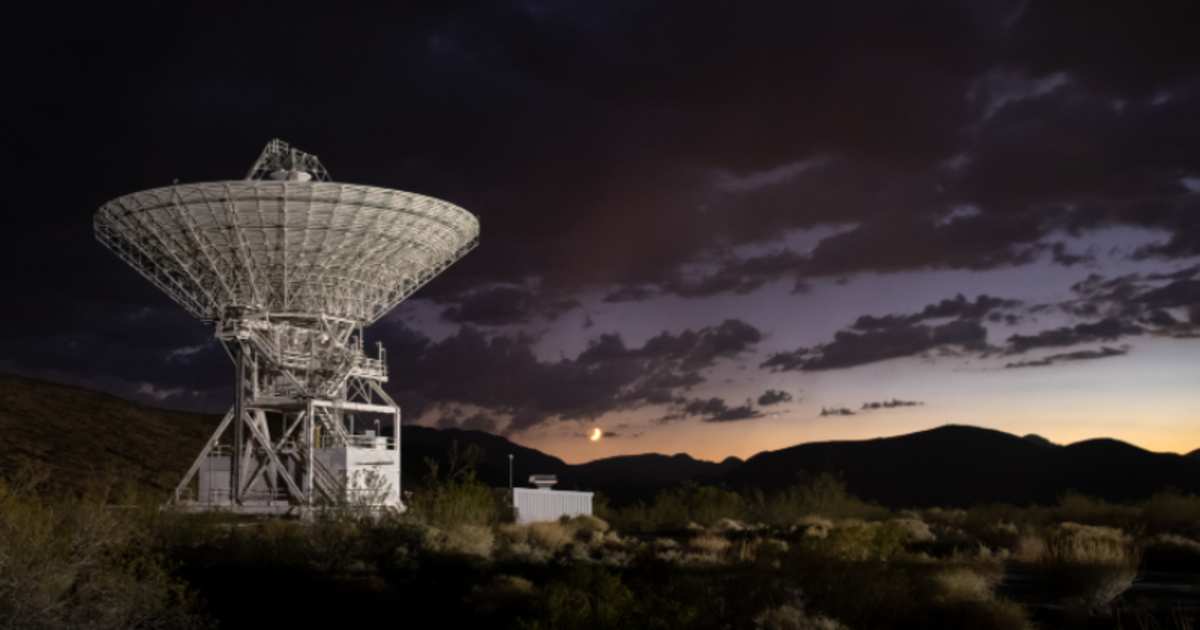
"From real-time conversations with mission controllers, to the data that drives critical decisions, research, and even calls home, space communications keep astronauts connected to mission managers, technical experts, loved ones, and everyone on Earth who wants to share in the excitement of our exploration missions," said Ken Bowersox, NASA's Associate Administrator for Space Operations Mission Directorate, reiterating the lifeline these networks are to astronauts, not just for technical support but to keep spirits high throughout difficult periods of isolation. The two broad categories of networking in space are the Near Space Network, which uses global ground stations and relay satellites for early phases like low Earth orbit and translunar injection, before the giant antennas in California, Spain, and Australia employed by the Deep Space Network take over for communications in deep space.
A key test for communication will happen with the Orion Artemis II Optical Communications System, a laser terminal that boosts data transfer rates to 260 Megabits per second. Astronaut Jeremy Hansen explained, "We’re testing a system on Artemis II. It’s a laser-enabled communication system. And that would have an increased bandwidth. And so that would allow us to send and receive more information than we can over the Deep Space Network, for example." This innovation is promising in that it can allow future upgrades for Moon and Mars missions by sending high-volume science and crew data more quickly than ever before.
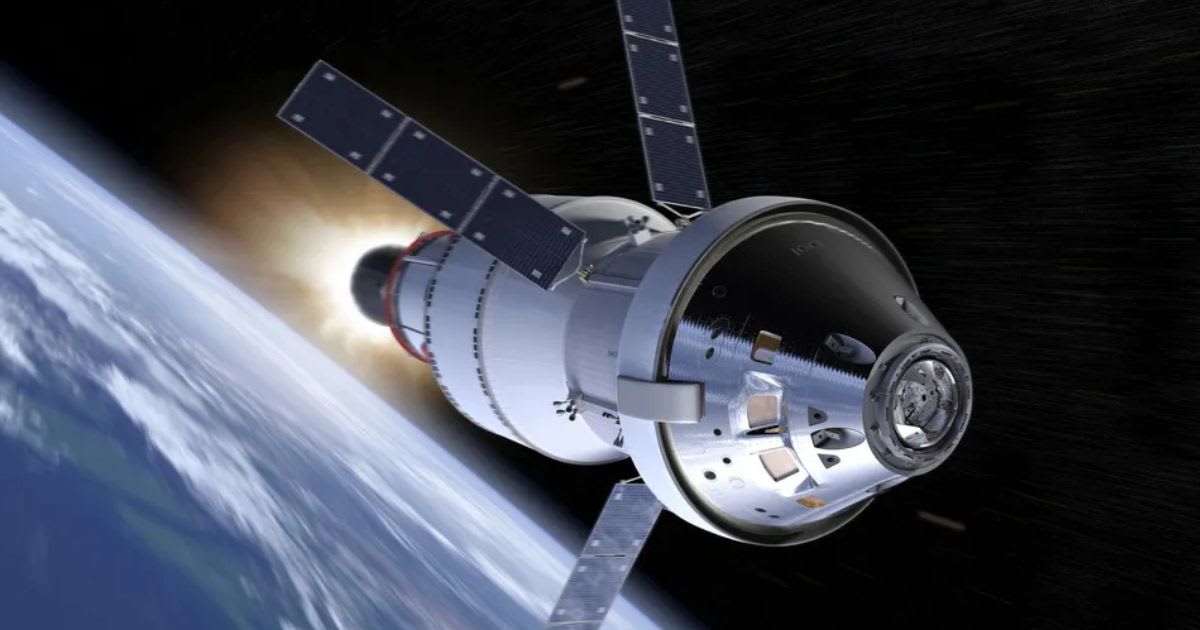
Artemis II aims to validate Orion's life support, handling, and navigation, and crew operations in deep space on a free return trajectory with an apogee at around 5000 miles beyond the Moon, making this humanity's farthest venture. Though just a flyby flight, it will test all systems for safe human travel and collect health data with high levels of radiation, letting teams know if they are headed in the right direction for Artemis III's surface touchdown. The broader Artemis program, which began with the uncrewed Artemis I's success, seeks to establish a sustainable lunar presence via the Gateway lunar orbiting station, extract resources like water ice, and eventually head for Mars habitation, all with the help of international partners and nations.
More on Starlust
Here's how the Artemis II astronauts prepared for their historic trip around the Moon
Will Artemis II rocket be rolled back into Vehicle Assembly Building? Here's what NASA said