ESA orbiters witness powerful solar superstorm hitting Mars
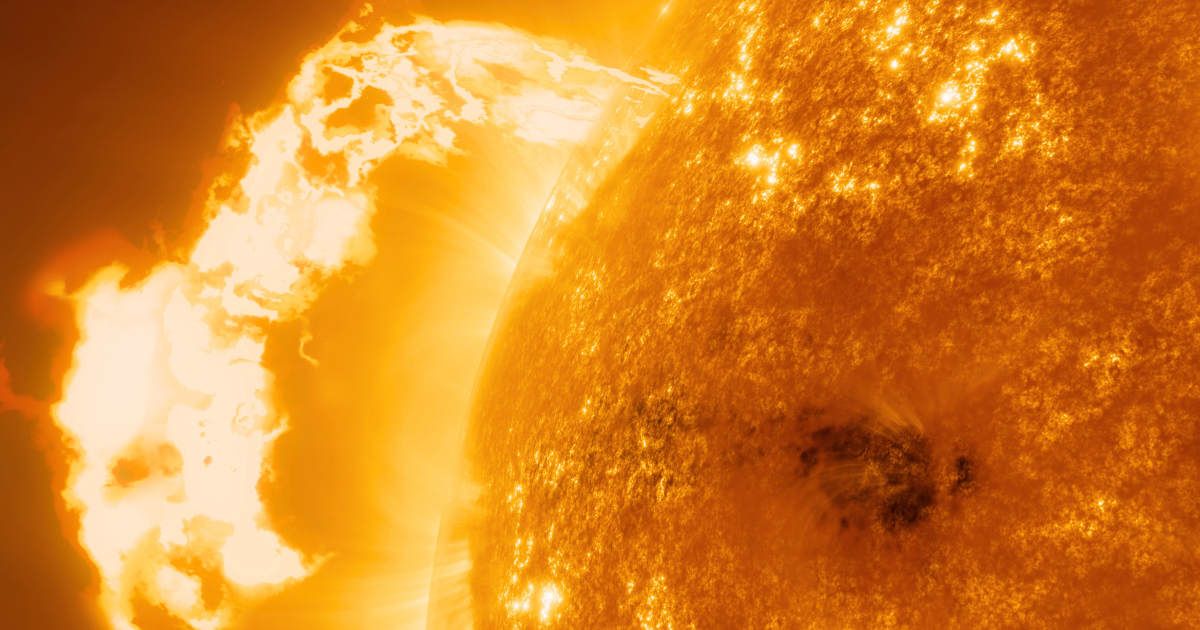
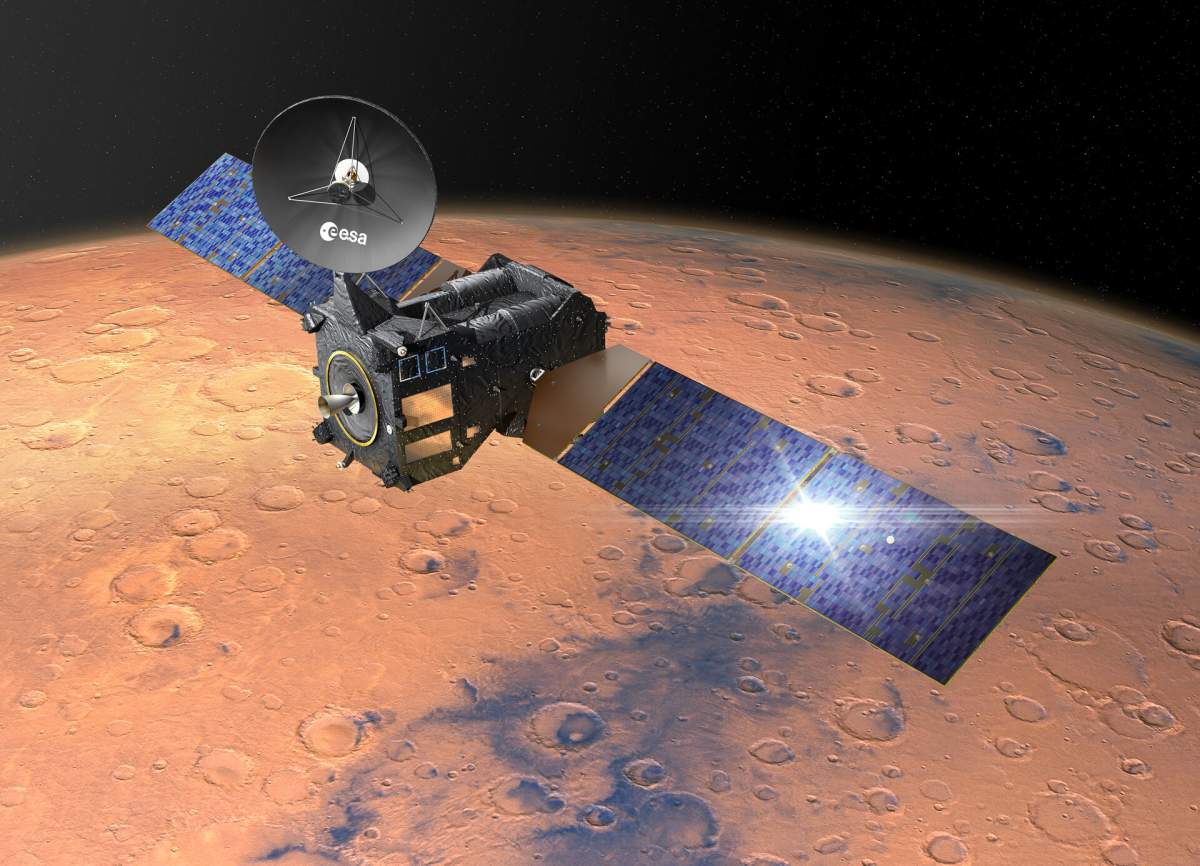
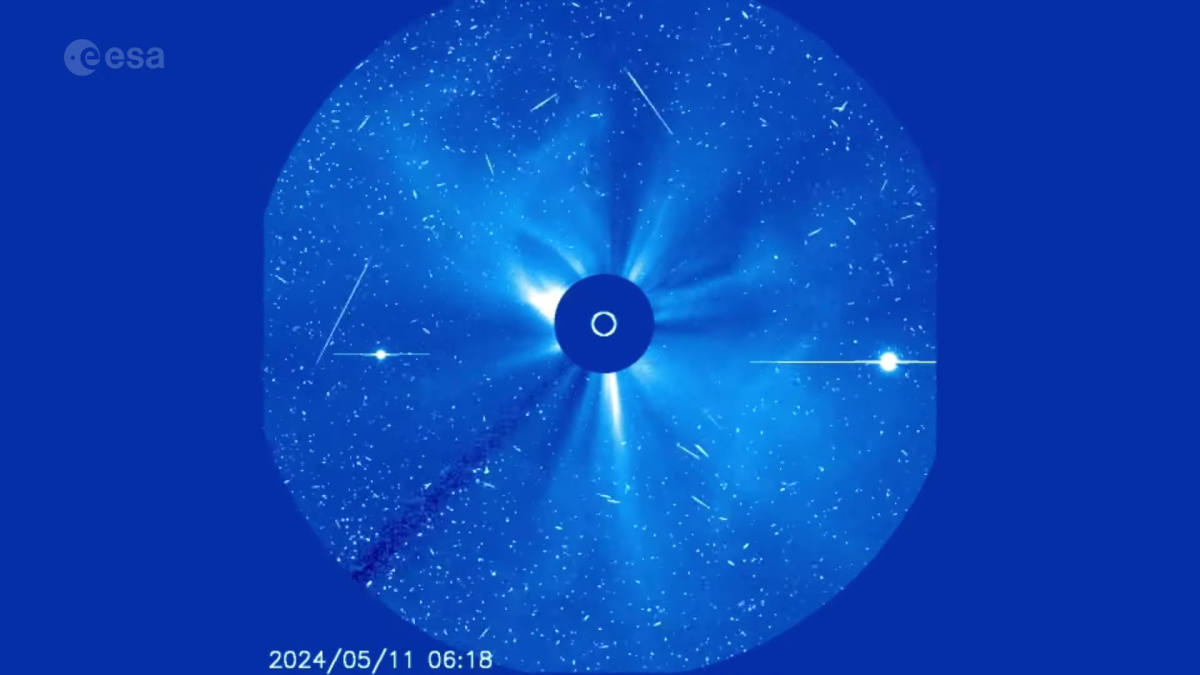
Back in May 2024, Earth felt the effects of the strongest solar storm in over two decades, and it turns out, so did Mars. Now, scientists have studied how the Red Planet reacted to this extreme space weather phenomenon, thanks to two European Space Agency (ESA) orbiters. ESA’s Mars Express and the ExoMars Trace Gas Orbiter (TGO) caught the solar superstorm in action when it struck Mars, and their observations reflect how it affected the planet’s atmosphere. The findings have been reported in a study titled “Martian ionospheric response during the May 2024 solar superstorm,” published in the journal Nature Communications (2026).
During the solar superstorm, the TGO’s radiation monitor measured a dose equivalent to about 200 ‘normal’ days of exposure in just under 64 hours. Mars’ upper atmosphere felt the most impact as a large influx of high-energy electrons flooded the region. Electron density numbers shot up 45% at about 110 km altitude and 278% at about 130 km altitude—the highest ever recorded in that part of Mars’ atmosphere. Jacob Parrott, ESA Research Fellow and lead author of the study, called it “the biggest response to a solar storm we've ever seen at Mars.”
Apart from the Martian atmosphere, the solar superstorm also affected both of the ESA spacecraft orbiting the planet. Space weather events typically cause computer glitches when high-energy particles interfere with the electronic equipment and systems on board. Once the storm passed, both Mars Express and the TGO recovered quickly, thanks to their radiation-resistant components and error detection systems. Later, the ESA orbiters worked hand-in-hand to help scientists successfully analyze the storm’s impact using a method known as radio occultation.
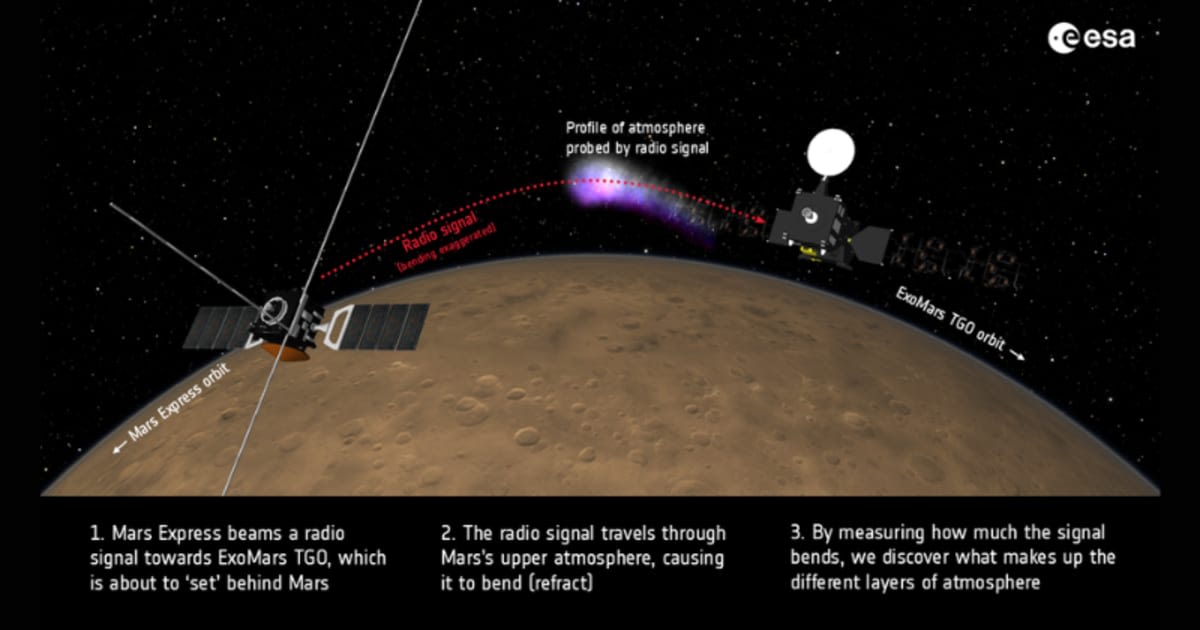
The Mars Express transmitted a radio signal to the Trace Gas Orbiter while it was moving behind the Martian horizon. The signal got refracted by the atmospheric layers before being picked up by TGO, and the changes it underwent allowed the scientists to determine the electron densities in each layer. NASA’s MAVEN spacecraft was also used to support and confirm these measurements. Radio occultation has been common practice in exploring the solar system for decades, but it’s rather new on Mars, having been in use for just the last five years or so.
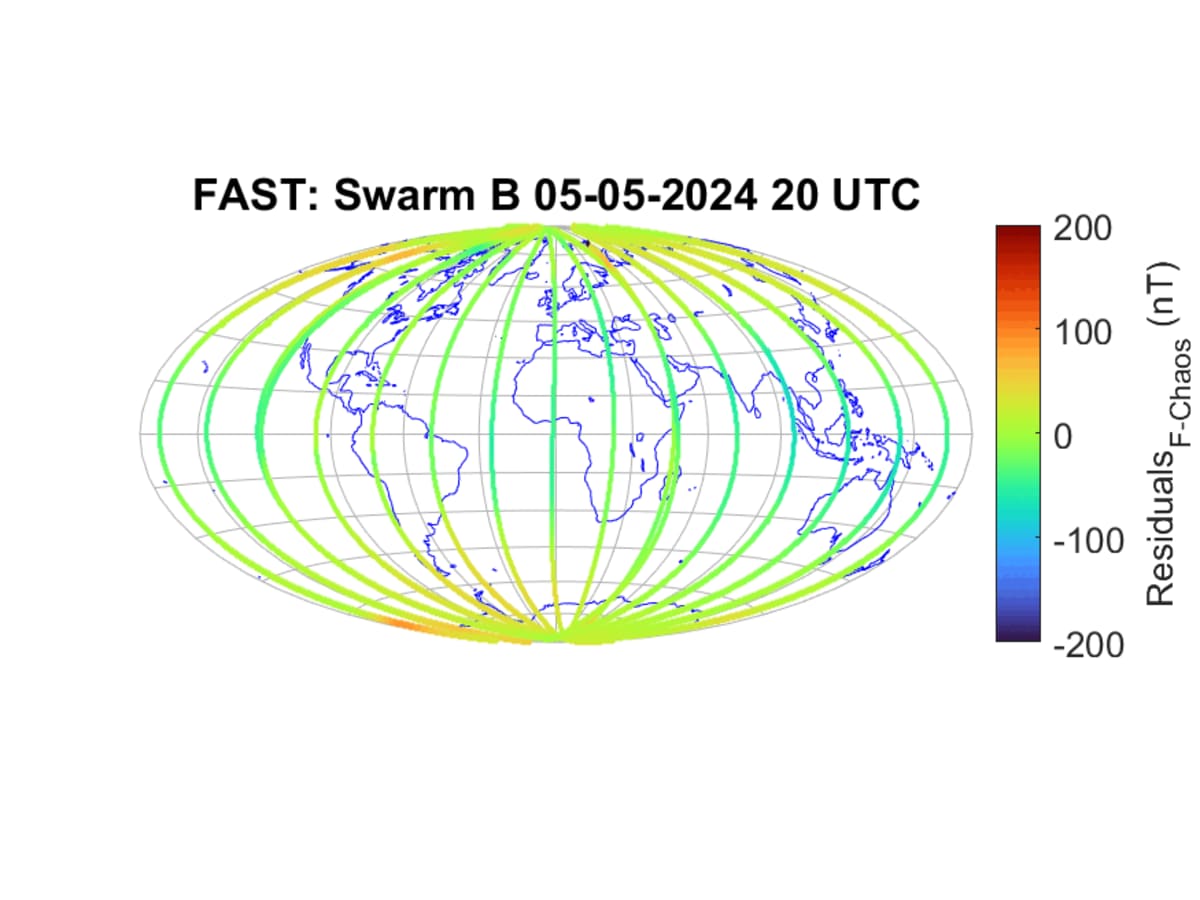
The May 2024 solar storm was felt differently here on Earth, as its strong global magnetic field deflected some of the charged particles away from the planet and some towards the poles, creating auroras. But Mars lacks such a magnetic field around it. As a result, the Red Planet had a far more drastic response to the same space weather event. We already know that it most likely lost both its water and atmosphere to space due to the continual wind of incoming particles from the Sun. "But there's another side to it: the structure and contents of a planet's atmosphere influence how radio signals travel through space," said Colin Wilson, ESA project scientist for Mars Express and TGO, and co-author of the study. "If Mars's upper atmosphere is packed full of electrons, this could block the signals we use to explore the planet's surface via radar, making it a key consideration in our mission planning—and impacting our ability to investigate other worlds."
More on Starlust
Dangerous solar storms can now be predicted up to two years in advance, thanks to new study
ESA’s ExoMars captures massive dust avalanches on Mars triggered by a meteoroid impact