Astronomers stunned by giant rotating chain of 14 galaxies—possibly the 'largest spinning object' ever discovered

The object in question is a cosmic filament, a thread-like chain of gas that is about 5.5 million light-years in length and 117,000 light-years in width.
PUBLISHED 10 HOURS AGO
A figure illustrating the rotation of neutral hydrogen (right) in galaxies residing in an extended filament (middle), where the galaxies exhibit a coherent bulk rotational motion tracing the large-scale cosmic web (left). (Image edited by Starlust staff)(

Using the MeerKAT, a group of 64 connected radio telescopes, a team of astronomers has come across what may be the “largest spinning object” in the known universe. What’s more, its rotation may be holding valuable clues to the formation of galaxies in the early universe.
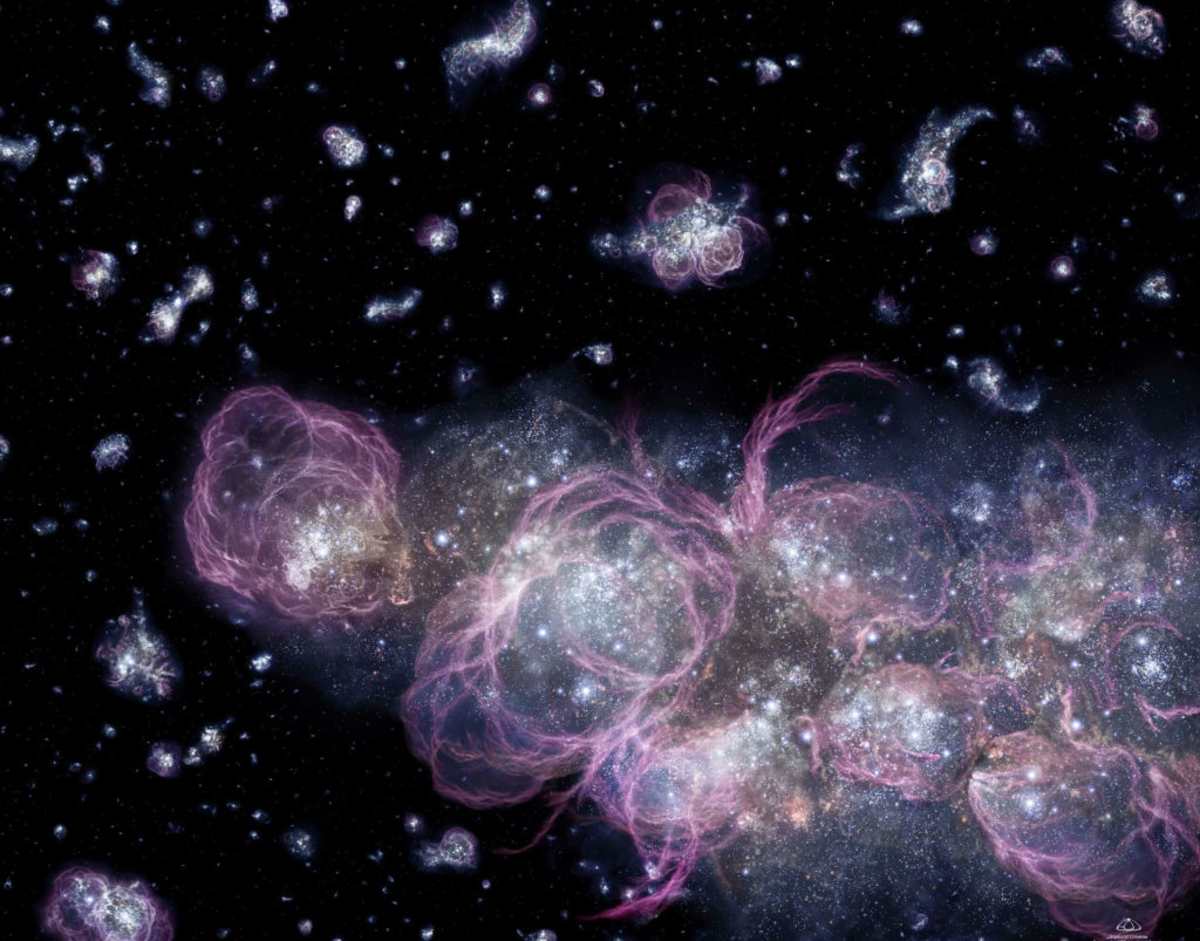
This undated artist's impression shows how the very early universe might have looked when it went through a voracious onset of star formation. (Representative Image Source: Getty | NASA)

The object in question is a cosmic filament, a thread-like chain of gas that is about 5.5 million light-years in length and 117,000 light-years in width. To put things into perspective, that’s wider than the Milky Way. According to the study published in the Monthly Notices of the Royal Astronomical Society, what brought the filament, which is 140 million light-years away, to the notice of the researchers was the 14 galaxies, rich in hydrogen, linked to it in a chain formation.
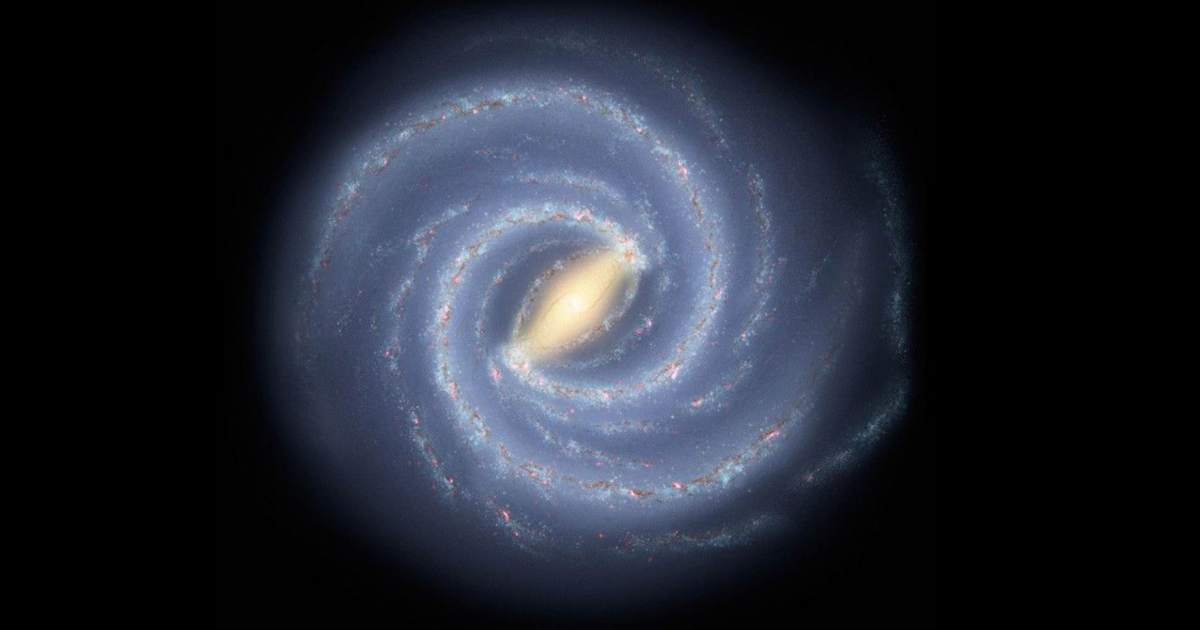
This illustration shows the Milky Way, our home galaxy. (Image edited by Starlust staff) (Representative Image Credit: NASA/JPL-Caltech)

Measurements revealed that the filament is rotating at a speed of 68 miles per second. And the galaxies around them? Well, they are moving, too. “You can liken it to the teacups ride at a theme park. Each galaxy is like a spinning teacup, but the whole platform - the cosmic filament - is rotating too,” explained co-lead author Dr. Lyla Jung of the University of Oxford, per the Daily Mail.
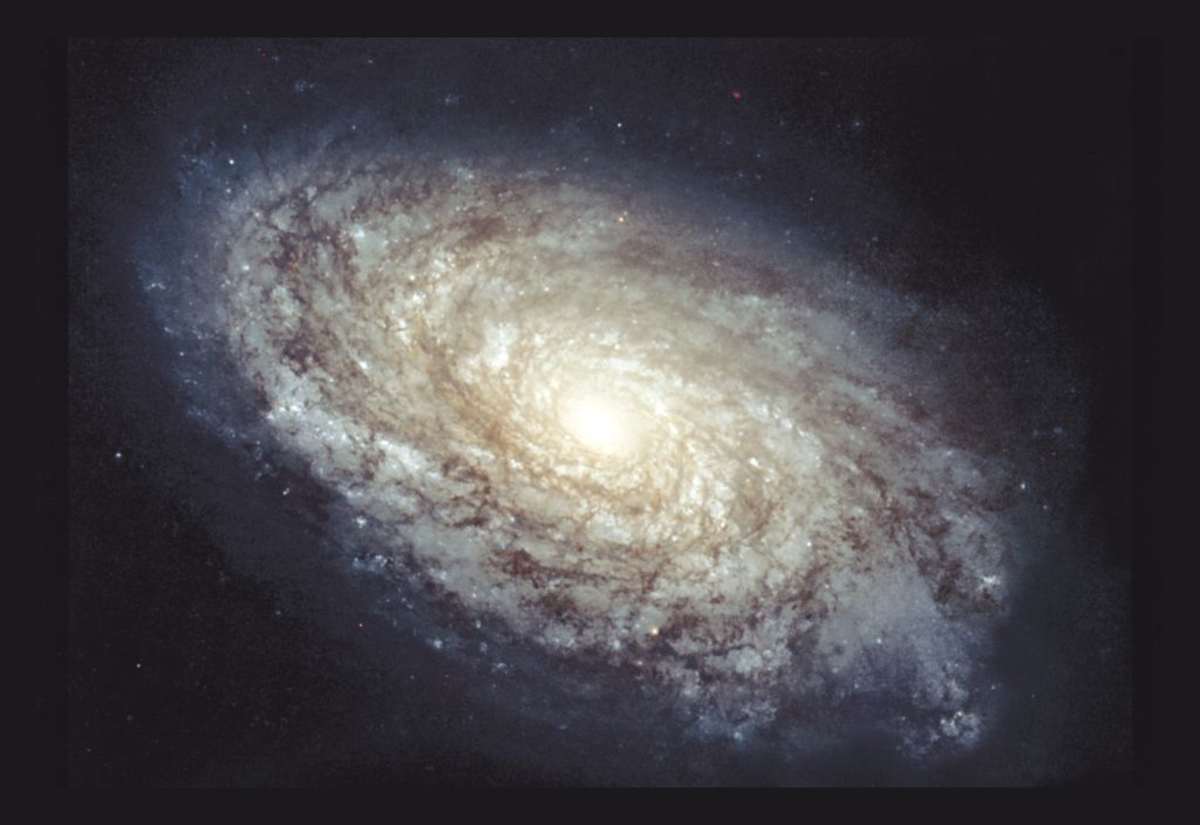
CIRCA 1995: Spiral galaxy NGC 4414.(Representative Image Source: Getty | Photo by Buyenlarge)

What is even more interesting is that while most galaxies are moving in the same direction as the gaseous thread connecting them. Threads like this connect galactic clusters, allowing the movement of galaxies and gas between them. The fact that some of the galaxies are moving in the same direction as the filament in question is a strong indication that cosmic structures can also influence the rotation of galaxies. “What makes this structure exceptional is not just its size, but the combination of spin alignment and rotational motion,” added Dr. Jung. “This dual motion gives us rare insight into how galaxies gain their spin from the larger structures they live in.”
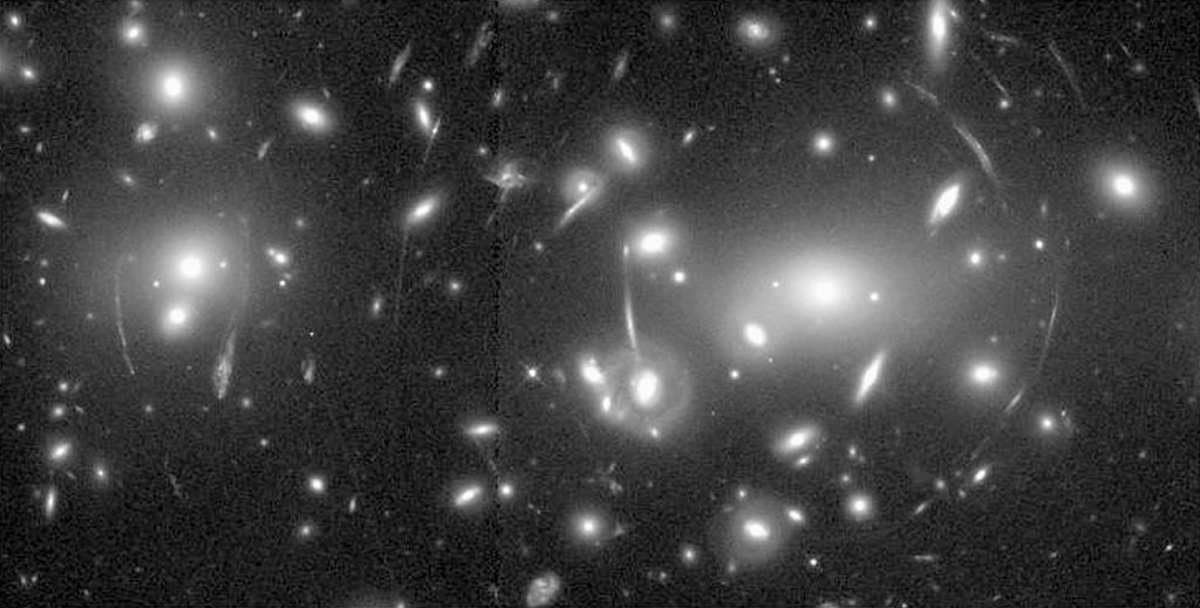
The galaxy cluster Abell 2218 (Representative Image Source: (Corbis via Getty | (Photo by © CORBIS)

Team member Madalina Tudorache, who’s also an astronomer at the University of Oxford, told Live Science that the filament is “probably the largest spinning object” detected as of now. Per her, it is “a fossil record of cosmic flows." But while the filament may be a time capsule of sorts, the abundance of hydrogen in it indicates that, in cosmic terms, it is quite young. Hydrogen is key to star formation, so when galaxies have it in abundance, it is a sign that they are either retaining or gathering fuel to form stars. And since the filament is in its “dynamically cold” state, or low level of internal motion, it is quite likely that it is in the early stages of its evolution.
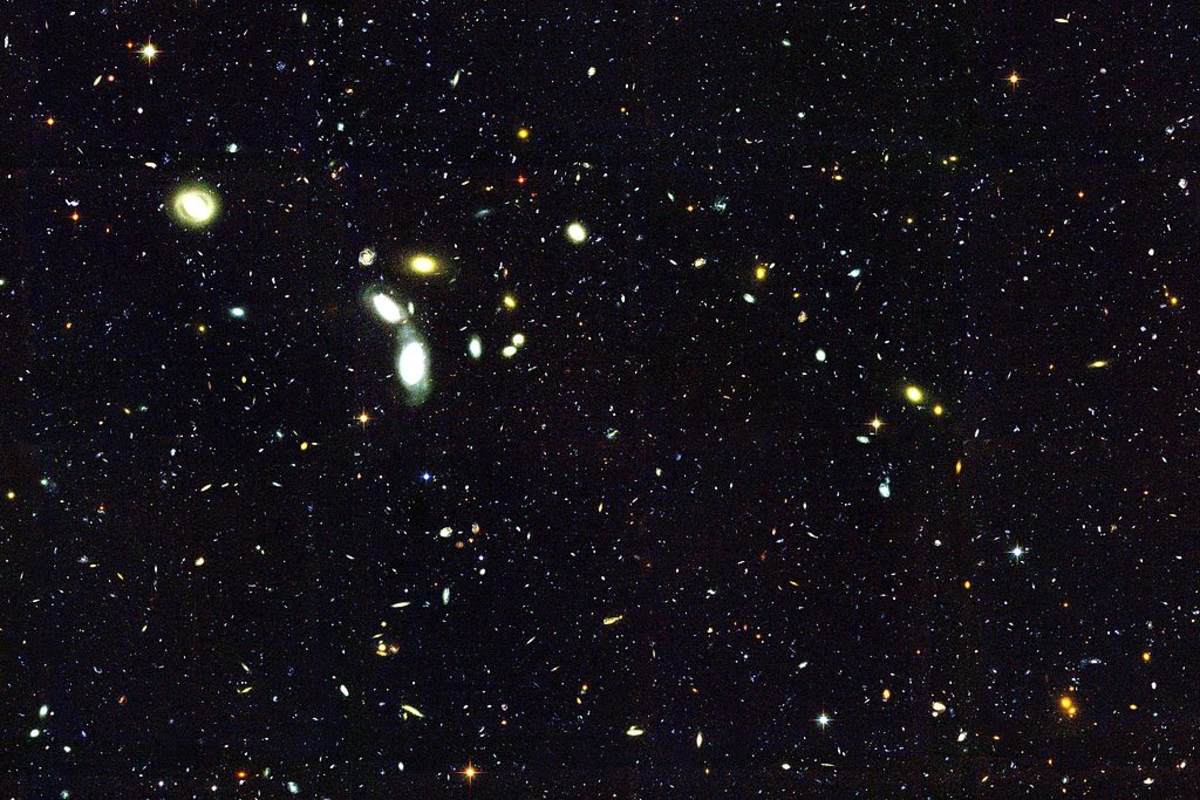
This image, taken with Hubble's Advanced Camera for Surveys, shows several thousand galaxies, many of which appear to be interacting or in the process of forming. (Representative Image Source: NASA | WireImage)

Future data collected through the MIGHTEE (MeerKAT International Ghz Tiered Extragalactic Exploration) survey could reveal further insights into the filament’s behavior, which, in turn, may prove future surveys with instruments like the Vera C. Rubin Observatory in Chile. While scientists had long suspected the existence of structures like this, they hadn’t been able to detect one till now due to the lack of appropriate telescopes. In fact, the research team thinks that the scientific community may come across similar filaments in the future as telescope technology continues to develop.

More on Starlust 

Hubble Space Telescope unveils striking portrait of a spiral galaxy harboring an active nucleus

ESA’s Euclid telescope provides remarkable insights into formation of galaxies and supermassive black hole

MORE STORIES

The population of satellites could grow to a massive 560,000 by the end of the 2030s.
6 hours ago
Avi Loeb's hypothesis follows the reasoning that this tail stretches tens of thousands of miles and is bright enough to show up in stacked telescopic images.
1 day ago
As many as 19 big clusters were discovered, but 16 of them crossed the threshold for large drainage basins.
1 day ago
The flare peaked at 9:49 p.m. ET on November 30 and triggered an R3-level radio blackout on the sunlit side of Earth.
2 days ago
The sunspot, initially classified as large, came fully into view on November 30, confirming its truly vast size.
3 days ago
The consequences of the Moon exploding will be felt in a variety of ways, and none of them will be good.
5 days ago
The SuperCam's microphone unexpectedly picked up the signals from two dust devils.
7 days ago
Comet C/2025 K1 ATLAS, an Oort Cloud object found by ATLAS in May, skimmed past the Sun on October 8 at 31 million miles.
7 days ago
Harvard astronomer Avi Loeb thinks that the nature of the two tails implies a mass loss that is not visible in 3I/ATLAS.
Nov 26, 2025
Unlike geology on Earth, which is driven by the movement of deep rock, the action on icy moons is powered by the dynamics of water and ice.
Nov 25, 2025