This NASA tool will fly aboard a JAXA-ISRO mission to look for water in the Moon's south pole
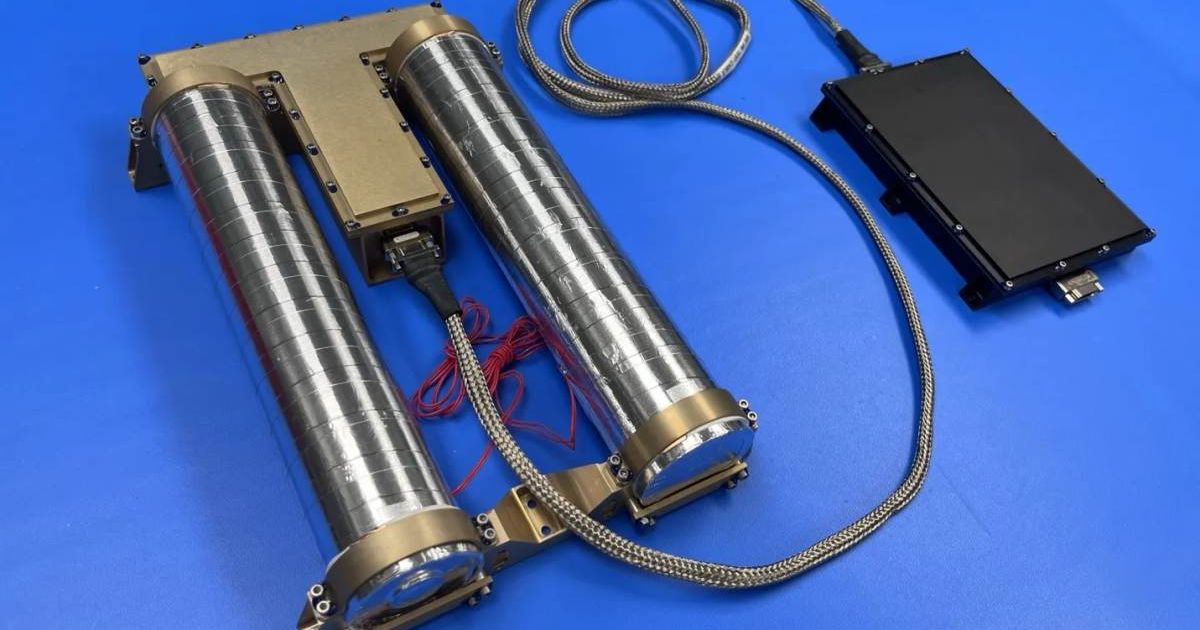
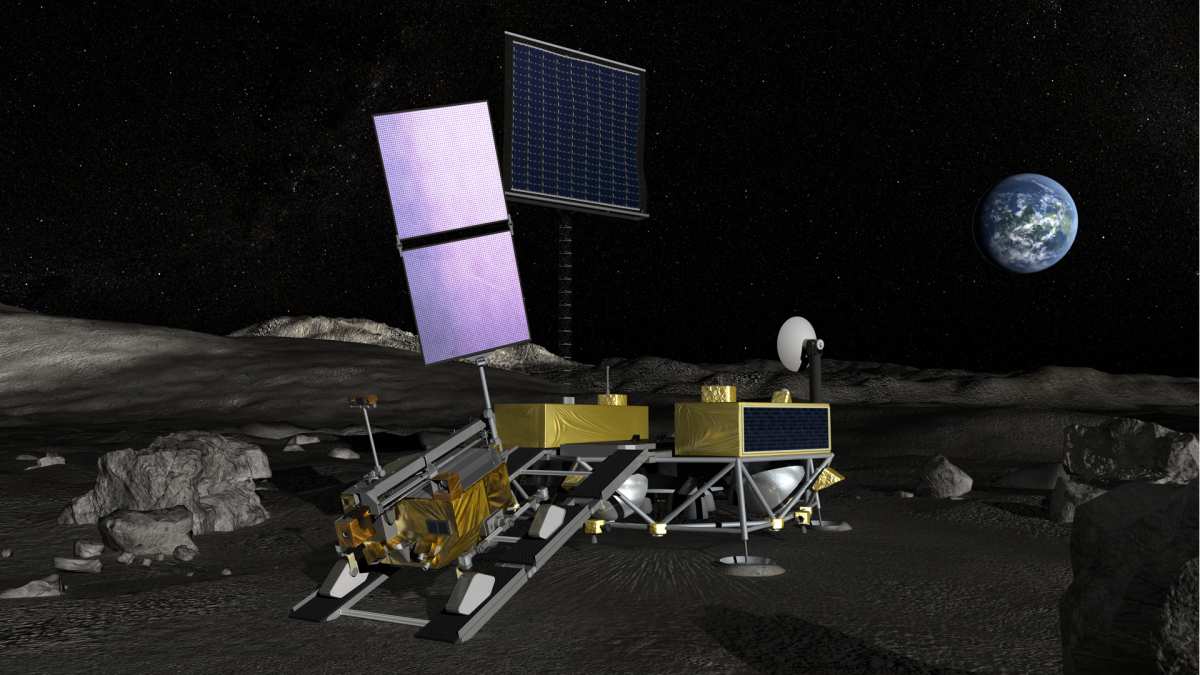
NASA's Ames Research Center, in collaboration with the Lockheed Martin Advanced Technology Center, has designed the Neutron Spectrometer System (NSS), an instrument that can hunt down traces of water ice under the Moon's surface. The agency plans to install it on LUPEX (Lunar Polar Exploration), a lunar rover that is likely to land on the Moon no earlier than 2028. The operation of this rover will be jointly led by JAXA (Japan Aerospace Exploration Agency) and ISRO (Indian Space Research Organization).
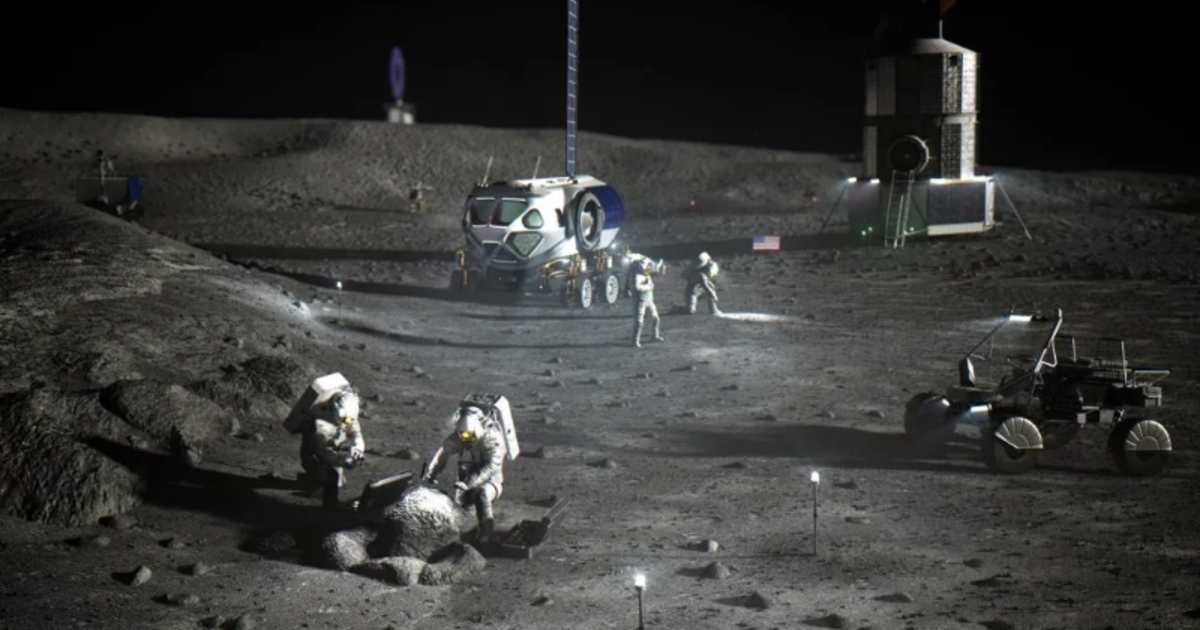
NASA not only wants to send astronauts back to the Moon, but it also wants them to stay. To achieve that, water is a critical resource. The first step toward that goal is to find a store of water close to the surface at a location near which a landing site can be selected. Water on the Moon is mostly found mixed into the lunar regolith—the loose rocky and dusty material covering the lunar surface. Knowledge of its quality and quantity may allow us to harness it in the future. “There is currently a gap in our understanding of how lunar ice is distributed at small scales, from 10s of centimeters up to 10s of kilometers,” said Rick Elphic, the NSS lead at NASA’s Ames Research Center in California’s Silicon Valley, in a statement. “The only way to understand the ‘where’ and ‘how much’ of lunar ice is by exploring on the surface at these scales.”
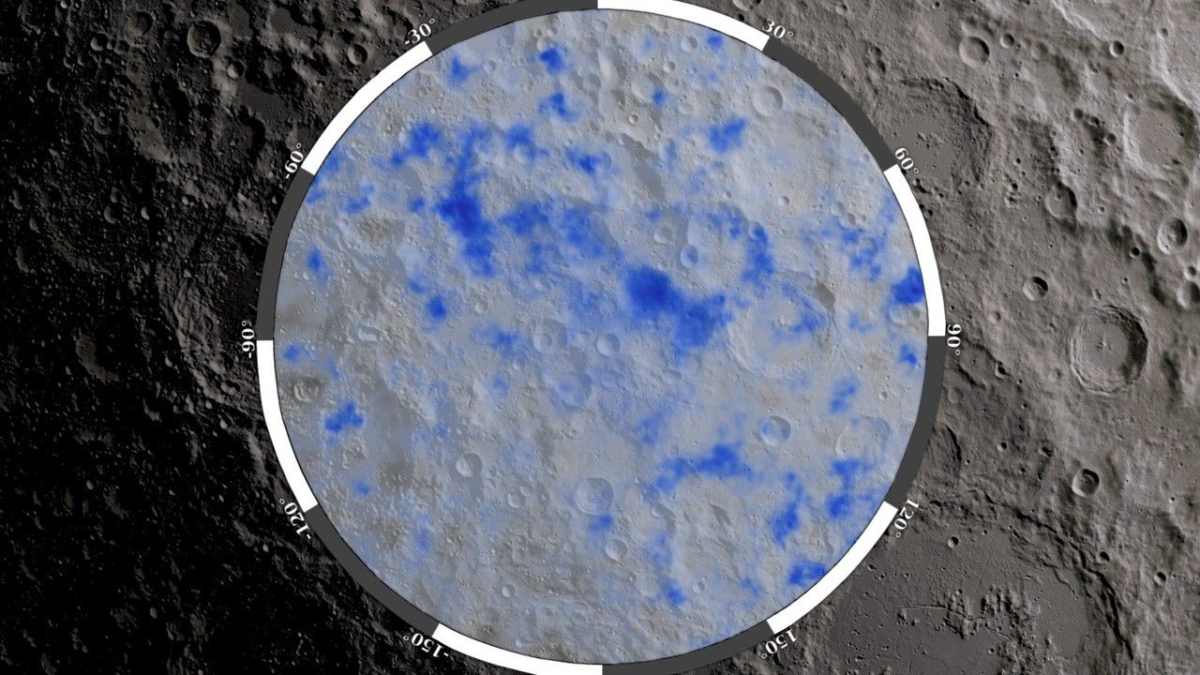
A recent study, led by Shuai Li at the University of Hawaii, suggests that the regolith in the Permanently Shadowed Regions (PSRs) on the Moon, considered to be "cold traps," may not be as rich in water ice as previously thought. Against this backdrop, the NSS will come in handy. With this device, scientists needn’t scoop up lunar soil samples or drill into the surface. Instead, it can search for the H in H₂O. NSS can find the presence of hydrogen by detecting hydrogen atoms’ interactions with neutrons. Neutrons, each of which is about the size of a hydrogen atom, constantly hop around on the lunar soil.
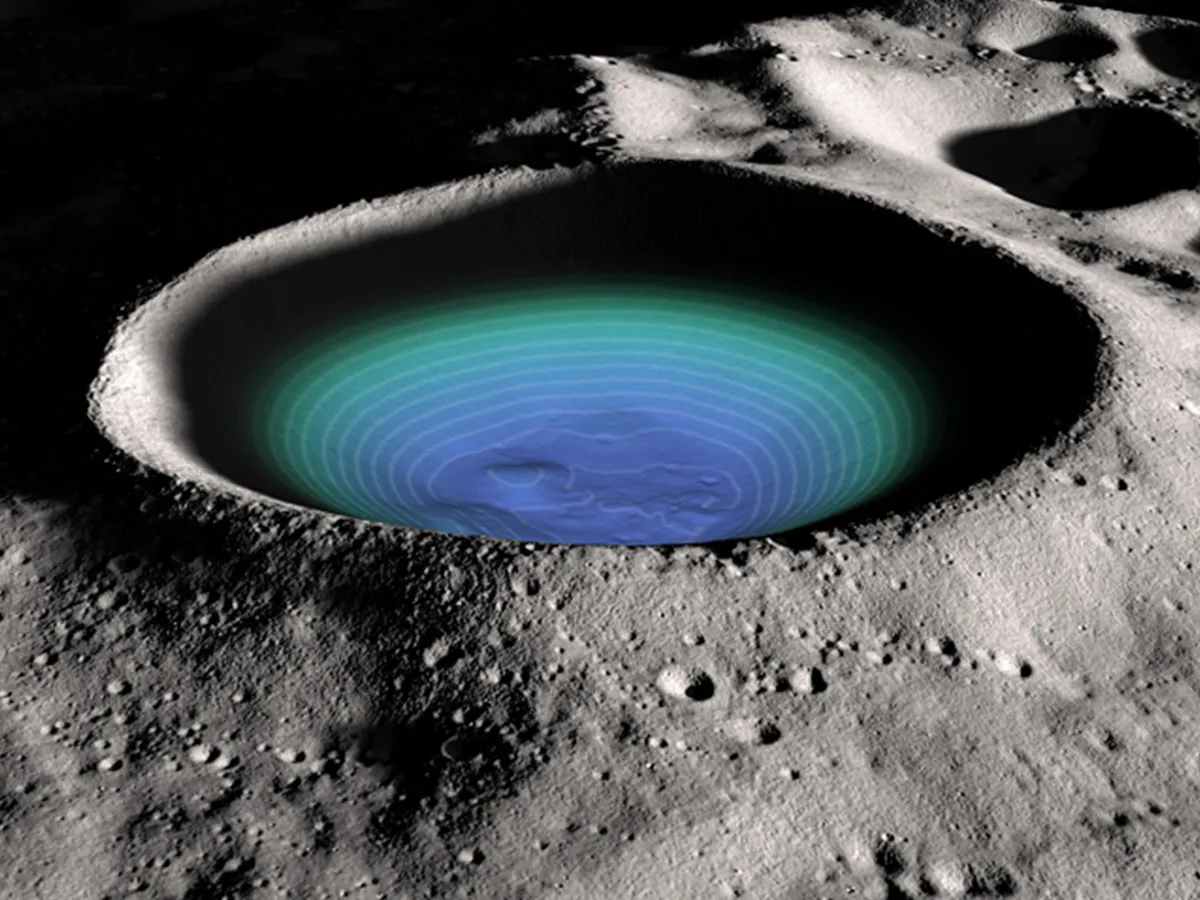
When the two particles interact, fewer medium-energy neutrons are ejected from the soil, suggesting that more of them are occupied with hydrogen. And this deficit can be calculated with the right tools. The NSS, which uses a "gas proportional counter," has two tubes that contain a rare gas called helium-3 that is sensitive to neutrons. The collision of neutrons with helium-3 gas atoms generates electrical pulses. By measuring such pulses, it is possible to detect and quantify hydrogen even up to three feet underground. This is not the lone water hunter. In fact, NASA has developed a series of NSS instruments that are waiting to board future Moon-bound spacecraft. The first NSS instrument took off for the Moon aboard Astrobotic's Peregrine Mission One in January 2024. It didn’t touch down on the lunar surface, but the device was operational throughout the 10-day mission. The device even captured data about the particle background of deep space, suggesting that it can operate in outer space.
More NSS instruments have been booked for their space travel. The third will board NASA’s VIPER (Volatiles Investigating Polar Exploration Rover) mission, part of the agency’s Artemis campaign. The fourth one will ride the MoonRanger “micro rover” developed by Carnegie Mellon University in Pittsburgh. This is a part of NASA’s ongoing Commercial Lunar Payload Services effort. “The three upcoming NSS rover expeditions will tell us what kinds of places on the Moon are most likely to host ice,” Elphic said. “Missions to the lunar surface can then be planned to similar sites where ice can be found.”
More on Starlust
Inexpensive fiber-optic cables could help future Moon missions by detecting moonquakes
NASA has adopted a 3-phase approach to establish a Moon Base: Here's what it looks like