Scientists may have directly observed a black hole tearing apart a white dwarf for the first time
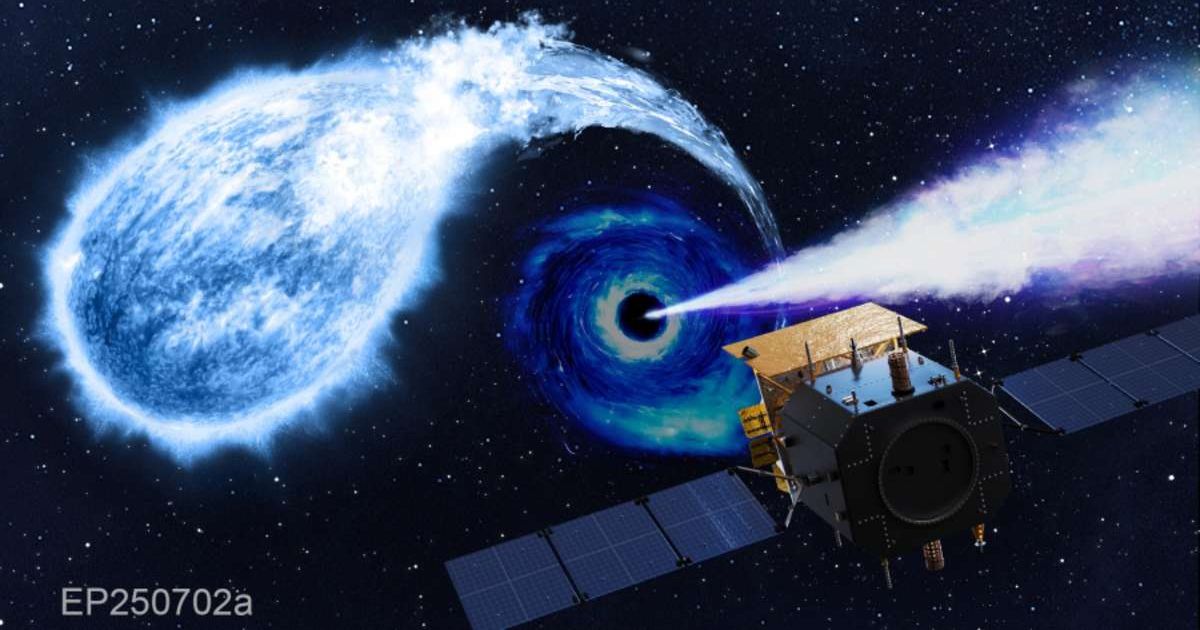
On July 2, 2025, a powerful X-ray source with rapidly fluctuating brightness was spotted by the China-led Einstein Probe (EP) space telescope. A large team of astronomers looked into it and has interpreted the event as an intermediate-mass black hole (IMBH) shredding a white dwarf. This discovery, published in Science Bulletin, may be the first observational evidence of such an extreme black hole feeding process. The Wide-field X-ray Telescope (WXT) on board the EP made the detection of the X-ray, later designated EP25070a. Almost simultaneously, gamma-ray bursts from the same location were also captured by NASA’s Fermi Gemini Telescope. "This early X-ray signal is crucial," said Dr. Dongyue Li, first author of the paper from the National Astronomical Observatories of China, in a statement. "It tells us this was not an ordinary gamma-ray burst."
For years, intermediate-mass black holes, which occupy the mass gap between stellar-mass and supermassive black holes (SMBHs), have represented a missing link in the evolution of the latter variety. A black hole uses its immense gravity to trap a passing star and then tears it apart, emitting high-energy electromagnetic radiation. This is called a tidal disruption event.

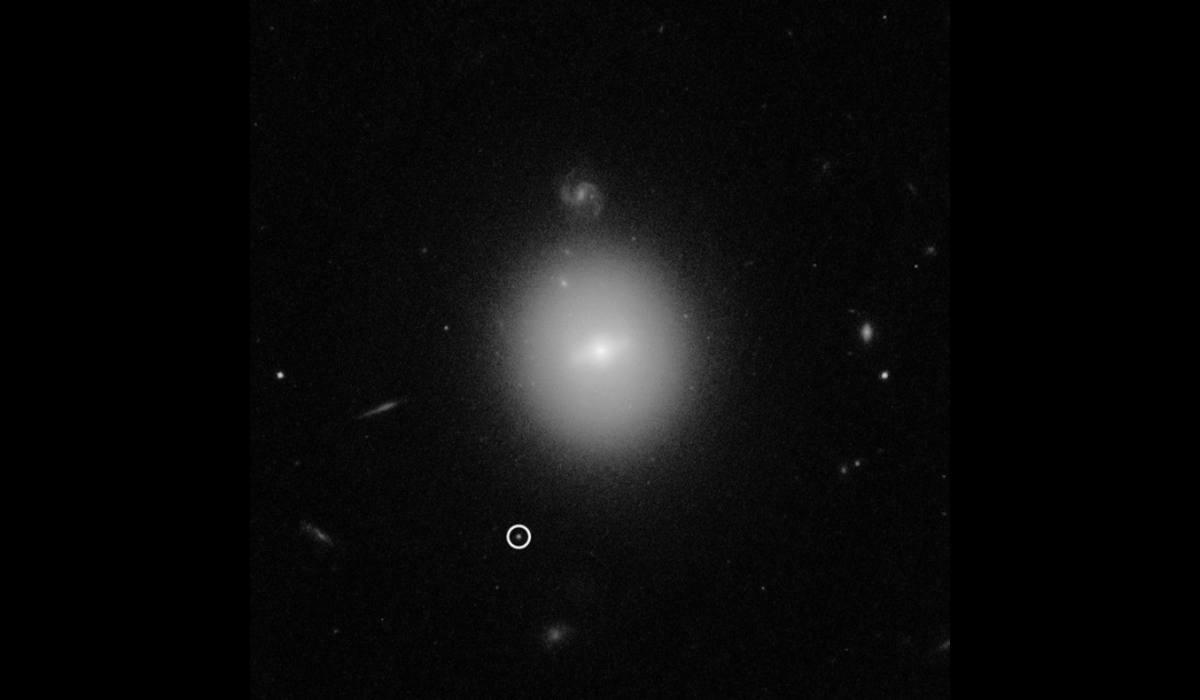
A day before the gamma-ray bursts revealed themselves, WXT had already detected X-ray emission from the same location. Within just 15 hours of the initial signal, its brightness reached the peak luminosity of about 3 × 10⁴⁹ erg s⁻¹. It thus became one of the brightest explosions ever detected in the universe before dimming down. “Over about 20 days, its brightness dropped by more than a hundred thousand times, while its X-ray emission shifted from higher-energy ("hard") to lower-energy ("soft") states,” the statement from the University of Hong Kong read. The characteristics shown by EP250702a did not align with existing models. After all, an extremely bright and fast-evolving X-ray emission preceding a gamma-ray burst in the outskirts of the host galaxy rather than its center is rarely seen in high-energy cosmic events. This led the researchers to consider the intermediate-mass black hole explanation.
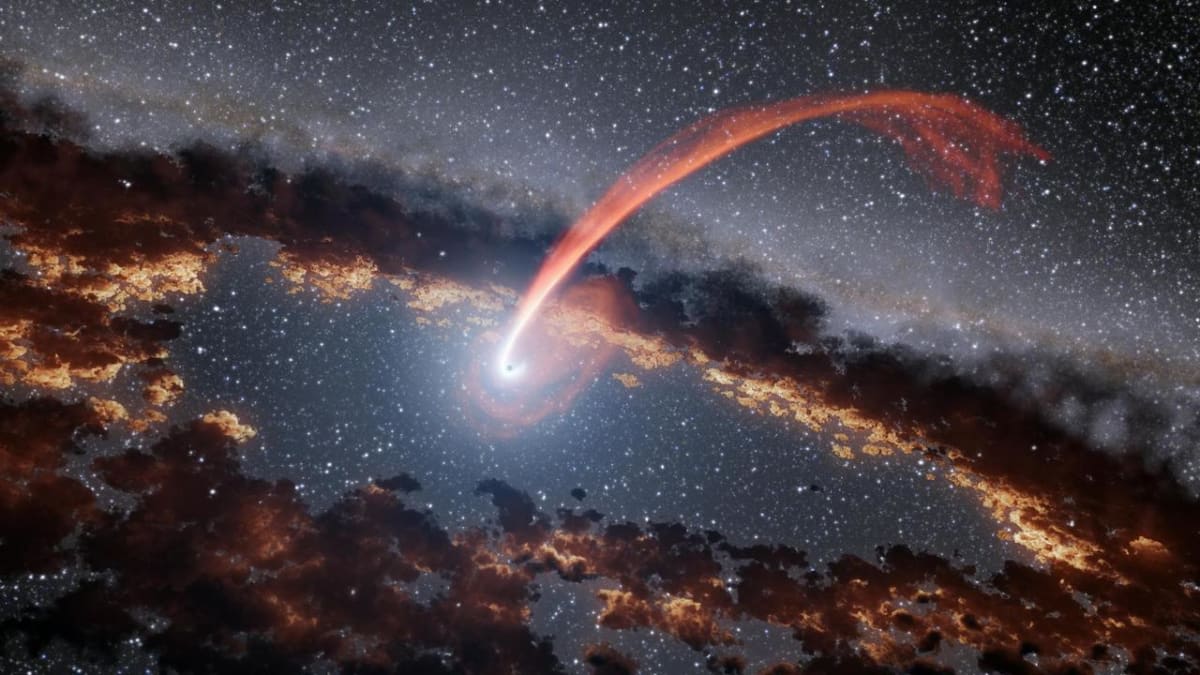
Only IMBHs (intermediate-mass black holes) of 1000 to 100,000 solar masses can disrupt something as compact as white dwarfs, resulting in powerful, transient flares. So, the rapid rise and fast decay of EP250702a strongly match predictions for a white dwarf disrupted by an IMBH. Dr. Jinhong Chen, a co-first author of the paper and a postdoctoral fellow at the Department of Physics of the University of Hong Kong, said, "Our computational simulations show that the combination of the tidal forces of an intermediate-mass black hole, combined with the extreme density of a white dwarf, can produce jet energies and evolutionary timescales that are highly consistent with the observational data." Besides shedding light on the missing population of IMBHs, this discovery may open new ways to study how black holes grow and the fate of compact stars and boost the fledgling field of multi-messenger astronomy.
More on Starlust
A black hole belching out the remains of a star it ate is emitting more energy than the 'Death Star'