Rotation may be the key factor separating giant planets from 'failed stars,' say scientists
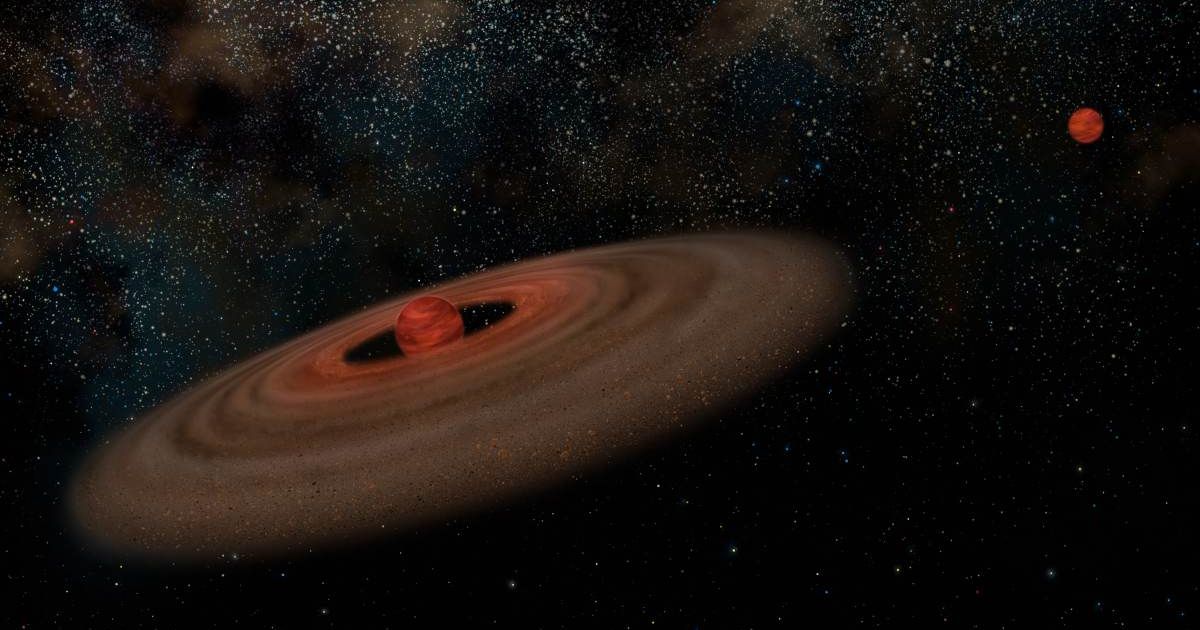
Heavier than Jupiter, but lighter than a small star, brown dwarfs are difficult to distinguish from giant planets. For years, astronomers have searched for a yardstick that can separate the giant planets from dwarf stars. Now, a research team at Northwestern University has discovered that giant planets’ spin properties are different from those of brown dwarfs. In a study published in the Astrophysical Journal, they show that giant planets spin much faster than brown dwarfs. The spin factor offers a new way to classify them that were often difficult to distinguish in certain cases. Besides, the difference in spin reveals that these two classes of objects evolve differently through distinct formative processes. “Spin is a fossil record of how a planet formed,” said lead author Chih-Chun Hsu, a postdoctoral researcher at Northwestern University, in a statement. “By measuring how quickly these worlds rotate, we can start to piece together the physical processes that shaped them tens to hundreds of millions of years ago.”
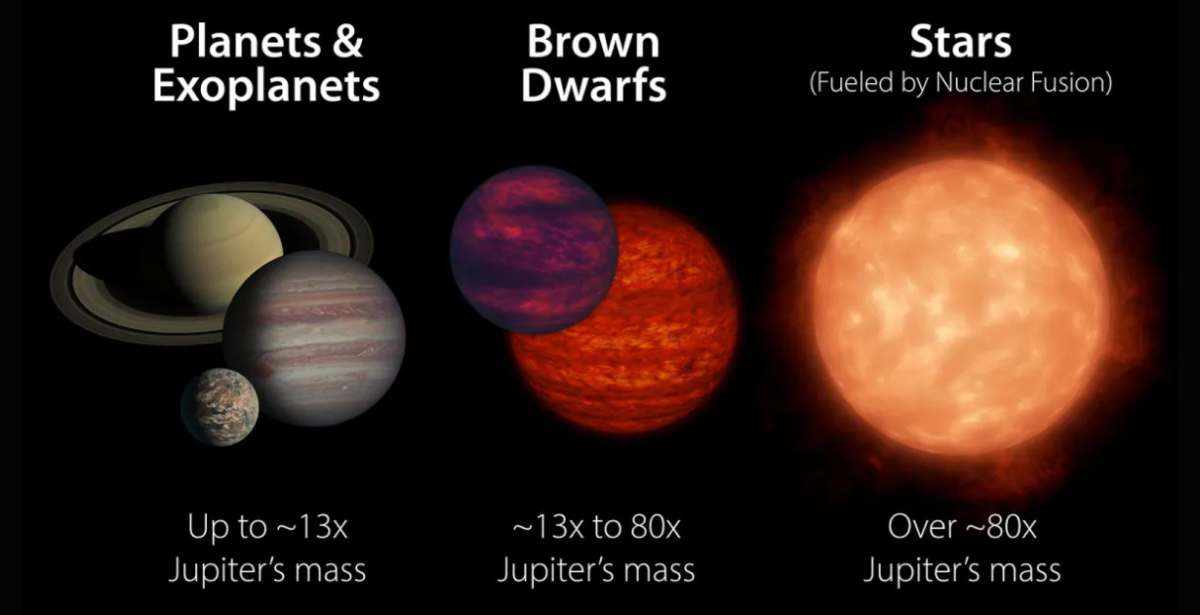
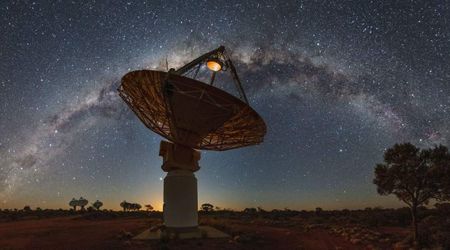
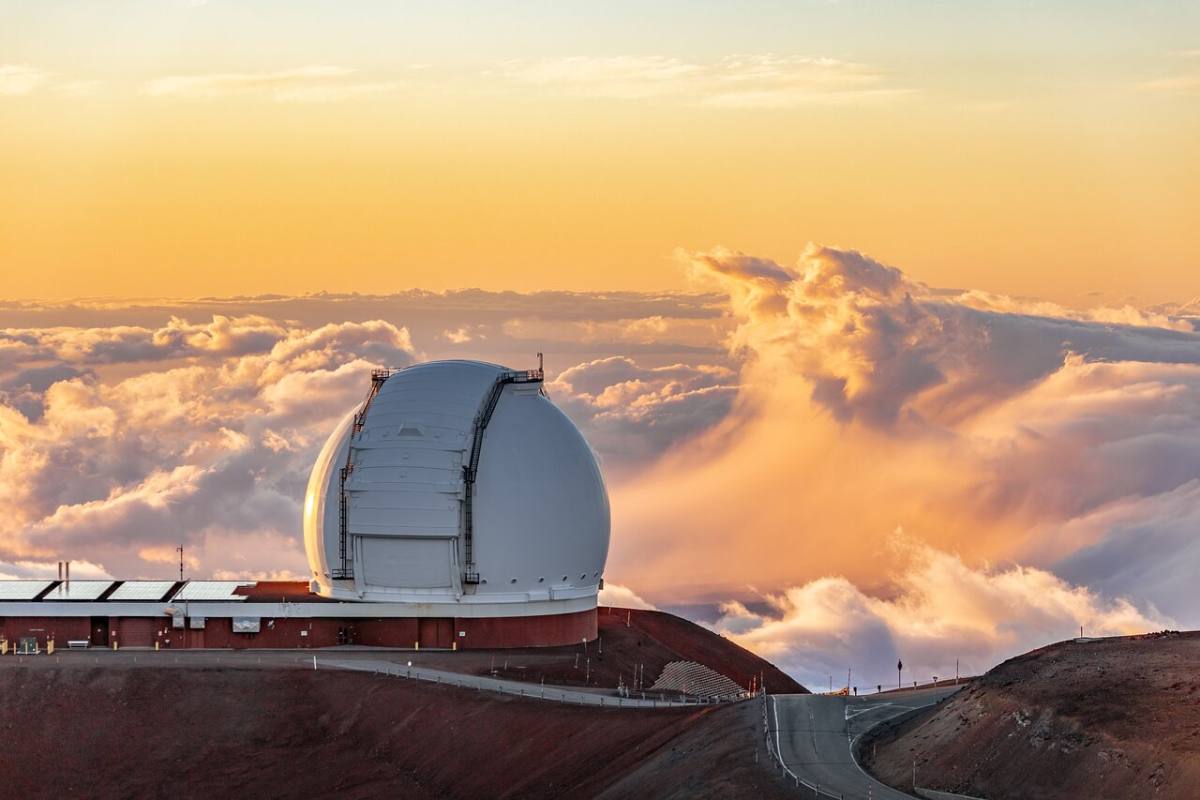
Despite being heavier than a giant planet like Jupiter, brown dwarfs cannot sustain fusion of hydrogen atoms that form helium, the key process that makes a regular star pour out radiation and heat. They are unable to shine like a Sun-like star. Instead, they emit a faint glow, making scientists dub them "failed stars." Usually, astronomers single out planets from stars based on brightness, temperature, and spectral information. But brown dwarfs’ traits make them sit in the blurry middle. Hsu and his peers thought about whether the spins of the objects could be used to distinguish them. Using W.M. Keck Observatory on Maunakea in Hawaiʻi, the researchers studied six giant planets and 25 brown dwarfs. “We were only able to conduct a spectroscopic survey of this scale because Northwestern is a Keck Observatory partner,” coauthor Jason Wang at Northwestern’s Weinberg College of Arts and Sciences said in the statement. “That allowed us to access Keck’s telescopes for many nights to make this survey a reality.”
The Keck Planet Imager and Characterizer Instrument (KPIC) allowed the team to pick up light signals from the faint objects. This provided a snapshot of their atmospheres. Depending on their rotation, the objects’ spectra broaden, like the Doppler effect for sound. Analysis of these features reveals how fast a planet or a brown dwarf is spinning. “With KPIC, we can detect these tiny signals that reveal a planet’s rotation around other nearby stars,” Hsu said. After combining the spins of the exoplanets, brown dwarfs and spins of similar objects from previous studies, the team built a database for comparison. The comparison of the rotations of all the objects yielded a clear pattern. Giant planets rotate at a larger fraction within the limit of their theoretical maximum speed. But brown dwarfs rotate at a slower rate.
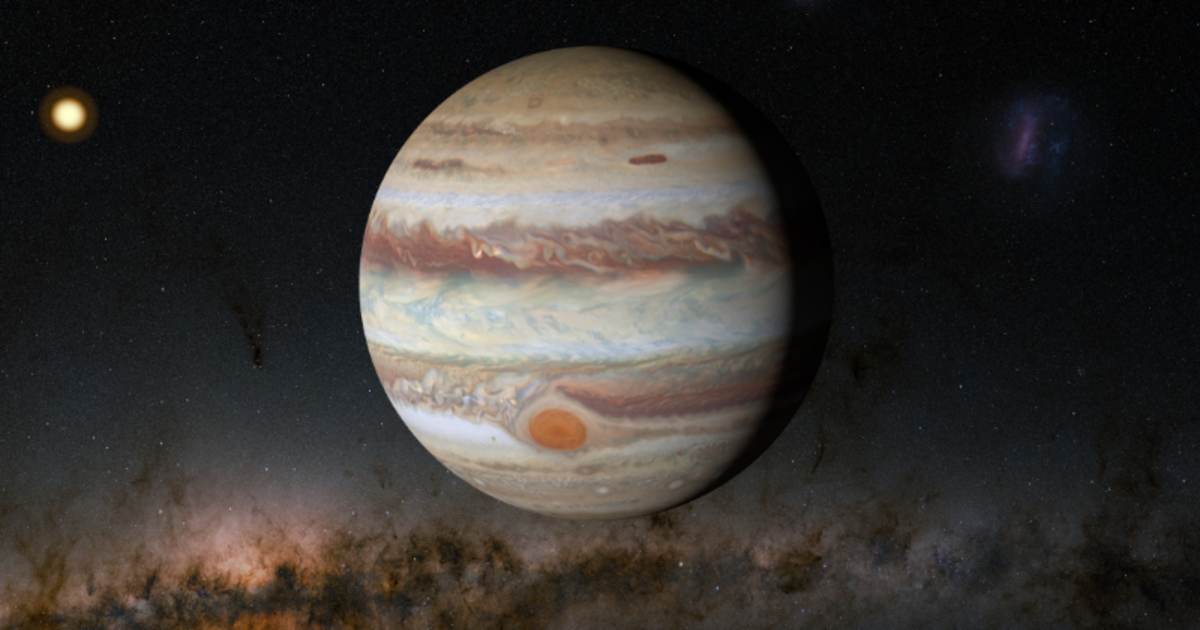
The spin difference can be traced back to their mass difference and how their mass compares to that of host stars. The giant planets accrete matter from the disks of gas and dust around young stars. “During formation, interactions with the disk can influence how much angular momentum — or amount of spin — the planet retains,” according to the statement. “Brown dwarfs, on the other hand, can form like stars — through the collapse of gas clouds — or like planets. Interactions between the brown dwarf’s strong magnetic field and the surrounding gas act like a cosmic brake, causing the object to lose angular momentum.”
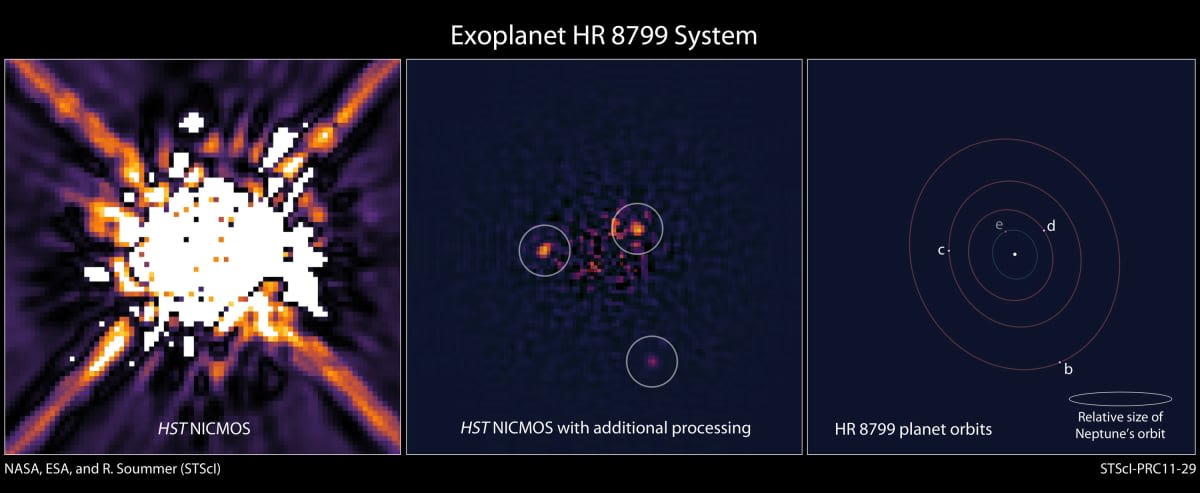
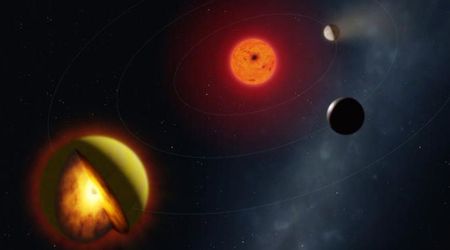
Hsu and his teammates highlight such a difference, citing the example of one exoplanet and one brown dwarf. The HR 8799 exoplanet system harbors a giant planet that is about seven times the mass of Jupiter, but spins unusually fast. The researchers note that a nearby brown dwarf, despite being roughly three times heavier than the giant exoplanet, rotates six times slower. “Our results suggest that both the planet’s mass and the ratio between the planet’s mass and its star’s mass influence how fast the planet ultimately spins,” Hsu said. “That helps us narrow down the physics of how these systems form.” The researchers plan to study the spins of free-floating planetary-mass objects that hurtle through space without a host star. They think that they will be able to link rotation with chemistry and even the birth of entire planetary systems.
More on Starlust
A rare 'teenage' planetary system could help bridge a gap in the study of cosmic evolution
NASA's Juno mission shows Jupiter may be smaller and flatter than previously thought