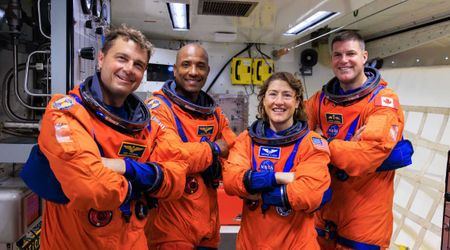
'Not the Moon you see from Earth': NASA’s Christina Koch describes the view from Artemis II’s Orion
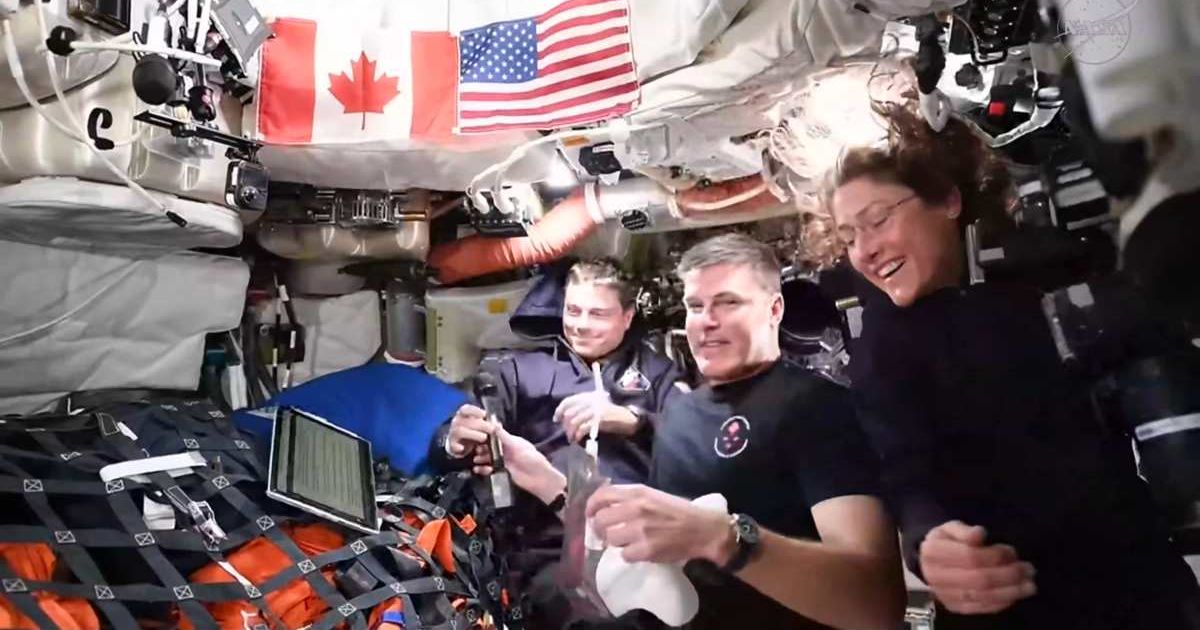
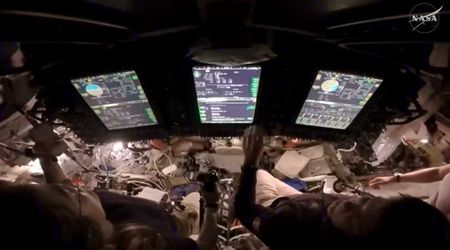
The four astronauts aboard Artemis II have plenty of items on their agenda across the 10-day mission. This includes the primary objectives of the mission, such as testing Orion’s handling and life-sustaining capabilities for future missions and conducting scientific experiments. However, the simple act of looking out of the window has treated the flight crew to some never-before-seen views of the Moon. During NASA’s downlink event at around 4:30 pm on April 4, 2026, the crew described seeing many features of maria, basins and craters on the lunar surface that hadn’t been observed for a long time, and in many cases, ever. The crew also catered to the curiosities of the public, shedding light on their life inside Integrity. Interesting insights were also shared between mission controllers in Houston and Integrity after the downlink event.
"...copy, Moon joy." pic.twitter.com/WsN2hTeeVk
— NASA Solar System (@NASASolarSystem) April 5, 2026
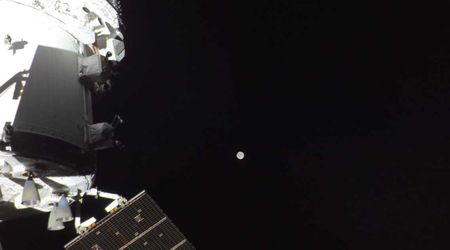
Christina Koch, NASA’s mission specialist assigned for the mission, described the view from their vantage point as “the Moon we are looking at is not the Moon you see from Earth whatsoever." She went on to describe the difficult-to-see western limb of the Moon, “One of the neat things that I’m seeing right now is in the sort of largest maria field. The one that sort of makes up most of the western side of what you can see on the near side. It’s much more obvious now that one of those marias is a huge basin, because it’s kind of at the 1 ‘o’ clock position." The mission specialist continued, “I don’t know the name of the big one. It’s basically just west of where Mare Serenitatis and Mare Tranquillitatis are."
History in the making
— NASA (@NASA) April 5, 2026
In this new image from our @NASAArtemis II crew, you can see Orientale basin on the right edge of the lunar disk. This mission marks the first time the entire basin has been seen with human eyes. pic.twitter.com/iqjod6gqgz
NASA mission controllers in Houston later filled her in, “We think, based on your description of the basin that you saw, that is Imbrium." "Yes, that sounds right," replied Koch. Referring to the individual features of the Moon that the crew can resolve with their naked eyes, including the terrain, Koch commented, “I’ve never noticed that Imbrium has such a distinctive high-albedo ring defining it.” Albedo refers to the reflectivity of a celestial object.
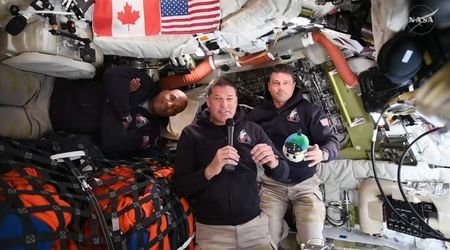
Besides the Moon, many questions about the crew's experiences so far were answered by them. Canadian Space Agency’s Jeremy Hansen was surprised by the changes they could see outside their windows, especially seeing various phases of the Earth. “One hour to a few hours later up here, we can see a completely different Earth…We woke up that first morning, on the TLI morning, it was half Earth, then it was a full Earth, and then it was no Earth," he said as the crew burst out laughing. Victor Glover was rather pensive in his remarks, hoping the inspiration from this mission would transcend human divisions.
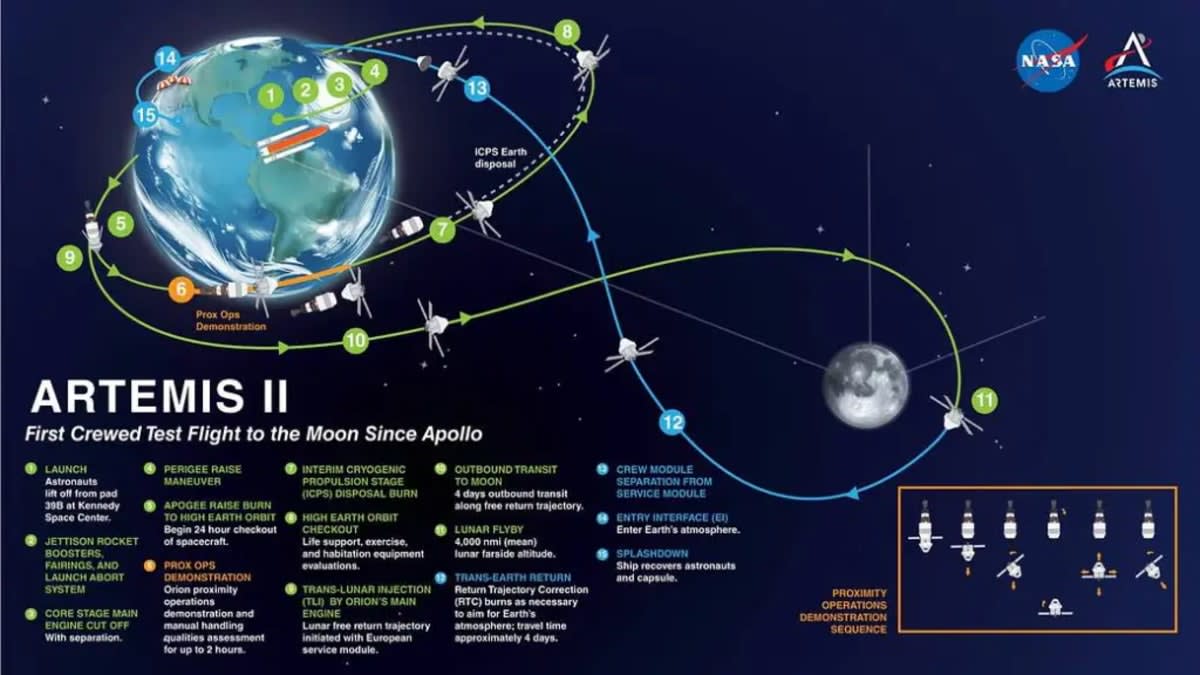
During the CSA downlink event a few hours later, Hansen led a Q&A session with children, with the crew seemingly in good spirits as they made their way into the lunar sphere of influence. Today (Sunday) onwards, the Orion spacecraft will see the gravity of the Moon act upon it more than Earth’s. The mission’s free return trajectory will see the quartet travel the furthest distance away from Earth at 252,757 miles. This will break the previous record held by the crew of Apollo 13 by about 4,102 miles, which stood for well over half a century.
Next stop: lunar flyby.
— NASA (@NASA) April 3, 2026
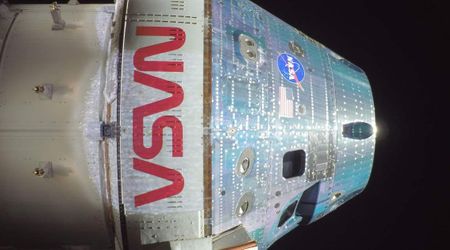
The Orion spacecraft recently ignited its main engine on the service module for about six minutes to provide about 6,000 pounds of thrust. This maneuver not only sets the Artemis II astronauts on the path to the Moon. It also puts the crew in a free… pic.twitter.com/cWTfpzGC7d
During NASA’s downlink event, the crew broke another record by being interviewed from the furthest distance away from Earth, at a distance of 155,000 nautical miles, as noted by Glover during this Day 4 event. The pilot had later also been involved in taking photographs of the Orientale basin on the Moon, which is hard to see in its entirety from Earth. At this point, the amount of media downlinked via the Optical Communications System from this mission has already passed the 100 GB mark. Sunday’s activities will see the crew test out their spacesuits, which by themselves are designed to support them for six days without cabin pressure, before a lunar flyby the following day allows for even more spectacular views of the Moon.
More on Starlust
Artemis II update: Crew set to spot rare solar eclipse, make detailed surface observations and more
Artemis II crew to get solar radiation forecasts from two new U.S. university-developed models