NASA's Europa Clipper captured a unique ultraviolet view of 3I/ATLAS
The Europa Clipper imaged the comet when Earth-based observation was not possible.
UPDATED 12 HOURS AGO
A black space background with white streaks and a single fuzzy white dot. The streaks are stars, and the dot is comet 3I/ATLAS in an old image. (Cover Image Source: ESA/TGO/CaSSIS)

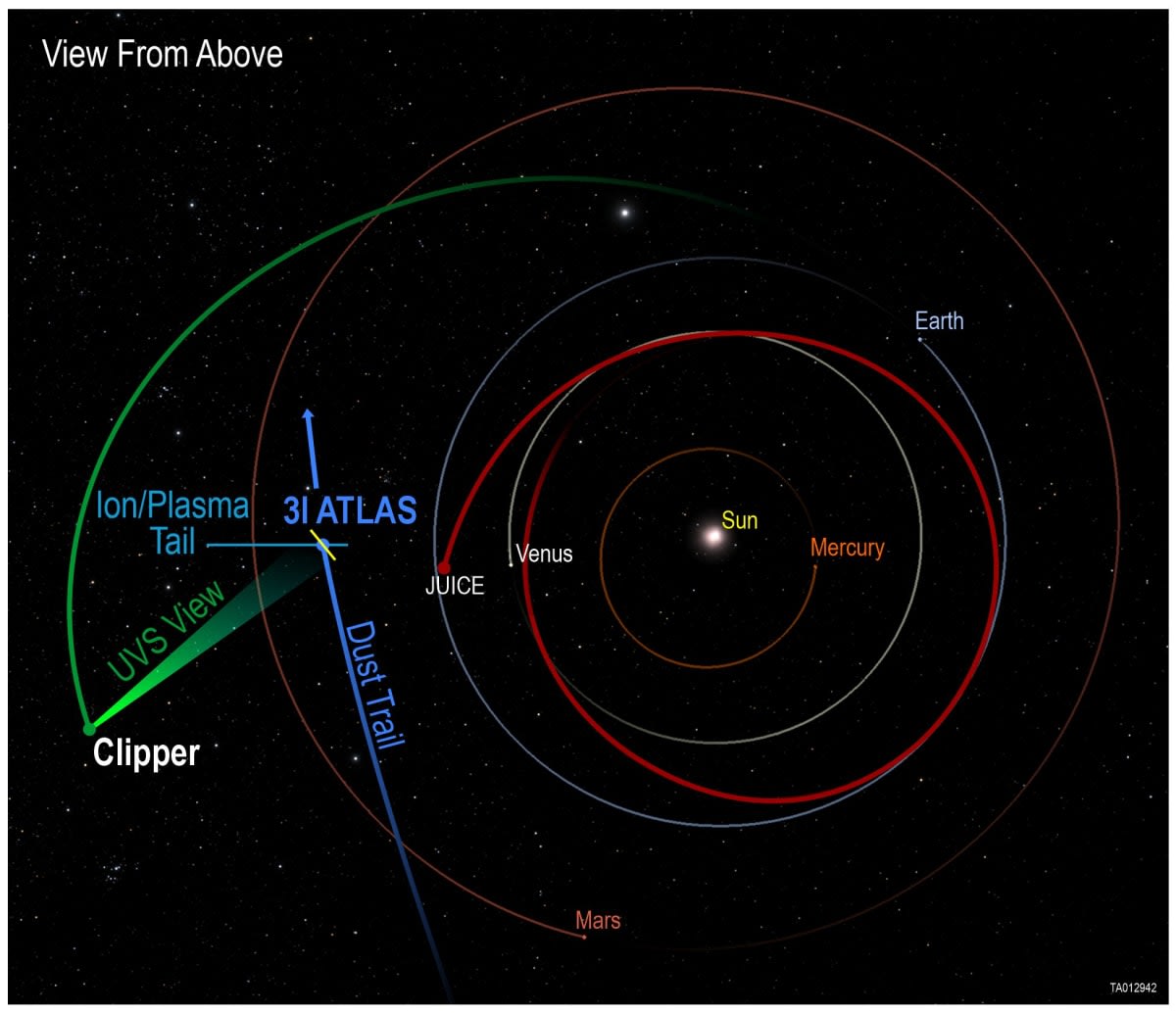
Objects from beyond our solar system do not come calling very often. This explains why comet 3I/ATLAS generated so much speculation and has been under observation by several space and ground telescopes since its discovery. And while it was an accident, NASA’s Europa Clipper spacecraft, too, observed 3I/ATLAS on November 6, when the comet was about 102 million miles, or roughly 164 million kilometers, away, the agency informed

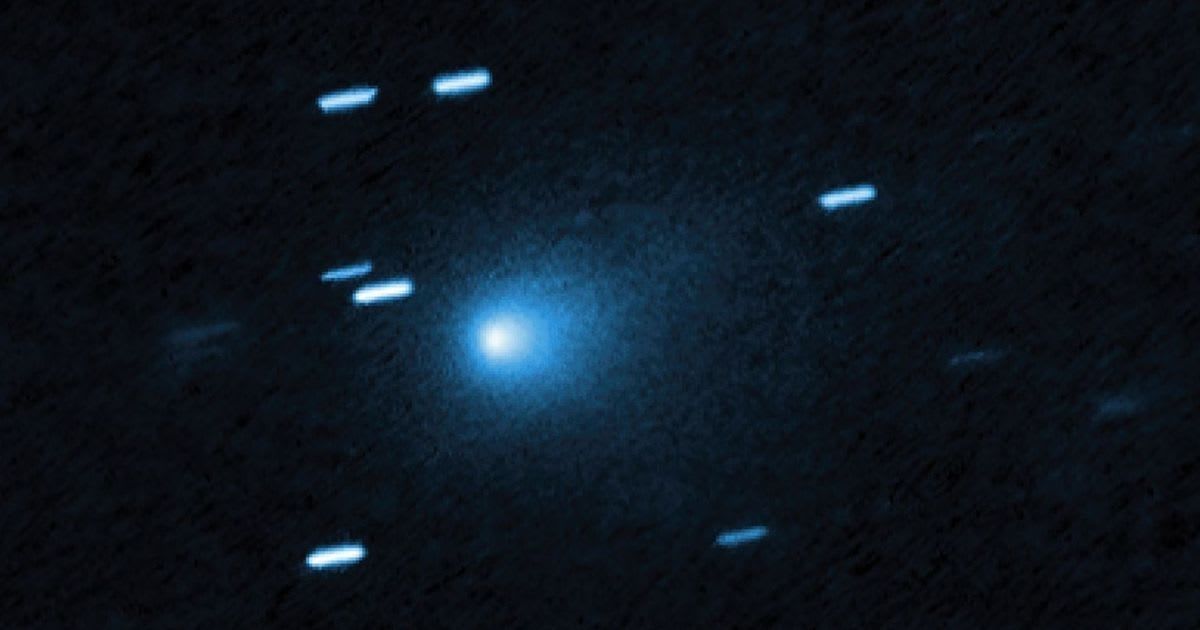
NASA’s Europa Clipper used its UV spectrograph to observe interstellar comet 3I/ATLAS when Earth and Mars views were limited, capturing rare details of its twin tails from space. (Image Credit: NASA/JPL-Caltech/APL/SwRI)

A big hurdle during November was that Earth-based observations were being blocked by the Sun. However, with 3I/ATLAS passing between Europa Clipper and our host star at the time, the spacecraft was uniquely positioned to snap an image of the comet, thereby bridging the gap between Mars-based observations in late September and those made from Earth later. And so it seized the opportunity, capturing the comet over seven hours with its Europa Ultraviolet Spectrograph (Europa-UVS). As the spacecraft happened to be facing the Sun at the time, it caught a rather unique downstream view of the comet's two tails while looking back toward the comet’s core and the cloud of gas around it. 
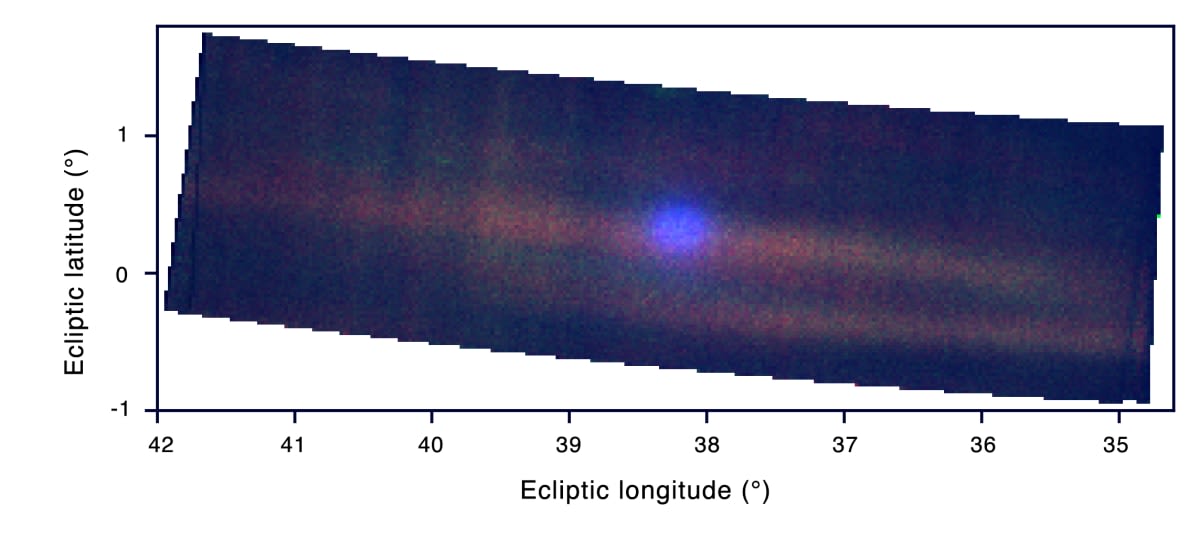
Interstellar comet 3I/ATLAS is seen in this composite image captured on Nov. 6 by the Europa Ultraviolet Spectrograph instrument on NASA’s Europa Clipper spacecraft. (Image Credit: NASA/JPL-Caltech/SWRI)

"We're hopeful that this new view, along with observations from Earth-based assets and other spacecraft, will help us to piece together a more complete understanding of the tails' geometries," said SwRI's Dr. Thomas Greathouse, co-deputy principal investigator of Europa-UVS, per Phys.org. The UVS picked up signs of oxygen, hydrogen, and dust around the comet. Together, these findings suggest that Comet 3I/ATLAS was releasing large amounts of gas and material shortly after it made its closest pass to the Sun.
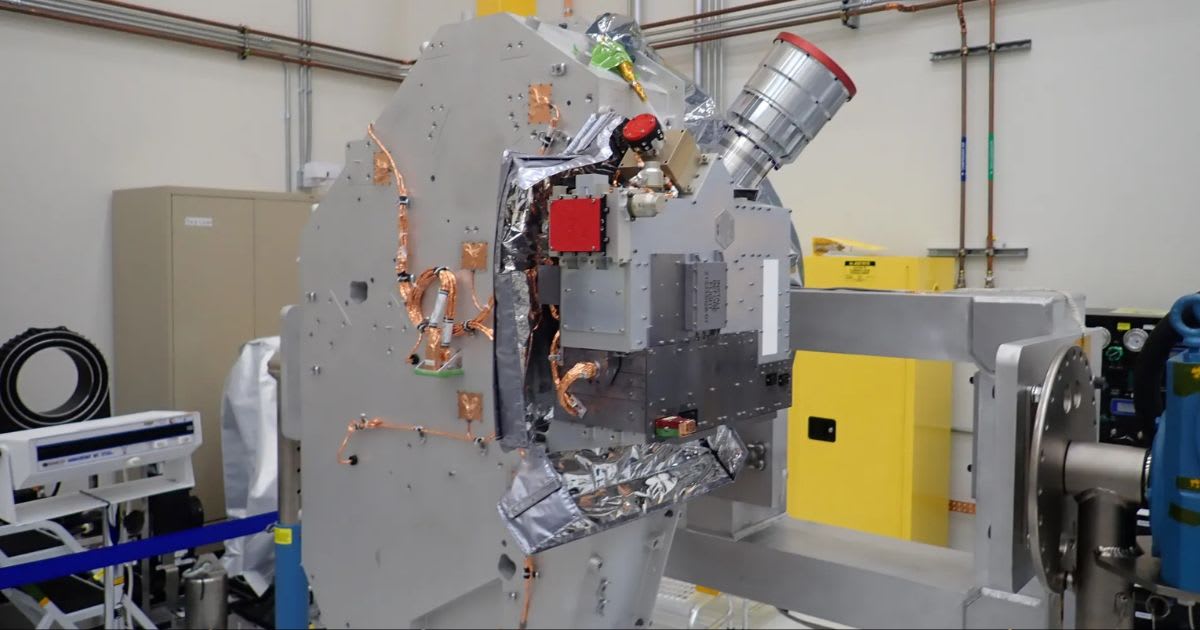
Europa-UVS, the first science instrument installed on Europa Clipper, is mounted on the spacecraft’s nadir deck at NASA’s JPL. The deck helps stabilize instruments and keep them properly oriented. (Image credit: NASA/JPL-Caltech)

Launched in October 2024, the spacecraft will not arrive at Jupiter until April 2030. Its primary mission is to study Europa, one of Jupiter’s largest moons and a world thought to hide a vast ocean beneath its icy surface. Kurt Retherford, a staff scientist at the Southwest Research Institute in San Antonio and the principal investigator for Europa-UVS, had previously explained the process used by the UVS in everyday terms. Light enters through the telescope, reflects off a mirror, and passes through a narrow slit. It then hits a grating that spreads the light out before it finally reaches a detector. "It’s like a digital image you take with a cell phone camera," Retherford explained. "But unlike a cell phone, Europa-UVS sees ultraviolet light, and records more than pictures."
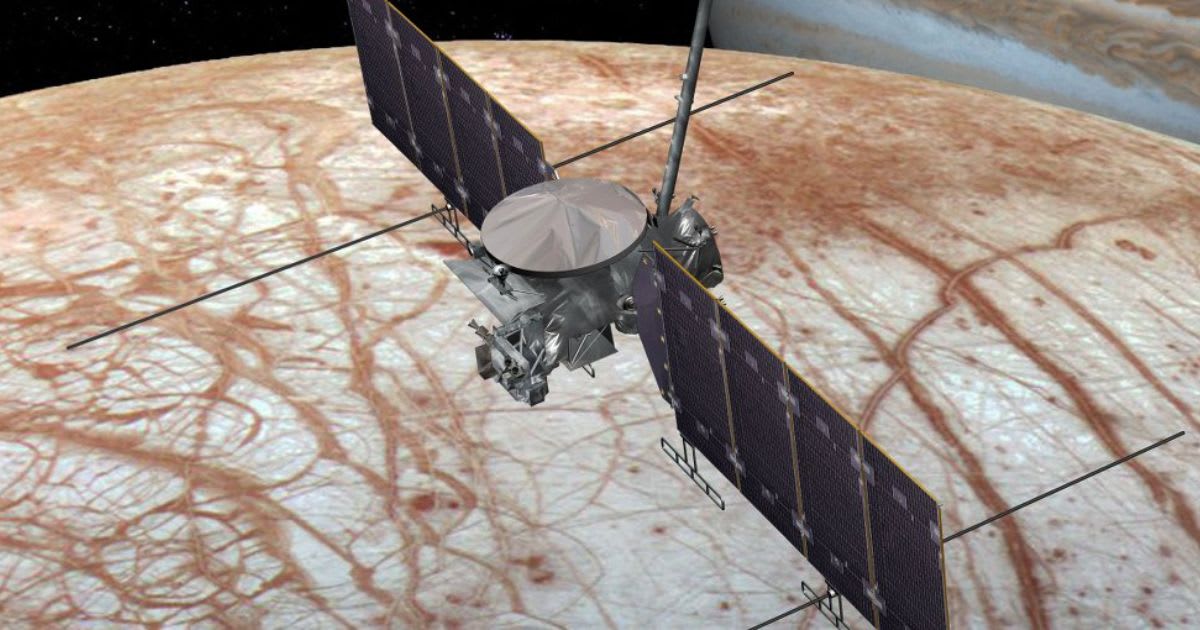
Europa Clipper will conduct detailed reconnaissance of Jupiter's moon Europa and investigate whether the icy moon could harbor conditions suitable for life (Cover Image Source: NASA)
Europa Clipper will conduct detailed reconnaissance of Jupiter's moon Europa and investigate whether the icy moon could harbor conditions suitable for life (Representative Image Source: NASA)

By scanning the sky and splitting ultraviolet light into its component wavelengths, the instrument can identify chemical fingerprints left behind by different elements. By stacking several observations together and converting them into visible colors, the team can even produce an image of an object that normally cannot be seen by the eye. This technique made it possible to capture a visual record and the chemical fingerprint of 3I/ATLAS last month.

More on Starlust

A closer look at the latest 3I/ATLAS image in X-ray light: What ESA's XMM-Newton observed

Astrophotographer livestreaming 3I/ATLAS at closest approach says he doesn't 'believe it is a comet'
MORE STORIES

Operators lost contact with the satellite on December 17 when it was at an altitude of 418 kilometers.
20 hours ago
Though officially detected by a NASA-funded ATLAS on July 1, archival records show the comet was actually captured on film as early as mid-June.
1 day ago
Four tiny NASA satellites team up to reveal solar storms, comets, and the Sun’s hidden power.
1 day ago
NASA’s MAVEN went silent on December 6 after it emerged from behind the Red Planet.
1 day ago
The target was suggested by a high school student via the HiWish program.
2 days ago
The Calabash Nebula measures 1.4 light-years across and is named after the unusual-looking Calabash gourd.
3 days ago
Flight controllers and technical specialists are racing to pinpoint the cause of the radio failure and restore contact with the orbiter.
Dec 11, 2025
The final milestone in construction was reached on November 25, as technicians carefully joined the giant telescope's inner and outer components.
Dec 8, 2025
The exoplanet is located seven times closer to its star than Mercury is to our own planet.
Dec 4, 2025
The rocks were determined to be kaolinite, which is found in tropical regions on Earth.
Dec 3, 2025