Moon phases 2026: When is the next Full Moon?
Skywatchers can look forward to a bright start to February with the Snow Moon reaching its peak, marking the second Full Moon of the year.
PUBLISHED 1 DAY AGO
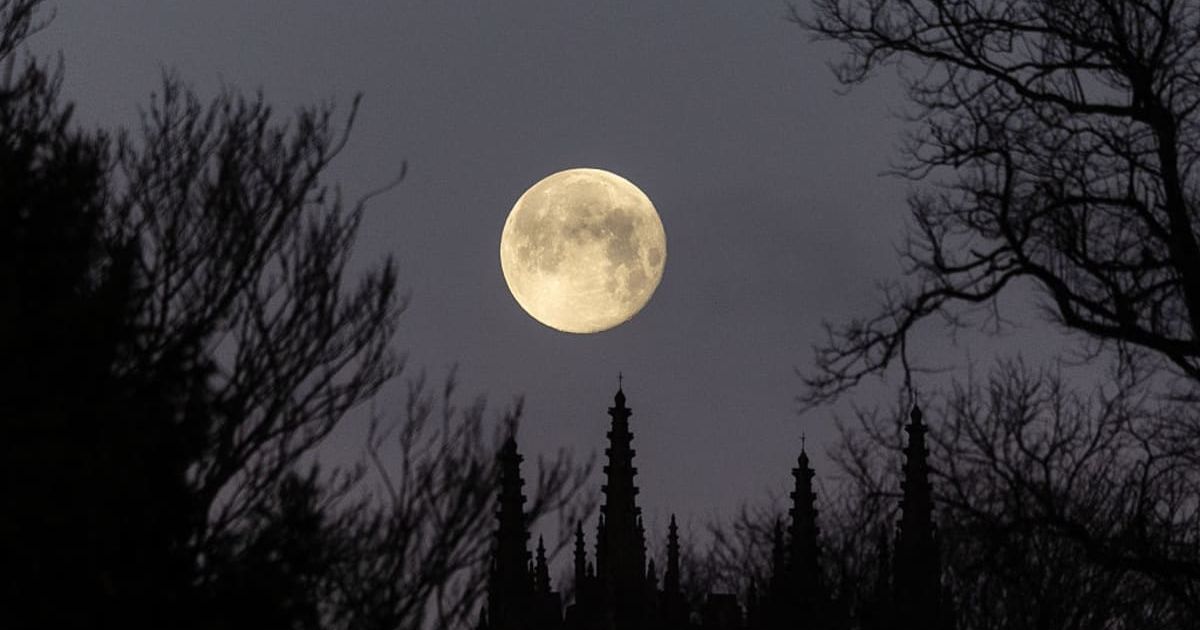
The Wolf Moon, the first full moon of the year, sets behind Downside Abbey on January 4, 2026, in Glastonbury, England (Representative Cover Image Source: Getty | Matt Cardy)

The second Full Moon of 2026 is anticipated to be seen early in the coming month, delivering to the observers a luminous vista at the height of winter. The mesmerizing lunar phenomenon, typically referred to as the Snow Moon, is going to reach its peak brightness at 5:09 PM EST on Sunday, February 1, according to the Almanac

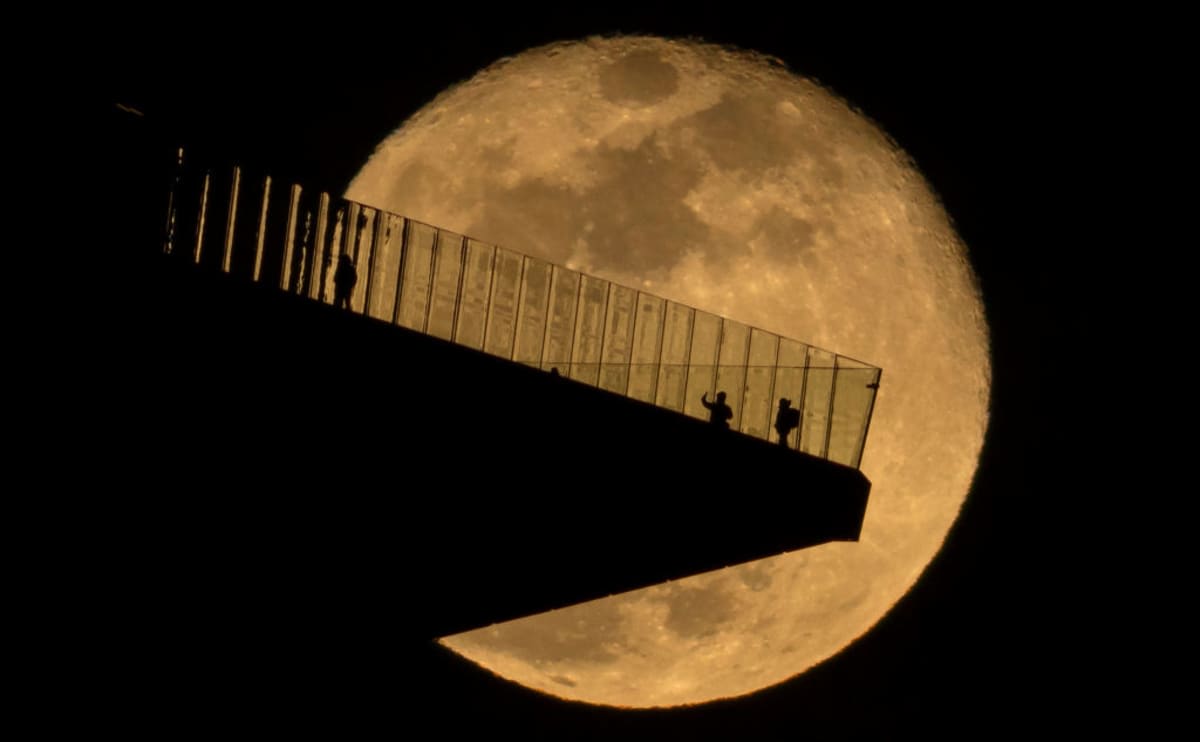
A 97 percent illuminated waning gibbous Snow Moon rises behind people visiting the EdgeNYC outdoor observation deck at Hudson Yards in New York City on February 13, 2025, as seen from Hoboken, New Jersey. (Photo by Gary Hershorn/Getty Images)

The customary names of full moons, used by sources such as The Old Farmer's Almanac, have been influenced by a historical mixture of Native American, colonial, and European cultures. In the past, these names not only referred to the single night but also were applied to the whole lunar month. The "Snow Moon" is probably the most realistic among the names since February is statistically the month that brings the most amount of snowfall in the United States.
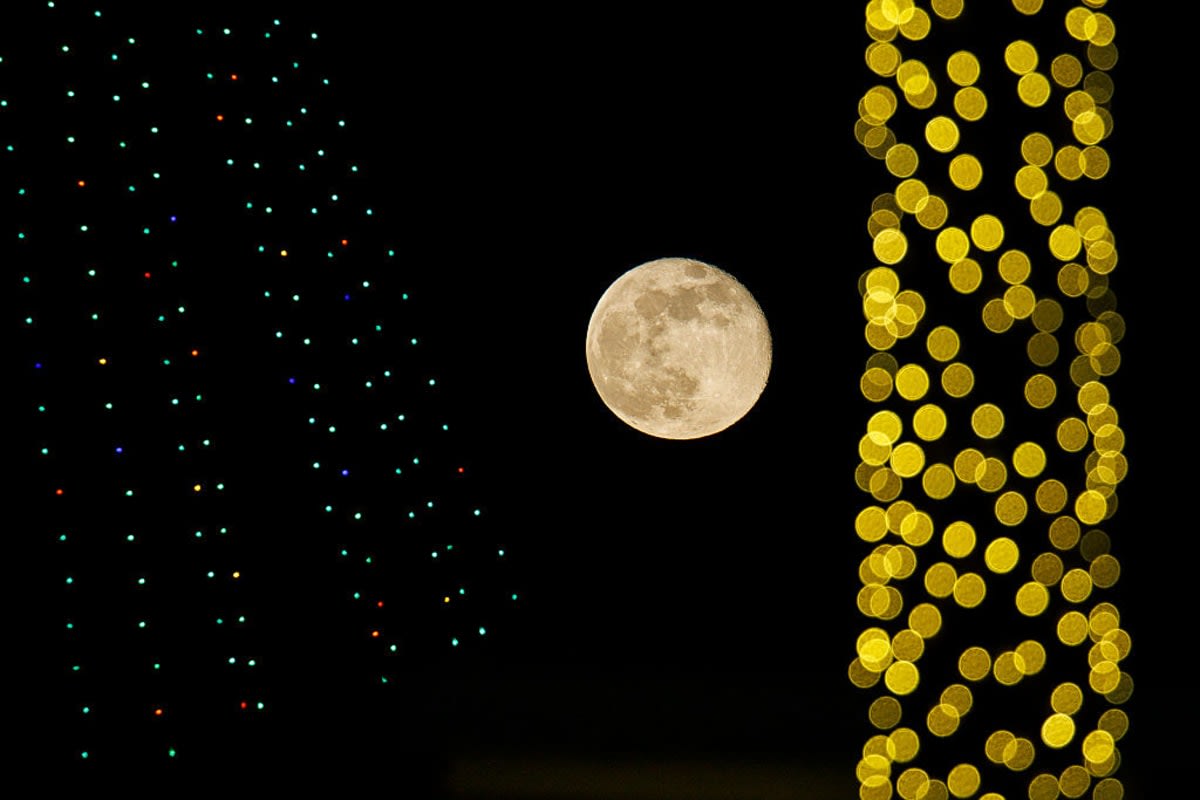
A full Cold Moon supermoon rises behind holiday lights on December 5, 2025 in San Diego, CA. (Photo by Kevin Carter/Getty Images)
A full Cold Moon supermoon rises behind holiday lights on December 5, 2025, in San Diego, CA. (Photo by Kevin Carter/Getty Images)

As for the time of moonrise on February 1, that depends on where you are, per Timeanddate.com. In New York, the Moon will rise at 5:03 p.m. local time and then set the next morning at 7:38 a.m. Observers in Chicago will be able to see the Moon rise at 4:57 p.m. local time before it sets at 7:36 a.m. the next day. In San Diego, the moonrise is set for 5:23 p.m. local time, and moonset is scheduled for 7:20 a.m. the next day. On the other hand, people in Los Angeles will get to see the Moon rise at 5:25 p.m. local time. It will disappear below the horizon at 7:27 a.m. the next day.

As for the first Full Moon of the year, also called the Wolf Moon, it reached its peak on Saturday, January 3, at 5:03 a.m. EST. This event was also a Supermoon, meaning it was somewhat larger and more luminous than the average Moon, and it was very special because it marked the closure of a four-month Supermoon cycle that started last October. People who didn't get to see the Supermoon in January will have to wait until November 2026 for the next one.
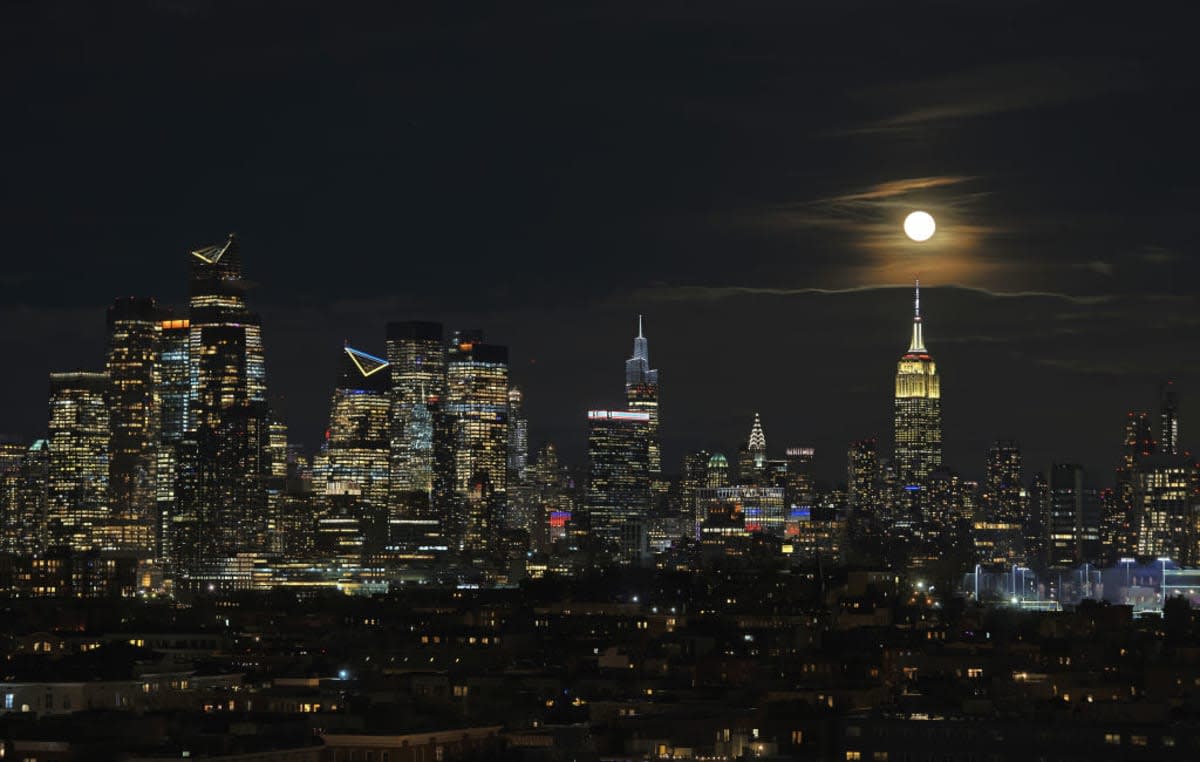
A 97 percent illuminated waning gibbous Snow Moon rises behind the skyline of midtown Manhattan, Hudson Yards and the Empire State Building in New York City on February 13, 2025, as seen from Jersey City, New Jersey. (Photo by Gary Hershorn/Getty Images)
A 97 percent illuminated waning gibbous Snow Moon rises behind the skyline of midtown Manhattan, Hudson Yards, and the Empire State Building in New York City on February 13, 2025, as seen from Jersey City, New Jersey. (Photo by Gary Hershorn/Getty Images)

The Snow Moon marks merely the onset of a busy month for skywatchers. By the end of February, a seldom-seen "planet parade" will be in full view for the stargazers. The six planets, Mercury, Venus, Saturn, Jupiter, Uranus, and Neptune, would be more or less in a straight line. Jupiter would be very hard to miss because of its brightness, while the others might require a telescope and a western horizon view right after sunset to be seen. Besides, there will be a solar eclipse on February 17, with a New Moon also scheduled for the same day. While it will be an annular solar eclipse and is expected to be seen from Antarctica, some parts of South America and Africa will get to see a partial eclipse. 

More on Starlust

Jupiter to reach opposition on January 10—how to see it when it's brightest and closest to Earth

Upcoming asteroid flyby: Near Earth Object 2025 YU6 to pass by our planet on January 11
MORE STORIES

From Jupiter being at its brightest to a meteor shower raining fireballs, January has a lot to offer.
1 day ago
The Wolf Moon is the first of three supermoons scheduled for 2026.
2 days ago
The asteroid is currently located in the constellation of Lynx, at a distance of more than 1.9 million miles (3.2 million kilometers) from Earth.
2 days ago
2025 was a great year for skywatchers, but 2026 isn't going to disappoint either.
5 days ago
NASA visualizations reveal how the Moon’s phases, tilt, and size will change through 2026.
5 days ago
Jupiter makes its closest approach on January 9, just 393 million miles away, shortly before reaching its opposition on January 10.
5 days ago
This event serves as the grand finale to a four-month Supermoon cycle that has been lighting up the skies since last October.
5 days ago
This weekend’s event is more than just a standard full moon; it is also a supermoon, appearing slightly larger and brighter than usual.
5 days ago
January sky is perfect for stargazing despite the cold.
6 days ago
The 2026 calendar year opens with a bright celestial display, featuring a Waxing Gibbous Moon that will.
6 days ago