The truth behind the 'doorway' spotted on Mars, according to NASA
What is this strange door on Mars?
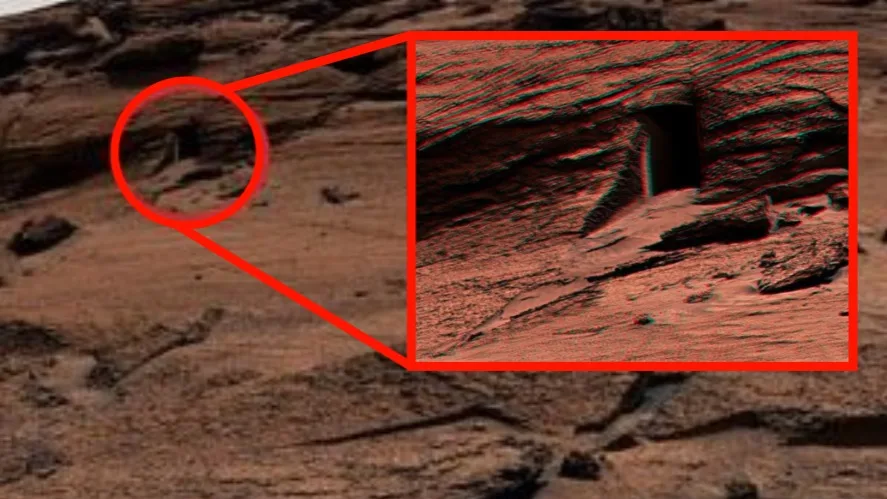
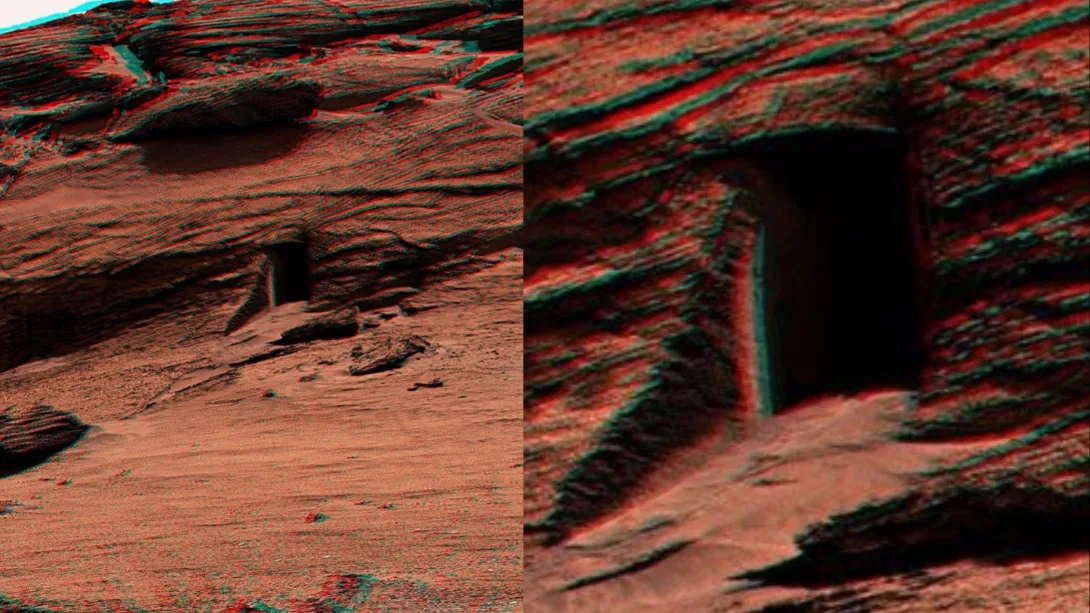
NASA’s Curiosity rover captured something that looked way too much like a door on the surface of Mars in 2022. The photo showed a small, door-shaped gap in a Martian rock formation. Many space enthusiasts who looked at the picture called it an ‘alien door’ and believed that it wasn’t just any rock formation. Some even joked that it could be a secret entry for Martians.
But scientists who study Mars say the shape is not a mystery. Here’s what they believe this “door” came from.
The story behind the ‘doorway’ seen on Mars
This particular photo was captured by Curiosity’s Mastcam, short for Mast Camera, on May 7, 2022, which was the rover's 3,466th day on Mars. NASA released the photo soon after, and the panorama was stitched together from 113 individual shots of the site, which scientists nicknamed 'East Cliffs.
As per NASA, “The main panorama included here was stitched together using 113 images from Mastcam’s left lens. The image is processed to approximate the color and brightness of the scene as it would look to the human eye under normal daytime conditions on Earth.”
It's way smaller than it looks
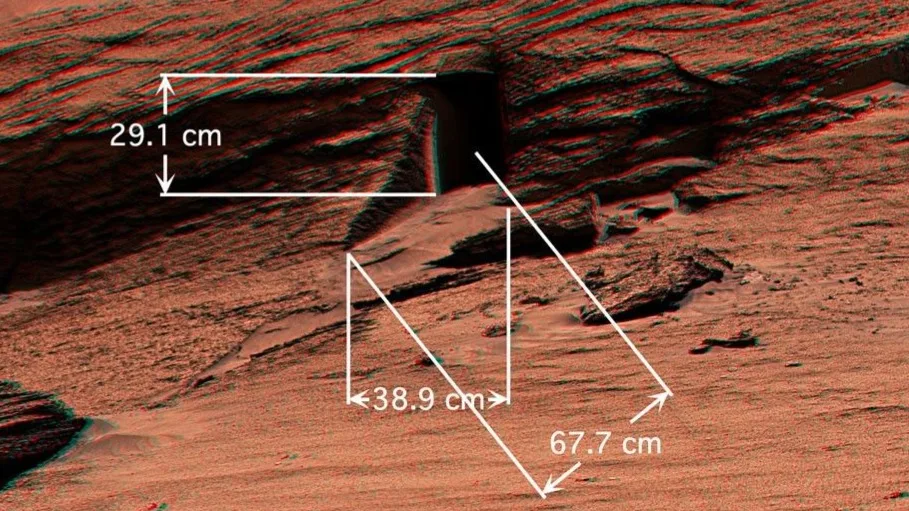
Even though the image looks a bit dramatic and makes it look like it's big in size, the actual story is different. This particular mound is located on Mount Sharp on Mars, and it has a number of open fractures, with one about 12 inches (30 centimeters) tall and 16 inches (40 centimeters) wide.
NASA shared that this formation is "similar in size to a dog door." This is not the only strange-looking formation spotted on Mars. NASA’s rovers have also spotted strange-looking faces, fields of honeycomb-like textures, a floating spoon, and even heart shapes on the surface of Mars, all of which can be found in the Mars image gallery on NASA’s website.
But what exactly is it, and how did it come to be?
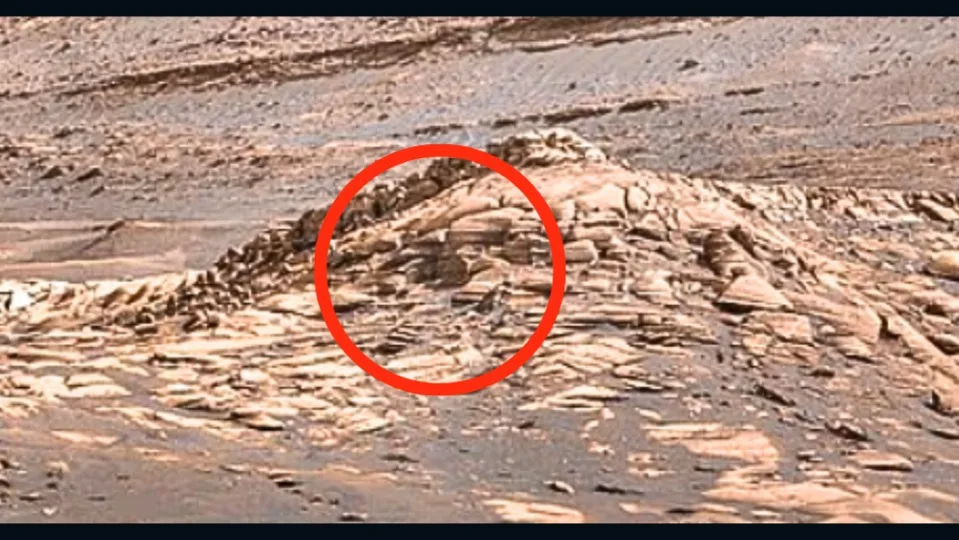
NASA shared that “these kinds of open fractures are common in bedrock, both on Earth and on Mars.” Commenting on the image, British geologist Neil Hodgson told Live Science, "This is a very curious image. But in short – it looks like natural erosion to me."
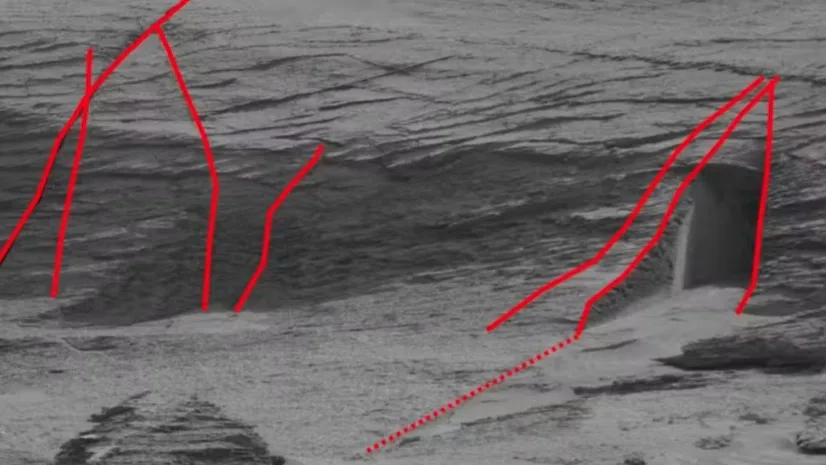
Hodgson shared that in the image, you can see the visible layers, or strata, in the cliff, some tilting down, others rising. "These are silt beds, with harder sandy beds that stand out," he said. He believes those layers formed long before the "door" ever existed: "They were deposited perhaps 4 billion years ago under sedimentary conditions, possibly in a river (I'd need to see more of the outcrop to be sure) or a wind-blown dune."
Cracks, not construction, made the gap
As per scientists, this opening was formed when natural vertical cracks crossed the rock's horizontal layers. Mangold, who has studied geological data from the Curiosity and Perseverance rovers, shared, "These are fractures in two directions, creating an 'open box' with a door appearance – nothing artificial."
He also noted that "a large boulder has fallen out under its weight" to create the door-shaped cave. A nearby rock with a smooth, freshly exposed edge is likely the very piece that broke off, not long ago in geological terms.