✕
Astronomy Constellation Deep Sky Objects Skywatching Instruments Spaceflight Videos
Home / Galleries

Scientists thought a black hole forming before its galaxy was impossible — then James Webb spotted one

Astronomy May 29, 2026
BY DISITA SIKDAR
This is an artist's depiction of a pair of active black holes at the heart of two merging galaxies. They are both surrounded by an accretion disk of hot gas. (Image Credits: NASA, ESA, Joseph Olmsted (STScI))
James Webb spots a black hole older than its galaxy, challenging long-held theories about how the early universe evolved.
7 Photos
1 / 7
James Webb observations offer clue about early black hole formation
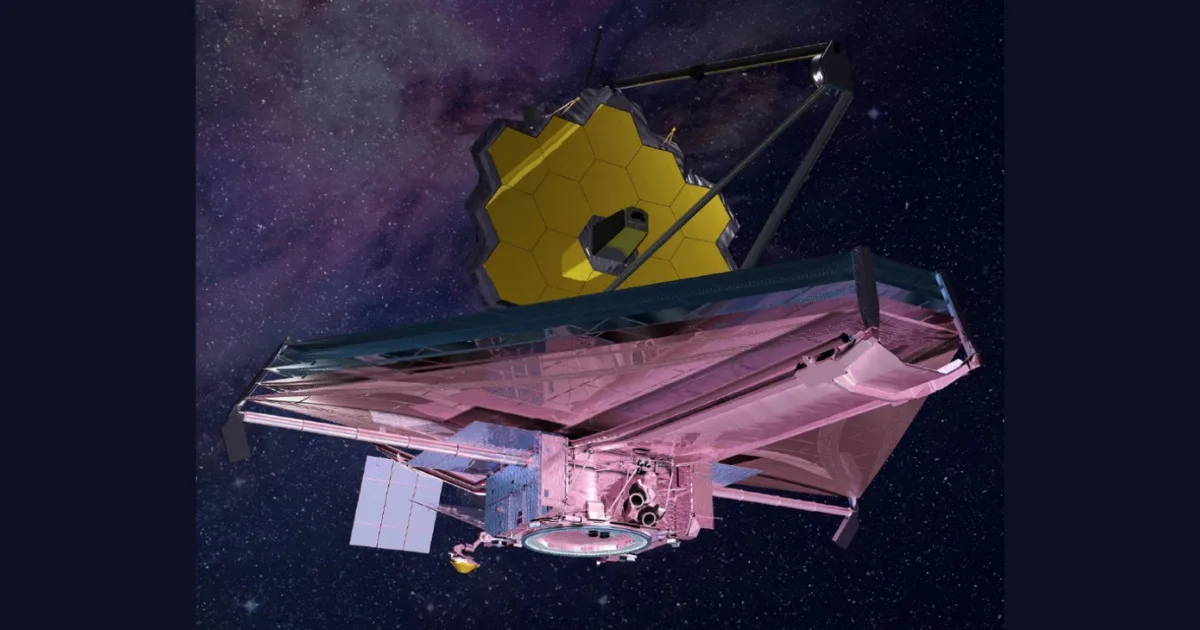
IMAGE SOURCE: EVENT HORIZON TELESCOPE COLLABORATION/NASA

James Webb observations offer clue about early black hole formation

Scientists have long debated whether galaxies formed first or if black holes formed early alongside them. Traditional theories stated that large stars, when they have consumed their fuel, collapse to form a black hole. After collapsing, these newly formed black holes gradually grew by feeding on surrounding material and by merging over a period of time. However, this idea struggles to explain how some black holes became millions to billions of times the mass of the Sun so quickly in the early universe. But now, observations from NASA’s James Webb Space Telescope (JWST) might be offering a surprising clue.

Observations reveal that some supermassive black holes may have formed enormously from the very beginning. What is even more intriguing is the fact that these black holes appear to exist without equally massive host galaxies around them to feed them

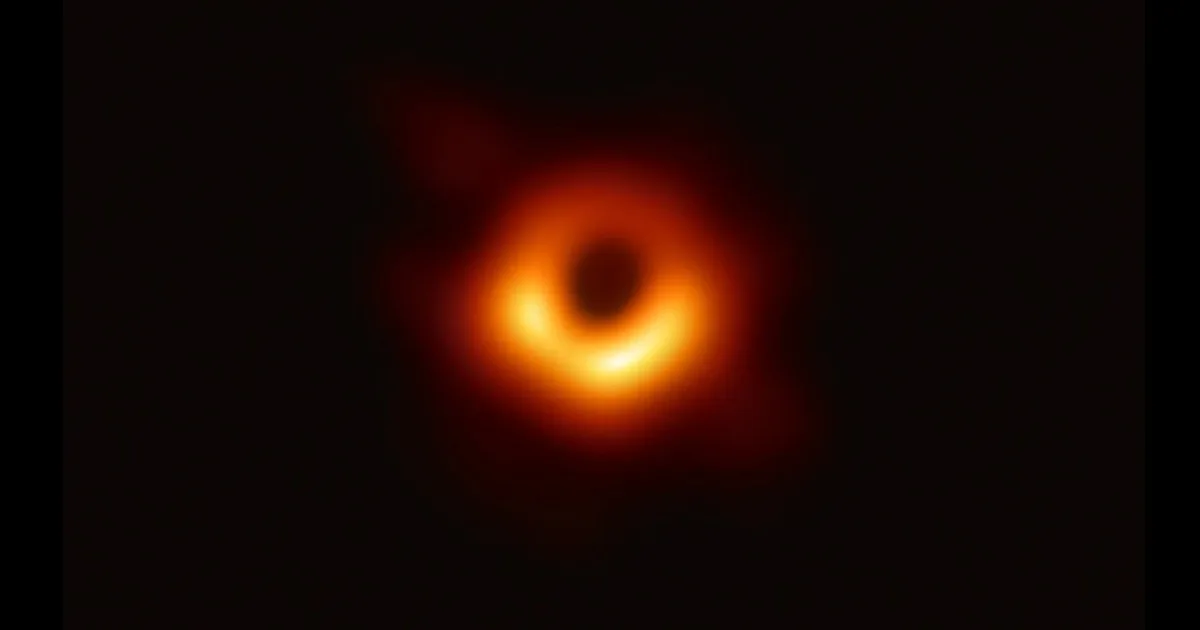
The historic first picture of a black hole, constructed using observations of the center of galaxy M87 taken by the Event Horizon Telescope.

2 / 7
JWST's findings could reshape what we know about black holes
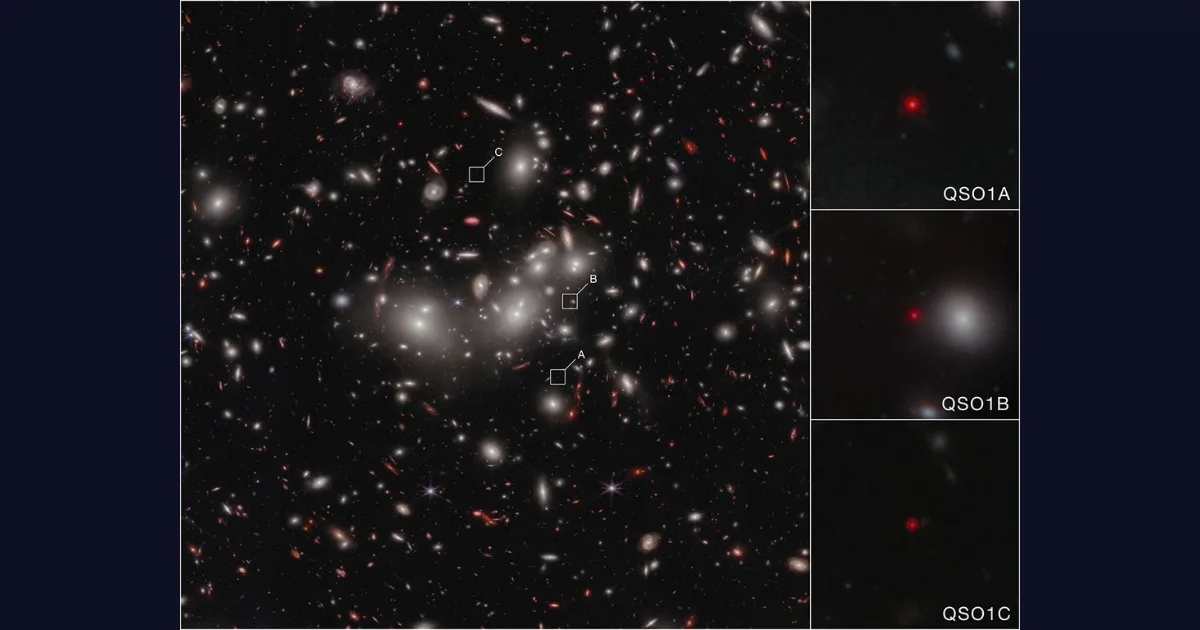
IMAGE SOURCE: NASA/ESA/CSA

JWST's findings could reshape what we know about black holes

“This is a remarkable finding. It’s a paradigm shift, a total revisiting of the classical scenarios of how black holes form and grow,” stated Roberto Maiolino of the University of Cambridge in the United Kingdom. Researchers reached this conclusion after studying Abell2744-QSO1, a prototypical “Little Red Dot” that existed just 700 million years after the Big Bang. The James Webb Space Telescope is the most powerful space observatory ever built. Using JWST, scientists were able to peer 13.1 billion years into the past.

This illustration depicts NASA’s James Webb Space Telescope in deep space. JWST was launched on December 25, 2021.

3 / 7
Gravitational lensing revealed this ancient black hole
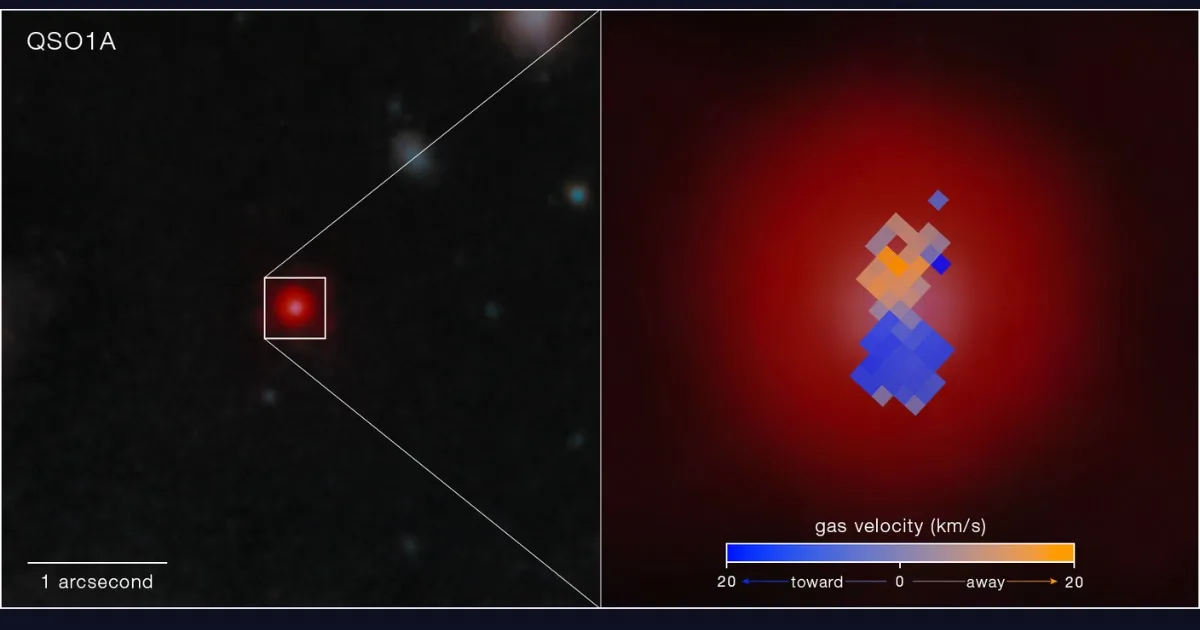
IMAGE SOURCE: NIRCAM/NASA

Gravitational lensing revealed this ancient black hole

Abell2744-QSO1, or QSO1, is about 1,300 light-years across; its light has traveled for more than 13 billion years. QSO1 has been gravitationally lensed by the massive foreground galaxy cluster Abell 2744, also called Pandora’s Cluster, which has made it significantly easier for scientists to study QSO1 compared to other little red dots.

An image from the Near Infrared Camera (NIRCam) on NASA’s James Webb Space Telescope capturing Abell2744-QSO1, magnified and triply imaged by the gravitational pull of galaxy cluster Abell 2744.

4 / 7
What early studies suggested about QSO1
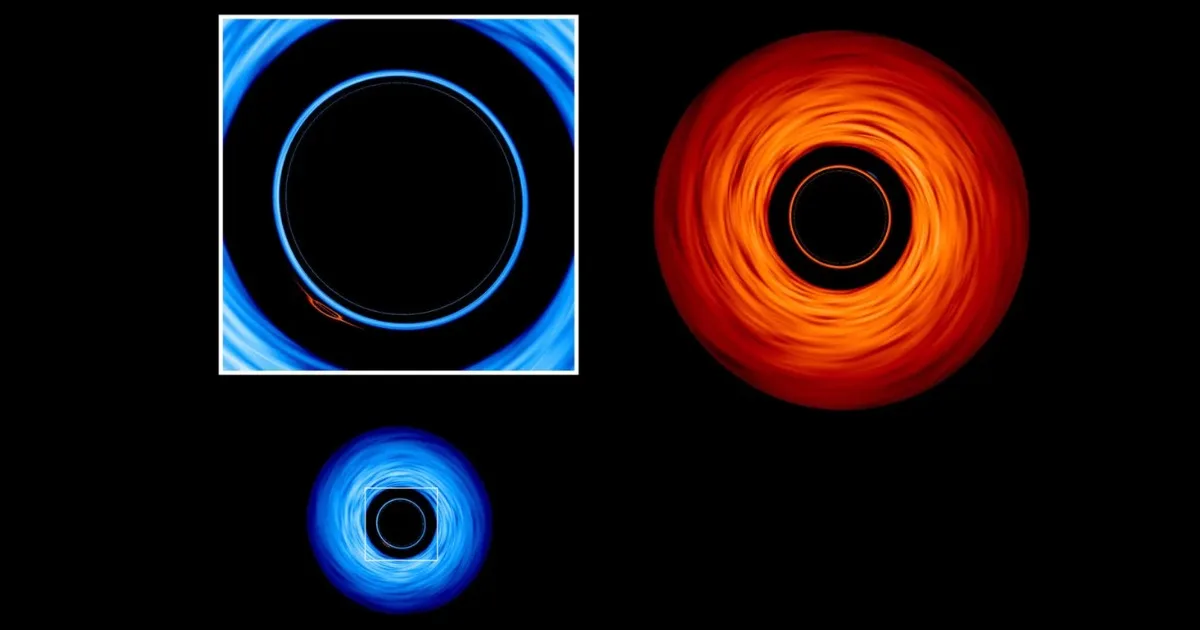
IMAGE SOURCE: LEFT: NIRCAM RIGHT: NIRSPEC/IFU/NASA

What early studies suggested about QSO1

“Before now, all of the mass measurements of black holes in the early universe have been indirect, based on assumptions from what we know about them in the local universe. We didn’t know if those assumptions really apply to the distant universe,” said co-author Francesco D’Eugenio, also of the University of Cambridge.

Early studies of QSO1 suggested it might just be a cloud of glowing hydrogen and helium gas swirling around a supermassive black hole. The researchers also estimated that it was nearly 40 million times the mass of the Sun. However, researchers were still uncertain about just how massive the black hole truly was.

This image is a detailed glimpse from NIRCam on NASA’s James Webb Space Telescope showing the Little Red Dot Abell2744-QSO1, gravitationally lensed by the enormous mega-cluster Abell 2744.

5 / 7
JWST NIRSpec IFU reveals Keplerian motion around black hole
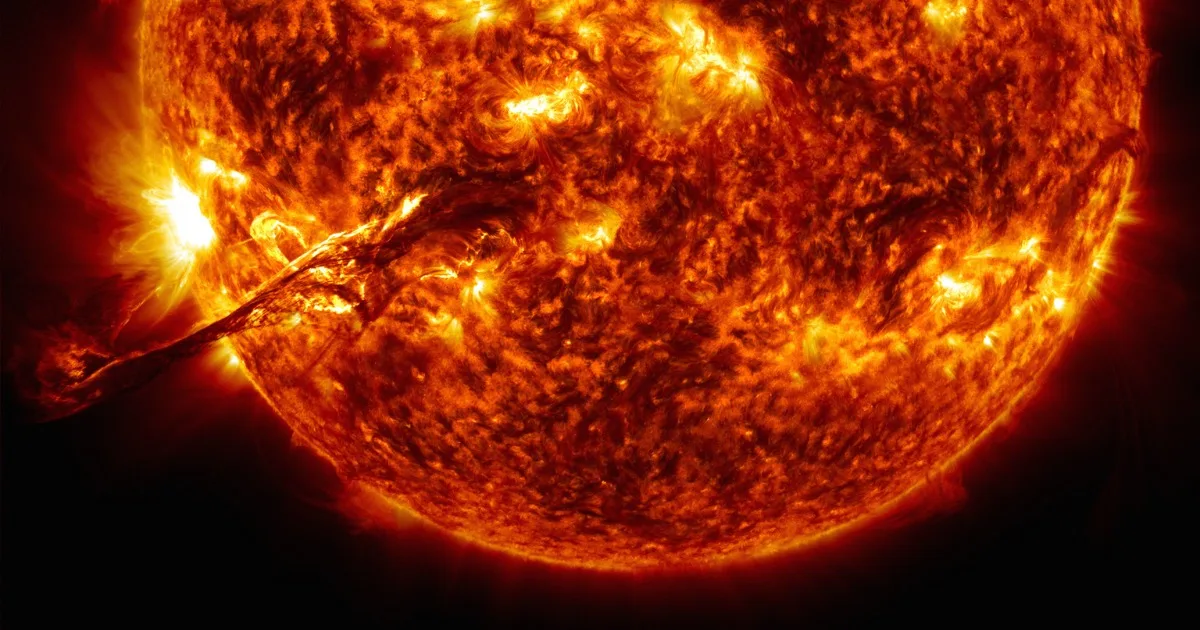
IMAGE SOURCE: NASA’S GODDARD SPACE FLIGHT CENTER/JEREMY SCHNITTMAN AND BRIAN P. POWELL

JWST NIRSpec IFU reveals Keplerian motion around black hole

Because the researchers suspected that QSO1’s black hole was massive, they utilized the integral field unit (IFU) on Webb’s NIRSpec (Near Infrared Spectrograph) to track and study the effects of its gravity on the surrounding gas. Adding to that, they also aimed to map the distribution of various elements in the gas.

When the motions of the hydrogen gas surrounding the black hole were tracked, the team found that the gas exhibited Keplerian motion—meaning it orbits the central mass under the same laws of gravity that dictate how planets in our solar system orbit the Sun.

This picture is a face-on view revealing a smaller black hole warping light from its larger companion, creating a distorted secondary image. The glowing accretion disk appears edge-on as a bright line, while additional warped light forms a second image near the larger black hole’s luminous ring.

6 / 7
QSO1's mass measured to be 50 million solar masses!
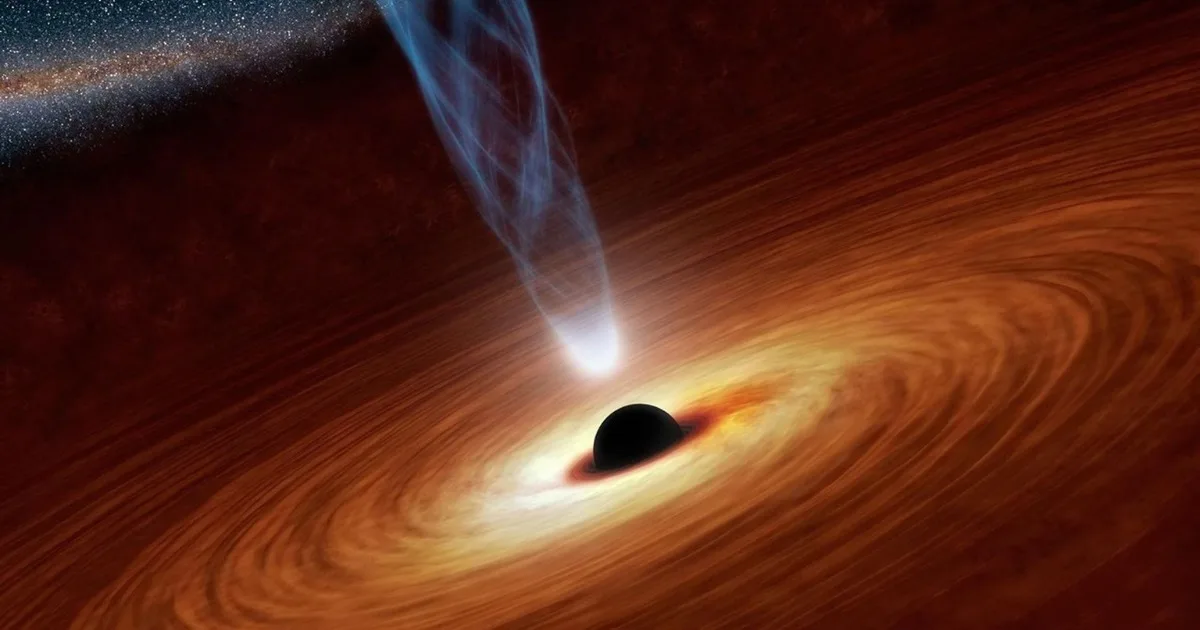
IMAGE SOURCE: NASA'S GODDARD SPACE FLIGHT CENTER

QSO1's mass measured to be 50 million solar masses!

By studying the motion of gas inside Abell 2744-QSO1, researchers discovered that most of the object’s mass is packed tightly around its central black hole. Using those gas velocity measurements, scientists were able to directly calculate the black hole’s mass for the first time, estimating it at around 50 million times the mass of the Sun. Even more surprisingly, the black hole appears to contain at least two-thirds of QSO1’s total mass.

This is an ultra-HD image of the Sun, released by NASA on November 1, 2015, whose mass serves as the standard baseline unit of mass in astrophysics.

7 / 7
Massive primordial black hole may challenge galaxy formation theories
IMAGE SOURCE: NASA/JPL-CALTECH

Massive primordial black hole may challenge galaxy formation theories

The large mass of QSO1 relative to its host galaxy indicates that it might not have followed the traditional pathway where it formed from the gradual accretion and merger of stellar-mass black holes. Reflecting on this anomaly, Juodzbalis stated, “It seems that we have found a black hole that does not have a substantial host galaxy and that has predated stellar processes. This is very exciting because it is evidence for primordial black holes or direct collapse black holes, which have been theorized but not confirmed.” Irrespective of whether QSO1’s black hole originated from a ‘heavy seed’ formed during the earliest moments following the Big Bang or from a later collapse of a giant gaseous cloud, the team is certain that it was born with a high initial mass.

This image is shows an artist's illustration of a supermassive black hole, which contains the mass of millions to billions of times our Sun.

MORE GALLERIES

Mars revealed like never before by NASA's Psyche spacecraft in breathtaking new images 6

Mars revealed like never before by NASA's Psyche spacecraft in breathtaking new images

May 28, 2026
NASA offers a fresh look at how astronauts could live at future Moon Base 12

NASA offers a fresh look at how astronauts could live at future Moon Base

May 27, 2026
Aliens may not be green creatures but purple beings 6

Aliens may not be green creatures but purple beings

May 26, 2026
Starship V3 launch: Spectacular photos of SpaceX’s most powerful rocket in flight 9

Starship V3 launch: Spectacular photos of SpaceX’s most powerful rocket in flight

May 25, 2026
Why Stephen Hawking warned humanity to leave Earth before it’s too late 8

Why Stephen Hawking warned humanity to leave Earth before it’s too late

May 24, 2026
Scientists think advanced civilizations like ours may not last long—it may explain the Great Silence 8

Scientists think advanced civilizations like ours may not last long—it may explain the Great Silence

May 23, 2026
'If it's all true... bring out the alien': Neil deGrasse Tyson demands hard evidence of alien life after UFO files release 5

'If it's all true... bring out the alien': Neil deGrasse Tyson demands hard evidence of alien life after UFO files release

May 22, 2026
Spacecraft already in space may help scientists find alien life 7

Spacecraft already in space may help scientists find alien life

May 21, 2026
10 breathtaking celestial spectacles that skywatchers must not miss in 2026 10

10 breathtaking celestial spectacles that skywatchers must not miss in 2026

May 19, 2026
6 upcoming space missions that could help humanity move beyond Earth 6

6 upcoming space missions that could help humanity move beyond Earth

May 18, 2026
Powerful words from NASA astronauts that still inspire the world today 8

Powerful words from NASA astronauts that still inspire the world today

May 16, 2026
“We should be prepared for aliens”: Neil deGrasse Tyson reacts to Pentagon UFO files 5

“We should be prepared for aliens”: Neil deGrasse Tyson reacts to Pentagon UFO files

May 15, 2026
The Pentagon has finally released the infamous UFO files—here's what they reveal 10

The Pentagon has finally released the infamous UFO files—here's what they reveal

May 12, 2026
Incredible Moon mission facts the world still talks about 9

Incredible Moon mission facts the world still talks about

May 12, 2026
Cosmonaut spent months in space—by the time he returned, his country was gone 9

Cosmonaut spent months in space—by the time he returned, his country was gone

May 11, 2026
Astronauts who almost never made it back home 8

Astronauts who almost never made it back home

May 9, 2026
Iconic space photos captured by astronauts and the incredible stories behind them 7

Iconic space photos captured by astronauts and the incredible stories behind them

May 8, 2026
Rare Artemis II photos reveal the Moon’s stunning hidden far side like never before 7

Rare Artemis II photos reveal the Moon’s stunning hidden far side like never before

May 7, 2026
These Nebula images from 2026 will change how you see space forever 6

These Nebula images from 2026 will change how you see space forever

May 6, 2026
Starlust.org is part of the Scale Content Inc. publishing group.

Google Source

About Us
Editorial Guidelines
Privacy Policy
Cookie Policy
Terms of Use
Contact Us
Link to Facebook
Link to Instagram

© Scale Content Inc. 1178 Broadway, 3rd Floor #3469, New York, NY 10001, United States