✕
Astronomy Constellation Deep Sky Objects Skywatching Instruments Spaceflight Videos
Home / Galleries

Harvard professor says humans could reach the Milky Way's center in just 10 years. Here's how

Spaceflight Aug 12, 2026
BY SHILADITYA RAY
A young man on a road watching the Milky Way. (Cover Image Source: Getty Images | Carlos Fernandez)
The distance from Earth to the Milky Way's center is a whopping 26,000 light-years. But Harvard astrophysicist Avi Loeb says humans could be able to traverse this in just a decade, without breaking the laws of physics. Read here to learn how.
5 Photos
1 / 5
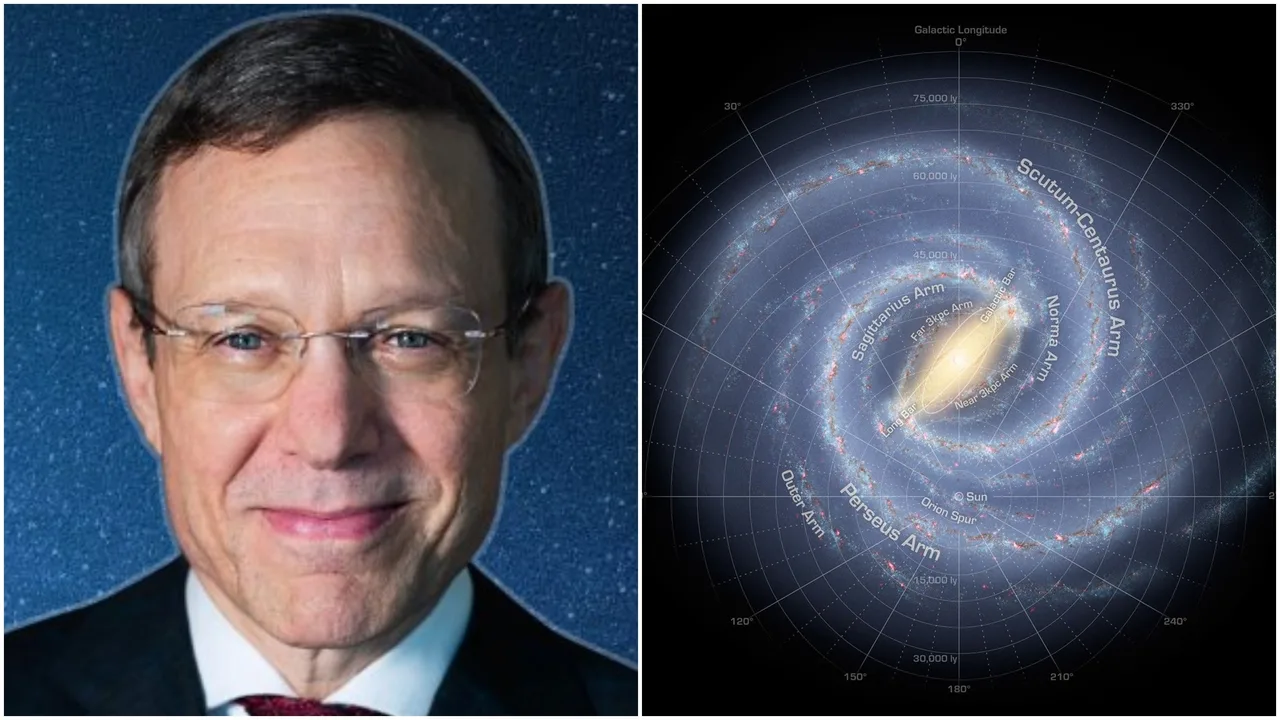
Wormholes: Space-time shortcuts remain hypothetical
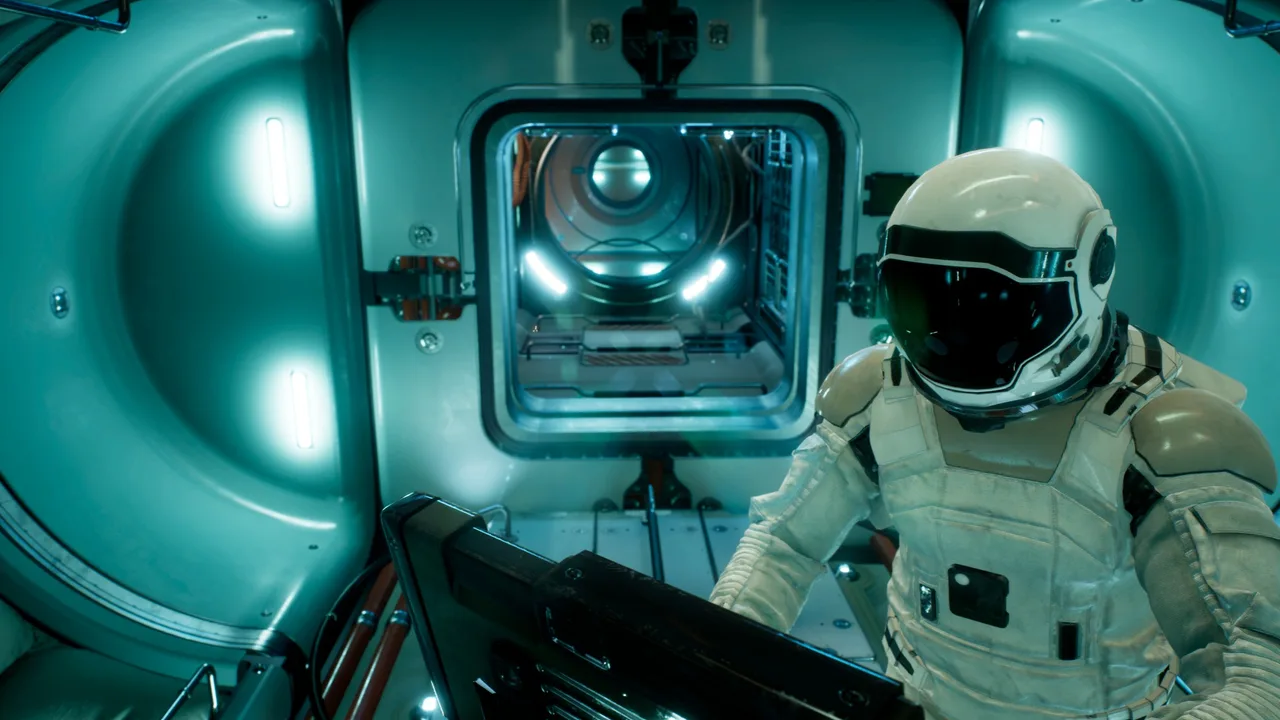
IMAGE SOURCE: X/@PROFAVILOEB; NASA/JPL-CALTECH/R. HURT (SSC/CALTECH)

Wormholes: Space-time shortcuts remain hypothetical

Wormholes—hypothetical tunnels through space-time—have been a staple of space-centric science fiction, and were perhaps most famously represented in the film Interstellar (2014), where the crew used a wormhole to traverse an unimaginably vast distance through space. While fascinating, the unfortunate truth is that wormholes remain purely theoretical objects and astronomers have yet to find any evidence that usable wormholes exist. As Harvard astrophysicist Avi Loeb points out, wormholes would require exotic matter or negative mass to keep them open, barring which they would instantly collapse.

So, does the absence of wormholes make long-distance space travel, such as exploring the Milky Way galaxy, an impossibility for humans? Not quite. The laws of physics already provide a real and scientifically sound mechanism for humans to traverse impossibly vast distances in a decade or so, and Loeb highlights precisely that in a recent blog post.

2 / 5
Keeping humans alive in space is itself a major challenge

IMAGE SOURCE: GETTY IMAGES | DESIGNPROJECTS

Keeping humans alive in space is itself a major challenge

A major obstacle to humans travelling vast distances through space is our physiology. In zero gravity, astronauts lose about 1-2% of their bone density every month, making super long-distance space travel a technical death sentence. However, this can be worked around, argues Loeb, by constructing a spacecraft that can continuously accelerate at 1g or 9.81 m/s^2. This would enable astronauts inside the spacecraft to experience the same gravitational pull we feel on Earth's surface, and this artificial gravity would preserve bone density and human health throughout long journeys.

In addition to helping astronauts maintain their health, a spacecraft accelerating at 1g would also be able to reach astonishing speeds, and would be able to travel close to the speed of light within a year.

3 / 5
Time dilation allows for the seemingly impossible space travel
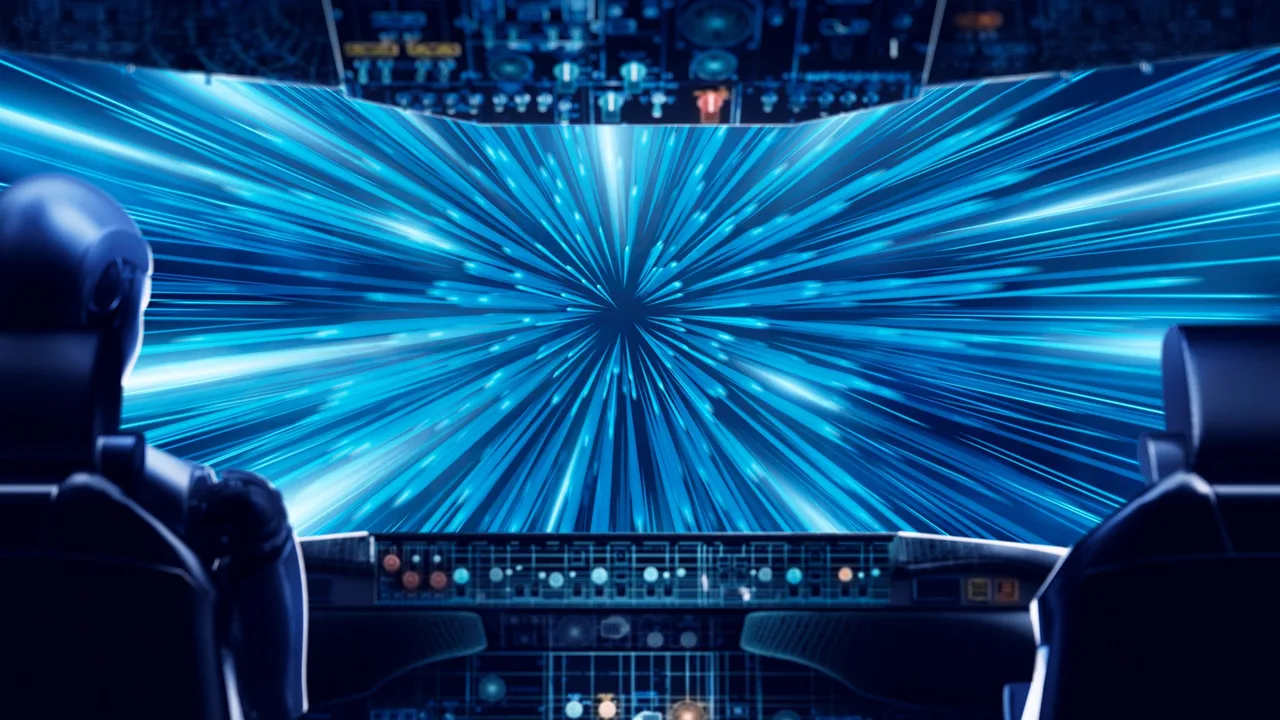
IMAGE SOURCE: GETTY IMAGES | AMANDA AIKEN

Time dilation allows for the seemingly impossible space travel

The center of our galaxy, the Milky Way, lies a whopping 26,000 light-years away from Earth, meaning that it would take millennia to reach even at the cosmic speed limit. However, thanks to a phenomenon called time dilation that stems from Albert Einstein's theory of relativity, such a journey could take just decades.

As the accelerating spacecraft approaches the speed of light, time would tick considerably slower inside the ship relative to clocks back on Earth. In simple terms, while the actual journey to the galactic core of the Milky Way would indeed take 26,000 years or more for observers on Earth, for the astronauts inside the ship, it would take roughly 10.6 years with constant acceleration—comfortably achievable within a human lifespan, says Loeb. In fact, even if the astronauts onboard our hypothetical spacecraft decided to decelerate for half of the trip, a journey to the galactic center would take just 19.8 years, he adds.

4 / 5
But the energy price tag is unimaginably steep
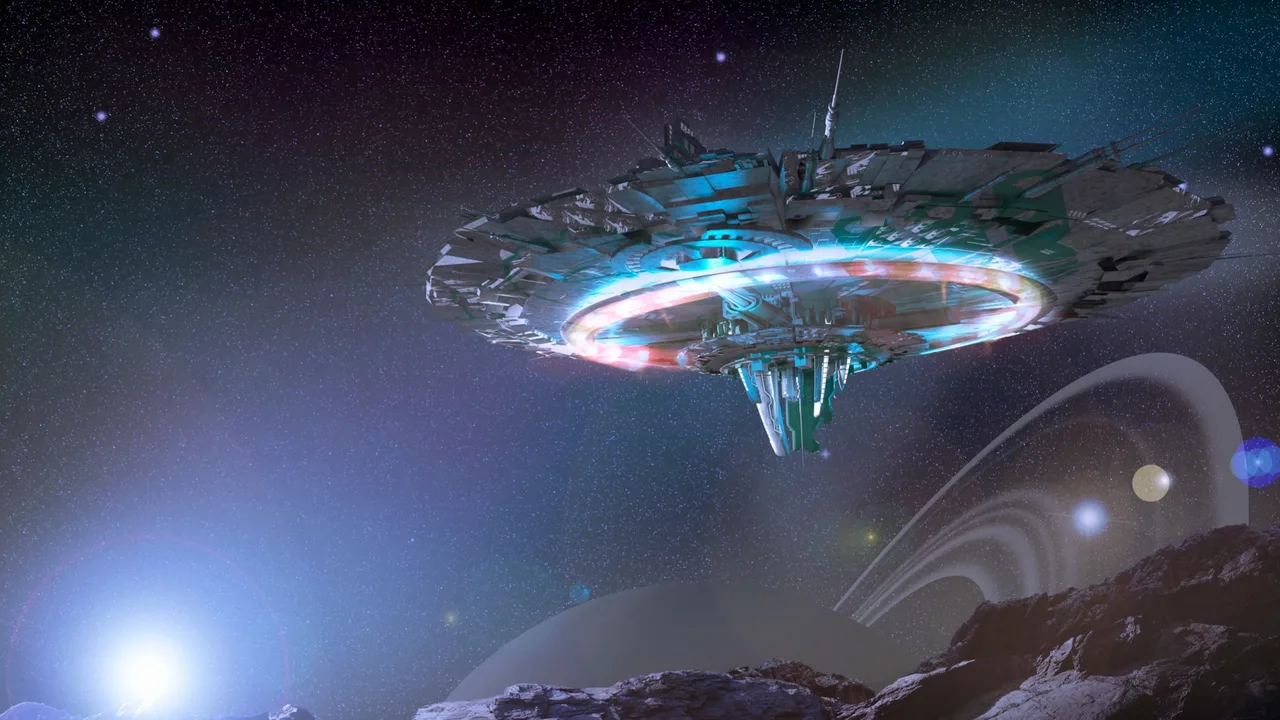
IMAGE SOURCE: GETTY IMAGES | YUICHIRO CHINO

But the energy price tag is unimaginably steep

The aforementioned idea does not break any laws of physics, and works on paper, but actually engineering a ship capable of constant 1g acceleration is where the hurdle lies. Sustaining such acceleration all the way to the core of the Milky Way would require an unimaginable amount of energy—55,000 times larger than the rest-mass equivalent of the payload. Loeb says that for a human with a hypothetical body mass of 150 kgs, energy requirements would be as much as the total energy stored in the global nuclear arsenal today.

If that weren't all, actually engineering such a spacecraft would add more obstacles. Not only would engineers need to figure out a way to produce enough energy to propel the mass of the ship, crew, and fuel, but they would also need to figure out a way to shield the crew from the extreme radiation that they would be subject to while travelling at near-light speeds.

5 / 5
It might be possible, with a little help from cosmic friends
IMAGE SOURCE: GETTY IMAGES | CONEYL JAY

It might be possible, with a little help from cosmic friends

But could we, or another advanced civilization, potentially overcome these extreme energy barriers? Loeb suggests that it is possible, but not through conventional means. Making such a spacecraft would require mysterious or exotic matter with negative mass—if engineers can pair normal mass with an equal amount of negative mass, the spacecraft's total mass would effectively be zero, thereby drastically reducing the energy required for acceleration.

While humans don't have access to such matter or technology, Loeb suggests that it's unlikely that we're the universe's best engineers, given its vastness and age. Therefore, an encounter with an advanced extraterrestrial civilization could help us bridge this knowledge gap—"In our first encounter with interstellar travelers, we can ask them for path length and duration of their journey. These two numbers would immediately educate us whether they solved the engineering challenges facing a decade-long travel of a spacecraft with a positive mass through the Milky-Way. Otherwise, they might have mastered the production of a negative mass," writes the Harvard astrophysicist.

MORE GALLERIES

What if reality isn’t real? Scientists think we might be living in a computer simulation 5

What if reality isn’t real? Scientists think we might be living in a computer simulation

Aug 11, 2026
This 'Pink Planet' was already weird, and now astronomers have found salt in its skies 5

This 'Pink Planet' was already weird, and now astronomers have found salt in its skies

Aug 11, 2026
How will the universe die? 5 possible ways it could all come to an end 6

How will the universe die? 5 possible ways it could all come to an end

Aug 10, 2026
Total solar eclipse 2026: 5 reasons why you must not miss the cosmic event on August 12 5

Total solar eclipse 2026: 5 reasons why you must not miss the cosmic event on August 12

Aug 10, 2026
Is time travel possible? What Albert Einstein's theory of relativity tells us 5

Is time travel possible? What Albert Einstein's theory of relativity tells us

Aug 8, 2026
Here's how much longer life on Earth has left, according to new research 5

Here's how much longer life on Earth has left, according to new research

Aug 8, 2026
This Oxford philosopher hopes humanity's search for extraterrestrial life "finds nothing" 5

This Oxford philosopher hopes humanity's search for extraterrestrial life "finds nothing"

Aug 7, 2026
Isaac Newton's 1704 doomsday prophecy predicted the year the world would end 5

Isaac Newton's 1704 doomsday prophecy predicted the year the world would end

Aug 6, 2026
SpaceX Falcon 9 rocket just crashed into the Moon—but have we hit the Moon accidentally before? 4

SpaceX Falcon 9 rocket just crashed into the Moon—but have we hit the Moon accidentally before?

Aug 6, 2026
Neil deGrasse Tyson thinks first contact with intelligent aliens could look like this 5

Neil deGrasse Tyson thinks first contact with intelligent aliens could look like this

Aug 6, 2026
When Brian Cox challenged Avi Loeb's alien probe theory about comet 3I/ATLAS 5

When Brian Cox challenged Avi Loeb's alien probe theory about comet 3I/ATLAS

Aug 5, 2026
Can we really time travel? Here's what award-winning physicist Brian Cox says 6

Can we really time travel? Here's what award-winning physicist Brian Cox says

Aug 4, 2026
Wait, what's that? The strangest things ever spotted on Mars 6

Wait, what's that? The strangest things ever spotted on Mars

Aug 4, 2026
Could our galaxy be full of aliens? The famous Drake Equation guides us towards an answer 5

Could our galaxy be full of aliens? The famous Drake Equation guides us towards an answer

Aug 4, 2026
Mars could become humanity's second home by 2050, says space resources engineer 5

Mars could become humanity's second home by 2050, says space resources engineer

Aug 4, 2026
What's really inside a black hole? Physicist Clifford Johnson explains 5

What's really inside a black hole? Physicist Clifford Johnson explains

Aug 3, 2026
Could alien technology be easier to detect than extraterrestrial life itself? Scientists share their thoughts 5

Could alien technology be easier to detect than extraterrestrial life itself? Scientists share their thoughts

Aug 3, 2026
What if time isn't real? Some physicists think it might just be in our heads 5

What if time isn't real? Some physicists think it might just be in our heads

Jul 30, 2026
By 2600, Earth could become a "giant ball of fire," Stephen Hawking warned. Is NASA backing it up? 5

By 2600, Earth could become a "giant ball of fire," Stephen Hawking warned. Is NASA backing it up?

Jul 30, 2026
Starlust.org is part of the Scale Content Inc. publishing group.

Google Source

About Us
Editorial Guidelines
Privacy Policy
Cookie Policy
Terms of Use
Contact Us
Link to Facebook
Link to Instagram

© Scale Content Inc. 1178 Broadway, 3rd Floor #3469, New York, NY 10001, United States