Is the universe actually a simulation? One scientist says he's found evidence
The simulation question just got a scientific twist
What if there’s more to what we experience in our day-to-day lives? It could be that the reality we live in is not the real thing. This concept has been debated among scientists across the world, and some even argue that we might actually be living inside a digital simulation.
And now, Dr. Melvin M. Vopson, who is an Associate Professor in Physics at the University of Portsmouth, a Chartered Physicist as well as a Fellow of the Institute of Physics, says we might already have a clue about this simulation in the laws of physics. Here’s what he believes.
One physicist thinks physics may hold a clue
In his 2022 paper, Dr. Melvin wrote, “In physics, there are laws that govern everything that happens in the universe, for example how objects move, how energy flows, and so on. Everything is based on the laws of physics.
He builds his case on the second law of thermodynamics. "One of the most powerful laws is the second law of thermodynamics, which establishes that entropy—a measure of disorder in an isolated system – can only increase or stay the same, but it will never decrease," he said. But when he tested this on information, he noticed something different.
This is where his theory takes a turn
Based on standard thermodynamics, entropy in information systems should keep rising. But he found that it stays flat or even drops to a low point once things settle into balance. This led him to propose what he calls the ‘Second Law of Infodynamics.’
In The Conversation, Vopson wrote: “We know the universe is expanding without the loss or gain of heat, which requires the total entropy of the universe to be constant. However we also know from thermodynamics that entropy is always rising. I argue this shows that there must be another entropy—information entropy—to balance the increase.”
A possible clue that our universe is a simulation
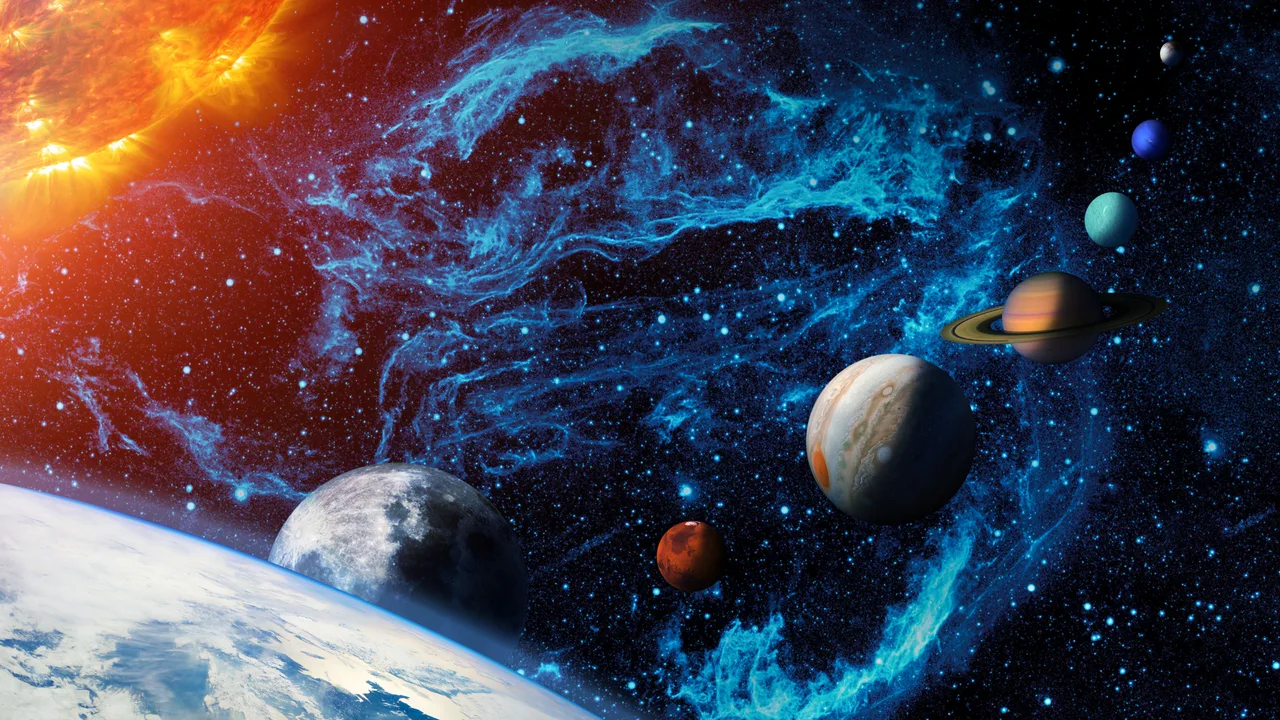
He further notes that, if our world is actually a simulation, then it would need to cut down on the computing power and storage requirements to keep it running. "This is exactly what we are observing all around us, including in digital data, biological systems, mathematical symmetries and the entire universe," he wrote.
The idea is that, if the universe also naturally reduces the amount of information or “disorder” in its systems, it could suggest that it operates somewhat like a digital system designed to optimize and compress information. That, according to Vopson, could be a clue that reality itself has a computational or simulated nature.
But not everyone is convinced
On the other hand, Physicist Dr. Mir Faizal argues that a complete, self-consistent simulation may simply be impossible. He notes, "Drawing on mathematical theorems related to incompleteness and indefinability, we demonstrate that a fully consistent and complete description of reality cannot be achieved through computation alone”.
“It requires non-algorithmic understanding, which by definition is beyond algorithmic computation and therefore cannot be simulated. Hence, this universe cannot be a simulation," he added. With researchers on both sides, the question of whether we're living inside a simulation is still wide open.