Could we possibly catch up with 3I/ATLAS? A daring new plan says 'yes'

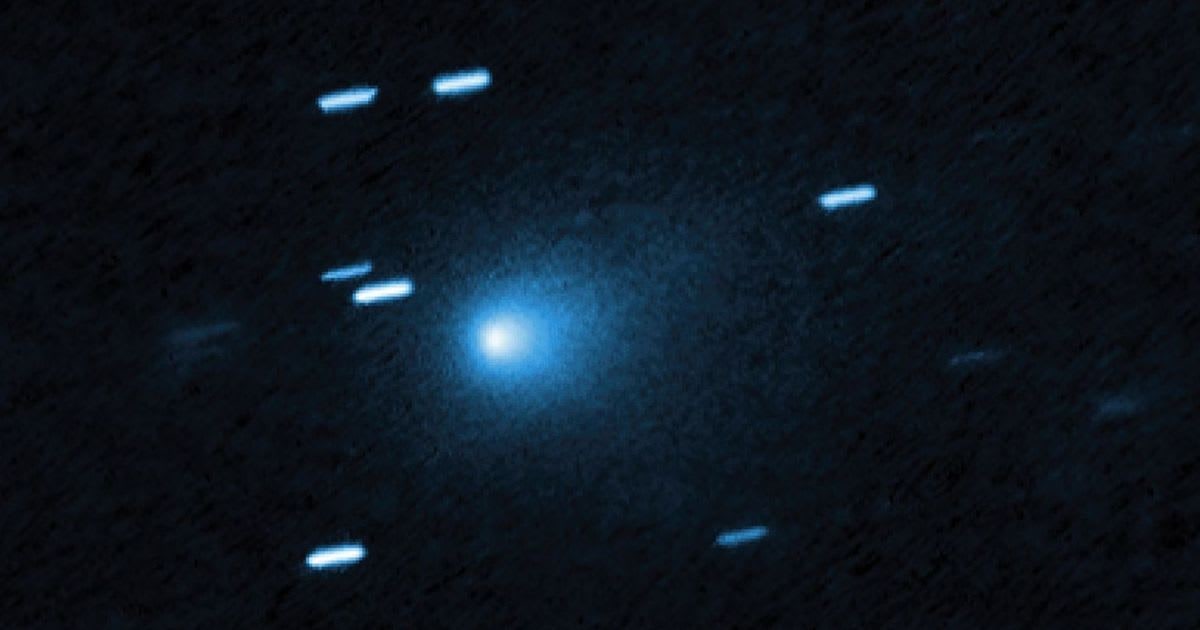
The interstellar comet 3I/ATLAS continues to speed away from us, as an ambitious plot to catch up with it thickens on Earth. The plan, according to a study published as a preprint on arXiv, aims to launch a spacecraft toward the comet in 2035 and expects it to fly by its target in 2085. By the time the spacecraft comes close to the comet, it will be around 68 billion miles away from the Sun, which is 732 times the distance between the Sun and Earth. So far, Voyager 1 has only traveled 170 times the distance between our star and Earth. It took the same flight time that the proposed spacecraft would likely take to fly by the comet.

Adam Hibberd, T. Marshall Eubanks, and Andreas Hien have teamed up to devise the flyby plan. Hibberd, a software engineer, developed ’Optimum Interplanetary Trajectory Software’ to figure out a launch time depending on the relative positions of Earth, the Sun, and Jupiter that would allow the probe to carry out the Solar Oberth Maneuver (SOM). To traverse huge distances in space, SOM is the best ploy. It relies on the Oberth effect, a concept named after the rocket scientist Hermann Oberth, who first propounded it. The key to this concept is to make a spacecraft fall into the gravitational field of a planet or a star like the Sun.
The gravitational push by the Sun will accelerate the spacecraft. At periapsis—the closest point to the Sun—the spacecraft will additionally fire its engines to gain further velocity, which scientists dub as “delta-V”—the highest velocity possible to attain. After doing all these analyses and considering the relative position of Earth, the Sun, and Jupiter, they found that 2035 is the best time to launch the spacecraft. They want to steer the spacecraft toward Jupiter, whose gravity will slow it down and then loop it around the giant planet before allowing it to fall toward the Sun. "Pretty much every launch uses the Oberth effect," Eubanks, a former NASA scientist who is now chief scientist at Space Initiatives Inc. and an author of the new paper, told Space.com.
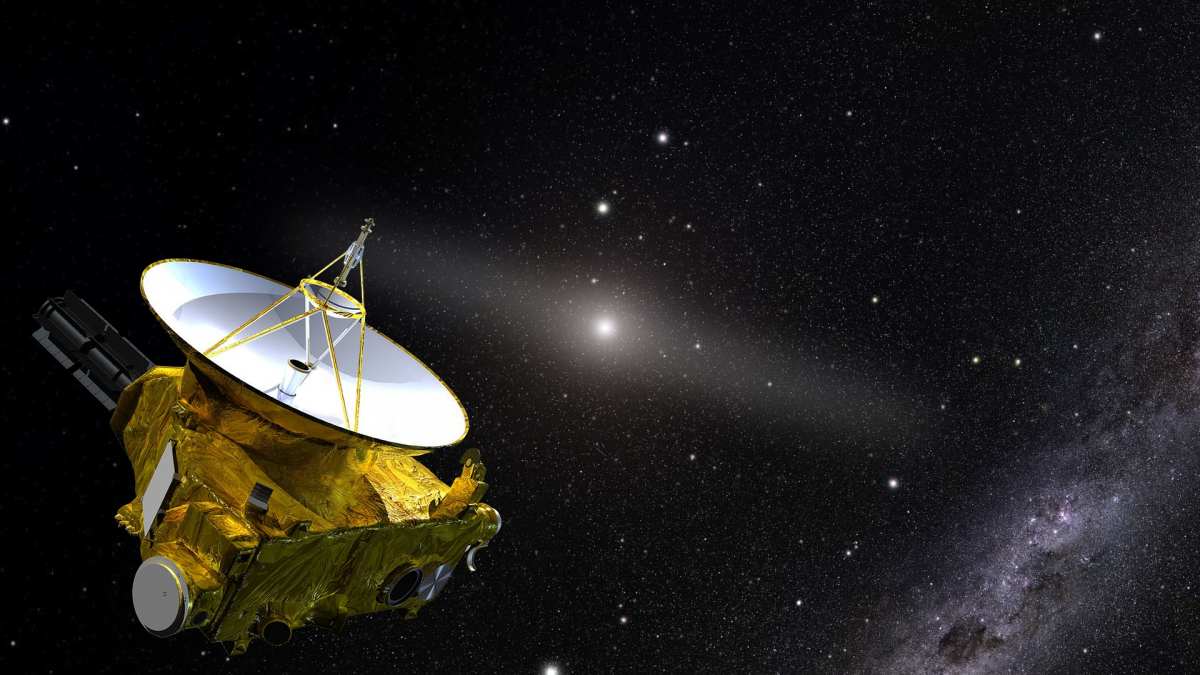
"It's why for example missions such as Artemis 2 do their translunar injection burns at perigee, not apogee. That's an Oberth maneuver. However, I cannot find a record of a straight-out Oberth maneuver of the type we propose, which is a major rocket burn at closest approach in a flyby," Eubanks added. The researchers calculated that the proposed spacecraft will weigh 500 kilograms, which is similar to NASA’s New Horizons mission to Pluto. For such a spacecraft to achieve a delta-V of at least 5.1 miles per second, it will have to exploit the SOM by reaching very close to the Sun at a distance of 3.2 solar radii (432,450 miles) from the center of the star. At such a close encounter, the spacecraft will enter the Sun’s corona, where temperatures will rise significantly.
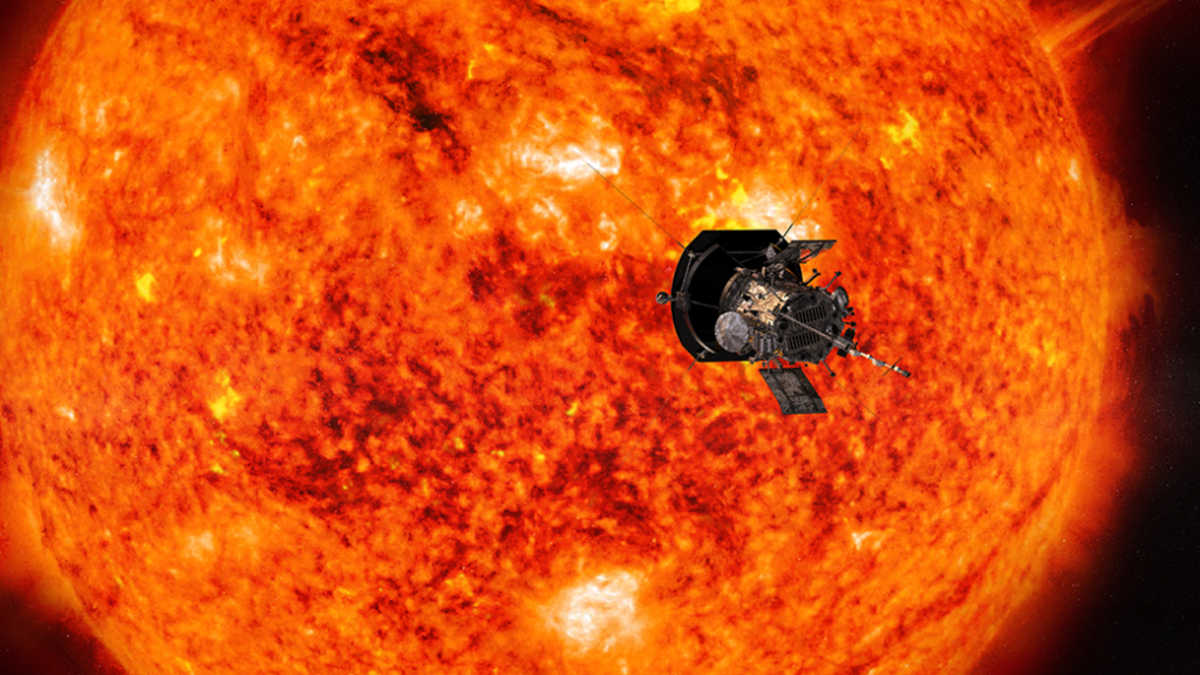
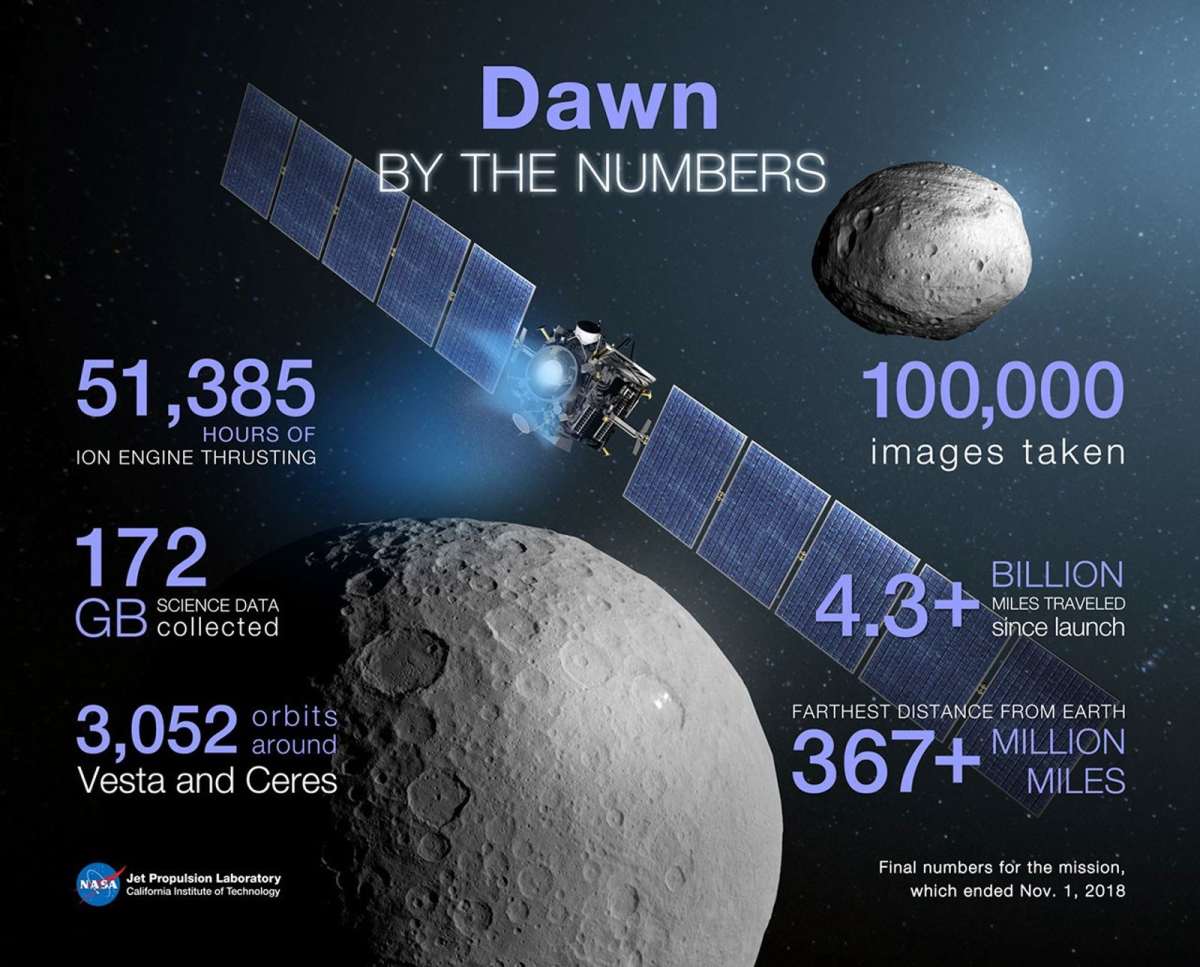
In reality, NASA’s Parker Solar Probe came close to the Sun, and its closest position in 2023 was within 3.7 million miles. At this distance, Parker Solar Probe tolerated temperatures of 1,370–1,400 degrees Celsius. But the proposed spacecraft will get closer than this. As a result, it will need a better heat shield than the Solar Probe, which is coated with a carbon-composite layer and weighs 160 pounds. The researchers think that the comet-stalking spacecraft will need added layers of aerogel to protect it from the heat of the Sun. "In principle, a similar heat shield could be used for the mission to 3I/ATLAS," said Hibberd. The researchers noted that the projected flight time of 50 years can be whittled down to 30 years if the spacecraft can achieve a delta-V of up to 6.43 miles per second. This is feasible since NASA’s Dawn spacecraft to the Asteroid Belt achieved a delta-V of 6.84 miles per second.
Since both the space probe and the comet will be zipping fast through space, only a fly-by is plausible. The researchers are not planning to make it orbit the 3I/ATLAS. Then, why do they design such a grand plan to stalk the interstellar comet? "We'll just have to see," said Eubanks. "Maybe after, say, 10 interstellar objects have been found, 3I will seem commonplace, and it won't seem worthwhile to mount an expedition to chase it. But then again, maybe it will seem different and unusual, and there will be such a desire." As 3I/ATLAS races away, at least theoretical studies show that we can reach it and get a close-up view of it by swinging past the Sun and then heading out to the outer solar system beyond Neptune. Although the plan is still in its embryonic stage, the farthest corner of the solar system doesn’t seem as inaccessible as previously thought.
More on Starlust
NASA’s SPHEREx images 3I/ATLAS again, detects organic molecules in the interstellar comet
Interstellar comet 3I/ATLAS tracked again by NASA’s exoplanet hunter TESS