Christmas 2025: What is the Moon phase on December 25
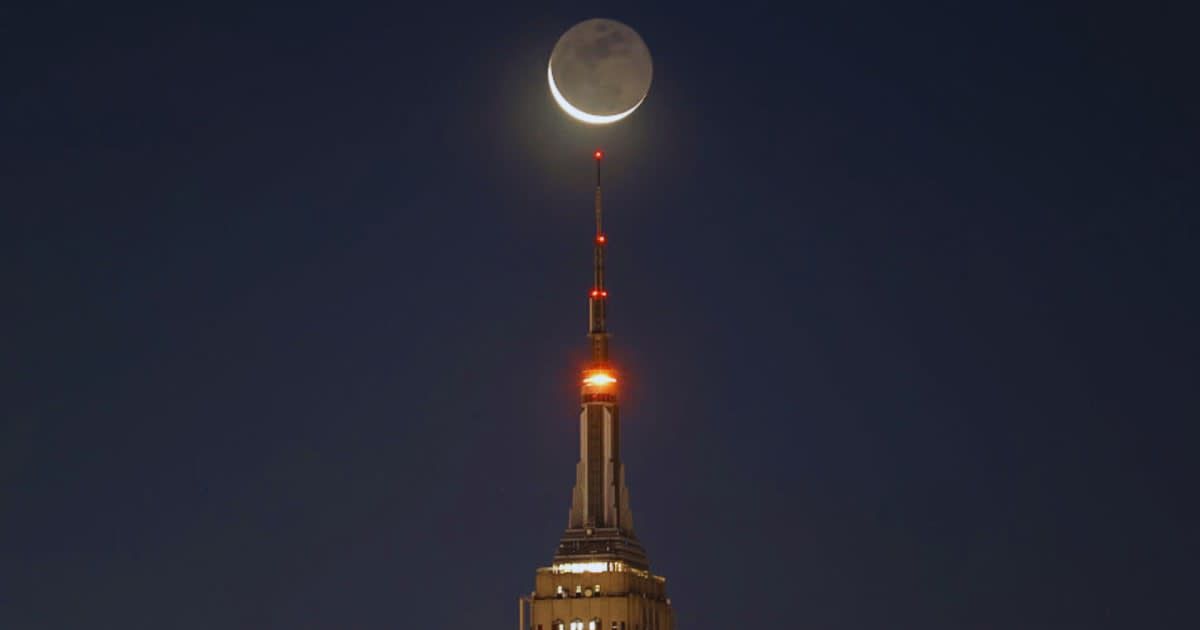
A beautiful Waxing Crescent Moon is here to grace the skies on Christmas.
PUBLISHED 2 HOURS AGO
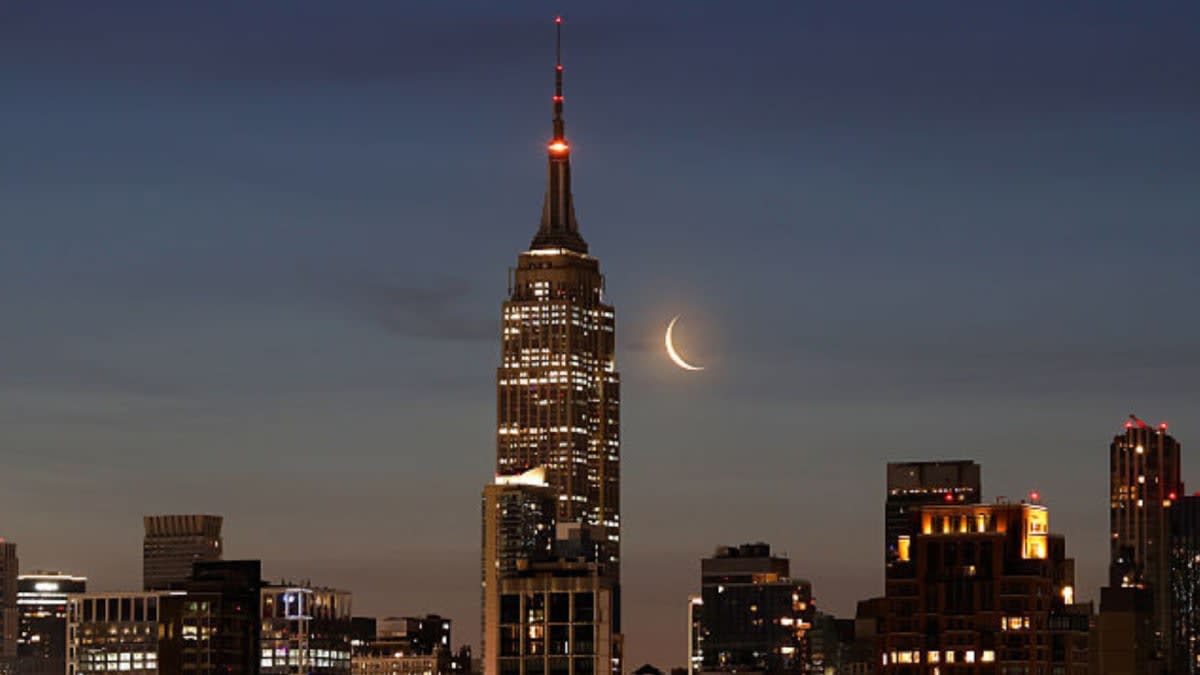
A four percent waning crescent moon illuminated with earthshine rises behind the Empire State Building in New York City. (Representative Cover Image Source: Getty Images | Photo by Gary Hershorn)

This holiday season, ease into the warmth of Christmas with the Moon in its beautiful waxing crescent phase. At 4.75 days old on Christmas Day, the Moon will be approximately 27% illuminated, per NASA and will offer a great chance to observe its features.
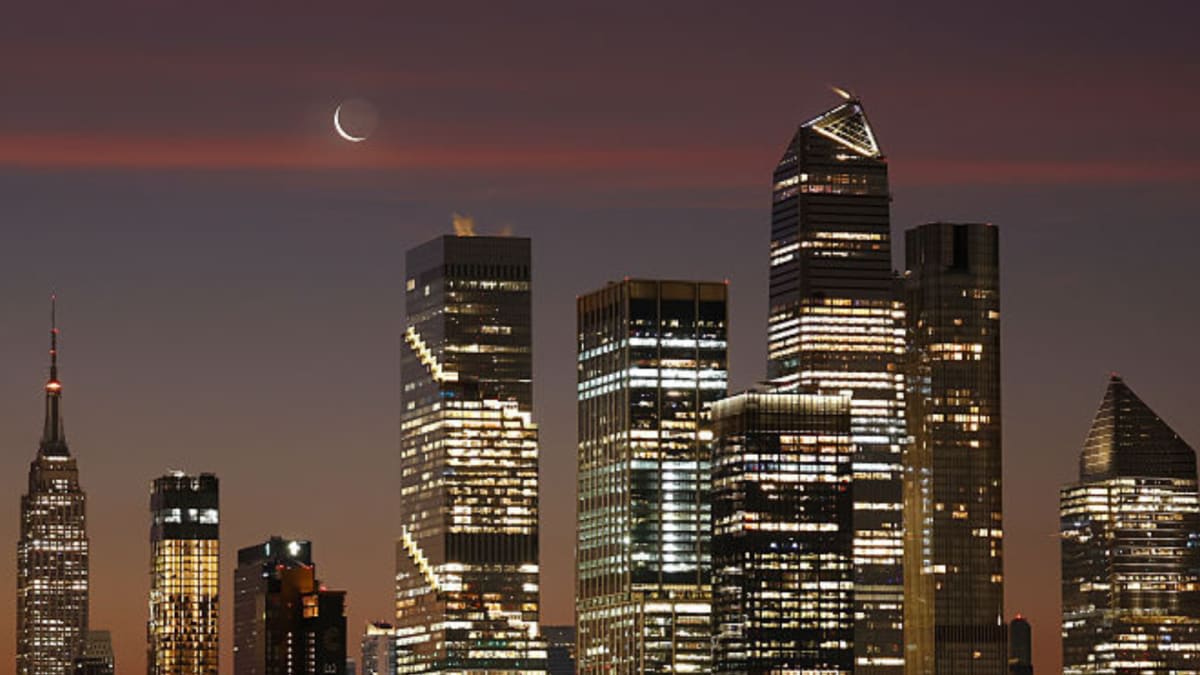
A six percent illuminated waning crescent moon rises behind the skyline of midtown Manhattan and the Empire State Building before sunrise in New York City on December 17, 2025. (Representative Image Source: Getty Images | Photo by Gary Hershorn)

The waxing crescent phase is best observed in the west after the Sun falls below the horizon after sunset. Unlike a Full Moon that washes out the stars around it with its brightness, a waxing crescent provides enough light to illuminate, and not wash out, the background. The Moon will be mostly dark, except for its right edge, and will be closer to the sun. It will become brighter as it gets closer to the next phase, a 50% illuminated First Quarter.

The crescent moon rise in the dawn sky behind midtown Manhattan and the Empire State Building in New York City on April 25, 2025 (Representative Image Source: Getty Images | Photo by Gary Hershorn)
The crescent moon rises in the dawn sky behind midtown Manhattan and the Empire State Building in New York City on April 25, 2025 (Representative Image Source: Getty Images | Photo by Gary Hershorn)

The 23% illumination of the waxing crescent by the Sun on December 25 can change and vary up to 10% a day. There are eight lunar phases in the lunar cycle: the Full Moon, New Moon, First Quarter, and Last Quarter are the major ones. The minor ones include the waxing crescent, waxing gibbous, waning gibbous, and waning crescent. It takes the Moon about 29.5 days to complete a full cycle.
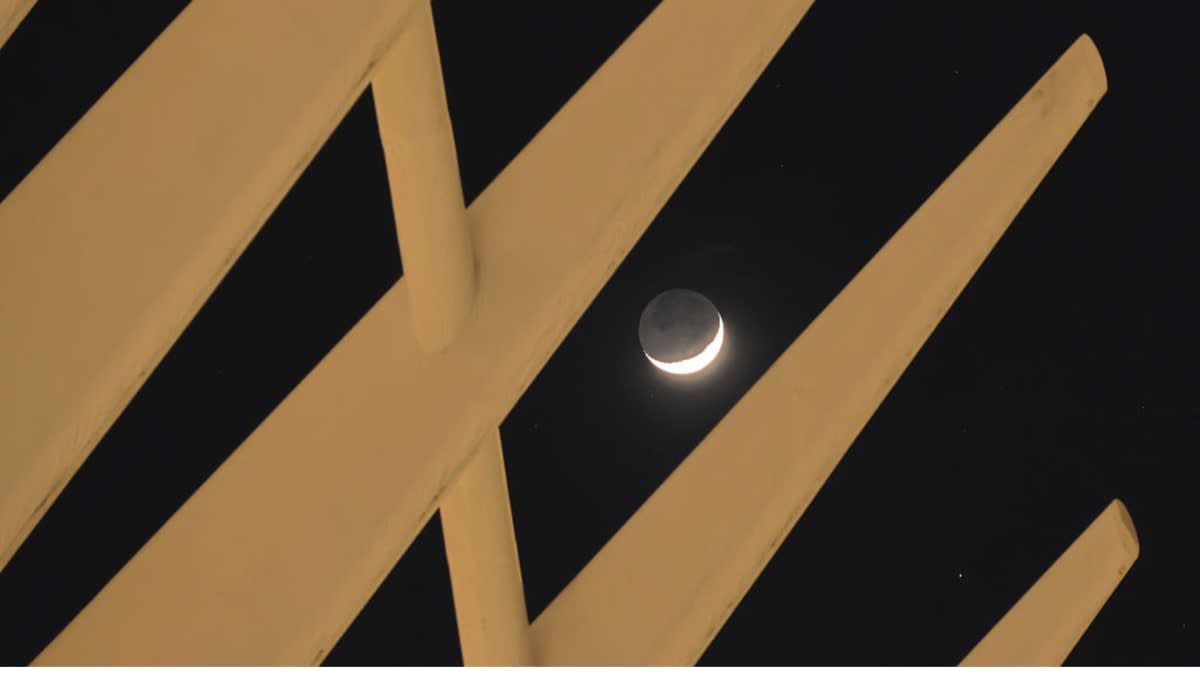
A 14 percent illuminated waxing crescent moon with earthshine sets behind the roof of the Oculus Transit Hub at One World Trade Center on April 30, 2025, in New York City. (Representative Image Source: Getty Images | Photo by Gary Hershorn)

There is also a possibility that the earthshine, the light reflected onto the moon from Earth, might illuminate certain parts of the surface that might be invisible. According to NASA's Daily Moon Observation, the Mare Crisium and the Mare Fecunditatis can be seen without any visual aids. The Endymion Crater can be spotted tonight with binoculars, and the Apollo 11 and 17 landing spots will be visible with a telescope. 
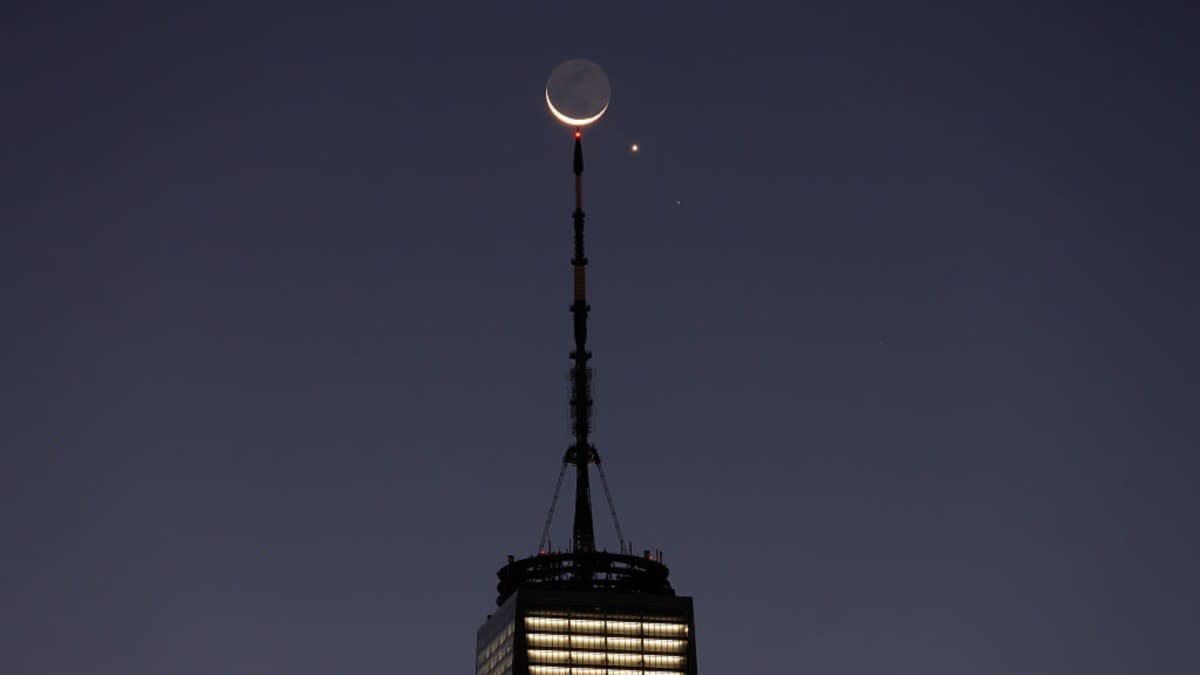
A six percent illuminated waning crescent moon, the planet Venus, and the star Regulus rise together behind One World Trade Center at sunrise in New York City on September 19, 2025. (Representative Image Source: Getty Images | Photo by Gary Hershorn)

No matter where you are—be it the Northern or the Southern Hemisphere—the phase of the Moon and its illumination percentage will be the same. That being said, the time for the Waxing Crescent Moon varies based on the time zone you are in. Moreover, the orientation of the Waxing Crescent Moon is also dependent on the time, date, location, and position of the satellite in the sky. Its height in the sky also affects which part of it—the top, the bottom, or the side—will be lit, according to timeanddate.

A six percent illuminated waning crescent moon rises behind the skyline of midtown Manhattan and the Empire State Building before sunrise in New York City on December 17, 2025. (Representative Image Source: Getty Images | Photo by Gary Hershorn)

The third brightest object in the night sky, Venus, can usually be seen near a Crescent Moon, better visible as the evening star when it is close to a Waxing Moon and as the morning star when it is close to the Waning Moon.

An impression of the greenhouse planet Venus, totally featureless seen from space, owing to its dense carbon dioxide atmosphere. (Photo by MARK GARLICK / SCIENCE PHOTO LIBRARY / Getty Images)

The Moon will reach its First Quarter Phase on December 27, according to Moongiant. At about 43% illumination, the Moon will be high overhead at sunset and will be visible till midnight before it sets in the west. As for the next Full Moon, it is scheduled to grace the skies on January 3. On the day, the Moon will be 14.47 days old and will be 100% illuminated. 

More on Starlust

Airless, shape-shifting wheels could help explore future human habitats on the Moon

Earth's atmosphere hidden on the Moon may prove to be life-sustaining for future astronauts
MORE STORIES

The Quadrantids are widely regarded as one of the best meteor showers of the year.
4 hours ago
NOAA forecasters report that a solar eruption known as a CME may sweep past Earth on December 24.
1 day ago
On Friday, December 19, the comet made its closest pass to Earth, safely cruising by at a distance of approximately 167 million miles.
3 days ago
The object was first spotted on July 1, 2025, by the NASA-funded ATLAS survey telescope based in Rio Hurtado, Chile.
6 days ago
Discovered in July by the ATLAS telescope in Chile, this comet is on a one-way trip through our solar system.
6 days ago
The object was first officially spotted on July 1, 2025, by the NASA-funded ATLAS survey telescope based in Rio Hurtado, Chile.
6 days ago
The closest approach of comet 3I/ATLAS to Earth will happen on Friday, 19 December 2025, at a distance of 1.798 Astronomical Units.
7 days ago
Now passing through the constellation Leo, the interstellar object sits at a distance so immense that the light from it takes about 15 minutes to reach us.
Dec 17, 2025
The interstellar comet 3I/ATLAS is currently visible in the constellation Leo, though its faint brightness of magnitude 12.5 means it is difficult to spot.
Dec 15, 2025
Observers will have ideal viewing conditions this year, as the New Moon guarantees zero moonlight interference.
Dec 15, 2025