Artemis II completes proximity operations demonstration; Orion's perigee raise burn to follow
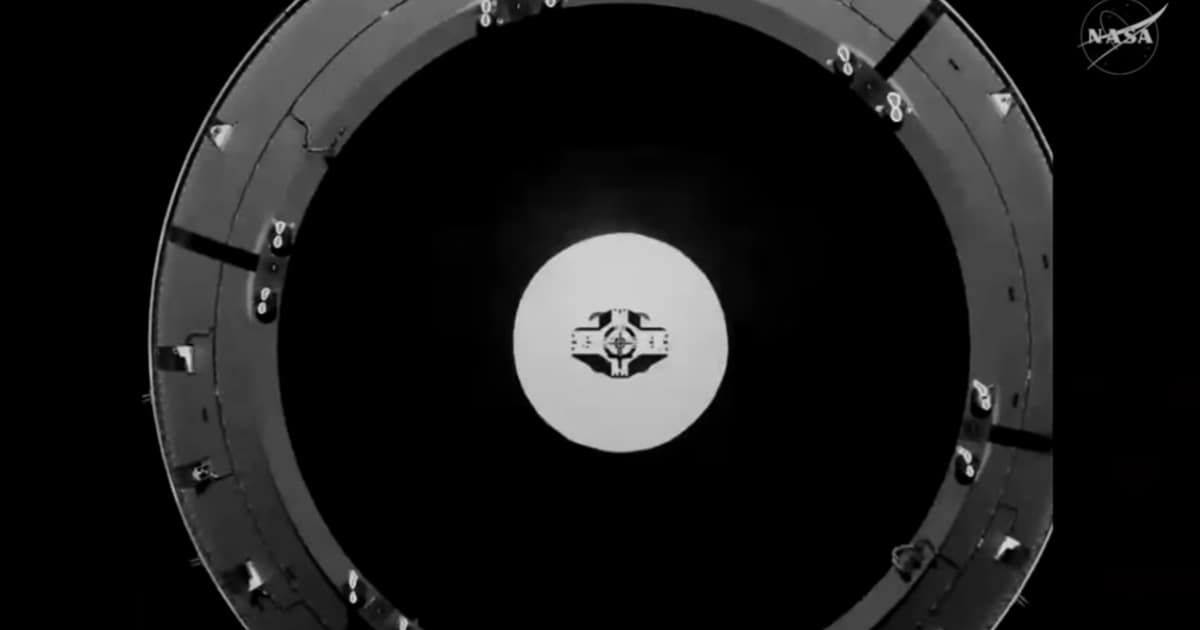
At 11:37 p.m. EDT on April 1, NASA announced that Artemis II had successfully completed the proximity operations demonstration—one of the most significant early objectives of the mission. Occurring not too long after the apogee raise burn of the interim cryogenic propulsion stage (ICPS), the demonstration showcased the manual handling capabilities of Orion in space, and the feedback from the activity will provide valuable data points to engineers designing simulators and flight hardware for subsequent missions, which will involve docking with other spacecraft. In fact, Artemis III, now set to launch in 2027, will see the Orion spacecraft dock with one or both of SpaceX's Human Landing System or Blue Origin's Blue Moon lander in low-Earth orbit to test integrated operations between the vehicles relatively closer to Earth before a lunar landing is attempted in 2028.
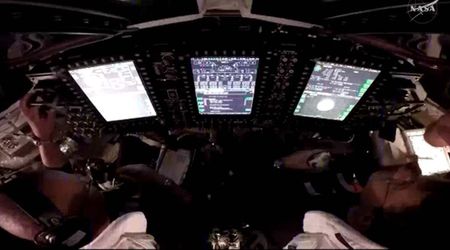
The Orion spacecraft successfully separated from the upper stage of the rocket, and the "proximity operations" test is underway. The Artemis II astronauts are manually piloting Orion similarly to how they would if they were docking with another spacecraft. pic.twitter.com/RWW4RSyaoq
— NASA (@NASA) April 2, 2026
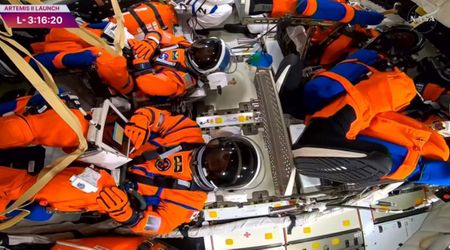
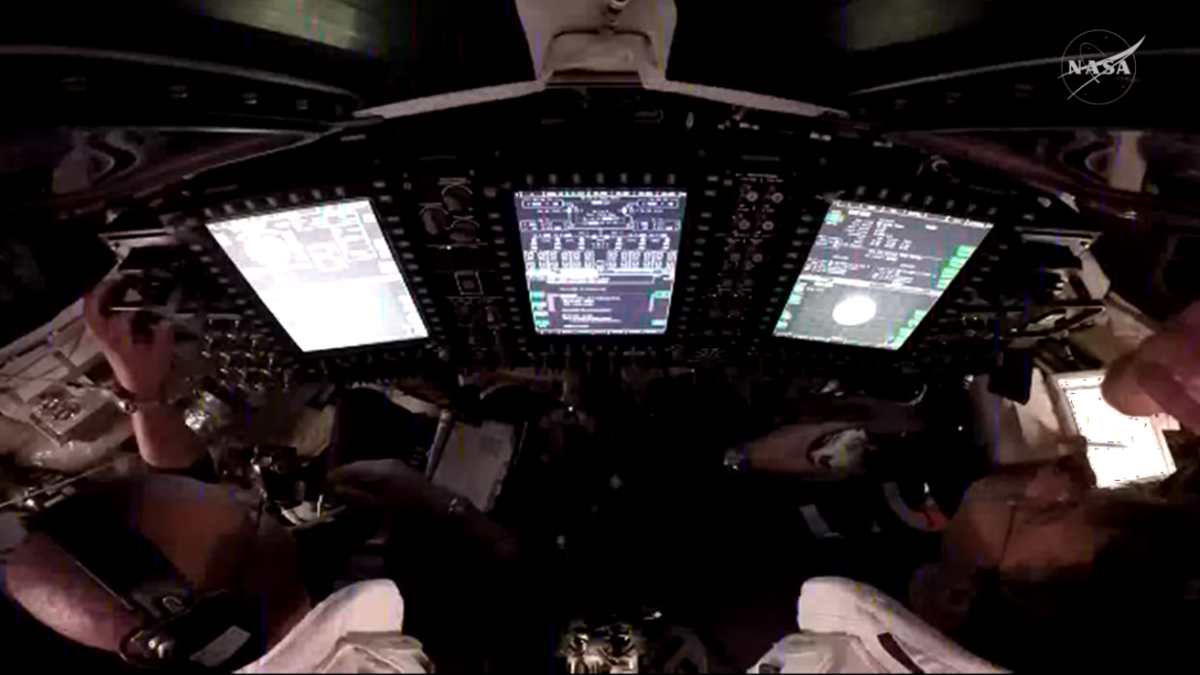
The approximately 70-minute demonstration itself saw pilot Victor Glover use the rotational hand controller and translational hand controller to manually align the spacecraft with the free-floating ICPS—the proxy for an actual docking target. Following the conclusion of the test, Orion performed an automatic departure burn to safely distance itself from the ICPS, which is also set to execute its own burn to re-enter Earth's atmosphere over a remote area in the Pacific Ocean.
A fleet of four CubeSats—small satellites no bigger than shoe boxes—will also be deployed soon as secondary payloads. They are currently housed in the Orion stage adapter and will be sent out once it separates from the rest of the spacecraft. These four CubeSats are the Argentina National Space Activities Commission's ATENEA; the Saudi Space Agency's Space Weather CubeSat-1; TACHELES, developed by the German Aerospace Center; and the Korea AeroSpace Administration's K-Rad Cube.
Looking ahead, once the crew is awakened at 7 a.m. EDT today (April 2), they will prepare for a perigee raise burn that will put the spacecraft on course to perform a Translunar Injection (TLI) burn scheduled for Flight Day 2. The TLI burn after the perigee raise burn will mean Orion departs on a journey towards the Moon before being captured by its gravity and being slingshot back to Earth on a free return trajectory. Once all operational activities for Flight Day 1 are wrapped up, the crew will be able to go back to sleep at around 9:40 a.m. EDT.
More on Starlust
'We are going for all humanity': NASA's Artemis II successfully launches from Kennedy Space Center
Artemis II: NASA confirms brief communications blackout after launch