An annular solar eclipse is due this month: Here's what you need to know
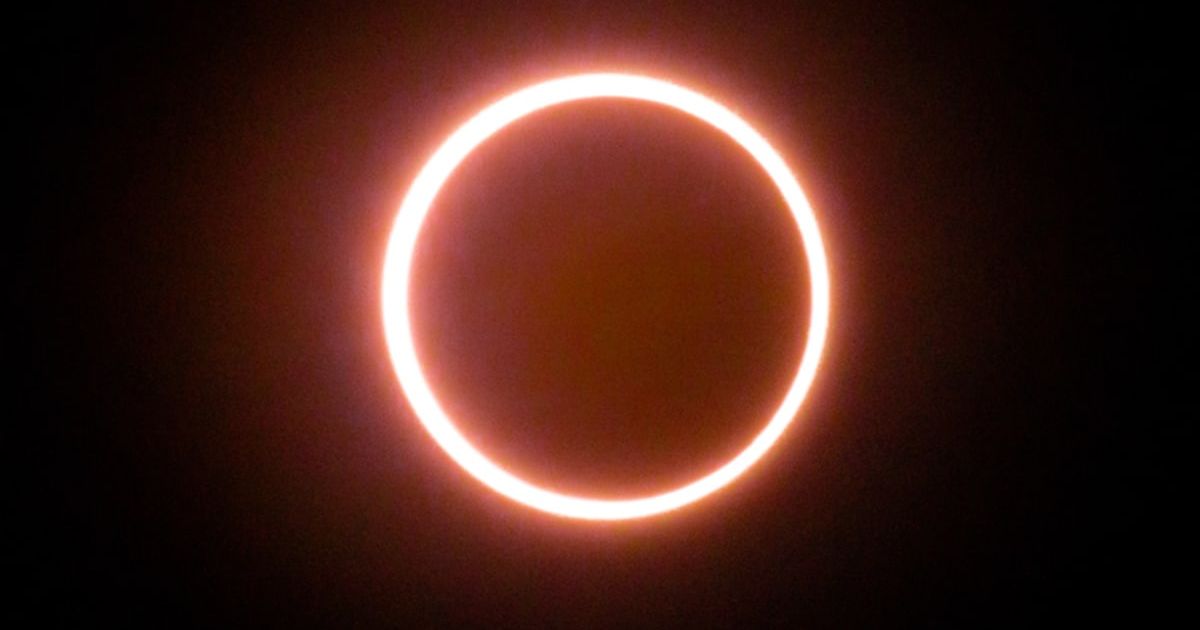
On 17 February 2026, the Moon will come directly in front of the Sun but will be too far away from the star to completely cover it, creating an annular solar eclipse. As a result, unlike during a complete solar eclipse when the Sun is fully darkened, it will appear as a ‘ring of fire’ with the Moon obscuring 96% of the star, according to a report in Forbes.com. The phenomenon will last for about 2 minutes and 20 seconds. But as breathtaking as it may sound, the event will likely be witnessed by a handful of people, if any. "It's possible that only a few people will view this eclipse from within the annular zone," eclipse meteorologist Jay Anderson wrote on his website, Eclipsophile.com. "It's a challenge to reach and there are only two inhabited locations within the annular shadow, neither of which is set up to welcome tourists."
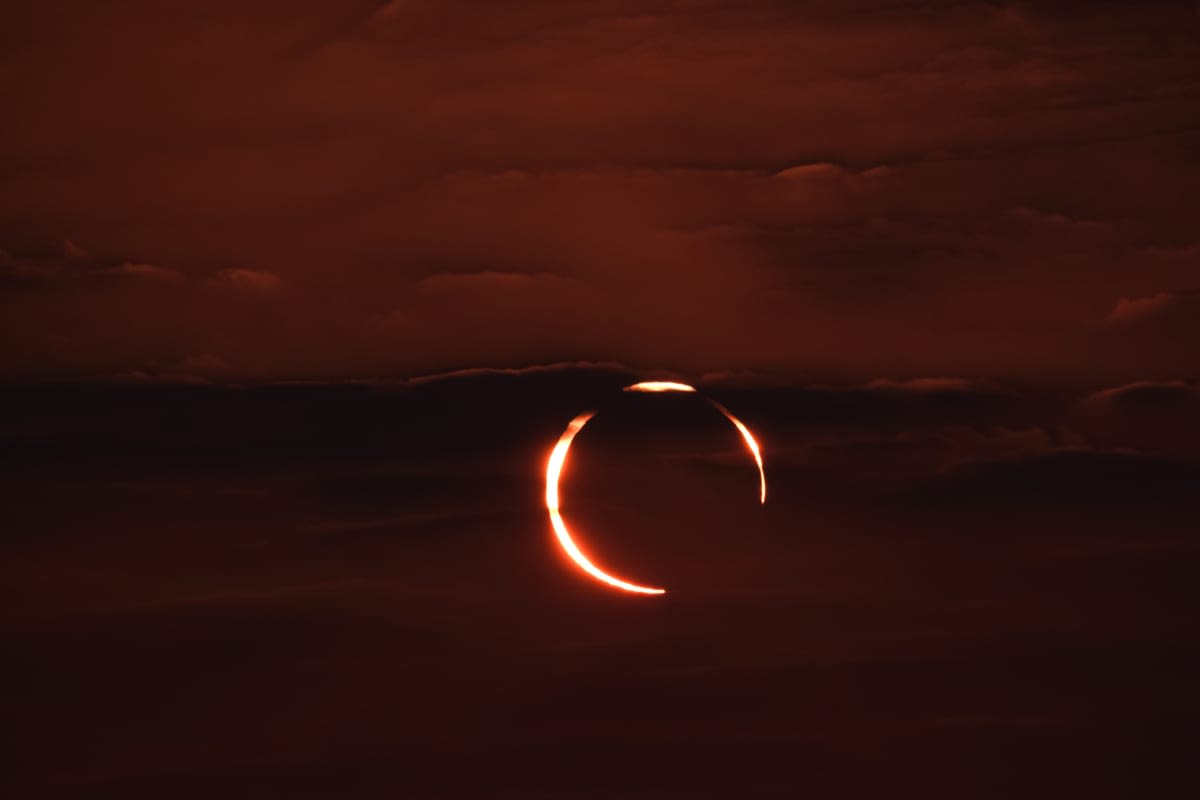
The path of the eclipse is likely to stretch 2,661 miles (4,282 kilometers) across Earth, peaking over a remote part of Antarctica and only visible from research stations such as the French-Italian Concordia (2 minutes 1 second annularity), which is located in the Antarctic interior and houses only 16 scientists, and the Russian-run Mirny (1 minute 52 seconds) on the Davis Sea Coast, where a few dozen inhabitants live. During this time, the Sun will be low on the horizon—just 5 to 10 degrees up, making it a challenging but rewarding observation for scientists and adventurous eclipse chasers, as per the Forbes.com report.
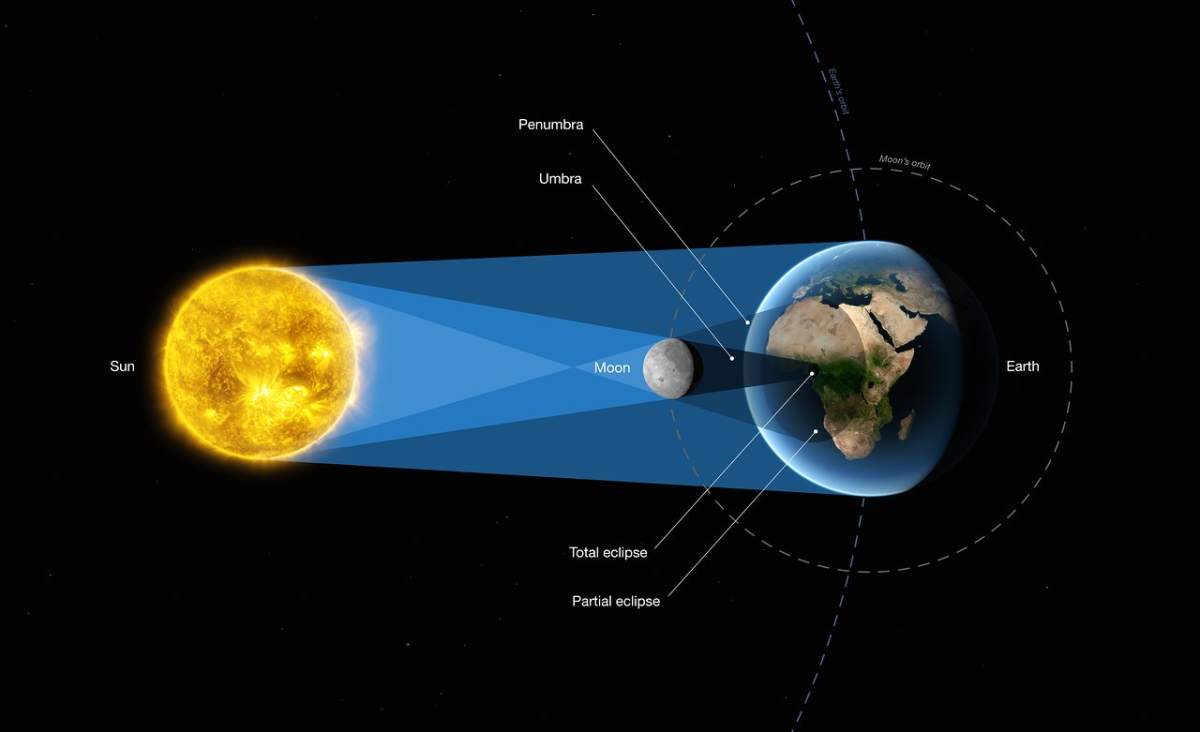
The eclipse, according to a report in Space.com, will rise over mainland Antarctica and set off the Davis Sea coast of the Southern Ocean. The moon's antumbral shadow—which creates the ring of fire—will take around 59 minutes to cross Earth, from 11:42 to 12:41 UTC. By mid-February, cruising season is about to end, but a well-timed cruise to locations in the Antarctic Peninsula will allow eclipse chasers to catch a glimpse of a partial solar eclipse, which will also be visible from southwestern Africa, the southern tip of South America, and remote islands such as Heard Island, Reunion, and Mauritius. Forbes reports that Durban in South Africa, Maputo in Mozambique, and Antananarivo in Madagascar will get to see a 12% to 20% partial solar eclipse. It goes without saying that no matter from where on Earth observers are watching the eclipse from, they will have to wear appropriate eclipse glasses.
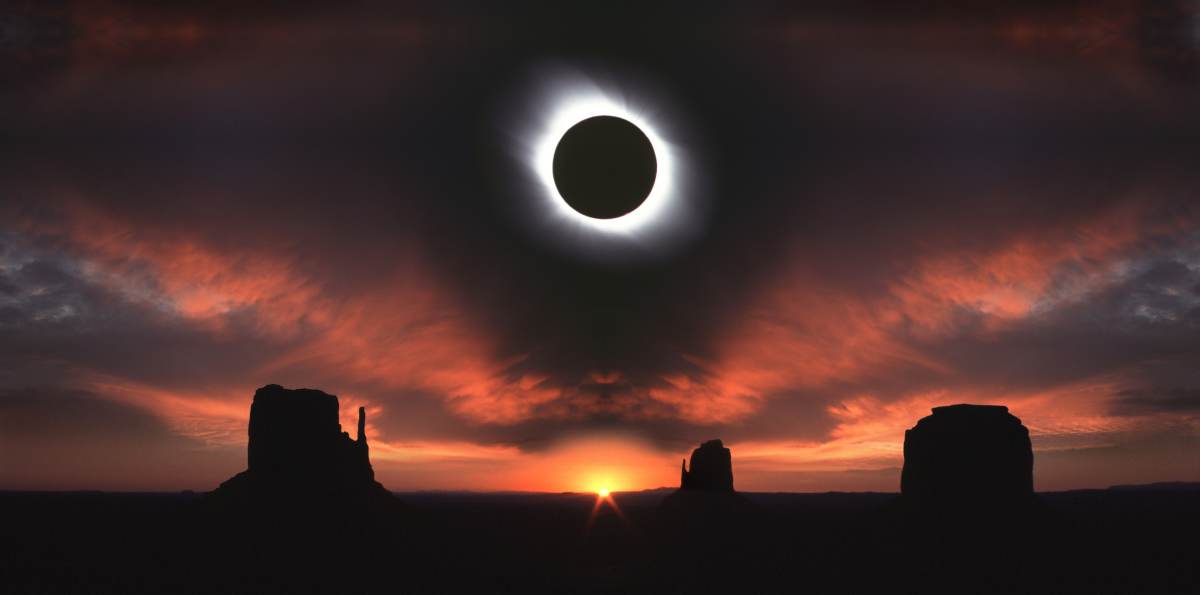
The solar eclipse following the one on February 17 will be a total eclipse. Taking place on August 12, 2026, it will be the first in mainland Europe since 1999. According to NASA, it will appear over Greenland, Iceland, Spain, Russia, and a small part of Portugal. Additionally, a partial eclipse will be visible from Africa, North America, the Atlantic Ocean, the Arctic Ocean, and the Pacific Ocean.
More on Starlust
2026 key skywatching events: Blue Moon, total solar eclipse and more
Don't miss the century's longest Total Solar Eclipse — here's the exact date